Recovery
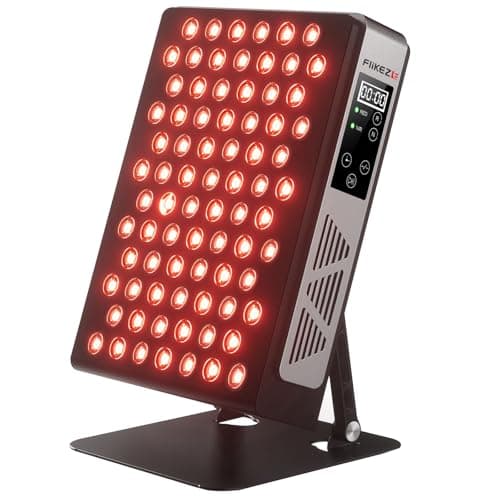
FliKEZE Red Light Therapy Review: 78 Quad Chip LEDs for £249.99
FliKEZE red light therapy review: 78 quad chip LEDs, 630 to 850nm, a 134 mW/cm² claim at 6 inches, five intensity levels and how it compares at £249.99.

By Mike Shilling, Recovery & Training Editor · Updated 3 October 2026
We may earn a commission from qualifying purchases made through links on this page, at no extra cost to you. This never affects our ratings.
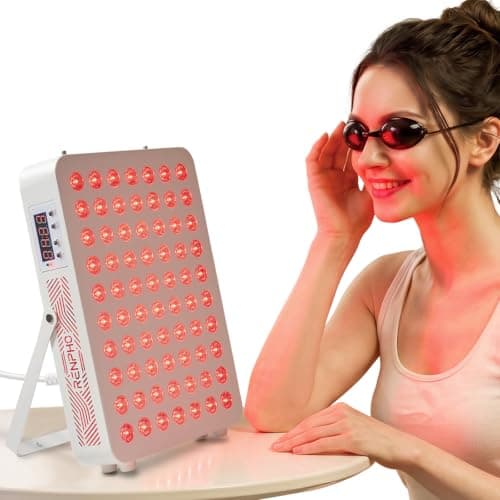
RENPHO is best known in the UK for smart scales and massage guns, and its first red light panel on Amazon UK costs £199.99 (3 October 2026). You get 70 dual chip LEDs at 660nm and 850nm, a fold out stand, a sling for hanging it off a door or rack, and a built in timer. That's a fair specification for the money, from a brand with a proper UK presence.
We rate it 3.8 out of 5. The panel is small, about the size of a tablet, and the only irradiance number RENPHO gives is measured at point-blank range, which flatters it. It also went on sale in early August 2026, so there are very few owner reviews to lean on yet. If you want a compact, well supported panel for one body part at a time, it's a reasonable buy; if you want to treat your whole back or both legs at once, it isn't.
How we review
This review is research-based. We haven't tested this panel hands-on or measured its output. We worked from RENPHO's Amazon UK listing, checked RENPHO's UK and global websites for an official product page (we couldn't find one for this panel), compared the specs with the four red light panels we've already reviewed, and read the published research on red and near infrared light for muscle recovery. Every irradiance figure here is the manufacturer's claim.
Buy it if you're curious about red light for a sore knee, a tight calf or a niggly shoulder and don't want to spend £300 to £400 finding out whether you like it. The stand means it can sit on a desk or bedside table, and the sling lets you hang it off a door or the upright of a power rack, so you don't need to drill anything.
It also suits anyone who'd rather buy from a brand they've heard of. RENPHO has a UK website, which is more than we could find for some panel sellers on Amazon.
Skip it if you want full body sessions. A tablet sized panel covers one area at a time, so treating both quads, your lower back and your shoulders means four separate sessions. A tall panel is the better tool for that, and our guide to red light therapy for recovery explains how size and distance change the dose you get.
Check the RENPHO red light panel price on Amazon£199.99RENPHO lists 70 LEDs, each a dual chip rated at 5W, with red and near infrared in equal numbers. You can switch between red, near infrared or both. Red at 660nm mostly acts near the surface, while 850nm reaches deeper into muscle, which is why panels aimed at recovery almost always carry both.
The headline number is 180 mW/cm² of irradiance "at point-blank range". Here's the problem: irradiance falls quickly as you step back, and point-blank is a distance nobody treats at, because it's uncomfortably warm and only lights a patch the size of each LED. Brands that publish proper figures show the drop. Hooga quotes 159 mW/cm² at 3 inches falling to 132 at 6 inches and 54 at 18 inches on its compact panel, and Nebula drops from 95 at 6 inches to 76 at 12 inches. RENPHO gives no reading at 15cm, which is where most people would use a panel this size, so the true figure there is unknown. Expect it to be a good deal lower than 180, and treat anyone selling you that number as a like for like comparison with scepticism.
Wattage gets the same treatment. Seventy LEDs at 5W each comes to 350W, but RENPHO doesn't quote that as a power rating, which is to its credit; it's a chip rating, and real wall draw on panels like this runs well below the nominal figure. The listing doesn't state the actual draw at all.
| LEDs | 70 dual chip LEDs, nominal 5W each |
|---|---|
| Wavelengths | 660nm red and 850nm near infrared, 1:1 |
| Modes | Red, near infrared or both |
| Claimed irradiance | 180 mW/cm² at point-blank (no figure at a working distance) |
| Power draw | Not stated |
| Timer | 6 settings (durations not listed) |
| Cooling | Internal fan |
| Mounting | Built in foldable stand plus hanging sling |
| Size | Slightly larger than a tablet, per RENPHO |
| Colour | White |
| On sale (Amazon UK) | August 2026 |
The honest answer is sometimes, a bit, and not reliably. A 2025 systematic review and meta-analysis on delayed onset muscle soreness found 14 relevant studies using wavelengths between 660nm and 950nm. Only four had data good enough to pool, and those showed a moderate drop in soreness at 72 and 96 hours plus better strength at 24 and 48 hours compared with placebo. That's encouraging, but four studies is a thin base.
A 2025 meta-analysis of volleyball and football players pooled 14 randomised trials and found no effect on maximal strength, though light treatment did lower creatine kinase (a blood marker of muscle damage) and slightly increased the number of reps players managed before fatigue. Then there's the double blind trial in 60 students that used an 808nm laser on the quads for 10 minutes before exercise and found no difference from sham treatment in strength or recovery.
Most of these studies used lasers or clinical LED clusters at carefully controlled doses, not a consumer panel at an unknown distance. So even the positive results don't transfer neatly to this product. If sleep, protein and training load aren't sorted, they'll do far more for you than any panel; our piece on sleep and muscle recovery is a better place to start.
Wear goggles. Near infrared at 850nm is almost invisible, so your eyes don't squint or blink against it as they would against a bright lamp, and the panel will often face your head when it sits on a desk. Don't look directly into the LEDs, and speak to your GP or optician first if you have an eye condition or take medication that makes you sensitive to light. The listing doesn't mention whether goggles come in the box, so budget a few pounds for a pair if they don't.
At £199.99 the RENPHO is the cheapest panel we've reviewed, and it's also the smallest bar one. The Hooga ULTRA360 is a similar laptop lid size and costs about £108 more, but Hooga publishes irradiance at several distances, so you know what dose you're getting. That transparency is worth paying for if you're serious about it.
If you want area rather than a spot treatment, the STASUN 1050W gives you an 85cm panel for £269.99, though its 167 mW/cm² claim is also measured close in and unverified. The Nebula 1020W at £379.99 remains our pick for treating big muscle groups after training, with 104cm of panel and figures at two working distances. The Helios 2 Series 600W sits around £400 and backs its half body panel with a five year UK warranty, but publishes no irradiance figure at all.
So the RENPHO wins on price and brand familiarity. It loses on coverage to every tall panel, and on published data to Hooga and Nebula.
See today's RENPHO red light panel priceIt has the two wavelengths the recovery research uses most, 660nm red and 850nm near infrared, so the hardware is sensible. The evidence itself is mixed: a 2025 meta-analysis found moderate reductions in muscle soreness at 72 and 96 hours, but it could only pool four studies, and some well run trials found no effect at all. Treat it as a small extra on top of sleep, food and sensible training load.
It's the irradiance RENPHO quotes with the light sensor right up against the panel. Nobody uses a panel at zero distance, and irradiance drops quickly as you move away, so the figure you actually get at 15cm will be much lower. RENPHO doesn't publish a reading at any working distance, so we can't tell you what it is.
RENPHO doesn't state a wall draw. The listing describes 70 LEDs rated at 5W each, which works out at 350W of nominal LED capacity, but that's a chip rating rather than what the panel pulls from the socket. Brands that do publish both figures, such as Nebula and Hooga, show real draw running well under the nominal number.
Yes, wear them. The 850nm near infrared light is barely visible, so your eyes won't squint or blink against it the way they do with bright visible light. Never stare into the LEDs, keep the supplied or a dedicated pair of blackout goggles on when the panel faces your head, and take extra care if you have an eye condition or take light sensitising medication.
RENPHO's six timer settings handle the shut off, but the listing doesn't say what the six durations are. Most published protocols use roughly 5 to 15 minutes per area. More time isn't better, because light therapy has a dose ceiling beyond which the effect drops off.
The panel went on sale on Amazon UK in early August 2026, so it has had less than two months to collect feedback. That's too short to judge long term reliability of the LEDs, the fan or the folding stand.
FliKEZE red light therapy review: 78 quad chip LEDs, 630 to 850nm, a 134 mW/cm² claim at 6 inches, five intensity levels and how it compares at £249.99.
How to use a red light therapy panel properly: the right distance and session time, how often, before or after training, eye safety and how to work out your dose.
The real benefits of compression boots, judged against the research: what helps (soreness, feeling recovered), what doesn't hold up, and who should avoid them.
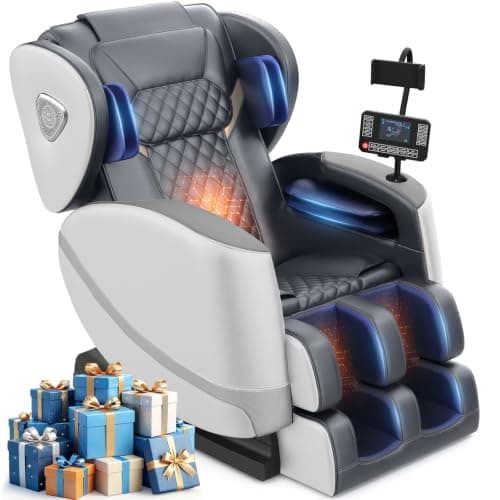
Our FURNIMAT massage chair review of the £470 zero gravity model: 14 fixed nodes, 8 airbags, heat and 165 degree recline, plus a footrest that suits shorter users.
Best Exercise is a participant in the Amazon EU Associates Programme, an affiliate advertising programme designed to provide a means for sites to earn advertising fees by advertising and linking to Amazon.co.uk. As an Amazon Associate we earn from qualifying purchases. This comes at no extra cost to you and never influences our independent reviews or rankings.