Recovery
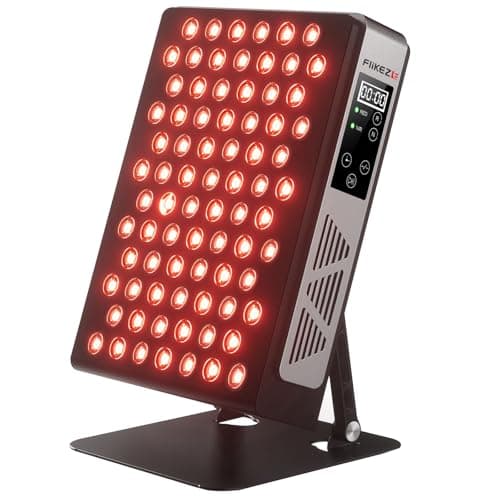
FliKEZE Red Light Therapy Review: 78 Quad Chip LEDs for £249.99
FliKEZE red light therapy review: 78 quad chip LEDs, 630 to 850nm, a 134 mW/cm² claim at 6 inches, five intensity levels and how it compares at £249.99.

By Mike Shilling, Recovery & Training Editor · Updated 11 September 2026
Red light therapy went from fringe to fashionable fast, and the marketing outran the research somewhere along the way. Panels now sell on wattage figures that mean almost nothing, session lengths pulled out of thin air, and claims about flushing toxins that belong nowhere near a discussion of muscle physiology. There is a real effect underneath all that, with real numbers attached, and it is worth understanding properly before you spend £300 on a panel.
The short version: light in the red and near infrared bands appears to reduce muscle soreness and improve strength recovery after damaging exercise, the effect is moderate rather than dramatic, timing matters, and you can absolutely give yourself too much.
The mechanism is better established than the clinical effects. Cytochrome c oxidase, an enzyme in the mitochondrial respiratory chain, absorbs light in the red to near infrared range, and the leading account of how photobiomodulation works is that those photons dissociate inhibitory nitric oxide from the enzyme. Electron transport picks up, mitochondrial membrane potential rises, and the cell makes more ATP. Downstream you get a brief burst of reactive oxygen species acting as a signal, shifts in calcium handling, and eventually changes in gene transcription that affect cell survival and repair.
None of that is controversial. What remains argued over is how much of it translates into a runner's legs feeling better on Wednesday after a hard Monday.
The most useful recent evidence is a 2025 systematic review and meta analysis of photomodulation therapy for delayed onset muscle soreness, pooling fourteen studies using wavelengths from 660 to 950nm applied to between one and six points on the affected muscle. The findings, in plain numbers:
The honest caveat is that only four studies supplied enough data for the quantitative analysis, which is a thin base for effect sizes that large. Anyone telling you red light therapy is proven is overselling four studies.
The practical detail worth taking from it: the benefit appeared when light was applied after the exercise that caused the damage. That is your timing answer.
This is the single most useful thing to know before you buy a panel, and it runs directly against how people use them.
Photobiomodulation follows a biphasic dose response. As you increase the dose, the response climbs to a maximum, and then it falls. Push further and the effect diminishes, disappears, and at sufficiently high fluences can invert into something inhibitory. Low levels stimulate; high levels suppress.
So a brighter panel does not mean better results from the same session length. It means you reach the peak of that curve faster, and sitting there for 30 minutes because it feels more thorough can carry you past it. Bright device, short session. That is the rule, and it is the opposite of the instinct almost everyone brings to the first week of ownership.
The number that matters, and the one that doesn't
Wattage on the box is nearly useless. A panel advertised at 360W might draw 116W from the wall, because LED power ratings describe the diodes rather than the output. What you want is irradiance, measured in mW/cm2, at a stated distance. A good panel publishes it at three or four distances; a bad one does not publish it at all. If the listing shouts about watts and says nothing about mW/cm2, assume the output is poor.
Nothing here is a medical prescription, and the research base is not strong enough to support precise dosing claims. It is a sensible starting structure built on what the studies actually did.
Pick the wavelength for the tissue. Near infrared at 810 to 850nm penetrates deepest, so use that for muscle and joints. Visible red at 630 to 660nm does more for skin and surface tissue. Panels that let you run the two bands independently, like the Hooga ULTRA360, let you actually make that choice rather than firing everything at once.
Get the distance right. Six inches is the standard reference point and where most manufacturers publish their headline irradiance. Back off to eighteen inches and output typically falls by around 60%, which means a much longer session for the same dose and a wider spread. Close for a knee, further back for a whole thigh.
Keep it short. On a panel delivering over 100 mW/cm2 at six inches, 5 to 10 minutes per area is enough. Do not extend the session because you feel nothing; there is nothing to feel beyond mild warmth, and duration is not the lever you think it is.
Use it after training. Evening of a hard session, or the following morning. That is where the DOMS evidence sits.
Three or four times a week, on the muscles you actually worked. Treating everything every day is how people burn out on the routine within a month. Target the legs after a leg session, the shoulders after pressing.
Wear the goggles. Near infrared is invisible, so nothing about how bright the panel looks tells you how much your eyes are absorbing. Use the eye protection that came with it.
Red light is a modest, low effort addition to a recovery routine, not a replacement for the things that do the heavy lifting. Sleep, food and sensible training load still account for most of how you feel, and the effect sizes above are moderate even in the studies designed to find them.
It layers well with mechanical and thermal work because the mechanisms are unrelated. Percussive massage improves range of motion and takes the edge off soreness, which is why a massage gun is the first recovery tool most people should own, and our guide to using one properly covers the technique. Heat is the other obvious pairing, whether that is a sauna after training or a sauna blanket. If you would rather go the other direction, we have covered whether to cold plunge before or after a workout in detail.
One caution worth repeating. If you are chasing muscle growth, it is worth knowing that aggressive post workout recovery interventions can blunt some of the adaptation you trained for, which is an established concern with cold water immersion and an open question for light therapy. Nobody has demonstrated that red light interferes with hypertrophy, but nobody has ruled it out either, so if you are in a hard building phase, keep it to the sessions where soreness is genuinely limiting your next workout.
The same caveat applies to the ingestible side of recovery, which is why we'd cycle tart cherry juice around races and hard blocks rather than drinking it every day of the year. The rest of the kit in this category sits in our recovery section.
The evidence is genuinely positive and genuinely limited. A 2025 systematic review and meta analysis of light therapy for delayed onset muscle soreness found moderate reductions in soreness at 72 and 96 hours and large improvements in muscle strength at 24 and 48 hours, along with lower creatine kinase. Only four of the fourteen included studies supplied enough data for the pooled analysis, so treat it as a promising effect rather than a proven one.
After, on the evidence available. The DOMS findings come from studies applying light following the damaging exercise, and that is where the measurable benefit shows up. Pre workout use is popular and largely unsupported, so if you only have time for one session a day, put it after training or in the evening.
Near infrared in the 810 to 850nm band for muscle, because longer wavelengths penetrate deeper than visible red. The studied range runs from 660 to 950nm. Visible red at 630 to 660nm does more for skin and surface tissue, which is why panels offering both let you target properly rather than guessing.
Shorter than most people assume, and it depends on how bright your device is. On a strong panel delivering over 100 mW/cm2 at six inches, 5 to 10 minutes per area is plenty. On a weak lamp you would need much longer to reach the same dose. Time alone tells you nothing without irradiance.
Yes, and this is the part the marketing skips. Photobiomodulation follows a biphasic dose response: the effect rises to a peak and then falls away as the dose keeps climbing, and at high enough fluences it can become inhibitory. Doubling your session length does not double the benefit and may reduce it.
Bright near infrared panels are intense enough that you should use the goggles that come with the device rather than staring into it, particularly at close range. Near infrared is invisible, so your blink reflex gives you no warning about how much you are taking. Close your eyes or wear the goggles and point the panel at the muscle, not your face, when you are treating a leg.
Some do, many do not, and the specification that separates them is irradiance at a stated distance. A £70 lamp with 30 LEDs and no published output figure will take a very long time to deliver a useful dose, if it ever does. Look for brands that publish mW/cm2 at a specific distance and ignore the wattage on the box.
FliKEZE red light therapy review: 78 quad chip LEDs, 630 to 850nm, a 134 mW/cm² claim at 6 inches, five intensity levels and how it compares at £249.99.
How to use a red light therapy panel properly: the right distance and session time, how often, before or after training, eye safety and how to work out your dose.
The real benefits of compression boots, judged against the research: what helps (soreness, feeling recovered), what doesn't hold up, and who should avoid them.
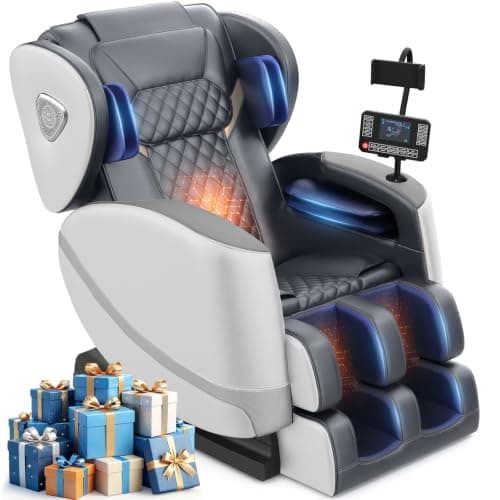
Our FURNIMAT massage chair review of the £470 zero gravity model: 14 fixed nodes, 8 airbags, heat and 165 degree recline, plus a footrest that suits shorter users.
Best Exercise is a participant in the Amazon EU Associates Programme, an affiliate advertising programme designed to provide a means for sites to earn advertising fees by advertising and linking to Amazon.co.uk. As an Amazon Associate we earn from qualifying purchases. This comes at no extra cost to you and never influences our independent reviews or rankings.