Recovery
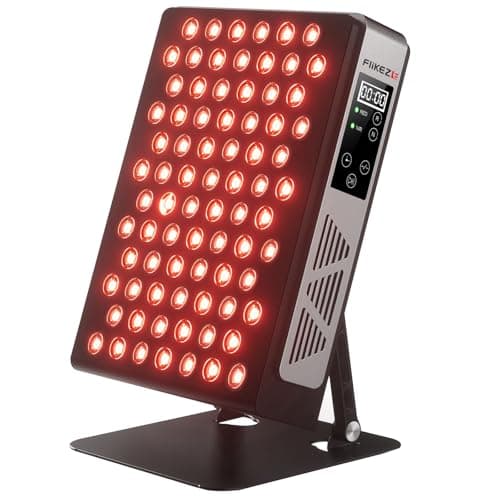
FliKEZE Red Light Therapy Review: 78 Quad Chip LEDs for £249.99
FliKEZE red light therapy review: 78 quad chip LEDs, 630 to 850nm, a 134 mW/cm² claim at 6 inches, five intensity levels and how it compares at £249.99.

By Mike Shilling, Recovery & Training Editor · Updated 11 September 2026
We may earn a commission from qualifying purchases made through links on this page, at no extra cost to you. This never affects our ratings.
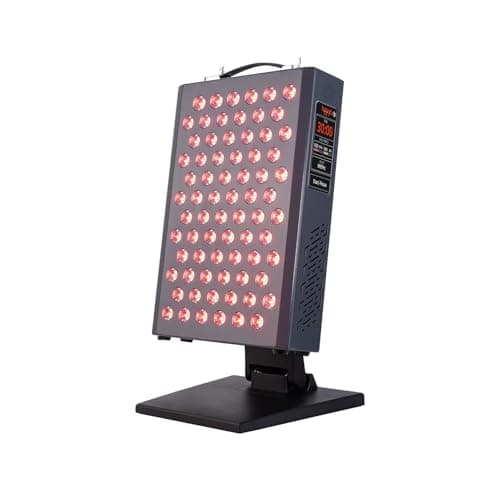
Red light therapy panels have a marketing problem: almost every listing shouts about wattage, almost none of them publish irradiance at a stated distance, and the two numbers have very little to do with each other. Hooga is one of the few brands that puts the useful figures on the page, and the ULTRA360 is its compact flagship. At £307.59 it is not a casual purchase, and the thing you need to understand before buying is that you are paying for intensity rather than area.
The specification that matters is 132 mW/cm2 at 6 inches, measured by Hooga and published on its own ULTRA360 spec sheet. That is a genuinely bright panel, several times what a £90 desk lamp delivers, and it comes from 72 quad chip LEDs that each carry all four wavelengths rather than alternating red and infrared diodes across the board. The catch sits in the dimensions. This is a 12.7 by 8.6 inch panel, roughly a laptop lid, so it treats one body part at a time.
How we review
This review draws on Hooga's published specifications, the peer reviewed literature on photobiomodulation dosing, and the consistent themes in verified owner reviews on Amazon UK and independent light therapy testing sites. We have not run a spectrometer over this exact unit, so every irradiance figure here is Hooga's own claim rather than our measurement, and we have flagged it as such.
Buy the ULTRA360 if you have a specific target: a stubborn knee, a shoulder that complains after pressing, a lower back that tightens up on long drives, or skin on your face and neck. Athletes who train hard four or five times a week and want something for local recovery will get more from this than from a wider, dimmer panel, because the evidence base for photobiomodulation and muscle soreness rests on delivering an adequate dose to the muscle you actually worked.
It is the wrong buy if you pictured standing in front of it and bathing your whole body. For that you need either a much larger panel or several ULTRA360 units linked together, which Hooga supports but which multiplies the cost fast.
Check Hooga ULTRA360 price on AmazonThe build is plain and solid. An aluminium shell, a fan that you can hear but would not call loud, a fold out stand, and a handle on top. Nothing about it feels like a gadget, which is the right call for something you will point at your knee twice a week for years.
Controls are where Hooga pulls ahead of the budget end. The remote lets you set the timer anywhere from 1 to 30 minutes, dim the panel from 1% to 100%, and adjust the red and near infrared bands independently. That last feature is more useful than it sounds: near infrared penetrates deeper and visible red does more for skin, so being able to run 850nm hard on a joint while keeping the red band low is a real advantage over panels that give you one on-off switch.
Then there is pulse mode, adjustable from 1Hz to 9999Hz. Some panels pulse at 10Hz and stop; Hooga gives you a four digit frequency selector. Honest answer: the human evidence for pulsing beating continuous wave output is thin, and a nearly unlimited frequency range is a specification sheet flourish rather than a reason to buy. Leave it on continuous and you lose nothing.
| Wavelengths | 630nm, 660nm red; 810nm, 850nm near infrared |
|---|---|
| LEDs | 72 quad chip, 5W each |
| LED power rating | 360W |
| Actual power draw | 116.4W |
| Irradiance at 3 in | 159 mW/cm2 |
| Irradiance at 6 in | 132 mW/cm2 |
| Irradiance at 12 in | 91 mW/cm2 |
| Irradiance at 18 in | 54 mW/cm2 |
| Coverage at 18 in | 31 x 27 in |
| Beam angle | 60 degrees |
| Panel size | 12.7 x 8.6 x 2.5 in |
| Weight | 12 lb / approx 5.4 kg |
| Timer | 1 to 30 minutes |
| Brightness | 1% to 100%, red and near infrared adjusted separately |
| Pulse mode | 1Hz to 9999Hz |
| LED lifespan | 50,000+ hours |
| Warranty | 3 years, 60 day trial |
| In the box | Panel with stand, power cord, goggles, remote, manual |
For muscle recovery, the evidence is better than sceptics expect and weaker than the marketing implies. A 2025 systematic review and meta analysis of photomodulation therapy for delayed onset muscle soreness pooled studies using 660 to 950nm and found moderate reductions in soreness at 72 and 96 hours (standardised mean difference around 0.55) along with large improvements in muscle strength at 24 and 48 hours. Creatine kinase and oxidative stress markers dropped too. The authors are careful to note that only four studies supplied enough data for the quantitative analysis, so this is a promising signal rather than settled science.
What that review also tells you is that timing matters: the benefit showed up when light was applied after the damaging exercise. Using the panel as a pre workout ritual has much less behind it than using it on the evening after a hard leg session.
The part almost no listing mentions is that you can overdo it. Photobiomodulation follows a biphasic dose response: output rises to a peak effect and then falls away, and at high enough fluences the effect can invert and become inhibitory. A panel this bright reaches a useful dose fast, which means the ULTRA360 rewards short sessions and punishes the instinct to sit there for half an hour because more must be better. Five to ten minutes at six inches is the sensible starting point, and we walk through building that into a training week in our red light therapy for recovery guide.
Here is the uncomfortable arithmetic. £307.59 puts the ULTRA360 up against panels two or three times its size from brands with looser specification sheets. If you want to stand in front of a wall of LEDs, those win on paper and the ULTRA360 loses badly. If you want a known irradiance at a known distance on a known wavelength set, backed by a 3 year warranty, the ULTRA360 is one of the few devices under £350 that gives you all four.
The flag to raise before you click buy is the power cord. Hooga's own specification lists a US 3 prong cable, and the Amazon UK listing is fulfilled under the Hooga Health brand rather than through a UK distributor. Message the seller and confirm what plug ships to a UK address, because an adaptor on a 116W device is workable but not what you want to discover on delivery day.
If red light is one part of a broader recovery setup, it sits naturally alongside a massage gun for mechanical work and heat for general relaxation, whether that is a sauna blanket or the home sauna options we have tested. All the kit in this category lives in our recovery section.
Check current price on AmazonPower is the one thing it is not short of. Hooga publishes 159 mW/cm2 at 3 inches and 132 mW/cm2 at 6 inches, which puts it near the top of the home panel market and well above the cheap 60 LED lamps that sell for under £100. The practical consequence is that your sessions get shorter rather than stronger, because light therapy has a dose ceiling you can overshoot.
The panel itself measures roughly 12.7 by 8.6 inches, so it is about the size of a laptop lid. Hooga quotes a 31 by 27 inch beam spread at 18 inches away, but irradiance falls to 54 mW/cm2 at that distance. Treat it as a targeted device for a knee, shoulder, lower back or your face, not a full body panel.
Four, all from the same quad chip LEDs: 630nm and 660nm in the visible red band, plus 810nm and 850nm in the near infrared. You can run red only, near infrared only, or both together, and each band has its own brightness control.
Start at 5 to 10 minutes at roughly 6 inches and stop there. Because the panel is bright, you reach a useful dose quickly, and low level light therapy follows a biphasic curve where going too far reduces the benefit rather than adding to it. The built in timer runs from 1 to 30 minutes, so the longest setting is there for distance work, not for daily use up close.
No, and the number needs unpicking. The 360W figure is the combined rating of 72 five watt LEDs, while actual wall draw is 116.4W. That is normal practice across the red light industry, since running LEDs below their maximum keeps them cool and extends their life, but it does mean the headline wattage tells you very little about output. Irradiance is the number that matters.
It is one of the better parts of the package. Hooga covers the panel for 3 years and offers a 60 day trial, which is longer than most rivals at this price and meaningful on a device whose LEDs are rated for 50,000 hours but whose driver and fan are the parts that usually fail first.
FliKEZE red light therapy review: 78 quad chip LEDs, 630 to 850nm, a 134 mW/cm² claim at 6 inches, five intensity levels and how it compares at £249.99.
How to use a red light therapy panel properly: the right distance and session time, how often, before or after training, eye safety and how to work out your dose.
The real benefits of compression boots, judged against the research: what helps (soreness, feeling recovered), what doesn't hold up, and who should avoid them.
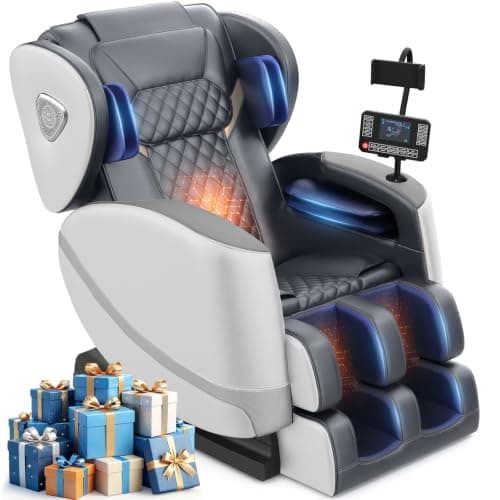
Our FURNIMAT massage chair review of the £470 zero gravity model: 14 fixed nodes, 8 airbags, heat and 165 degree recline, plus a footrest that suits shorter users.
Best Exercise is a participant in the Amazon EU Associates Programme, an affiliate advertising programme designed to provide a means for sites to earn advertising fees by advertising and linking to Amazon.co.uk. As an Amazon Associate we earn from qualifying purchases. This comes at no extra cost to you and never influences our independent reviews or rankings.