Recovery
Compression Boots Benefits: What the Research Actually Shows
The real benefits of compression boots, judged against the research: what helps (soreness, feeling recovered), what doesn't hold up, and who should avoid them.

By Mike Shilling, Recovery & Training Editor · Updated 26 September 2026
We may earn a commission from qualifying purchases made through links on this page, at no extra cost to you. This never affects our ratings.
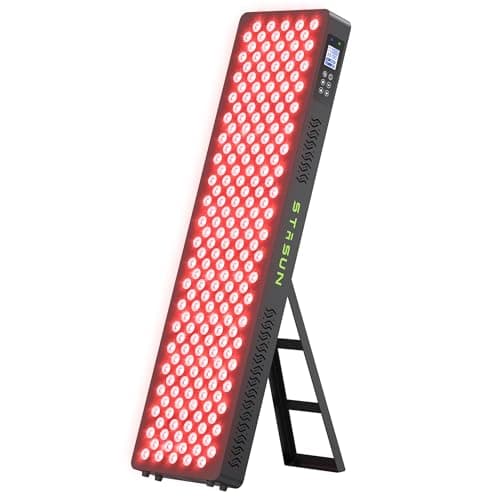
STASUN's panel lands in the gap between two rivals we've already covered. It's taller than a compact unit like the Hooga ULTRA360 and cheaper than the Nebula 1020W, and at £269.99 it claims more irradiance than either. That's the sales pitch in one sentence. The problem is that almost every number on the listing comes from STASUN alone, and when we went looking for a brand site to check them against, we didn't find one.
What you get, according to the Amazon UK listing: 210 dual chip LEDs running 660nm red and 850nm near infrared, three modes (red, near infrared, or both), an adjustable back stand so the panel tilts, and a body of roughly 85 x 22 x 6 cm. The listing calls it "four-spectrum", although it only names those two wavelengths, so we've reviewed it as a two band panel.
How we review
This review is based on the Amazon UK listing, our own spec research, the published research on photobiomodulation, and comparison with the red light panels we've already covered. We haven't used this panel for months ourselves and we haven't measured it with a meter, so every output figure here is STASUN's own claim and we've labelled it that way.
The buyer this suits has a budget under £300 and wants coverage of a large area, typically thighs and lower back after leg day, without paying Nebula money. An 85cm panel standing a foot or so away covers most of your torso or both legs in one go, which a laptop sized unit can't. If that's you and you're comfortable buying from a brand you can't research, it's a sensible gamble.
If you want a panel whose numbers you can trust, look elsewhere. Nebula and Hooga both publish irradiance at more than one distance and name their real power draw. STASUN does neither, and that gap matters more than the £40 to £80 you'd save.
Check STASUN panel price on Amazon£269.99Start with the wattage, because it's the biggest figure on the box and the least useful. 210 LEDs at a nominal 5W each comes to 1,050W, and that's almost certainly the whole calculation. Panels don't run their chips at full rating; they'd overheat and die early. Our Nebula review found that brand's 1020W panel actually drawing 288W, and Hooga's 360W unit draws 116.4W. STASUN's real draw is probably far below 1050W too, but it doesn't publish one, so we won't guess.
Irradiance is the figure that decides whether a panel does anything. STASUN claims output "exceeding 167.4 mW/cm²" at 3 inches. Hooga publishes 159 mW/cm2 at the same distance, so STASUN is claiming a little more from a panel with nearly three times as many LEDs spread over a much larger face. That's plausible. It's also unchecked, and 3 inches is a distance that flatters every panel; with something 85cm tall you'll usually stand 15 to 30cm back, where output falls away substantially. Nebula gives figures at 6 and 12 inches. STASUN gives you one number and asks you to trust it.
Then there's the line that 10 minutes with this panel equals 20 minutes with other devices. Dose is irradiance at your skin multiplied by time, so the claim only holds against a panel delivering exactly half the output at the same distance. Against the Hooga, on STASUN's own figures, it's nowhere near true.
| LEDs | 210 dual chip |
|---|---|
| Wavelengths | 660nm red and 850nm near infrared |
| Modes | Red only, near infrared only, combined |
| Claimed irradiance | Over 167.4 mW/cm2 at 3in / 7.6cm (STASUN figure) |
| LED power rating | 1050 W (nominal, not power draw) |
| Actual power draw | Not published |
| Dimensions | Approx 85 x 22 x 6 cm |
| Stand | Adjustable back stand for tilting |
| Timer, flicker, EMF | Not stated in the listing |
| Price | £269.99 (third party seller) |
The mechanism isn't in serious dispute. Red and near infrared light gets absorbed by cytochrome c oxidase in the mitochondria, which nudges energy production and local blood flow; the review of proposed photobiomodulation mechanisms sets out the pathway. Whether that turns into better recovery after training is a narrower question with a more mixed answer.
A 2025 meta-analysis of photomodulation therapy for DOMS pooled controlled trials using 660 to 950nm light and found a moderate reduction in soreness at 72 and 96 hours and a large improvement in muscle strength at 24 and 48 hours. Only four of the 14 included studies had data good enough to pool, though, and most applied light to a handful of points on the muscle rather than bathing it from a panel. Not every trial is positive either: a randomised, placebo controlled crossover study of 60 students given 808nm laser to the quads for 10 minutes before exercise found no effect on strength or on recovery after fatigue.
Our read is that light after training probably takes the edge off soreness for some people, it's a modest effect, and pre workout sessions have weaker support. The STASUN's separate 850nm mode is the part that lines up best with those studies. For the fuller picture, see our guide to red light therapy for recovery.
Don't chase brightness. Low level light follows a biphasic dose response: benefit climbs to a peak and then drops, so twice the time isn't twice the result. If STASUN's figure is anywhere near accurate, standing 15 to 30cm away for around 10 minutes per side is plenty, and you can go shorter up close. Wear goggles if your face is near the panel.
The back stand is a nice touch. Tilted on the floor, it angles the beam up at your legs or lower back while you sit or lie, which is easier than hanging a panel off a door. On the other hand, at 22cm wide you'll get the same strip shaped beam we flagged on the Nebula, so arms and outer thighs sit at the edge and may need a second pass.
With no published timer in the listing, set one on your phone. That's a small niggle but it's the kind of detail a brand with a proper spec sheet would answer.
At £269.99 this is the cheapest of the large panels we've looked at. The Hooga, at around £307, is brighter on paper at 6 inches than most rivals and carries a 3 year warranty, but it's a small, targeted panel. The Nebula 1020W costs more (£349.99 on Amazon UK in late September 2026) and gives you 104cm of height with published figures at two distances and a stated 288W draw. STASUN sits between them on size and undercuts both on price.
What you give up for that saving is certainty. There's no brand site we could find, no measured power draw, one irradiance number at one close distance, and a seller you'll only know through Amazon. For some buyers that's a fair trade for £40 to £80 back in their pocket; for others it's a reason to spend more. If you're still weighing up heat against light, our piece on infrared sauna benefits covers the other half of the "infrared recovery" market, and the recovery section puts both alongside cold water and compression.
See today's STASUN panel priceNo. The figure lines up with 210 LEDs multiplied by a nominal 5W chip rating, which is how nearly every panel in this market arrives at its headline number. Real wall draw on panels like this is usually a fraction of the rated figure, and STASUN doesn't publish a measured draw, so we can't give you one. Irradiance at a stated distance tells you far more.
On paper it's strong, a touch above the 159 mW/cm2 Hooga publishes at the same distance. But it's one reading at close range, it comes from the listing rather than an independent test, and there's no figure at 6 or 12 inches, which are the distances most people actually use with a large panel. Treat it as a claim, not a spec.
Not as a general rule. Dose depends on the irradiance you actually receive at your chosen distance multiplied by time, so the comparison only holds against a panel exactly half as bright at the same distance. Light therapy also has a biphasic dose response, so more light past a certain point doesn't help and can reduce the effect.
You can run the 660nm red alone, the 850nm near infrared alone, or both together. Red is absorbed nearer the surface and suits skin; near infrared travels deeper and is the band most recovery studies have used on muscle. Being able to run near infrared on its own is useful for treating a knee or lower back without flooding the room in red.
At the time of writing it's listed on Amazon UK and sold by a third party seller called Langx lights rather than by Amazon or a UK brand shop. Amazon's own returns window still applies, but check warranty terms with the seller before you buy, because we couldn't find a STASUN support site to fall back on.
The real benefits of compression boots, judged against the research: what helps (soreness, feeling recovered), what doesn't hold up, and who should avoid them.
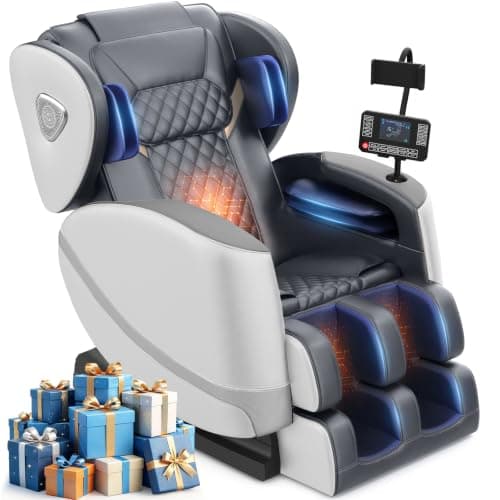
Our FURNIMAT massage chair review of the £470 zero gravity model: 14 fixed nodes, 8 airbags, heat and 165 degree recline, plus a footrest that suits shorter users.
Infrared sauna vs traditional sauna compared: heat, sweat, session length, what the research supports, home costs and safety, plus which one to pick and why.
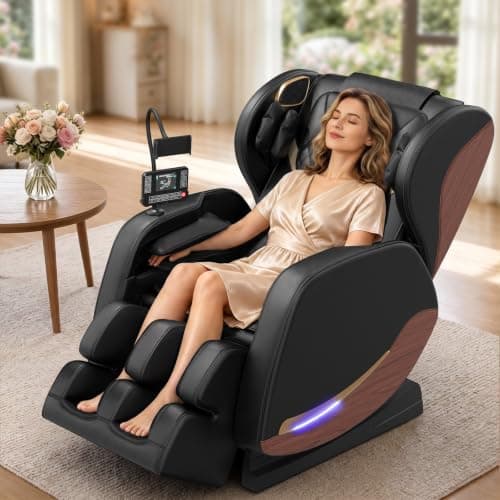
Our yewglen massage chair review: 14 fixed rollers, 8 airbags, back and leg heat, 165 degree recline and a 175cm height cap, compared with rival budget chairs.
Best Exercise is a participant in the Amazon EU Associates Programme, an affiliate advertising programme designed to provide a means for sites to earn advertising fees by advertising and linking to Amazon.co.uk. As an Amazon Associate we earn from qualifying purchases. This comes at no extra cost to you and never influences our independent reviews or rankings.