Recovery
How to Use a Portable Steam Sauna: Setup, Session Time and Safety
How to use a portable steam sauna tent at home: setup, which water to use, pre-heat time, how long to sit in it, cleaning to stop mould, and who should check with a GP first.

By Mike Shilling, Recovery & Training Editor · Updated 15 September 2026
Everyone doing the work knows the protein target and the training split. Far fewer people can tell you how much sleep they got last week, which is odd, because sleep is the only recovery tool with evidence behind it that also happens to be free. Ice baths, massage guns and compression boots all sit somewhere between mildly useful and placebo. Sleep is not in that conversation; when it goes, measurable things go with it.
This guide covers what actually changes in a muscle when you sleep badly, how much you need, and the handful of behaviour changes worth more than anything you can buy.
The strength effect is real and it's been measured repeatedly. A 2025 systematic review pulling together the sleep restriction literature found that losing sleep reduces muscle strength, with the effect showing up across different testing protocols (implications of sleep loss or sleep deprivation on muscle strength). You're weaker, and not by a trivial margin.
Underneath that there's a metabolic story. Work on acute sleep deprivation found a fall in muscle protein synthesis alongside an unfavourable shift in the hormonal environment, with cortisol up and testosterone down (the effect of acute sleep deprivation on skeletal muscle protein synthesis and the hormonal environment). Put plainly: after a bad night your body is less able to turn the protein you ate and the training you did into new tissue.
The applied picture in sport is consistent with all that. Reviews of sleep in professional athletes link short or fragmented sleep with worse performance and higher injury risk (sleep and performance in professional athletes). Tired athletes get hurt more. Coaches have known it for decades; the data caught up.
The uncomfortable summary
If you sleep six hours a night and take creatine, a pre-workout and 2.2g of protein per kilo, you are optimising the small stuff while ignoring the large stuff. Adding 60 minutes of sleep will do more for your training than any supplement in your cupboard.
Seven to nine hours covers most adults. People training hard sit nearer the top of that band, and some endurance athletes in heavy blocks need more than nine. There's individual variation, but almost nobody who claims to thrive on five hours actually does; they've just normalised how they feel.
Judge it weekly rather than nightly. Forty-nine hours across seven nights is the target if you need seven a night, and the distribution matters less than people think, so a short Thursday balanced by a long Saturday is fine. What doesn't work is a chronic four-hour deficit every week that you promise to repay later.
Two practical markers, since most people won't track anything: if you need an alarm to wake up every single morning, and if you fall asleep within five minutes of your head hitting the pillow, you're probably under-slept.
Don't cancel the session. Do change it. After a bad night, keep the movement patterns and cut the intensity or the volume: drop the top set, stay a couple of reps further from failure, skip the sprint work. Technical work under fatigue is where injuries come from, so leave heavy singles and anything explosive for a day when you're not running on five hours.
If bad nights stack up for a week or more, that's a signal for a deload week rather than a hero effort. The training stress you can absorb is a function of your recovery capacity, and sleep is most of that capacity.
Fix the timing before anything else. Same bed time and same wake time, including weekends, does more than any other single change. Your circadian rhythm responds to consistency, not intentions.
Get light in the morning and cut it at night. Ten minutes outdoors within an hour of waking anchors the rhythm. In the evening, dim the room rather than relying on a phone's night mode, which mostly changes the colour and not the brightness.
Cool and dark. Around 16 to 18 degrees suits most people, which is cooler than the average British bedroom. Blackout curtains or a decent eye mask are cheap and effective.
Move the caffeine cut-off earlier than feels necessary. Caffeine's half-life runs roughly five to six hours, so a 4pm coffee still has a quarter of its dose working at midnight. Two o'clock is a safer line for most people, and the NHS advice on sleep and tiredness covers the rest of the basics well.
Don't train hard immediately before bed if you can help it. A late session raises core temperature and sympathetic drive when you want both falling. If your only training window is 9pm, that's better than not training, and a longer cool-down helps.
Alcohol is the one people defend. It gets you to sleep faster and then fragments the second half of the night, which is where a lot of recovery happens. Two glasses of wine will show up in any tracker you own.
For the kit end of this, a weighted blanket helps some people settle, and a sauna session a couple of hours before bed produces a temperature drop afterwards that many find makes falling asleep easier.
Once sleep is handled, the rest of the recovery stack is worth something. Not before. If you're curious about tracking the relationship between your sleep and your readiness to train, our WHOOP Peak review covers the most detailed option, with the caveat that it costs £229 a year.
For the soreness side, how long DOMS lasts sets sensible expectations, and foam rolling before or after a workout covers what that tool can and cannot do. Contrast therapy has its uses too, mostly for how it makes you feel rather than what it does to the muscle. On the supplement side cherry and theanine are the two with sleep trials worth reading, and in both cases the effect is measured in minutes rather than hours. Our picks for tart cherry juice in the UK explain what the research actually asked people to drink, and our best L-theanine supplement guide covers the 200mg dose most of the sleep studies used.
None of them replace a seventh hour.
Seven to nine hours for most adults, and athletes in heavy training often need the upper end or more. What matters is total sleep across the week rather than any single night, so a 5 hour Tuesday is survivable if it is not the pattern.
No. A single short night costs you some strength and a lot of willingness, and you can still train usefully. Repeated short nights are the problem, because the deficit accumulates and both strength and recovery decline with it.
Sleep does not build muscle by itself; training and protein do that. What sleep does is protect the hormonal and metabolic conditions muscle building depends on. Cut it short and muscle protein synthesis falls while the stress hormone picture worsens, so the same training produces less.
Yes, if you can. A 20 to 30 minute nap avoids the grogginess of waking from deep sleep and adds to your daily total. Anything over 90 minutes, or a nap after about 4pm, tends to make that night's sleep worse.
They help if you act on them and hurt if you obsess. A tracker is good at showing you the pattern across weeks, which is the thing that matters, and bad at grading any single night accurately. If a poor score makes you anxious at bedtime, stop looking at it.
Fix the basics first, since consistent bed and wake times, a dark cool room and less late caffeine beat every supplement on the market. If you are genuinely low in magnesium, correcting that can help; taking more when you are not deficient does very little.
How to use a portable steam sauna tent at home: setup, which water to use, pre-heat time, how long to sit in it, cleaning to stop mould, and who should check with a GP first.
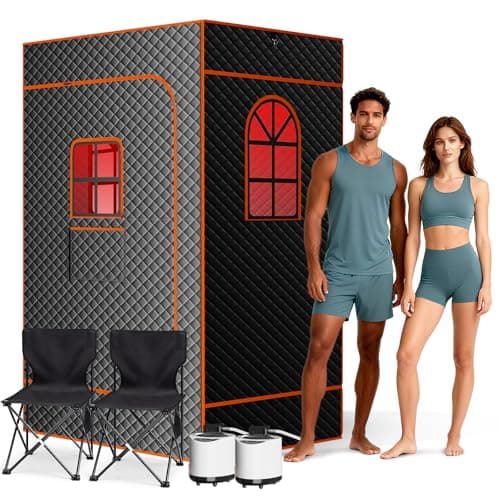
An honest Obqer 2 person portable steam sauna review: two 1200W generators, 9 heat levels, a 120 x 90cm footprint and £212.99 price, compared with Manastin and SereneLife.
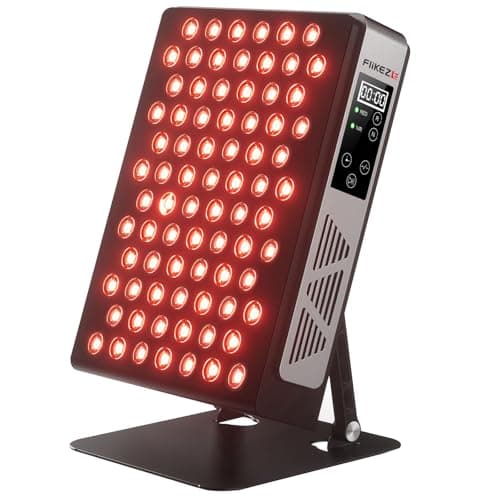
FliKEZE red light therapy review: 78 quad chip LEDs, 630 to 850nm, a 134 mW/cm² claim at 6 inches, five intensity levels and how it compares at £249.99.
How to use a red light therapy panel properly: the right distance and session time, how often, before or after training, eye safety and how to work out your dose.
Best Exercise is a participant in the Amazon EU Associates Programme, an affiliate advertising programme designed to provide a means for sites to earn advertising fees by advertising and linking to Amazon.co.uk. As an Amazon Associate we earn from qualifying purchases. This comes at no extra cost to you and never influences our independent reviews or rankings.