Recovery
Samsung Galaxy Watch Ultra2 Review: Bigger Battery, Same Android Catch
Samsung Galaxy Watch Ultra2 review for UK buyers: 800 mAh battery, 60 hours, 5,000 nit screen and 40m dive rating for around £549. Android only.

By Mike Shilling, Recovery & Training Editor · Updated 12 November 2026
We may earn a commission from qualifying purchases made through links on this page, at no extra cost to you. This never affects our ratings.
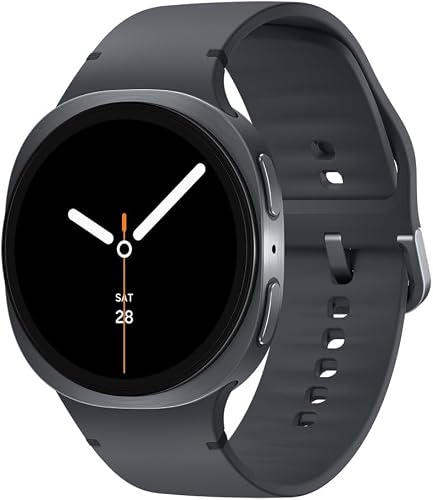
The Galaxy Watch8 is the Android smartwatch to buy at around £226, on one condition: you're happy to charge it every day. Samsung squeezed a 3,000 nit sapphire screen, dual-frequency GPS and an ECG sensor into a case 8.6mm thick, then added sleep coaching and a running programme that cost nothing extra. What it can't do is last. Samsung's own figure is 30 hours with the always-on display, which is about a tenth of what a Garmin vívoactive 6 manages.
Two more limits matter before you spend anything. The watch won't pair with an iPhone at all, and the most medical features (ECG, blood pressure) only switch on if your phone is a Samsung Galaxy.
Check the Galaxy Watch8 (44mm) price on Amazonaround £226How we review
This review is based on Samsung's published specifications and UK product page (checked on 12 November 2026), the Amazon UK listing and peer-reviewed research on Galaxy Watch sensors. We haven't tested this watch ourselves. Battery and health figures are Samsung's claims unless we say otherwise, and the accuracy studies we cite used the older Galaxy Watch6 and Watch7, because nobody has published one on the Watch8 yet.
Samsung phone owners first. If there's a Galaxy S or A series phone in your pocket, every feature on the box works, setup takes minutes, and £226 is less than the Pixel Watch or any current Apple Watch with ECG. People with another brand of Android phone still get a very good fitness watch, minus three health checks.
It's a bad fit for iPhone users (it simply won't connect), for anyone training towards a marathon who wants a week of battery, and for people who know they'll forget a daily charge. If that last one is you, a dead watch tracks nothing, so buy something from our best Garmin watch guide instead.
Samsung calls the shape a cushion: a round display set in a squarer aluminium frame with rounded corners. You'll either like that or you won't, and photos on the listing tell you more than I can. The numbers are easier to judge. The 44mm case measures 43.7 x 46 x 8.6mm and weighs 34g before the strap, and Samsung's UK page describes it as 11 percent thinner than the Galaxy Watch7.
Thin matters more than it sounds on a watch you're meant to wear to bed. Most of what the Watch8 does well (Energy Score, Bedtime Guidance, the overnight heart checks) depends on it staying on your wrist through the night, and a slim, light case is what makes that tolerable.
The screen is the strongest part of the hardware. It's a 1.47in panel at 480 x 480 pixels under sapphire crystal, peaking at 3,000 nits, which matches the Pixel Watch 5 and beats the 2,000 nits Apple quotes for the Series 12. Outdoors in direct sun you'll read your pace without shading the watch with your other hand.
| Case | 43.7 x 46 x 8.6 mm, 34.0 g without band (also sold in 40 mm) |
|---|---|
| Display | 1.47in Super AMOLED, 480 x 480, sapphire crystal, 3,000 nits peak |
| Processor and storage | Exynos W1000 (5 core, 3nm), 2 GB memory, 32 GB storage |
| Battery | 435 mAh; up to 30 hours always-on display, up to 40 hours with it off |
| Charging | Wireless fast charging (WPC-based) |
| Sensors | BioActive Sensor (optical heart rate, ECG, body composition), temperature, barometer |
| GPS | Dual-frequency L1+L5 (GPS, Glonass, Beidou, Galileo) |
| Durability | 5ATM, IP68, MIL-STD-810H |
| Connectivity | Bluetooth 5.3, Wi-Fi 2.4 and 5 GHz, NFC |
| Software | Wear OS 6 with One UI 8 Watch |
| Requires | Android 11.0 or above with at least 1.5 GB of memory; no iPhone support |
| Amazon UK price | Around £226 at the time of writing |
Figures come from Samsung's UK product page and its launch specification sheet. One discrepancy: the launch sheet says Android 12 or higher, while the UK page says Android 11. If your phone is still on Android 11, check before you order.
Thirty hours with the always-on display, forty without. Samsung says both come from internal lab tests of typical use, and "typical" rarely includes an hour of GPS running followed by a full night of sleep tracking. Realistically this is a charge-every-day watch, or every day and a half if you turn the always-on display off and skip a workout.
How much should that bother you? It depends on what you're comparing against. Next to an Apple Watch Series 12 at 24 hours it's slightly better, and next to the Pixel Watch 5's 40 hours with the display on it's slightly worse. Against Garmin there's no contest: the vívoactive 6 is rated for 11 days and the Venu 4 for 12.
The awkward part is sleep. A watch whose best features run overnight can't charge overnight, so you need a new habit: on the puck while you shower and dress, back on before you leave. People who manage that routine get on fine with it. Those who don't end up with gaps in their sleep data and a watch that dies at 4pm.
Energy Score is Samsung's daily readiness number. It blends your sleep, recent activity and overnight heart signals into one figure each morning, much like Garmin's Body Battery or the Readiness score Apple added this year. Bedtime Guidance builds on it: after three nights of sleep data the watch suggests when to go to bed, based on your body clock and how long you've been awake. Neither needs a subscription, which is a real advantage over Fitbit and WHOOP. If you want to know why sleep timing deserves this much attention from a training point of view, our guide to sleep and muscle recovery covers the evidence.
Then there's the antioxidant index, the feature Samsung leads with on the Amazon listing. You take the watch off, press your thumb against the back for five seconds, and a light sensor estimates the carotenoids stored in your skin. Carotenoids come from fruit and vegetables, so the score is a rough proxy for diet. Samsung classes it as general wellness, and we couldn't find an independent, peer-reviewed validation of the watch's reading. I'd treat it as a curiosity. The same goes for the overnight AGEs index and Vascular Load: interesting trends, no clinical weight.
ECG, blood pressure and the CE-marked sleep apnoea risk check all run through the Samsung Health Monitor app. Samsung only offers that app on Galaxy phones, so pairing the Watch8 with a Pixel, Motorola or OnePlus leaves that hardware idle. Blood pressure also needs calibrating against a proper cuff before the watch will give readings. If those features are the reason you're buying, own a Galaxy phone or buy a different watch.
Running Coach is the best new training feature. You run a level test, the watch assigns you a level, and it builds a programme toward a target distance with live cues during each session. For someone moving from 5K towards 10K that's useful structure for free. Experienced runners who already plan by heart rate zone will get less from it; our heart rate zone training guide explains that approach.
How accurate is the heart rate data underneath? There's no published study on the Watch8, so the best evidence is from its predecessors. In a 2026 validation, 55 healthy adults ran a maximal treadmill test wearing a Galaxy Watch6 and a Polar H10 chest strap. The watch read low by an average of 2.67 beats per minute, with median errors of 1 to 3 bpm, but the limits of agreement ran from roughly 17 below to 12 above the strap (Galaxy Watch heart rate validation study). The authors judged it valid for groups while noting large differences between individuals. In plain terms, it's good enough for most people's steady runs, and you can't know in advance whether you're one of the wrists it struggles with.
Calorie figures deserve more caution. A separate study had 148 adults do intermittent treadmill running with a Galaxy Watch6 and Watch7 against a portable gas analyser, and found mean absolute errors of about 10 to 13 percent, which the researchers called moderate validity (energy expenditure study). Don't plan your eating around the calorie burn on any wrist device.
If you lift, do short intervals or just want clean numbers, pair a chest strap from our heart rate monitor guide.
GPS is dual-frequency L1+L5 across four satellite systems. That's the same class of chipset Garmin keeps for watches costing a good deal more, and it should hold a straighter line between tall buildings than single-band GPS does. I can't point you to independent track tests of this model, so take that as a spec advantage and not a measured one.
The Google Pixel Watch 5 is the closest rival: also Android only, also dual-frequency GPS and a 3,000 nit screen, with a 40 hour always-on battery in the 45mm size. It costs around £329 and its ECG works without a Samsung phone, which makes it the better pick for Pixel owners. Google's coaching features sit behind a subscription after a trial, though, and Samsung's don't.
If battery is what's putting you off, the Garmin vívoactive 6 lasts 11 days and pairs with Android or iPhone. You lose ECG, dual-frequency GPS and most of the smartwatch apps. The older Garmin vívoactive 5 does the same job at around £149.
iPhone owners can stop here. The Apple Watch Series 12 is the equivalent watch on that side of the fence, at nearly twice the price.
And the Galaxy Watch9? Samsung launched it this summer, and launch coverage describes the 44mm model as near-identical in screen, case and battery, with a new processor and software. We haven't reviewed it, but on that evidence the discounted Watch8 looks like the better buy while stock lasts.
See today's Galaxy Watch8 price on AmazonYes, if you own an Android phone, and especially a Samsung one. Around £226 for the 44mm Bluetooth model buys a 3,000 nit sapphire display, dual-frequency GPS, sleep and Energy Score tracking and a guided running programme with no subscription. It's a poor choice if you want several days between charges or you use an iPhone.
No. Samsung's UK page says the Galaxy Watch8 has to be paired with an Android smartphone running Android 11.0 or above with at least 1.5GB of memory, and the Galaxy Wearable app comes from Google Play. There's no iOS app, so iPhone owners should look at an Apple Watch or a Garmin.
Samsung rates the 44mm model's 435mAh battery at up to 30 hours with the always-on display and up to 40 hours with it switched off. Those are Samsung's internal lab figures for typical use. GPS workouts and overnight sleep tracking pull that down, so plan on charging once a day.
Not for most of it. Workouts, GPS, sleep, Energy Score, Running Coach, payments and notifications work with other Android phones. ECG, blood pressure and the sleep apnoea check run through the Samsung Health Monitor app, which Samsung only offers on Galaxy phones, so owners of a Pixel or OnePlus lose those three.
Nobody has published a peer-reviewed validation of the Watch8 sensor yet. A 2026 study of the earlier Galaxy Watch6 found it read an average of 2.67 beats per minute below a Polar H10 chest strap during a maximal treadmill test, with median errors of 1 to 3 beats per minute but wide variation between individuals. That's fine for zone training on steady runs and less dependable for any single person's hard intervals.
You take the watch off, hold your thumb on the rear sensor for five seconds, and it estimates the carotenoid level in your skin, which reflects how much fruit and veg you've been eating. Samsung calls it a first for a smartwatch and labels it a general wellness feature. We couldn't find independent research validating the reading, so treat it as a nudge to eat more plants and nothing firmer.
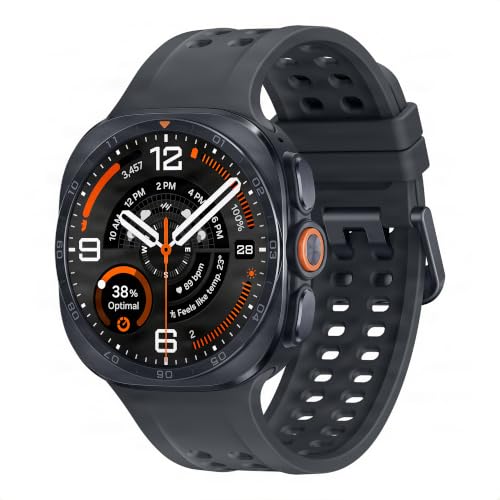
Samsung Galaxy Watch Ultra2 review for UK buyers: 800 mAh battery, 60 hours, 5,000 nit screen and 40m dive rating for around £549. Android only.
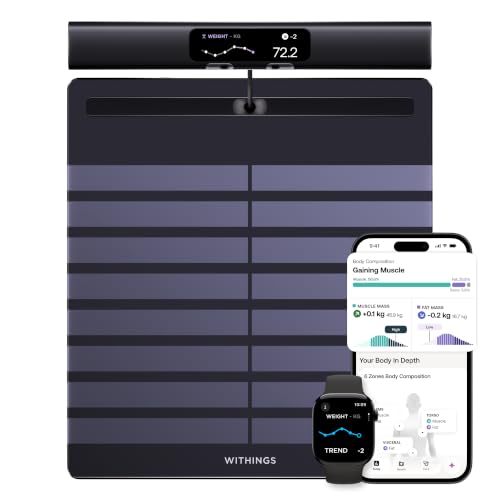
Withings BodyScan 2 review for UK buyers: 12 electrodes, 6-lead ECG and segmental body fat, plus the Withings+ cost and what the DEXA claim really means.
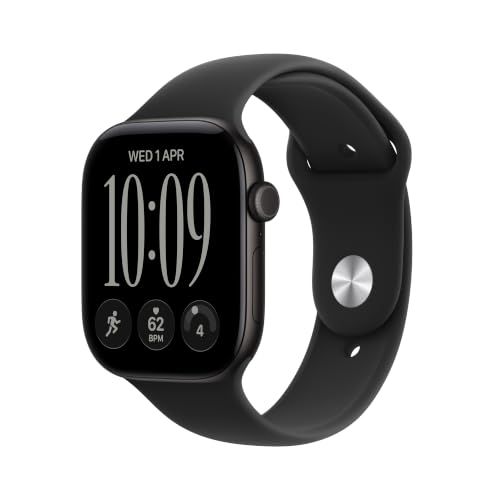
Apple Watch Series 12 review for UK buyers: Readiness score, HRV every five minutes, Ceramic Shield 2 and the 24 hour battery that still loses to Garmin.
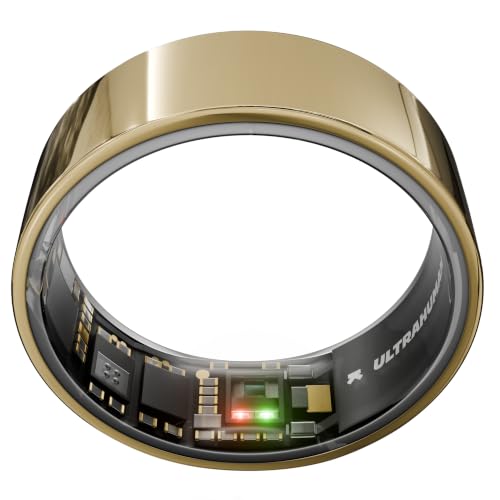
Ultrahuman Ring AIR review for UK buyers: £199 with no subscription, 4 to 6 day battery, sizing advice, accuracy evidence and a two-year cost check vs Oura.
Best Exercise is a participant in the Amazon EU Associates Programme, an affiliate advertising programme designed to provide a means for sites to earn advertising fees by advertising and linking to Amazon.co.uk. As an Amazon Associate we earn from qualifying purchases. This comes at no extra cost to you and never influences our independent reviews or rankings.