Recovery
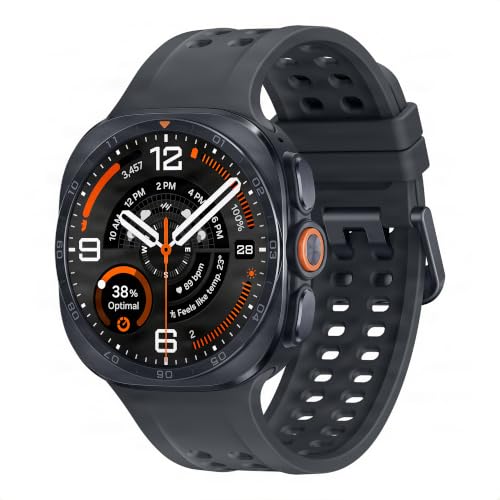
Samsung Galaxy Watch Ultra2 Review: Bigger Battery, Same Android Catch
Samsung Galaxy Watch Ultra2 review for UK buyers: 800 mAh battery, 60 hours, 5,000 nit screen and 40m dive rating for around £549. Android only.

By Mike Shilling, Recovery & Training Editor · Updated 12 November 2026
We may earn a commission from qualifying purchases made through links on this page, at no extra cost to you. This never affects our ratings.
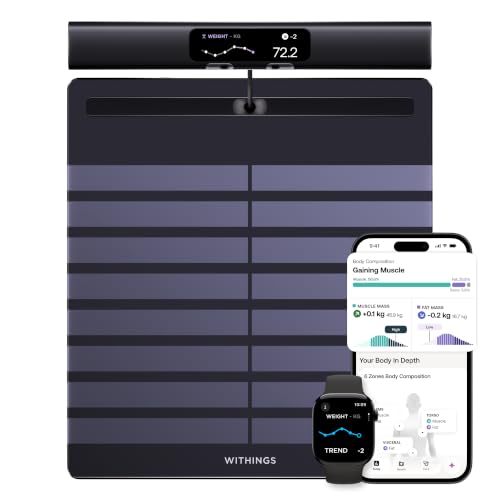
The Withings BodyScan 2 is the most capable bathroom scale on sale in the UK, and most people shouldn't buy it. At around £450 at the time of writing it costs roughly twice as much as the Withings BodyFit, which uses the same hand-and-foot body composition system, so the extra £220 is really paying for a 6-lead ECG, a blood oxygen sensor and a screen in the handle. If those heart checks matter to you, nothing else that sits on a bathroom floor does as much. If you want to track weight and body fat while you cut or bulk, you're overpaying.
There's a second cost to know about before you order. Withings keeps its newest scores, Heart Age and Glucose Resilience among them, behind a Withings+ membership at £8.95 a month or £89.50 a year, and Glucose Resilience is still marked "coming soon" on Withings' own UK page.
Check the Withings BodyScan 2 price on Amazonaround £450How we review
This review is based on Withings' published UK specifications, the Amazon UK listing and peer-reviewed research on how well consumer impedance scales agree with DEXA. We haven't tested this scale ourselves, and no independent validation of the BodyScan 2 has been published yet, so we treat Withings' accuracy figures as manufacturer claims and say so each time.
Buy it if you're over 40 or have a family history of heart trouble, you already weigh yourself most mornings, and you like the idea of an ECG and arterial stiffness reading arriving without any extra effort. It also suits people on GLP-1 weight loss drugs who want to see whether the weight coming off is fat or muscle, and where; Withings pitches the six-zone lean mass tracking squarely at them.
Skip it if your budget is tight or your interest is mostly gym progress. A lifter tracking a 12-week cut needs a consistent trend line, and a scale at a fifth of the price gives you that. Our best smart scales guide covers the cheaper end.
Withings has built this like a piece of furniture. The platform is a full-size sheet of ITO glass on a reinforced aluminium chassis, measuring 325 x 357 x 18.5mm and weighing 3.4kg, which is heavy for a scale and deliberately so. A retractable handle pulls up from the front edge and locks automatically, with haptic buzzes to tell you when to hold still.
That handle is the point of the whole design. Eight electrodes sit in the glass under your feet and four stainless steel ones sit in the handle, giving 12 in total, and the handle electrodes double as buttons for moving through the menus. Results show on a 3.2 inch colour LCD built into the handle itself, which fixes the oldest complaint about smart scales: reading tiny numbers past your own toes.
| Electrodes | 12 (8 ITO in the platform, 4 stainless steel in the handle) |
|---|---|
| Body composition | Multi-frequency bioimpedance spectroscopy, 13 frequencies up to 800 kHz, 6 body zones |
| Heart | 6-lead ECG, AFib detection, standing heart rate, pulse wave velocity, vascular age |
| Other sensors | Blood oxygen (SpO2) via PPG in the handle, nerve health score |
| Weighing range | 5 kg to 200 kg, 50 g graduation |
| Display | 3.2 inch colour LCD in the handle, 640 x 172 pixels |
| Dimensions and weight | 325 x 357 x 18.5 mm, 3.4 kg |
| Build | Aluminium chassis, tempered ITO glass platform |
| Battery | Rechargeable via USB-C, up to 1 year claimed |
| Connectivity | Wi-Fi 802.11 b/g/n (Bluetooth listed as coming soon) |
| Users | Up to 8, recognised automatically |
| Phone requirements | iOS 18 or later, Android 12 or later |
| Warranty | 2 years |
All figures come from Withings' UK product page, apart from the phone requirements, which are on the Amazon UK listing.
Withings says fat mass readings "correlate 99% with clinical DEXA scans". Read the footnote and it's an internal comparative study, described on the UK page as being between Body Scan measurements and DEXA, with the line that individual results may vary. Nobody outside the company has published a check on the BodyScan 2.
Correlation is also the kindest statistic Withings could have chosen. It tells you that people with more fat get higher readings, which isn't hard when the scale already knows your exact weight. It doesn't tell you how far your own number could sit from the truth, and that's the bit that matters when you're staring at 21.4 percent on a Tuesday morning.
Published research shows the gap clearly. A study of 106 adults compared four consumer impedance devices with DEXA and MRI and found body fat correlations of r² 0.92 to 0.96 for the better ones, yet the 95 percent limits of agreement for the best device, the only one that wasn't a foot-to-foot scale, still ran from about minus 6.6 to plus 4.6 percentage points of body fat (Bosy-Westphal and colleagues, 2008). For the foot-to-foot scales those limits stretched as wide as minus 14.5 to plus 8.6. So a device can correlate beautifully and still miss an individual by several points.
The same paper is good news for the BodyScan 2's design, though. Its authors concluded that tetrapolar electrode layouts, the family a hand-and-foot scale belongs to, should be preferred for individual use over foot-to-foot ones, which send current up one leg and down the other and largely guess at your torso. Withings' older foot-only Body Cardio shows what that guessing costs: in a 2021 French hospital study it weighed people to within a median 0.25kg of the reference, but its median fat mass error against DEXA was 3.7kg, and the authors concluded that smart scales "are not accurate for body composition" (JMIR mHealth and uHealth, 2021).
Where does that leave a £450 scale with 12 electrodes and 13 frequencies? Probably better than anything in those studies, and still unproven. Use it the way every impedance scale should be used: same time each morning, before eating and after the loo, and watch the four-week trend. If your fat mass line drops 2kg while muscle holds steady, you can believe the direction even if the absolute figure is a few points out.
Here the BodyScan 2 has no competition. Because you're touching electrodes with both hands and both feet, it can record a 6-lead ECG, where a watch manages a single lead. Withings pairs that with its ECG Monitor 2 software to detect atrial fibrillation; the company describes the software as a CE-marked medical device, for adults only, and says it isn't recommended for people with other known arrhythmias.
Each weigh-in also measures pulse wave velocity, the speed at which the pressure wave from a heartbeat travels along your arteries. Stiffer arteries carry it faster, and Withings turns the result into a "vascular age". A PPG sensor in the handle adds a blood oxygen reading, and a nerve health score looks for early signs of the nerve damage that can come with diabetes.
The blood pressure feature needs a caveat that the Amazon listing doesn't make obvious. The scale can't measure blood pressure. It looks for patterns in your other readings that suggest hypertension and nudges you to check. In the UK Withings calls it Blood Pressure Insights and states it hasn't received medical device certification here, so it's offered as a wellness feature only. If it flags something, the NHS advice is to get a proper reading from a pharmacy, your GP surgery or a validated home monitor.
None of this replaces a doctor, and an ECG taken on a bathroom scale is a prompt to get checked, not a diagnosis.
Withings says "your data stays free", and the basics do: weight, segmental fat and muscle, visceral fat index, ECG recordings and vascular age all appear in the app without paying. What Withings+ adds is interpretation. Heart Age and Glucose Resilience are subscriber-only, as are the BodyPath goal and calorie tracker, Health Trajectory, Body Profile and cardiologist reviews of your ECGs.
UK pricing is £8.95 a month or £89.50 a year, with the first month free for new subscribers. Over three years that's £268.50 on top of the scale, taking the total past £700. I'd start without it. The measurements that justify the hardware don't need the membership, and you can add it later if the scores tempt you.
A few advertised features weren't finished at the time of writing. Withings' own spec sheet lists Bluetooth as "coming soon" and says the pregnancy and eyes-closed modes "will be enabled shortly", while Glucose Resilience carries a "coming soon" tag. Buy it for what it does today.
The obvious one is the Withings BodyFit at around £230. It has an eight-electrode handle, the same 13 frequencies up to 800 kHz and the same six-zone fat and muscle breakdown, plus standing heart rate and vascular age. You give up the ECG, AFib detection, blood oxygen, the nerve score and the handle display. For anyone buying mainly for body composition, that's an easy saving of about £220.
If it's heart and recovery data you want all day and not once each morning, a wearable does a different job. The Apple Watch Series 12 takes a single-lead ECG on demand and tracks HRV overnight, the Oura Ring 5 is the least intrusive way to follow sleep and readiness, and the WHOOP Peak suits people who want strain and recovery scores with no screen. None of them weighs you or estimates body fat, which is why plenty of people end up with a wearable and a cheap scale.
And if all you need is a reliable weight trend with a body fat estimate, the picks in our smart scales guide start well under £100.
See the Withings BodyScan 2 on Amazonaround £450Only if you'll use the heart features. The 6-lead ECG, AFib detection, pulse wave velocity and blood oxygen reading are what separate it from the Withings BodyFit, which costs around £230 and has the same 13-frequency, six-zone body composition system. If you mainly want weight, body fat and muscle trends, the BodyFit is the better buy.
No, but you lose some features without it. Withings says your data stays free, and weight, body composition and the ECG work without paying. Heart Age, Glucose Resilience, the BodyPath goal and calorie tracker, Health Trajectory and cardiologist ECG check-ups sit behind Withings+, which costs £8.95 a month or £89.50 a year in the UK after a free first month.
Nobody independent has published a validation of it yet. Withings says fat mass correlated at 99 percent or better with DEXA in its own internal study, but a high correlation doesn't tell you how far an individual reading can be from the true figure. Published research on consumer impedance devices finds hand-and-foot designs like this one agree with DEXA better than foot-only scales, with individual errors of several percentage points still possible.
No. It doesn't have a cuff and it doesn't give a blood pressure reading. In the UK the feature is called Blood Pressure Insights and Withings says it's a wellness feature without medical device certification here. It looks for patterns that suggest high blood pressure and prompts you to check with a proper monitor.
Both have a handle and measure fat and muscle across six body zones using 13 frequencies. The BodyScan 2 adds the 6-lead ECG with AFib detection, pulse wave velocity, a blood oxygen sensor, a nerve health score, Blood Pressure Insights, a display in the handle and an aluminium frame. The BodyFit costs roughly half as much.
Withings lists a weighing range of 5kg to 200kg with 50g graduation, and the scale recognises up to 8 users automatically.
Samsung Galaxy Watch Ultra2 review for UK buyers: 800 mAh battery, 60 hours, 5,000 nit screen and 40m dive rating for around £549. Android only.
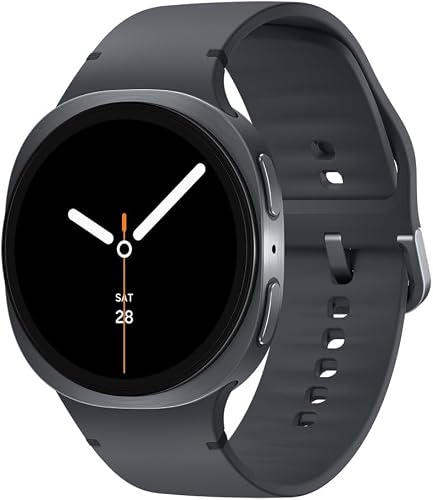
Samsung Galaxy Watch8 review for UK buyers: 8.6mm case, dual-frequency GPS, Energy Score and Running Coach for around £226, with a 30 to 40 hour battery.
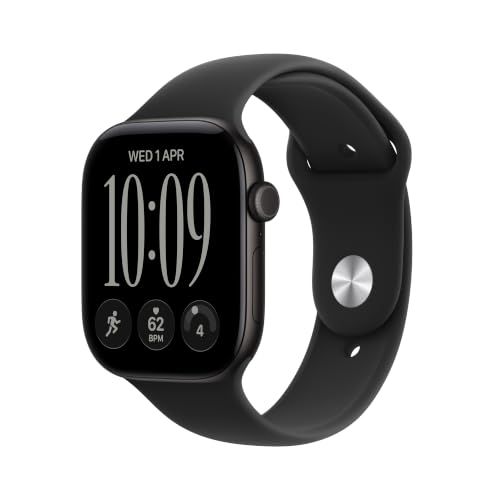
Apple Watch Series 12 review for UK buyers: Readiness score, HRV every five minutes, Ceramic Shield 2 and the 24 hour battery that still loses to Garmin.
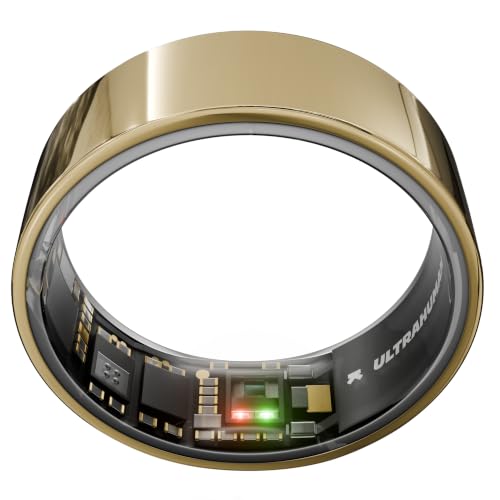
Ultrahuman Ring AIR review for UK buyers: £199 with no subscription, 4 to 6 day battery, sizing advice, accuracy evidence and a two-year cost check vs Oura.
Best Exercise is a participant in the Amazon EU Associates Programme, an affiliate advertising programme designed to provide a means for sites to earn advertising fees by advertising and linking to Amazon.co.uk. As an Amazon Associate we earn from qualifying purchases. This comes at no extra cost to you and never influences our independent reviews or rankings.