Recovery
Samsung Galaxy Watch8 Review: Slim, Sharp and Tied to Android
Samsung Galaxy Watch8 review for UK buyers: 8.6mm case, dual-frequency GPS, Energy Score and Running Coach for around £226, with a 30 to 40 hour battery.

By Mike Shilling, Recovery & Training Editor · Updated 12 November 2026
We may earn a commission from qualifying purchases made through links on this page, at no extra cost to you. This never affects our ratings.
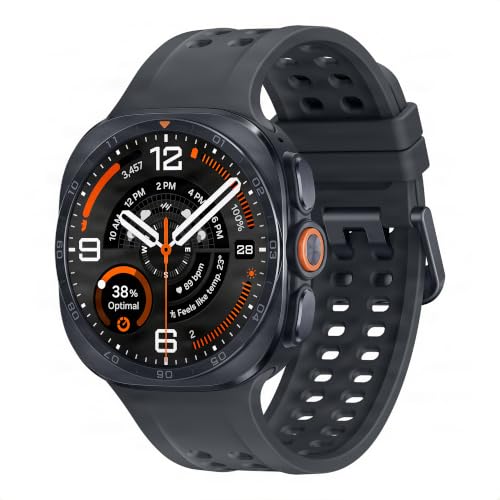
Buy the Samsung Galaxy Watch Ultra2 if you carry an Android phone and want one watch for trail runs, swims, work notifications and contactless payments. It costs around £549 at the time of writing, and for that you get the biggest battery Samsung has put in a watch, a screen rated at up to 5,000 nits and a proper dive certification. If you own an iPhone, stop here, because it won't pair.
The second catch is quieter. Samsung's 60 hour figure describes smartwatch use, and the GPS workout number on the same page is 20 hours. That's a big step for a Wear OS watch and still a long way behind the outdoor watches it's priced against.
Check the Galaxy Watch Ultra2 price on Amazonaround £549How we review
This review is based on Samsung's published UK specifications and footnotes, the Amazon UK listing, peer-reviewed research on wrist heart rate sensors and recurring themes in owner feedback. We haven't tested this watch ourselves; it only went on sale in August 2026. Battery, brightness and charging numbers are Samsung's own lab claims and we say so where nobody independent has checked them.
Samsung has aimed the Ultra2 at people who'd otherwise buy an Apple Watch Ultra but can't, because their phone is a Galaxy or a Pixel. It suits a runner or cyclist who trains five or six hours a week, swims or snorkels on holiday, and wants calls, maps, Spotify and Google Wallet on the same wrist. LTE is built into the model we're reviewing, so you can leave the phone at home on a run and still be reachable.
Two groups should look elsewhere. Anyone racing beyond roughly 15 hours will find the GPS battery too tight, and anyone with a small wrist has no second size to fall back on.
The cushion-shaped case carries over from the first Galaxy Watch Ultra, but Samsung has trimmed it. The UK spec sheet lists 47.4 x 47.1 x 10.7mm and 61.5g for the body, and Samsung says the Ultra2 is slimmer than its predecessor despite the battery growing from 590 to 800 mAh. For comparison, our Apple Watch Ultra 3 review lists that watch at 49mm and about 62g, so the two feel similar in weight while the Samsung sits a little lower on the wrist.
There are three buttons, including an orange Quick Button that Samsung has spaced out so you can find it in gloves. Hold it for five seconds and the watch sounds an 86 decibel siren, which Samsung says carries up to 180 metres.
Durability is the strongest part of the spec sheet. The body is titanium, and the watch carries IP69K, 10 ATM and MIL-STD-810H ratings plus the EN13319 standard for dive instruments, which no Galaxy Watch had before (Samsung UK). Read the dive claim carefully, though. The Depth app gives you depth, water temperature and dive time down to 40 metres, and Samsung's footnote admits that no-decompression limit tracking isn't supported out of the box and that full dive computer functions may need a separate app with no release date yet. It's a backup instrument for recreational divers and a very good snorkelling and freediving watch; it doesn't replace a dive computer today.
| Case | Titanium, 47.4 x 47.1 x 10.7mm, 61.5g |
|---|---|
| Display | 1.5in (38.5mm) Super AMOLED, 498 x 498, up to 5,000 nits |
| Battery | 800 mAh |
| Battery, smartwatch use | Up to 60 hours (always-on display on), up to 80 hours (off) |
| Battery, GPS workout | Up to 20 hours; up to 16 hours with a GPX route in Exercise power saving |
| Charging | Up to 40 percent in around 30 minutes |
| Positioning | Dual-frequency L1+L5; GPS, Glonass, Beidou, Galileo, QZSS |
| Water and dust | 10 ATM, IP69K, EN13319 dive certified to 40m, MIL-STD-810H |
| Chip, memory, storage | Snapdragon Wear Elite, 2GB, 64GB (49.3GB available) |
| Sensors | Optical heart rate, electrical heart, bioelectrical impedance, temperature, barometer, compass |
| Connectivity | LTE (eSIM), Bluetooth 6.0, Wi-Fi 2.4 and 5GHz, NFC |
| Software | Wear OS 7; security updates until 31 July 2031 |
| Compatibility | Android phones only |
| Amazon UK price | Around £549 at the time of writing |
This is the upgrade that matters. The cell is 800 mAh, about 35 percent bigger than the 590 mAh one in the first Ultra, and Samsung quotes up to 60 hours with the always-on display running or 80 hours with it off. Two and a half days is a real change for anyone used to charging a Wear OS watch every night; the Pixel Watch 5 we reviewed is rated at 40 hours, and the Apple Watch Ultra 3 at 42.
Now look at the exercise figures, because they're the ones a trail runner needs. Samsung lists up to 20 hours of outdoor workout tracking with GPS, and up to 16 hours when you're following a loaded GPX route in Exercise power saving mode, which turns the always-on display off. That covers a marathon many times over and most 50 mile races. It doesn't cover a slow 100 miler, a Bob Graham attempt or a three-day fastpack without a power bank.
The Garmin fenix 9 Pro shows the gap plainly: 18 days as a smartwatch and up to 32 hours of GPS in its normal mode, stretching to 87 on max battery. The Amazfit Cheetah 2 Ultra claims 60 hours of dual-band GPS, which is the Samsung's whole smartwatch figure spent on tracking alone.
Fast charging is new for a Galaxy Watch and modest in practice. Up to 40 percent in half an hour, tested on Samsung's own puck with a 5V/2A adapter, gives you roughly a day of use from a shower-length top-up. Some early owner reviews on Samsung's UK page complain about the new charger running hot, so it's worth keeping an eye on yours in the first weeks while the Amazon return window is open.
On hardware, the Ultra2 has what a serious sports watch needs. Samsung confirms dual-frequency L1+L5 positioning across five satellite systems, a barometer and compass, and direct pairing with cycling cadence, power and speed sensors with no phone in between.
The trail running mode is the headline software addition. Load a GPX file and the watch gives turn-by-turn guidance, previews the average gradient and elevation gain of each climb before you reach it, and nags you to drink at set intervals. Track Back retraces your route if you get turned around. One caveat from the small print: Samsung says the trail run feature needs an Android phone on Android 13 or later with the Samsung Health app and a Samsung account.
Wrist heart rate deserves the usual caution. No independent lab has validated the Ultra2's sensor yet, but there's recent evidence on Samsung's optical hardware. A 2026 study put 55 healthy adults through a maximal treadmill test wearing a Galaxy Watch 6 and a Polar H10 chest strap, and found the watch's median error was about 1 to 3 beats per minute. It also read low on average, by 2.67 beats per minute, and the limits of agreement ran from roughly 17 beats under to 12 over, which the authors called adequate for group comparisons with substantial variability between individuals (Inoue and colleagues, JMIR Cardio). Put simply, it's fine for steady runs and less dependable for any one person's hard intervals. If you train by heart rate zones, a strap from our heart rate monitor guide is a cheap fix.
Each morning the watch produces an Energy Score from the previous day's activity, your sleep and overnight heart signals, and Samsung doesn't charge a subscription for it. Sleep Coaching assigns you a sleep type after a week and sets a three to four week programme. Treat nightly sleep stages from any wrist device as estimates; the multi-week trend is the useful part, and our guide to sleep and muscle recovery explains what to do with it.
The medical-style features come with more small print than the marketing suggests. Blood pressure readings need calibrating against a cuff every four weeks, and Samsung says the feature only works where it has regulatory approval. Sleep apnoea detection is limited to selected countries and to adults of 22 and over, and Samsung states it isn't intended to diagnose anything. We couldn't confirm from Samsung's page which of these are switched on for UK buyers, so check in the Samsung Health Monitor app before you rely on either. If you snore heavily and wake up tired, the NHS sleep apnoea guidance and a GP are the right route whatever your watch says.
See today's Galaxy Watch Ultra2 priceAround £549 puts the Ultra2 in awkward company, and the right alternative depends on your phone and how long you're out for.
iPhone owners: the Apple Watch Ultra 3 is the equivalent watch. It was around £503 on Amazon UK when we checked on 12 November 2026, adds satellite messaging, and charges faster (about 80 percent in 45 minutes). Apple rates it at 42 hours, so the Samsung lasts longer between charges.
Long days and multi-day trips: the Garmin fenix 9 Pro costs around £927 and lasts 18 days, with far deeper training analysis. It works with Android and iPhone. If that's too much money, the Polar Grit X2 was around £297 when we reviewed it, with offline maps and 30 hours of GPS.
Ultra runners on Android: the Amazfit Cheetah 2 Ultra was £599.90 at review and trades smartwatch apps for 60 hours of dual-band GPS. It's only rated 5 ATM, so the Samsung is the better swimmer.
Smaller wrists or budgets: the Google Pixel Watch 5 comes in 41mm and 45mm, was around £329 for the larger size at review, and runs the same Wear OS apps with a 40 hour battery.
Samsung quotes up to 60 hours with the always-on display enabled and up to 80 hours with it switched off, both in normal battery mode. For exercise it lists up to 20 hours of outdoor workout tracking with GPS, and up to 16 hours when following a GPX route in Exercise power saving mode. Those are Samsung's lab figures, so expect less with LTE, music and a bright screen in use.
No. Samsung's UK page says pairing with iPhones or tablets isn't supported. The watch works with Samsung Galaxy phones and other supported Android phones through the Galaxy Wearable app, and Samsung notes that some features vary by phone and by country.
It's rated IP69K and 10 ATM and certified to the EN13319 standard for dive instruments, and Samsung supports it down to 40 metres. The Depth app shows current depth, water temperature and elapsed dive time. Samsung's own footnote says no-decompression limit tracking isn't included out of the box, so treat it as a depth gauge and backup, and carry a proper dive computer.
Samsung says up to 40 percent in around 30 minutes, measured with its own wireless charger and a 5V/2A adapter. It's the first Galaxy Watch with fast charging, but that's slower than an Apple Watch Ultra 3, which Apple rates at about 80 percent in 45 minutes.
For a 50km trail race, yes: 20 hours of GPS covers it, and you get GPX routes with turn-by-turn guidance and climb previews. For a 100 miler or a multi-day event it runs short. A Garmin fenix 9 Pro is rated for up to 32 hours of GPS in its normal mode and 87 hours on max battery, and it lasts 18 days as a smartwatch.
No. There's one case, listed by Samsung at 47.4 x 47.1 x 10.7mm and 61.5g without the strap, in Titanium Silver or Titanium Grey. If your wrist is slim, try one on before buying or look at a smaller sports watch.
Samsung Galaxy Watch8 review for UK buyers: 8.6mm case, dual-frequency GPS, Energy Score and Running Coach for around £226, with a 30 to 40 hour battery.
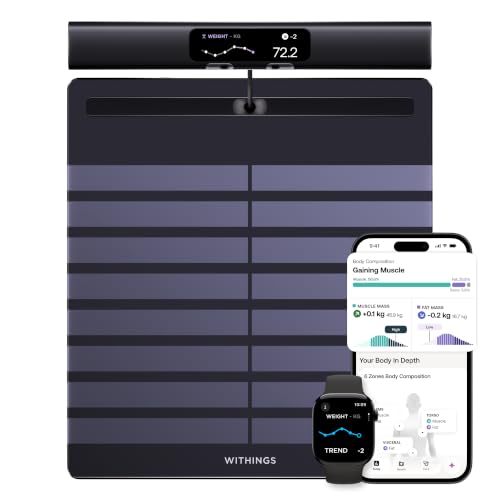
Withings BodyScan 2 review for UK buyers: 12 electrodes, 6-lead ECG and segmental body fat, plus the Withings+ cost and what the DEXA claim really means.
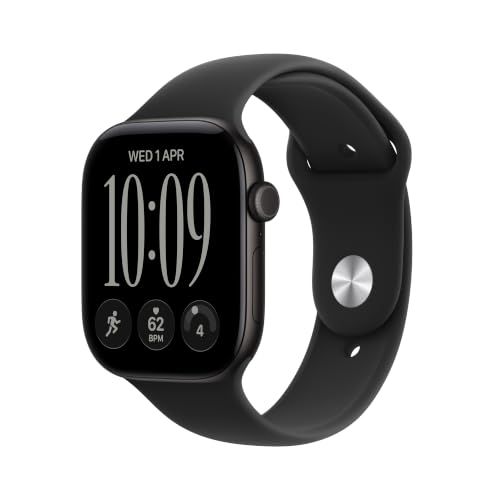
Apple Watch Series 12 review for UK buyers: Readiness score, HRV every five minutes, Ceramic Shield 2 and the 24 hour battery that still loses to Garmin.
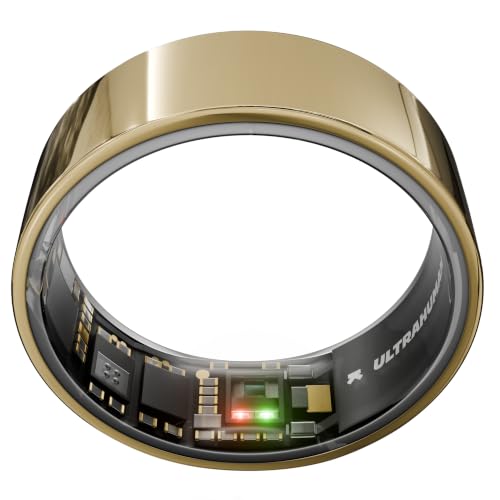
Ultrahuman Ring AIR review for UK buyers: £199 with no subscription, 4 to 6 day battery, sizing advice, accuracy evidence and a two-year cost check vs Oura.
Best Exercise is a participant in the Amazon EU Associates Programme, an affiliate advertising programme designed to provide a means for sites to earn advertising fees by advertising and linking to Amazon.co.uk. As an Amazon Associate we earn from qualifying purchases. This comes at no extra cost to you and never influences our independent reviews or rankings.