Recovery
FliKEZE Red Light Therapy Review: 78 Quad Chip LEDs for £249.99
FliKEZE red light therapy review: 78 quad chip LEDs, 630 to 850nm, a 134 mW/cm² claim at 6 inches, five intensity levels and how it compares at £249.99.

By Mike Shilling, Recovery & Training Editor · Updated 12 September 2026
We may earn a commission from qualifying purchases made through links on this page, at no extra cost to you. This never affects our ratings.
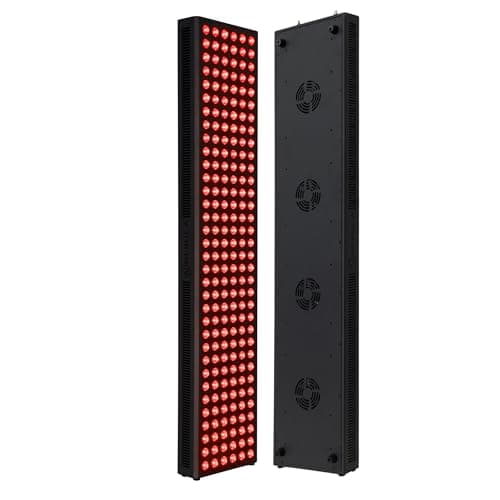
Most red light panels under £400 make you choose. You can have intensity in a laptop sized unit that treats one knee at a time, or you can have area in a cheap, dim lamp that would need an hour to deliver a useful dose. Nebula's 1020W device is one of the few that refuses the trade: 104cm tall, 204 dual chip LEDs, and a published 95 mW/cm2 at six inches. At £379.99 it is the panel to look at if your reason for buying is recovery after training rather than a facial routine.
What sold me on the specification is that Nebula publishes it at all. The company's own 1020W product page lists irradiance at two distances, real power draw of 288W against the 1020W LED rating, and the exact LED count and configuration. Half this market hides behind wattage alone, which is a number you can inflate by buying cheaper diodes and never running them hard.
How we review
This review uses Nebula's published specifications, the peer reviewed literature on photobiomodulation dosing, and the consistent themes across verified owner reviews on Amazon UK. We have not measured this panel with a spectrometer, so every irradiance figure here is Nebula's own claim and is labelled as such. Where the marketing and the physics disagree, we have said so.
Buy this if you train hard and want the light on a large area: quads and hamstrings after a leg session, a whole lower back, shoulders and upper chest in one go. The height is the point. Standing about 30cm away, the beam covers you from collarbone to knee, so a ten minute front session and a ten minute back session covers nearly everything that hurts.
Skip it if your interest is your face and nothing else, because a small panel or a mask does that job for a third of the price. Skip it too if you have no floor space, since this needs somewhere to stand or hang and it is not something you tuck behind the sofa between uses.
Check Nebula 1020W price on AmazonTwo panels can deliver the same dose in very different ways. Compact units concentrate output, which is how the Hooga ULTRA360 reaches 132 mW/cm2 at six inches from a panel the size of a laptop lid. Nebula gives up some of that intensity, publishing 95 mW/cm2 at the same distance, and spends the difference on height. For a knee or an elbow the Hooga approach wins. For anything involving two large muscle groups at once, this one does, because you are not standing there repositioning a small panel four times.
The mechanism behind all of it is reasonably well understood. Red and near infrared light is absorbed by cytochrome c oxidase in the mitochondria, which nudges cellular energy production and local blood flow, and the review literature on photobiomodulation covers the pathway in detail. For muscle soreness specifically, a 2025 meta-analysis of photomodulation therapy for DOMS found moderate effects on pain at 72 and 96 hours and larger effects on strength recovery at 24 and 48 hours, using wavelengths in the 660 to 950nm range. That is a real effect, and it is also a modest one. Light therapy takes the edge off a bad week; it does not replace sleep or sensible training.
| LEDs | 204 dual chip, 5W rated |
|---|---|
| Wavelengths | 660nm red and 850nm near infrared |
| Irradiance | 95 mW/cm2 at 6in, 76 mW/cm2 at 12in (Nebula figures) |
| LED power rating | 1020 W |
| Actual power draw | 288 W |
| Panel dimensions | 104 x 21 x 6.5 cm |
| Weight | 6.25 kg |
| Controls | Separate red and near infrared switches, built in timer |
| Voltage | AC 100 to 240 V |
| In the box | Door hook, pulley cable, goggles and case, power cable, manual |
| Warranty | 1 year, with a further year offered on registration |
The mistake almost everyone makes is treating brightness as something to maximise. Photobiomodulation follows a biphasic dose response, meaning the benefit rises with dose to a peak and then falls away again, so twenty minutes at point blank range is not twice as good as ten and may be worse than five. With this panel at 95 mW/cm2, six inches away for ten minutes puts you in a sensible window for a given body part.
Practical routine that works: stand about 30cm back, run both bands for ten minutes on your front, turn round, repeat. Do it after training rather than before, since the evidence for pre exercise light is thinner than for recovery, and keep it to once a day. If a specific joint is the issue, move to 15cm, switch to near infrared only, and cut the time to five minutes.
The panel's honest weakness shows up here. At 21cm wide the beam is a vertical strip, so your outer thighs and arms sit at the edges where output falls off noticeably. You end up doing a second pass turned 45 degrees, which is fine but adds five minutes. A wider panel would fix it and would also cost considerably more.
Aluminium shell, a fan you can hear in a silent room, two switches and a timer. There is nothing clever about the construction and that suits a device meant to run for years with no maintenance. Hanging it on a door with the supplied hook is the easiest setup; the pulley cable lets you adjust height, which matters more than it sounds if you want the beam centred on your hips rather than your ribs.
The warranty is the weakest part of the package. One year as standard, with a second year offered when you register, against three years from several rivals. On a device whose LEDs are rated for tens of thousands of hours but whose driver and fan are the parts that usually fail, longer cover would be worth paying for.
At £379.99 the value case rests on area. You are paying roughly £70 more than a compact high intensity panel and getting four times the treatment height for it. If you want to understand where light therapy sits against everything else you could do after a hard session, our guide to red light therapy for recovery covers the evidence, and our recovery section puts it alongside cold water, compression and heat.
See current Nebula 1020W priceNebula publishes 95 mW/cm2 at 6 inches and 76 mW/cm2 at 12 inches. That sits in the upper middle of the home market: brighter than the £90 desk lamps by a wide margin, a little below the most intense compact panels, and unusually consistent across a tall treatment area rather than concentrated in a small hot spot.
No. The 1020W figure is 204 LEDs multiplied by their 5W rating, while actual wall draw is 288W. Every red light brand does this and it tells you almost nothing useful. Irradiance at a stated distance is the number that decides whether a panel works, and Nebula is one of the few that publishes it.
Closer than most panels manage. At 104cm tall it covers you from shoulders to knees standing at about a foot away, so a front session and a back session gets most of you. It is 21cm wide, though, so arms and outer thighs sit at the edge of the beam where output drops off.
Ten minutes at roughly 15cm is plenty for a given area. Light therapy follows a biphasic curve, so a bigger dose is not a better one past a certain point, and going longer can undo the benefit rather than adding to it. Daily use is fine; marathon sessions are not.
The 660nm red band is absorbed close to the surface and does more for skin. The 850nm near infrared passes deeper into muscle and joint tissue, which is what you want after training. Nebula gives you independent switches, so you can run near infrared alone on a knee without lighting the room red.
Wear them if the panel is anywhere near your face. The LEDs are bright enough to be uncomfortable to look at directly, and while a brief glance will not injure you, there is no reason to test it when a pair comes in the box.
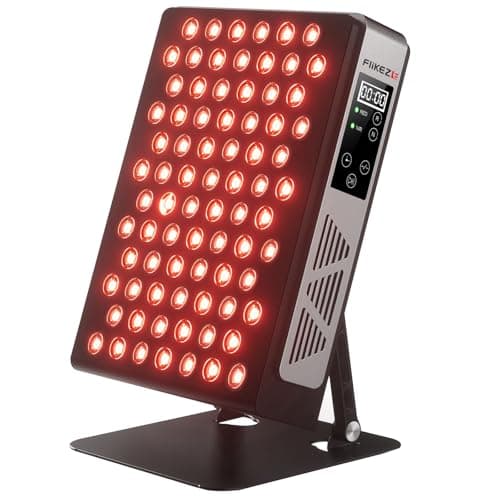
FliKEZE red light therapy review: 78 quad chip LEDs, 630 to 850nm, a 134 mW/cm² claim at 6 inches, five intensity levels and how it compares at £249.99.
How to use a red light therapy panel properly: the right distance and session time, how often, before or after training, eye safety and how to work out your dose.
The real benefits of compression boots, judged against the research: what helps (soreness, feeling recovered), what doesn't hold up, and who should avoid them.
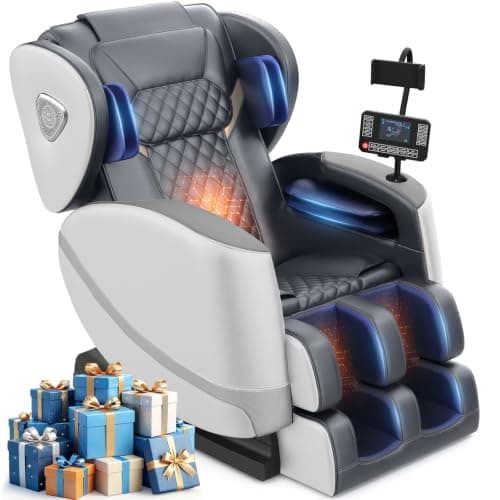
Our FURNIMAT massage chair review of the £470 zero gravity model: 14 fixed nodes, 8 airbags, heat and 165 degree recline, plus a footrest that suits shorter users.
Best Exercise is a participant in the Amazon EU Associates Programme, an affiliate advertising programme designed to provide a means for sites to earn advertising fees by advertising and linking to Amazon.co.uk. As an Amazon Associate we earn from qualifying purchases. This comes at no extra cost to you and never influences our independent reviews or rankings.