Recovery
How to Use a Portable Steam Sauna: Setup, Session Time and Safety
How to use a portable steam sauna tent at home: setup, which water to use, pre-heat time, how long to sit in it, cleaning to stop mould, and who should check with a GP first.

By Mike Shilling, Recovery & Training Editor · Updated 14 September 2026
We may earn a commission from qualifying purchases made through links on this page, at no extra cost to you. This never affects our ratings.
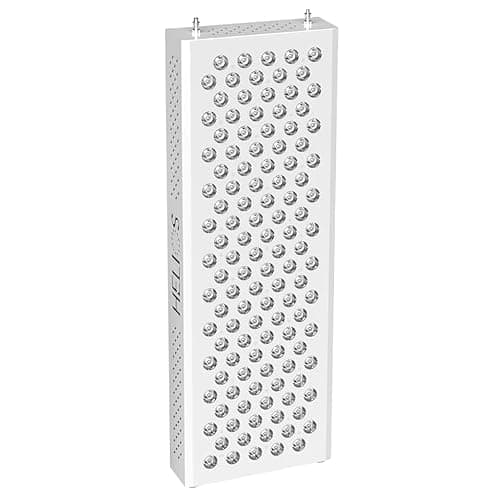
Red light panels have a credibility problem, and most of it is self-inflicted. Walk through the listings on Amazon UK and you'll find wattage figures that describe nothing useful, collagen claims copied between eight brands, and almost no independently measured irradiance data anywhere. The Helios 2 Series 600W is a decent panel buried under exactly that kind of marketing, sold by a UK company with a five year warranty at £399.99.
Strip the claims away and you're left with something reasonable: 120 LEDs rated at 5W each, split evenly between 660nm red and 850nm near-infrared, covering about half your body per session. That's a sensible specification. Whether it earns £400 of your money depends entirely on how you read the recovery research, which is more ambivalent than any brand in this category will tell you.
How we review
This review is based on Helios's published product specifications, the pattern of verified owner reviews on Amazon UK, and the peer-reviewed literature on photobiomodulation cited throughout. We have not measured this panel's irradiance ourselves, and Helios does not publish an independent measurement, so we have avoided quoting any dose figures we cannot verify.
This makes sense for someone who trains hard several times a week, has already sorted sleep, food and load management, and wants to test a marginal gain. It also has a real audience among people managing stubborn joint or tendon niggles, where near-infrared has more supporting evidence than it does for general muscle soreness.
It's the wrong purchase if your recovery basics are a mess. A £400 panel will do nothing for someone sleeping six broken hours a night, and the money would be better spent on almost anything in our red light therapy for recovery guide or on fixing the sleep first.
Check the Helios 2 Series price on Amazonaround £400Here's the number that matters and the number nobody quotes. Irradiance, measured in milliwatts per square centimetre at a stated distance, tells you how much light energy actually lands on your skin. Rated LED wattage tells you what the diodes are capable of drawing, which is a different thing entirely, and the two are separated by driver efficiency, beam angle, LED binning and how far away you stand.
A panel advertising 600W might deliver 100mW/cm2 at 15cm or it might deliver 40. Without a third-party measurement you can't know, and Helios doesn't publish one. That's not unique to Helios; almost nobody in this price bracket does. It does mean you should treat the wattage figure as a rough indicator of panel size rather than a performance spec, and it's the single reason we've held this review to 4.0 rather than higher.
| Rated LED power | 600W total, 120 LEDs at 5W each |
|---|---|
| Wavelengths | 660nm red and 850nm near-infrared, 50:50 split |
| Coverage | Half body per session |
| Independently measured irradiance | Not published |
| Warranty | 5 years, UK company |
| Mounting | Wall mount hardware included, floor stand sold separately |
| Eye protection | Goggles included |
| Typical session | 5 to 15 minutes per area |
| Price at review | Around £400 |
Photobiomodulation has a plausible mechanism behind it, which is more than most recovery gadgets can claim. Light in the red and near-infrared range is absorbed by cytochrome c oxidase in the mitochondrial respiratory chain; the leading hypothesis is that this dissociates inhibitory nitric oxide from the enzyme, increasing electron transport and ATP production, with downstream effects on reactive oxygen species and gene transcription (proposed mechanisms of photobiomodulation, 2016). That's a real biological pathway, not marketing.
The applied results are messier. A randomised, double-blinded, placebo-controlled crossover trial in 60 physical education students found no difference between real and sham laser treatment for either maximal muscle performance or recovery after induced fatigue (does photobiomodulation therapy enhance maximal muscle strength and muscle recovery, 2020). That study used a handheld laser rather than a panel, and the dose was modest, but it's a well-designed null result and it shouldn't be waved away.
The more encouraging data is recent. A 2026 randomised crossover trial in 12 CrossFit athletes compared photobiomodulation against passive recovery, pneumatic compression and shockwave therapy after a workout. One hour afterwards, nothing separated the groups. At 24 and 48 hours, the photobiomodulation arm showed better countermovement jump height and lower lactate dehydrogenase than passive recovery, alongside reduced oxidative stress markers (randomised crossover trial of photobiomodulation in CrossFit athletes, 2026). Twelve participants is a small sample. The direction is interesting.
So the honest position: this is a plausible tool for the second and third day after hard training, with modest supporting evidence, and it is not going to make you stronger on its own.
Dose matters more than duration, and more isn't better. Photobiomodulation follows a biphasic dose response, where the effect curve rises and then falls off if you overdo the exposure. Most published protocols sit between 5 and 15 minutes per area at 15cm to 60cm from the panel, and standing closer raises the delivered energy sharply.
Practical routine that works for most people: treat the muscles you trained, within a few hours of the session or the following morning, front and back if you've done a full-body workout. Wear the goggles. Keep the distance consistent so your sessions are comparable to each other. Don't bother trying to combine it with an ice bath immediately afterwards, since the cold blunts several of the same inflammatory signals the light is supposed to be working on, and our contrast therapy guide explains where the two do fit together.
At £399.99 the Helios sits in a crowded bracket. The Nebula 1020W runs £379.99 with 204 LEDs and more coverage, the Hooga Ultra 360 is £307.59 with 72 higher-spec quad chip LEDs, and there's a long tail of cheaper panels that publish even less data than Helios does. On raw LED count per pound, Helios loses to Nebula. On warranty and UK support, it wins against almost everyone.
What tips it is the five year cover. Panels in this category fail through driver electronics and fan bearings rather than the LEDs themselves, and a five year UK warranty is worth real money against a 12 month import guarantee. Compare against the Nebula 1020W red light therapy review and the Hooga ULTRA360 review before deciding, and if you're building out a wider recovery setup, our home sauna guide covers the other end of the heat and light spectrum.
See today's Helios 2 Series priceThe evidence is mixed and genuinely interesting rather than settled. A 2026 randomised crossover trial in CrossFit athletes found no benefit one hour after training, but better jump height and lower muscle damage markers at 24 and 48 hours compared with passive recovery. An earlier crossover trial using a handheld laser found nothing at all. Treat it as a plausible marginal gain, not a guaranteed one.
A 50:50 split of 660nm deep red and 850nm near-infrared across 120 LEDs. Those are the two wavelengths with the most published research behind them: 660nm is absorbed near the skin surface, 850nm penetrates further into muscle and joint tissue.
No, and this is the most misread number in the whole category. 600W describes the rated LED capacity (120 LEDs at 5W each), not the electrical draw or the light energy reaching your skin. What matters is irradiance in mW/cm2 at a stated distance, and Helios does not publish an independently measured figure for this panel.
Most protocols in the published research land between 5 and 15 minutes per area, at 15cm to 60cm from the panel. Longer is not better. Photobiomodulation follows a biphasic dose response, meaning too much light produces less benefit than the right amount.
Goggles are included and you should use them. The near-infrared output is invisible, which means your blink reflex offers no protection, and staring into 120 high-output LEDs at close range is a bad idea regardless of wavelength.
It covers roughly half the body at a time, so you treat your front, then your back, or target a specific area like a knee or shoulder. Full-body panels such as the 1500W Helios or a multi-panel setup cost considerably more and take up wall space most homes do not have.
How to use a portable steam sauna tent at home: setup, which water to use, pre-heat time, how long to sit in it, cleaning to stop mould, and who should check with a GP first.
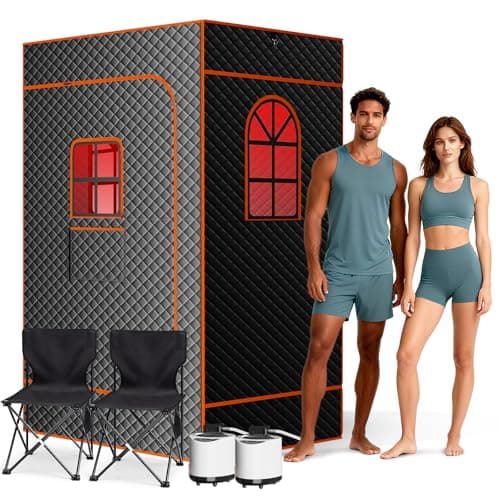
An honest Obqer 2 person portable steam sauna review: two 1200W generators, 9 heat levels, a 120 x 90cm footprint and £212.99 price, compared with Manastin and SereneLife.
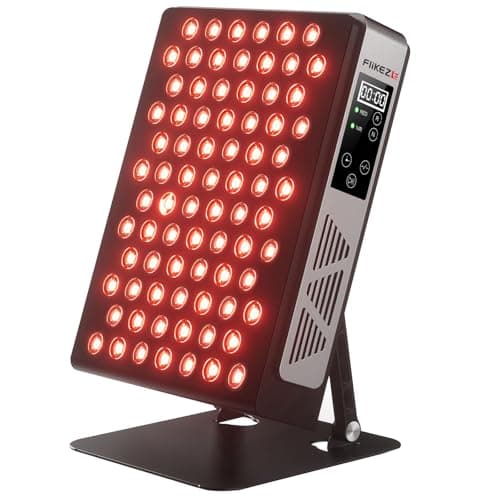
FliKEZE red light therapy review: 78 quad chip LEDs, 630 to 850nm, a 134 mW/cm² claim at 6 inches, five intensity levels and how it compares at £249.99.
How to use a red light therapy panel properly: the right distance and session time, how often, before or after training, eye safety and how to work out your dose.
Best Exercise is a participant in the Amazon EU Associates Programme, an affiliate advertising programme designed to provide a means for sites to earn advertising fees by advertising and linking to Amazon.co.uk. As an Amazon Associate we earn from qualifying purchases. This comes at no extra cost to you and never influences our independent reviews or rankings.