Home Gym
Forerunner 165 vs 265: Is the Garmin 265 Worth the Extra?
Garmin Forerunner 165 vs 265 compared on multi-band GPS, Training Readiness, Training Status, battery, screen size, triathlon mode and UK price, with a clear verdict.

By Mike Shilling, Recovery & Training Editor · Updated 19 November 2026
Garmin Body Battery is a 0 to 100 estimate of how much energy you have in reserve, worked out from your heart rate variability (HRV), stress, sleep quality and activity. Sleep and rest charge it; exercise and stress drain it. Garmin likens it to a fuel gauge on a car, which is a fair description as long as you remember the gauge is inferred from your heartbeat rather than read directly off your body. Below is what the number actually means, why it sometimes refuses to climb, and how much weight to give it.
Body Battery comes from Firstbeat Analytics, a Finnish company Garmin bought in 2020 whose HRV software already powered Garmin's all-day stress tracking. The watch's optical sensor records the tiny variations in time between your heartbeats. When you're relaxed, those gaps vary more (high HRV) and your heart rate drops. Stress, illness, alcohol and hard exercise do the opposite, pushing your nervous system towards its fight-or-flight side, so HRV falls and heart rate rises.
The watch combines that signal with your sleep data and what you've done during the day, then turns it into one number. According to Garmin's own Vivoactive 5 manual, it "analyzes heart rate variability, stress level, sleep quality, and activity data" to estimate your reserve.
It doesn't measure blood sugar, muscle glycogen, hydration or how sore your legs are. That's worth saying plainly, because a lot of confusion on Reddit and Mumsnet comes from people expecting it to reflect things it can't see.
Think of the day as a single curve. You go to bed on a low number, recharge overnight, peak shortly after waking, then drain through the day.
Charging. Sleep is where almost all of it happens. The watch looks at your overnight HRV and heart rate, and a calm, unbroken night with a low resting heart rate produces a big top-up. Daytime rest helps too: a nap or a quiet stretch where your stress reading sits in the low range can add a handful of points, and newer watches such as the Venu 3 detect naps automatically and show what they added.
Draining. Exercise drains it in proportion to how hard and how long you go, so a 90-minute threshold run costs far more than a 30-minute walk. Stress drains it as well, and this is the bit that surprises people: a day of back-to-back calls or a tense commute can pull it down as much as a gym session, because your heart doesn't know the difference between a deadline and a deadlift.
Garmin's manuals also note that food intake and caffeine have no direct effect. That matters if you were hoping a flat white would bump the number. It won't, though a late one that ruins your sleep will cost you indirectly.
Garmin splits the scale into four bands. The labels changed a few years ago, so which ones you see depends on your watch.
| Score | Newer watches (0 to 100) | Older watches (5 to 100) |
|---|---|---|
| 76 to 100 | Very high reserve | High reserve |
| 51 to 75 | High reserve | Medium reserve |
| 26 to 50 | Medium reserve | Low reserve |
| 0 to 25 | Low reserve | Very low reserve |
Those bands come from the Forerunner 965 manual for the newer scale and the Vivoactive 5 manual for the older one.
In practice, waking up somewhere between the 70s and 90s after an ordinary night is a healthy pattern. Hitting 100 isn't the goal, and plenty of fit, well-rested people rarely see it. Ending the day in the 20s or 30s after a full day is normal too; that's the battery doing its job.
The more useful habit is comparing yourself with yourself. If your morning peak has sat around 85 for months and slides to 50 for three days running, something has changed. A single bad morning after a wedding means very little.
When the overnight charge is weak, it's nearly always one of these.
Alcohol. This is the big one, and the evidence is solid. A study of 4,098 Finnish employees, using Firstbeat's own HRV analysis, found that drinking cut the recovery measured in the first three hours of sleep by about 9 percentage points at low intake, 24 at moderate intake and 39 at high intake, compared with alcohol-free nights (Pietilä et al., JMIR Mental Health, 2018). Two pints can be enough to flatten the morning number, which is why so many owners notice it on a Saturday.
Late or very hard training. A tough session finishing at 9pm leaves your heart rate elevated well into the night. The same workout at 7am usually hurts the next morning's score far less.
Short or broken sleep. Fewer hours means less charging time, and waking repeatedly (a baby, a partner, a hot bedroom) interrupts the deeper stretches where HRV is highest.
Getting ill. Garmin's own explainer on illness and Body Battery describes how an immune response raises sympathetic activity, so HRV drops and the battery struggles to charge, sometimes before you feel properly unwell. It also points out that a 1°C rise in body temperature can lift average heart rate by more than 7 beats per minute. Several low mornings in a row alongside a scratchy throat is a decent hint to back off training.
Ongoing stress. Work worries, money worries or a stressful week keep your nervous system switched on overnight even if you sleep the full eight hours.
Bad data. A loose strap, a watch worn only in the day, or a low battery that switches the sensor off all leave gaps. Garmin says wearing the watch in bed gives more accurate results, and without overnight data the score is mostly guesswork.
Garmin also notes that conditions such as poorly controlled diabetes or thyroid problems can show up in stress readings and pull the score down. If your number stays stubbornly low for weeks with no obvious reason, that's a conversation for your GP rather than a setting to fiddle with. Garmin watches aren't medical devices and Body Battery can't diagnose anything.
Accurate is the wrong word, because there's no gold-standard "energy" reading to compare it against. HRV itself has decades of research behind it as a marker of autonomic nervous system balance, and wrist-worn optical sensors measure it reasonably well during still, overnight periods. Daytime readings are noisier.
What Garmin hasn't published is independent validation of the Body Battery number. So treat it as a sensible model built on a real signal, not as a lab test.
Where it earns its place is feedback. Most people find it does three practical things well:
Where it falls short is precision. A score of 62 versus 68 means nothing, and it can miss tiredness from things it can't measure, such as heavy legs after a long hike or muscle soreness two days after squats. If your body feels wrecked and the watch says 90, believe your body. If you want a more training-focused read, Garmin's Training Readiness and HRV Status (Training Readiness on mid-range and up Forerunners, Fenix and Epix; HRV Status on those plus recent Venu and Vivoactive models) are better tools for deciding whether to train hard. Our Garmin vs WHOOP comparison goes into how those stack up against WHOOP's recovery score.
There's no trick here. The score goes up when you recover better, so the levers are the ones that improve recovery anyway.
We'd stop short of promising that a higher number makes you healthier. It reflects better recovery habits; it doesn't create them.
Nearly every current Garmin wearable has it, from the Forerunner 55 up to the Fenix 8, plus the Venu, Vivoactive, Instinct, Enduro, Lily and Vivomove ranges. Garmin's screenless Cirqa band has it too. Very old or basic models, and some kids' trackers, don't.
The number is the same algorithm everywhere. What changes as you spend more is the context around it: Sleep Coach, nap detection, a morning report that combines Body Battery with sleep and HRV, and on running-focused models Training Readiness and HRV Status.
If Body Battery and sleep tracking are the main reasons you want a Garmin, the Venu 4 is the most complete health-first option, with a full metal case and up to 12 days of battery. The Vivoactive 6 gives you the same core health tracking for less. Runners should look at the Forerunner 265, which adds Training Readiness and HRV Status alongside Body Battery. The previous-generation Venu 3 is still a strong buy if you can find it at a good price, with Sleep Coach and automatic nap detection built in.
Check Garmin Venu 3 price on AmazonFor the full range compared side by side, see our guide to the best Garmin watch in the UK.
The short version
Body Battery is a 0 to 100 estimate of your reserves based mainly on HRV. Sleep charges it, stress and exercise drain it, and alcohol is the most common reason it won't charge. Watch the trend over a week, not the number on any one morning.
On current Garmin watches, 76 to 100 counts as very high reserve energy and 51 to 75 as high. Waking up somewhere in the 70s to 90s after a normal night is a healthy pattern for most people. What matters more is your own trend: if you usually wake on 80 and you're now waking on 45, that drop tells you far more than any fixed target.
The usual causes are alcohol the evening before, a hard or late workout, a short or broken night, high stress before bed, or the start of an illness. All of these keep your heart rate up and your heart rate variability down overnight, so the watch sees less recovery and charges you less. A loose strap or not wearing the watch in bed also starves it of the data it needs.
Not directly. Garmin's manuals state that food intake and stimulants like caffeine have no impact on the score. They can still show up indirectly, for example if a late coffee wrecks your sleep, because poor sleep means a smaller overnight recharge.
It's a reasonable estimate rather than a measurement. Body Battery is built on Firstbeat's heart rate variability analysis, which has a long research history, but Garmin hasn't published independent validation of the Body Battery number itself. Treat it as a guide to trends and to how your habits land, not as a precise reading of your energy.
Yes. Genuine rest, such as a nap or a quiet half hour where your stress reading sits low, can add a few points. Most people see their biggest gains overnight, though, and a busy day spent on your feet or in meetings will usually drain it steadily even without exercise.
Almost every current Garmin wearable has it, including the Venu, Vivoactive, Forerunner, Fenix, Epix, Enduro, Instinct, Lily and Vivomove ranges, plus the screenless Cirqa band. The cheapest watches show the number, while newer models add extras such as Sleep Coach, nap detection and morning reports that put the score in context.
Garmin Forerunner 165 vs 265 compared on multi-band GPS, Training Readiness, Training Status, battery, screen size, triathlon mode and UK price, with a clear verdict.
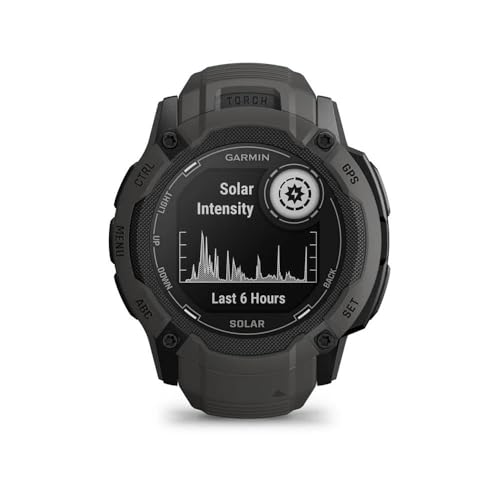
An honest Garmin Instinct 2X Solar review covering the 40 day battery, the unlimited solar claim, the LED torch, multi-band GPS and whether to buy it over the Instinct 3 Solar.
Garmin Venu vs vivoactive explained: what separates the two lines, how the Venu 4 and vivoactive 6 compare on battery, sensors and price, and when the older Venu 3 or vivoactive 5 is the smarter buy.
How Garmin estimates VO2 max, how accurate it really is against lab tests, what counts as a good score for your age and sex, why it drops or won't update, and how to raise it.
Best Exercise is a participant in the Amazon EU Associates Programme, an affiliate advertising programme designed to provide a means for sites to earn advertising fees by advertising and linking to Amazon.co.uk. As an Amazon Associate we earn from qualifying purchases. This comes at no extra cost to you and never influences our independent reviews or rankings.