Home Gym
Forerunner 165 vs 265: Is the Garmin 265 Worth the Extra?
Garmin Forerunner 165 vs 265 compared on multi-band GPS, Training Readiness, Training Status, battery, screen size, triathlon mode and UK price, with a clear verdict.

By Paul Kendrick, Cardio & Endurance Editor · Updated 19 November 2026
Your Garmin's VO2 max number is one of the few watch metrics that's genuinely worth watching, as long as you know what it is: an estimate, built from your heart rate and running pace, that tracks your aerobic fitness over weeks and months. It isn't a lab measurement. Treated as a trend line it's useful, but if you obsess over every daily wobble it'll drive you mad. Below is how Garmin actually works it out, how close it gets to a proper treadmill test, what counts as a good score for your age, and why it sometimes drops or refuses to move.
VO2 max is the maximum amount of oxygen your body can take in and use during hard exercise, expressed in millilitres of oxygen per kilogram of body weight per minute (ml/kg/min). A higher figure means your heart, lungs and muscles can deliver and use more oxygen, which is the engine behind endurance performance. It also tracks closely with long-term health; low cardiorespiratory fitness is one of the stronger predictors of early death in population studies.
In a lab, you'd run on a treadmill wearing a mask while the speed or incline climbs until you can't continue. The gas analyser measures exactly how much oxygen you're using at the point it plateaus. Your watch can't do any of that, so it estimates.
Garmin licenses the algorithm from Firstbeat Analytics, the Finnish company it bought in 2020, and uses norms from The Cooper Institute to rate your score (Garmin Forerunner 265 manual, About VO2 Max. Estimates).
The principle is straightforward. Your heart rate and your running speed rise roughly in a straight line together across moderate to hard efforts. The watch looks for stretches of a run where both are steady and reliable, then works out how fast you're moving for a given percentage of your maximum heart rate. A fitter runner covers more ground per heartbeat, so the line extrapolates to a higher oxygen ceiling. Firstbeat's software filters out the messy bits (the first few minutes, stops at junctions, sudden spikes) and only uses data segments it trusts.
For cycling the inputs are heart rate and power from a power meter rather than GPS pace, because speed on a bike depends too much on wind and gradient to mean anything. That's why bike VO2 max needs a paired power meter or smart trainer.
A few details matter more than people expect:
Better than most watch metrics, and good enough for tracking trends. Not good enough to quote as your "real" VO2 max.
The best single piece of evidence for current watches is a 2026 study that put 20 recreational runners through 12 weeks of half-marathon training wearing a Forerunner 265, with lab gas-analysis tests at the start and end (Howard et al., J Med Eng Technol, 2026). The watch's starting estimate averaged 43.95 ml/kg/min against a lab result of 41.10. After 12 weeks it was 45.00 against 42.43. So the watch read high by roughly 2.5 to 3 points both times, but the average error stayed under the 10% threshold researchers use for consumer devices, and crucially it moved in the same direction as the real thing.
The bigger picture comes from the INTERLIVE network's meta-analysis of 14 validation studies (Molina-Garcia et al., Sports Medicine, 2022). Wearables that estimate VO2 max from exercise data, which is what Garmin does, showed almost zero average bias (minus 0.09 ml/kg/min). The catch was the spread: individual readings fell anywhere from roughly 10 points too low to 10 points too high. Devices that guess from resting data alone did noticeably worse.
What that means in practice:
| Question | Answer |
|---|---|
| Is my Garmin VO2 max my true VO2 max? | Probably within a few points, but it could be out by more |
| Can I compare it with a mate's Garmin score? | Loosely. Different max heart rate settings skew it |
| Can I compare it with my own score from three months ago? | Yes, this is where it's most useful |
| Should I use it for a clinical or sports science purpose? | No, get a lab test |
One more thing that skews accuracy: wrist heart rate. Optical sensors can lock onto your running cadence or lag during intervals, and a bad heart rate trace produces a bad VO2 max. A chest strap fixes most of this.
Garmin rates your score against Cooper Institute data, and the bands on the watch map to percentiles: Fair is the 40th percentile, Good the 60th, Excellent the 80th and Superior the 95th. Anything under Fair shows as Poor. These are the figures from Garmin's own manual (Garmin VO2 Max. Standard Ratings).
| Age | Fair | Good | Excellent | Superior |
|---|---|---|---|---|
| 20 to 29 | 41.7 | 45.4 | 51.1 | 55.4 |
| 30 to 39 | 40.5 | 44.0 | 48.3 | 54.0 |
| 40 to 49 | 38.5 | 42.4 | 46.4 | 52.5 |
| 50 to 59 | 35.6 | 39.2 | 43.4 | 48.9 |
| 60 to 69 | 32.3 | 35.5 | 39.5 | 45.7 |
| 70 to 79 | 29.4 | 32.3 | 36.7 | 42.1 |
| Age | Fair | Good | Excellent | Superior |
|---|---|---|---|---|
| 20 to 29 | 36.1 | 39.5 | 43.9 | 49.6 |
| 30 to 39 | 34.4 | 37.8 | 42.4 | 47.4 |
| 40 to 49 | 33.0 | 36.3 | 39.7 | 45.3 |
| 50 to 59 | 30.1 | 33.0 | 36.7 | 41.1 |
| 60 to 69 | 27.5 | 30.0 | 33.0 | 37.8 |
| 70 to 79 | 25.9 | 28.1 | 30.9 | 36.7 |
Each figure is the minimum for that band. A 45-year-old woman with a score of 40 sits just into Excellent; a 35-year-old man on 47 is comfortably Good but not yet Excellent.
Keep in mind the Cooper data comes from a largely American population that chose to have a fitness test, which probably skews it slightly fitter than the general public. And for runners chasing times, the bands matter less than the trend. Elite male distance runners sit in the 70s and 80s, but plenty of decent club runners hold a score in the low 50s and run well.
Fitness age
Garmin also turns your VO2 max into a "fitness age", comparing your score to the average for each age group. It's a motivational number rather than a medical one, but because it uses the same VO2 max estimate, anything that improves your VO2 max will lower it.
Garmin's requirements for a running estimate are simple once you know them:
Your estimate should appear in the post-run summary and in the Performance Stats or VO2 max widget. Expect the first few readings to be off; Garmin says the watch needs several runs to learn your performance before it settles.
What won't work: treadmill or indoor track runs (Garmin excludes them on purpose), very short jogs, and runs where you stay in easy zone 1 the whole time. Trail and ultra runs can be set to skip VO2 max recording in the activity settings, which is worth doing, because technical terrain wrecks the pace-to-heart-rate relationship.
For cycling, you need a ride of at least 20 minutes at a steady, high intensity with a paired power meter.
Most sudden drops aren't lost fitness. They're your heart rate running high relative to pace, which the watch can't distinguish from being less fit. The common culprits:
If the number falls by a point after one hot or hilly run, ignore it. If it slides steadily for a month while your training has dropped off, that's probably real, and it'll come back once you're running consistently again.
The honest answer: get fitter, and the number follows. The watch simply reports how fast you run for a given heart rate, so anything that makes you faster at the same effort raises it.
Run more, mostly easy. Building weekly volume at comfortable effort drives most aerobic adaptation, especially in your first couple of years. Around 80% of your running in easy zones is a sensible split.
Add one or two harder sessions a week. Intervals at or near your VO2 max effort are the most direct stimulus. A classic session is 5 x 3 minutes hard with 2 to 3 minutes easy jogging between, or 4 x 4 minutes at about 90 to 95% of max heart rate. Tempo or threshold runs of 20 to 30 minutes help too.
Lose a little weight if you have it to lose. VO2 max is per kilogram, so dropping body fat raises the score even if your heart and lungs don't change. That's not a reason to diet aggressively, but it explains why the number often rises during a weight-loss phase.
Make the readings fair. Wear a chest strap for hard runs, set your max heart rate from a real test or race, and record runs as outdoor Run activities on flat-to-rolling routes when you can. None of this makes you fitter, though it removes the reasons your score reads low.
Expect beginners to gain several points over a few months. Experienced runners see far smaller gains, often one point in a training block, because they're already close to their genetic ceiling.
Almost every current running-focused Garmin estimates VO2 max, including the budget Forerunner 165 Music. The more expensive watches add the features that use it: training status, training readiness, race predictions and load focus. The Forerunner 265 is where that full training suite starts, and it's the same watch used in the 2026 validation study above. The Forerunner 965 adds maps and a bigger battery but calculates VO2 max the same way.
Check Forerunner 265 price on AmazonIf you're choosing between models, our best Garmin watch UK guide compares the line-up by budget.
Close enough to track your fitness, not close enough to replace a lab test. A 2026 study of the Forerunner 265 found an average error under 10% against treadmill gas analysis, though the watch read about 3 ml/kg/min high on average. A 2022 meta-analysis found exercise-based wearable estimates had almost no average bias across groups, but individual readings could be out by up to roughly 10 ml/kg/min either way.
It depends on your age and sex. Garmin uses Cooper Institute norms, where 'Good' means you sit at the 60th percentile. For a man aged 30 to 39 that's 44, and for a woman of the same age it's 37.8. Superior, the top 5%, starts at 54 for men and 47.4 for women in that age band.
The usual causes are running indoors (treadmill runs never update it), keeping your heart rate below 70% of your maximum, running for less than 10 minutes, or patchy GPS. Garmin also only nudges the figure when it has enough steady data, so a run of easy or very hilly sessions can leave it sitting still for weeks.
Short-term drops usually come from conditions rather than lost fitness: hot weather, hills, a poor wrist heart rate signal, fatigue or illness all make your heart work harder at a given pace, which the algorithm reads as lower fitness. A slide that lasts several weeks alongside fewer or easier runs is more likely to be real detraining.
No. Garmin deliberately excludes indoor runs from VO2 max estimates because treadmill pace from a wrist accelerometer isn't reliable enough. You need an outdoor run with GPS, or for cycling, an outdoor or indoor ride with a paired power meter.
Most people who add one or two harder sessions a week see the number creep up by a point or two over six to twelve weeks. Beginners usually improve fastest. Trained runners might gain only one point in a whole block, because they're already close to their ceiling.
Garmin Forerunner 165 vs 265 compared on multi-band GPS, Training Readiness, Training Status, battery, screen size, triathlon mode and UK price, with a clear verdict.
What Garmin Body Battery actually measures, how it charges and drains, what a good number is, why yours stays low, how far to trust it and which Garmin watches have it.
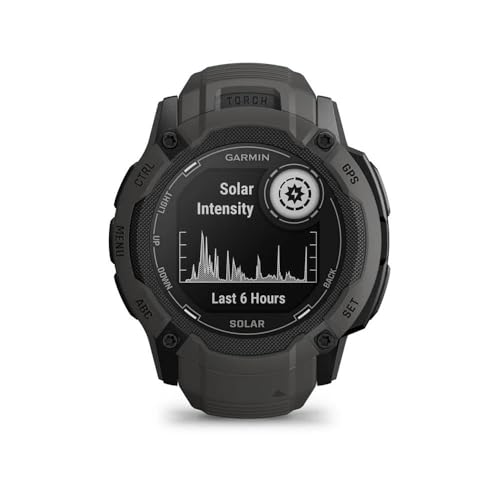
An honest Garmin Instinct 2X Solar review covering the 40 day battery, the unlimited solar claim, the LED torch, multi-band GPS and whether to buy it over the Instinct 3 Solar.
Garmin Venu vs vivoactive explained: what separates the two lines, how the Venu 4 and vivoactive 6 compare on battery, sensors and price, and when the older Venu 3 or vivoactive 5 is the smarter buy.
Best Exercise is a participant in the Amazon EU Associates Programme, an affiliate advertising programme designed to provide a means for sites to earn advertising fees by advertising and linking to Amazon.co.uk. As an Amazon Associate we earn from qualifying purchases. This comes at no extra cost to you and never influences our independent reviews or rankings.