Home Gym
Forerunner 165 vs 265: Is the Garmin 265 Worth the Extra?
Garmin Forerunner 165 vs 265 compared on multi-band GPS, Training Readiness, Training Status, battery, screen size, triathlon mode and UK price, with a clear verdict.

By Paul Kendrick, Cardio & Endurance Editor · Updated 19 November 2026
Garmin sells two watches that look almost identical in a product photo and sit roughly £130 apart on Amazon, which is why "Venu vs vivoactive" gets searched so much. The short answer: the Venu is the premium lifestyle line, with a speaker, microphone, bigger screen option and more sensors, while the vivoactive is the cheaper fitness-first line that keeps the bits most people use every day. For the current pair, the Venu 4 is around £339 and the vivoactive 6 is around £205 at the time of writing.
Below I'll explain what each line is actually for, then go through the Venu 4 and vivoactive 6 spec by spec, and finish with a note on the older Venu 3 and vivoactive 5, which are still on sale and still decent.
How we compared them
This comparison is built from Garmin's own owner's manuals and specifications, our full reviews of all four watches, and recurring themes in owner feedback. We haven't run a side-by-side test on one wrist, so every battery and sensor figure here is Garmin's published number unless we say otherwise. Prices are Amazon UK prices checked on 19 November 2026.
Think of the vivoactive as the watch Garmin builds for people who want a proper fitness tracker with a nice screen, and the Venu as that same watch dressed up for the office, with extra hardware bolted on. Both run the same Garmin Connect app with no subscription, both have AMOLED touchscreens, both do sleep coaching, Body Battery, HRV status, Garmin Pay and offline music.
The Venu line has always carried a speaker and microphone, so you can take calls on the wrist and talk to your phone's voice assistant. It also has a barometric altimeter, ECG support and, on the Venu 4, a 45mm size with a 1.4in screen. The vivoactive drops all of those to hit a lower price and a lighter, single 42mm case.
What surprises people is how little separates them on battery and core tracking. A vivoactive isn't a stripped-back toy; it's the same platform with fewer sensors.
| Garmin Venu 4 (45mm) | Garmin vivoactive 6 | |
|---|---|---|
| Amazon UK price | Around £339 | Around £205 |
| Case sizes | 45mm or 41mm | 42mm only |
| Display | AMOLED, 1.4in on the 45mm | AMOLED, 1.2in |
| Build | Full metal case | Lighter polymer case |
| Smartwatch battery | Up to 12 days (45mm), 10 days (41mm) | Up to 11 days |
| GPS-only battery | Up to 20 hours (45mm) | Up to 21 hours |
| All satellite systems | Up to 19 hours (45mm) | Up to 17 hours |
| Multi-band GPS | Yes, up to 17 hours (45mm) | No |
| Barometric altimeter | Yes | No |
| Speaker and microphone | Yes, calls and voice commands | No |
| ECG | Yes, region dependent | No |
| Flashlight | LED, with strobe and colour modes | Screen flashlight only |
| Running dynamics | From the wrist | Needs a compatible HRM or pod |
| Water rating | 5 ATM | 5 ATM |
| Onboard maps | No, breadcrumb only | No, breadcrumb only |
Battery, GPS and water figures come from the specifications section of each owner's manual: the Venu 4 series manual and the vivoactive 6 manual.
This is the feature Venu owners mention most. With a speaker and microphone you can answer a call while cooking or driving and talk through the watch, and the Venu 4 adds Garmin's own voice commands ("OK Garmin" to start an activity or set a timer) alongside your phone's assistant. The vivoactive 6 shows the caller's name and lets you answer or reject, but you're talking into your phone.
These two matter to anyone who runs or walks somewhere other than a flat park. The Venu 4's barometer gives accurate ascent figures, floors climbed and Garmin's Auto Climb screens. The vivoactive 6 works out elevation from GPS, which is fine on the flat and unreliable on repeated short hills.
Multi-band GPS is the fix for tall buildings and thick tree cover, where a single-band watch can wander off your actual line and inflate your distance. If you run through a city centre or a wooded trail, you'll notice it. If you run loops of an open park, you won't.
Garmin pushed the Venu 4 well into Forerunner territory. It measures running dynamics from the wrist, and it carries training readiness and lactate threshold detection alongside the training status, recovery time and VO2 max estimates both watches share. The vivoactive 6 can show running dynamics too, but only with a paired chest strap such as the HRM 600 or a running dynamics pod.
The Venu 4 has a real LED torch with white and red light and a strobe you can set to flash during an activity. It sounds like a gimmick until you're finding your keys at 6am in January. The vivoactive 6 just turns its screen white, which is a lot dimmer. The Venu 4 also has a full metal case, so it looks more like a conventional watch with a suit, and it comes in two sizes.
The Venu 4 supports Garmin's ECG app for an on-demand single-lead reading that checks for signs of atrial fibrillation, subject to your region and software version. It's a spot check, not continuous monitoring, and if you have symptoms such as palpitations or breathlessness the NHS guidance on atrial fibrillation is the place to start. The vivoactive 6 has no ECG.
Price, obviously, but also weight and fit. At 42mm it's the more comfortable watch to sleep in on a small or average wrist, and it has the same AMOLED screen quality, the same 8GB of offline music for Spotify and Amazon Music playlists, and more than 80 sport profiles. Its battery is within a day of the 45mm Venu 4 in smartwatch mode and slightly ahead on GPS-only recording.
I'd also argue the vivoactive 6 is the more honest product. It does exactly what most people buying a Garmin want, and nothing on that missing list will matter to someone who walks, runs on roads, swims and goes to the gym. Our vivoactive 6 review calls it the sensible Garmin most people should buy, and I'd stand by that.
Check vivoactive 6 price on AmazonThe previous generation is still widely stocked, and both have dropped in price. The vivoactive 5 is around £154 and the Venu 3 around £279 at the time of writing.
The vivoactive 5 gives you an AMOLED screen, an 11 day rated battery, 4GB of music and around 30 sport profiles, but no barometer. Its successor doubled the storage and nearly tripled the sport list, which only matters if you do activities outside running, cycling, swimming, walking and gym work. We go into that gap properly in our vivoactive 5 vs 6 comparison.
The Venu 3 is the more interesting deal. It has the speaker and microphone, the barometric altimeter, ECG support and a 45mm 1.4in screen with Garmin's rated 14 days of battery, which is actually longer than the Venu 4's 12. What it lacks against the Venu 4 is multi-band GPS, the LED flashlight, the full metal case and wrist-based running dynamics. At £60 less than the Venu 4 it's tempting, though at that gap I'd rather pay up for the newer watch. Our Venu 3 review and vivoactive 5 review cover both in depth.
Buy the vivoactive 6 if you want a Garmin for steps, sleep, gym sessions, swimming and road running, and you'd rather spend the £134 difference on a chest strap and decent headphones. That's most first-time Garmin buyers.
Buy the Venu 4 if you'll take calls on your wrist, run or hike somewhere hilly, train in a city or under trees where GPS accuracy suffers, or want a watch that passes as a proper metal timepiece at work. It's also the pick if you have a large wrist and want the 45mm screen. Our Venu 4 review goes into the training features in more detail.
Buy the vivoactive 5 if your budget stops around £150. It's the cheapest way into a Garmin with an AMOLED screen and offline music.
Skip both lines if you want maps. Neither the Venu nor the vivoactive carries onboard maps, so trail runners and hikers should look at the Forerunner range in our best Garmin watch guide.
Check Venu 4 price on AmazonThe Venu is Garmin's premium lifestyle line and the vivoactive is its cheaper, fitness-first line. The current Venu 4 adds a speaker and microphone for calls and voice commands, a barometric altimeter, ECG, multi-band GPS, an LED flashlight and a bigger 45mm option. The vivoactive 6 keeps the AMOLED screen, music storage, sleep coaching and similar battery life, and costs well over £100 less.
Only if you'll use what the extra money buys. At around £339 against around £205, the gap is roughly £134. That pays for calls from the wrist, an altimeter for accurate climbing data, multi-band GPS for cities and woodland, ECG, an LED torch and running dynamics without a chest strap. If none of those appeal, the vivoactive 6 does the daily job just as well.
They're close. Garmin's manuals quote up to 12 days in smartwatch mode for the 45mm Venu 4, 10 days for the 41mm, and 11 days for the vivoactive 6. In GPS-only mode the vivoactive 6 is actually rated slightly longer at 21 hours against 20 hours for the 45mm Venu 4. Battery should not decide this one.
No. The vivoactive 6 has no barometer, so it estimates elevation from GPS and doesn't count floors climbed. The Venu 4 and Venu 3 both have a built-in barometric altimeter. If you run or walk in hilly areas and look at ascent figures, that's one of the strongest reasons to pay for a Venu.
You can see and answer or reject incoming call notifications from your paired phone, but there's no speaker or microphone, so you have to talk on the phone itself. The Venu 4 and Venu 3 have both, so you can hold a conversation from your wrist and use voice commands.
They're worth a look if price matters most. The vivoactive 5 is around £154 and covers running, cycling, swimming and gym work with an 11 day battery and 4GB of music. The Venu 3 is around £279 and adds calls, an altimeter, ECG and a 14 day rated battery. Neither has multi-band GPS or the Venu 4's flashlight.
Garmin Forerunner 165 vs 265 compared on multi-band GPS, Training Readiness, Training Status, battery, screen size, triathlon mode and UK price, with a clear verdict.
What Garmin Body Battery actually measures, how it charges and drains, what a good number is, why yours stays low, how far to trust it and which Garmin watches have it.
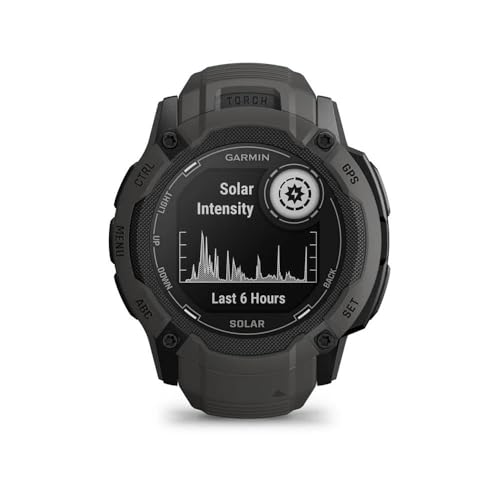
An honest Garmin Instinct 2X Solar review covering the 40 day battery, the unlimited solar claim, the LED torch, multi-band GPS and whether to buy it over the Instinct 3 Solar.
How Garmin estimates VO2 max, how accurate it really is against lab tests, what counts as a good score for your age and sex, why it drops or won't update, and how to raise it.
Best Exercise is a participant in the Amazon EU Associates Programme, an affiliate advertising programme designed to provide a means for sites to earn advertising fees by advertising and linking to Amazon.co.uk. As an Amazon Associate we earn from qualifying purchases. This comes at no extra cost to you and never influences our independent reviews or rankings.