Home Gym
Cambered Bar Explained: Squat, Bench and Swiss Bar Types
What a cambered bar is, the three main types (cambered squat bar, bowed bench bar, cambered Swiss bar), what each one does, how much they weigh and how to buy one.

By Paul Kendrick, Cardio & Endurance Editor · Updated 15 August 2026
We may earn a commission from qualifying purchases made through links on this page, at no extra cost to you. This never affects our ratings.
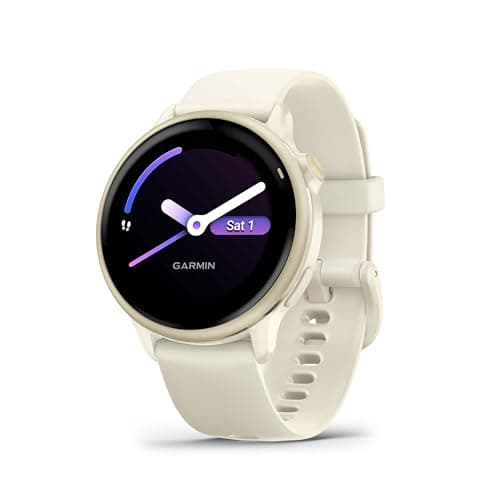
Garmin's range has a habit of making you pay for features you will never open. The vívoactive 6 is the antidote: around £252 buys a 42mm AMOLED watch with an 11 day battery, 8GB of music storage and more than 80 sport profiles, and it skips the sensors that only matter if you race or climb. For a lot of people that is exactly the right set of compromises, and it is why this is the Garmin I would point most first-time buyers towards.
The catch is that Garmin cut two things that show up in reviews as headline omissions: there is no barometric altimeter, and the GPS is not multi-band. Neither will bother somebody running loops of a local park with a Spotify playlist. Both will bother a hill runner.
How we review
This review is based on Garmin's published specifications and owner manuals, plus consistent themes across verified owner feedback and expert coverage. We have not run a months-long endurance test of this specific unit, so we report repeated findings rather than isolated impressions, and we say when a figure comes from Garmin rather than from users.
Anybody who wants a proper fitness watch without the fitness-watch obsession. It tracks running, cycling, swimming, strength sessions, walks and dozens of other activities well enough that you will never hit its limits during ordinary training, and it does the daily smartwatch job convincingly: notifications, payments, sleep coaching, music. If you race trail, climb hills, or care about pace accuracy through a city centre, buy something else.
The AMOLED panel is bright, sharp and readable in direct sun, and the 42mm case is small enough that wearing it overnight for sleep tracking is not a chore. At roughly 37g it is one of the lighter Garmins, and the difference from a chunky 50mm outdoor watch is obvious within a day.
Eleven days is Garmin's smartwatch-mode figure, and it holds up reasonably. Run GPS workouts several times a week, keep notifications on and stream music during those runs and you will be charging weekly rather than fortnightly. That is still a different world from a smartwatch you charge nightly, and it is the main reason people move from an Apple Watch to a Garmin in the first place.
| Display | AMOLED touchscreen |
|---|---|
| Case size | 42 mm (single size) |
| Weight | Approx 37 g |
| Water rating | 5 ATM |
| Battery | Up to 11 days smartwatch mode |
| Music storage | 8 GB, offline playlists supported |
| Sport apps | 80 plus built in |
| GNSS | Multi-constellation, not multi-band |
| Barometric altimeter | No |
| Heart rate | Garmin Elevate V4 optical sensor |
| Payments | Garmin Pay |
| Warranty | 2 year manufacturer |
For the training most people actually do, the vívoactive 6 is more than enough watch. Heart rate from the Elevate V4 sensor is fine for steady work and, like every wrist sensor, drifts during hard intervals; if you train by heart rate zones seriously, pair it with a chest strap and stop worrying about it. The jump from roughly 30 sport profiles on the vivoactive 5 to more than 80 here means the gaps that used to annoy people, particularly around strength and studio classes, have mostly closed.
The missing barometric altimeter is the real limitation. Without one, the watch works out elevation from GPS, which is serviceable for a flat 10k and unreliable on repeated short climbs, and floors climbed disappears as a metric. If your training involves hills and you look at ascent numbers afterwards, that will irritate you every week.
Multi-band GPS is the second gap and matters less. Garmin's manual confirms the watch is rated to 5 ATM, which is fine for swimming and rain but a notch below the outdoor line. Between the two omissions, a picture emerges: this is a fitness and wellbeing watch, not a mountain watch, and Garmin has priced it accordingly.
Advanced sleep coaching, Body Battery, HRV status, stress tracking and a morning report cover the wellbeing side properly, and Garmin Connect remains one of the few fitness apps that does not hold your own data behind a subscription. For anyone using the watch to hit the NHS target of 150 minutes of moderate activity a week, the intensity minutes tracking does that job directly and without fuss.
There is no ECG, which the Venu 3 has. Worth knowing, rarely decisive.
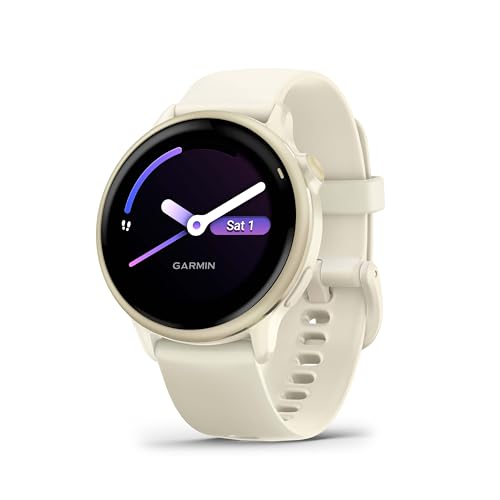
At £252 against a £269.99 list price, this is the strongest value in Garmin's mid-range. You are paying roughly a third less than a Venu 3 and getting the same screen quality, the same music capability and the same battery ballpark, with an altimeter and ECG as the price of the difference. Against cheaper watches, the 8GB of offline music is the feature that keeps justifying the spend, because phone-free running is one of those things you do not go back from.
For a wider comparison, our best Garmin watch guide ranks the range by use case, and if a rugged case matters more than a slim one, the Garmin Instinct 3 AMOLED review covers the tougher alternative. Runners who want deeper analysis should read the Forerunner 265 review before deciding.
Check price on AmazonGarmin quotes up to 11 days in smartwatch mode. Owners running daily activity tracking, sleep monitoring, notifications and a few GPS workouts a week typically report somewhere between six and nine days, which for an AMOLED watch of this size is genuinely good. Streaming music over Bluetooth during a run is the fastest way to drain it.
No, and it is the clearest gap in the spec sheet. Elevation comes from GPS instead, which is less accurate on short climbs, and there is no floors-climbed metric. Trail runners and hikers who care about accurate ascent figures should look at a Venu or an Instinct instead.
Yes. There is 8GB of onboard storage and support for offline playlists from Spotify, Amazon Music, Deezer and YouTube Music, so you can run with Bluetooth headphones and leave your phone at home. That single feature is why it beats most watches at this price.
It is rated to 5 ATM, which Garmin's own manual describes as withstanding pressure equivalent to 50 metres depth. That covers showering, pool swimming and being caught in the rain. It is not a diving watch, and 5 ATM is a step below the 10 ATM rating on Garmin's outdoor models.
The Venu 3 adds a barometric altimeter, ECG, a speaker and microphone for calls, and a slightly nicer build, and costs meaningfully more. The vivoactive 6 matches it on the things most people use daily: screen, battery, music and sport tracking. Unless you specifically want ECG or on-wrist calls, the vivoactive is the better buy.
No. It supports multiple satellite constellations including GPS, GLONASS, Galileo, BeiDou and QZSS, but not dual-frequency multi-band reception. In open parkland the difference is negligible. Between tall buildings or under heavy tree cover, a multi-band watch tracks noticeably better.
What a cambered bar is, the three main types (cambered squat bar, bowed bench bar, cambered Swiss bar), what each one does, how much they weigh and how to buy one.
What a landmine attachment is, the rack-mounted, plate-post and floor platform types, how to check bar and rack fit, safety tips, and the best exercises to do.
What a safety squat bar is, how much it weighs, how it changes your squat compared with a straight bar, who it suits and what to check before buying one in the UK.
What a Swiss bar (football or multi-grip bar) is, how much it weighs, why the neutral grip suits sore shoulders, the best exercises and what to check when buying.
Best Exercise is a participant in the Amazon EU Associates Programme, an affiliate advertising programme designed to provide a means for sites to earn advertising fees by advertising and linking to Amazon.co.uk. As an Amazon Associate we earn from qualifying purchases. This comes at no extra cost to you and never influences our independent reviews or rankings.