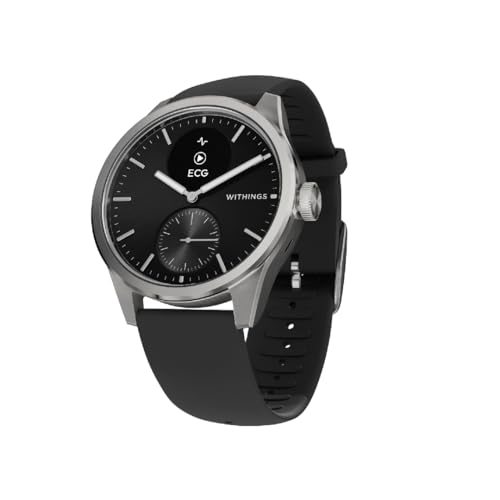
The Withings ScanWatch 2 is the best hybrid watch you can buy if your priority is heart health rather than training. You get a single-lead ECG that can flag atrial fibrillation, overnight blood oxygen, skin temperature trends, decent sleep staging and a battery that lasts weeks, all inside a stainless steel case with real analogue hands and sapphire glass. At £239 on Amazon UK it's well below Withings' own list price of £319.95. What it won't do is replace a sports watch: there's no built-in GPS, the screen is a small greyscale window, and Withings keeps some of its most useful analysis behind a monthly subscription.
How we review
We haven't worn the ScanWatch 2 ourselves. This review is built from Withings' published specifications and support documentation, the current Amazon UK listing, peer-reviewed research on smartwatch ECG accuracy and consistent themes in owner feedback and published reviews. Where we couldn't confirm a figure, we say so.
What the ScanWatch 2 actually is
Withings makes hybrids, which means the watch face is mostly a conventional dial with moving hands. A small OLED panel near the top (0.63 inches, greyscale, up to 260 nits) wakes when you press the crown or raise your wrist and shows your heart rate, steps, notifications or an ECG prompt. A second subdial tracks progress towards your daily step goal. Everything else, from sleep charts to ECG traces, lives in the Withings app on your phone.
That split is the whole point. Most people who buy one want a watch that looks at home with a shirt and doesn't need charging after every night's sleep. If you've looked at the Garmin vívomove Trend or the cheaper vívomove Sport, the ScanWatch 2 sits in the same design category but leans much harder into medical-grade heart features and much less into training metrics.
Single-lead ECG with AF classification, regulated as a medical device
Up to 30 days of battery (35 days on the current Amazon listing)
Looks like a proper watch: stainless steel, sapphire glass, real hands
Overnight SpO2, skin temperature, respiratory rate and HRV in one place
Works with iPhone and Android, and core health data needs no subscription
5ATM water rating for showers and pool swims
Cons
No built-in GPS, so phone-free runs get no route or accurate pace
Tiny greyscale screen shows a line or two of text at a time
Withings+ upsell for health scores and the AI assistant
Training analysis is thin next to Garmin, Polar or Apple
No third-party apps, payments or music control worth mentioning
Heart health: ECG and AF detection
The headline feature is the 30-second ECG. You rest the fingers of your other hand on the metal bezel, the watch records a single-lead trace and Withings' software classifies it as normal sinus rhythm, possible atrial fibrillation or inconclusive. Alongside that, the optical sensor watches your heart rate continuously and can send irregular rhythm notifications plus alerts for unusually high or low heart rate.
Withings describes the ScanWatch 2 as a Class IIa medical device intended as an aid to diagnosing AF, and its ECG app holds US FDA 510(k) clearance (K240795). We couldn't find a specific UK MHRA listing for this model, so treat UK regulatory status as following the European medical device route rather than something we've confirmed independently.
Regulatory approval isn't the same as clinic-level accuracy, and the independent evidence is worth reading. The BASEL Wearable Study tested five consumer devices against a cardiologist-read 12-lead ECG in 201 cardiology patients. It used the original ScanWatch, not the ScanWatch 2, and the Withings watch had the weakest automated result of the group: 58% sensitivity and 75% specificity for AF, with 24% of its tracings judged inconclusive (the Apple Watch 6 managed 85% and 75%, with 18% inconclusive). The good news buried in that paper is that when cardiologists manually reviewed the inconclusive tracings, they could read the rhythm in 99% of cases. In other words, the recordings were usually usable even when the algorithm wouldn't commit.
A follow-up from the same Basel group found that inconclusive readings are far more likely when someone already has baseline ECG quirks such as ventricular pacing, conduction delays or frequent ectopic beats (Isenegger et al., 2025). If you're healthy with no known heart issues, expect fewer inconclusive results than that study population produced.
We'd expect the ScanWatch 2's algorithm to have moved on since the original was tested, but we haven't seen a published head-to-head validation of the second-generation model, so we won't claim it has closed the gap. The sensible way to use it is as an early-warning tool. AF often causes no symptoms at all, and the NHS atrial fibrillation guidance says to see a GP if you think you may have it; a saved ECG trace gives that conversation something concrete to start from. Withings+ also includes cardiologist review of a set number of ECGs (four on the current UK listing).
Sleep, SpO2, temperature and recovery
Overnight, the ScanWatch 2 records light, deep and REM sleep, blood oxygen, respiratory rhythm and what Withings calls a breathing quality index, then rolls it into a sleep score. It also tracks skin temperature changes over time and heart rate variability, and combines these into a recovery-style daily picture. Cycle tracking is built in too.
Because it runs for weeks, it captures sleep every single night rather than missing the nights you'd have put an Apple Watch on charge. That consistency matters more than any one night's accuracy; trend data over months is where wrist wearables earn their keep. We haven't seen independent validation of the ScanWatch 2's sleep staging specifically, so read the stage breakdown as a rough guide and focus on duration, timing and how the trends move. If sleep is your main reason for buying, the Oura Ring 4 is a more focused alternative, and our guide to sleep and muscle recovery explains which numbers are worth paying attention to.
Temperature tracking measures change from your baseline rather than a clinical body temperature, so it's useful for spotting a deviation (the start of an illness, for instance), not for checking whether you have a fever.
Withings ScanWatch 2 key specs
Sizes
38mm (13.4mm thick) or 42mm (12.9mm thick); listing linked is 42mm
Weight (without strap)
Approx 34.6g (38mm) / 52.6g (42mm)
Display
0.63in greyscale OLED, up to 260 nits, plus analogue hands
Case and glass
Stainless steel case and crown, sapphire glass
Battery
Up to 30 days (Withings launch rating); up to 35 days on current Amazon listing
ECG with AF classification, irregular rhythm and high/low HR alerts, SpO2, respiratory rate, HRV, sleep stages, cycle tracking
Subscription
Withings+ optional; 1 month free, then about £8.95/month or £89.50/year
Compatibility
iOS and Android via the Withings app
Workouts and activity: where it falls short
Day-to-day activity tracking is fine. Steps, floors climbed (thanks to the barometric altimeter), calories and heart rate all sync to the app, and the watch can automatically recognise common activities such as walking and running. For someone who mainly walks, does classes or uses home cardio kit, that's enough.
Runners and cyclists will hit the ceiling quickly. Connected GPS means you need your phone on you to get a proper route and pace, and the small screen can only show a couple of data points mid-workout. There's no training load, no race predictor and nothing close to the structured workouts or recovery advice you get from a Garmin or Polar. If you're following a plan built around heart rate zone training, the ScanWatch 2 will log your heart rate but won't coach you through it, and a chest strap from our best heart rate monitor guide paired with a sports watch will be more accurate for interval work anyway.
Battery, screen and day-to-day living
Battery is the reason many people pick a hybrid, and the ScanWatch 2 delivers. Withings rated it at up to 30 days at launch; the current Amazon listing says up to 35, which may reflect firmware changes or simply lighter test usage. Either way, charging once a month changes how you use a wearable. You stop thinking about it, and you get continuous sleep and heart data without gaps.
The trade-off is the screen. It's sharp enough for a heart rate number or a short notification, but message text scrolls past a few words at a time and you can't reply to anything. That suits people who want fewer distractions. Anyone used to an Apple Watch will find it limiting within a day.
The other catch is Withings+. Nothing essential is locked away, which is better than some rivals, but the in-app health assistant, extra health scores, ECG cardiologist reviews and the extended warranty sit behind roughly £89.50 a year. Over the life of the watch that can add up to more than you paid for it, so decide upfront whether you'll keep it after the free month.
Who should buy it, and who shouldn't
Buy the ScanWatch 2 if you're in your forties or older, have a family history of heart rhythm problems, or simply want a discreet watch that keeps an eye on your heart, sleep and breathing without daily charging. It's also a good fit if you already use a Withings scale such as the Body Scan 2 or BodyFit, because weight, body composition and watch data all sit in the same app and you get one joined-up health picture.
Skip it if you train seriously for running, cycling or triathlon, want maps and onboard GPS, or expect smartwatch extras like payments and apps. For an all-rounder with ECG and strong fitness features, the Apple Watch Series 12 is the obvious alternative if you're on iPhone. If blood pressure is the health metric you care about most, the Huawei Watch D3 has a real inflating cuff, which no Withings watch offers.
No, not built in. It uses connected GPS, which borrows your phone's location while you exercise. If you run without your phone, you'll get time, heart rate and an estimated distance from the accelerometer, but no route map and no reliable pace.
Is the ScanWatch 2 ECG a medical device?
Withings describes the ScanWatch 2 as a Class IIa medical device intended as an aid to diagnosing atrial fibrillation via ECG and PPG, and its ECG app is FDA cleared in the US (510(k) K240795). That means the AF classification has regulatory approval; it doesn't mean the watch replaces a 12-lead ECG or a GP appointment.
How long does the ScanWatch 2 battery last?
Withings launched it with an up to 30-day rating, and the current Amazon UK listing quotes up to 35 days. Real life depends on how many ECG readings, workouts and notifications you use, but you're charging it roughly once a month, not every night. A full charge takes about 2 hours on the dock.
Do you need Withings+ to use the ScanWatch 2?
No. ECG, heart rate, SpO2, sleep stages, temperature trends and activity tracking all work without it. Withings+ (one month free, then around £8.95 a month or £89.50 a year on Withings' UK pricing at the time of writing) adds the in-app health assistant, extra health scores, cardiologist review of a set number of ECGs and an extended warranty while you subscribe.
Should I buy the 38mm or 42mm ScanWatch 2?
It comes down to wrist size. The 38mm model weighs about 34.6g without the strap and the 42mm about 52.6g, and both share the same sensors and screen. The black listing we link to (B0CG6PJLY3) is the 42mm.
Is the ScanWatch 2 good for swimming?
It's rated 5ATM, which covers showering and pool swimming. It isn't built for diving or high-speed water sports, and as a swim tracker it's basic compared with a Garmin.
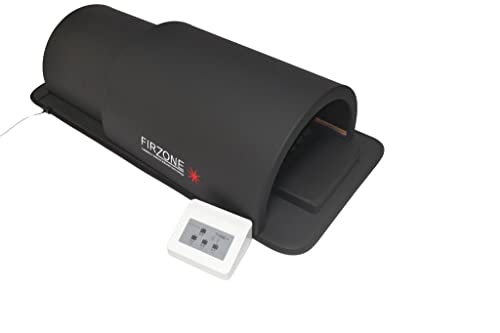
An honest Firzone ProZERO FZ-TD1 infrared sauna dome review covering the 1000W split-zone heating, heated mat, 178cm length and storage design, plus the tourmaline and zero EMF claims and how it compares with sauna tents and boxes.
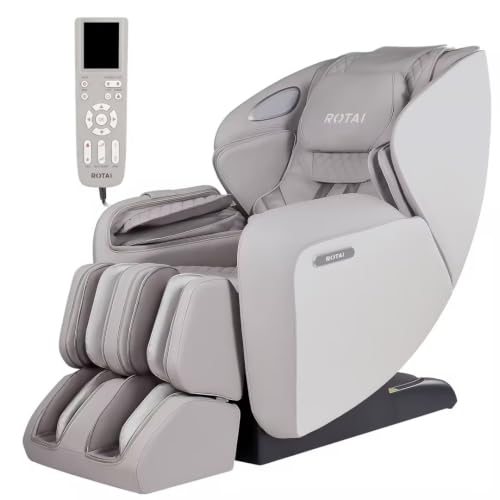
Our ROTAI RT6891 review: SL track, full body airbags, carbon fibre heat, two zero gravity positions and a big senior friendly remote, plus why £1,300 is hard to justify.
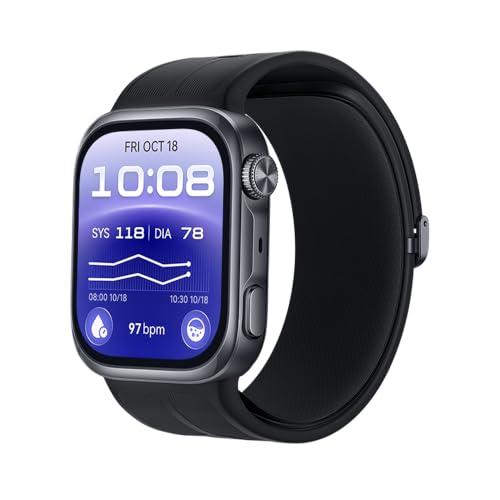
Huawei Watch D3 review: the airbag cuff in the strap, what CE-MDR certification really means, accuracy vs an upper-arm monitor, ECG, battery, iPhone limits and D3 vs D2.
Our Pod Company cold plunge chiller review: a 280W, 1/3 HP unit that holds 5°C, with honest pull-down times, running costs, filters and tub fit.
Best Exercise is a participant in the Amazon EU Associates Programme, an affiliate advertising programme designed to provide a means for sites to earn advertising fees by advertising and linking to Amazon.co.uk. As an Amazon Associate we earn from qualifying purchases. This comes at no extra cost to you and never influences our independent reviews or rankings.