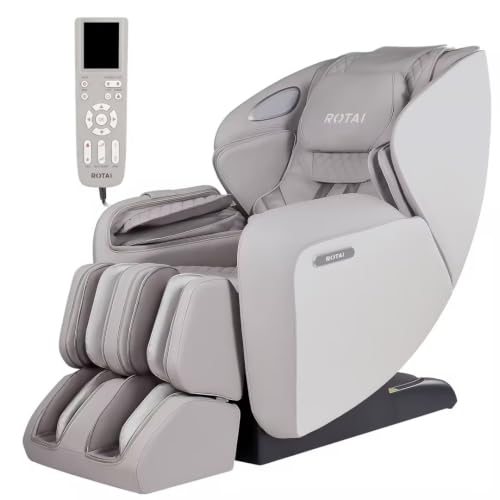
Only if the controls matter more to you than the massage mechanism. The RT6891 is a full body zero gravity chair with rollers that travel an SL track from neck to hips, airbags around the shoulders, arms, legs and feet, carbon fibre heat and a large remote that's plainly been designed for older users. It's a perfectly pleasant chair. The problem is the price: £1,299.99 on Amazon UK buys a chair with no stated 3D or 4D mechanism, while the 4D chairs we've reviewed from FURNIMAT and YONISEE cost £770 and £970.
It also sits in an odd spot within ROTAI's own range. Our ROTAI A37 review covers the brand's fixed roller chair at around £646, and the ROTAI A68 Pro is its dual roller 4D flagship at £2,374.99. The RT6891 is a genuine step up from the A37 because its rollers actually move along your spine, but it's nowhere near the A68 Pro, and the gap in price between the two is smaller than the gap in hardware.
How we review
This review is based on the Amazon UK listing for the RT6891, ROTAI's own store, the RT6891 user manual published for the US market, our existing reviews of other ROTAI, FURNIMAT and YONISEE chairs, recurring owner feedback and peer reviewed research on massage. We haven't tested this chair in our own homes, so we've reported what's stated and flagged clearly where the specification is silent.
The RT6891 makes most sense for an older parent, or anyone who finds modern chair remotes fiddly. The handset is large and clear, the six auto programmes have plain names such as Relax, Refresh and Neck & Shoulder, and you can get a full session going with one or two presses. If you're buying a chair for someone who'll never want to dig into custom settings, that simplicity is worth something.
It's harder to recommend if you want the deepest massage for your money. A 4D chair pushes the rollers forward into your back and lets you set how far, which is what gets into a knot between the shoulder blades. ROTAI makes no such claim for the RT6891, and paying £1,300 for a chair without it means you're funding the brand and the remote rather than the mechanism. People who want to target sore legs after training will also get more per pound from a massage gun or recovery boots.
Pros
Large, clear remote with six named auto programmes is easy for older users
SL track runs from the neck to the hips, so rollers reach the glutes as well as the back
Full body airbags with individually switchable zones and adjustable intensity
Carbon fibre heating at the waist and legs
Footrest extends by up to 16cm to suit taller users
Built in wheels and Bluetooth speakers
Cons
No stated 3D or 4D mechanism, so you can't adjust roller depth
£1,299.99 is more than the 4D chairs we've reviewed at £770 to £970
Two zero gravity positions, where the cheaper A37 and FURNIMAT 4D offer three
Track length, user height range and heat temperature aren't published
73kg chair needs planning for delivery, and the warranty is only 2 years
The massage
ROTAI describes the track as an "SL long track". The S section follows the curve of your spine and the L section bends under the seat, so the rollers carry on past the lower back to work the glutes and the tops of the hips. That coverage is the main upgrade over the A37, whose fixed rollers can only press where they're mounted. ROTAI doesn't publish the track length for the RT6891. For context, the 4D chairs we've covered quote around 139 to 143cm.
The user manual lists five manual techniques: kneading, knocking, tapping, shiatsu and a combined sync mode, with adjustable speed and intensity. The six auto programmes are Extension, Refresh, Recovery, Relax, Neck & Shoulder, and Waist & Buttocks. Before a session, a Hall sensor body scan measures where your shoulders sit so the rollers start in the right place. On most chairs that use one, the Hall sensor tracks where the roller carriage is while the rollers feel for your shoulders, so it sets a starting height rather than mapping your whole spine.
What the listing never mentions is roller depth. Chair makers advertise 3D and 4D mechanisms loudly because they're expensive to build, and the RT6891's listing is detailed enough everywhere else that the silence tells you something. Assume a 2D mechanism, which moves up, down and across your back at a fixed depth. In practice that means the strength setting changes speed and intensity of the stroke, but you can't push the rollers further into a stubborn spot. If you've tried a 4D chair before, you'll notice.
The airbags are better specified. The manual lists airbag zones at the shoulders, arms, legs and feet, and the listing says each area can be switched on or off individually, with separate pressure settings. That's more useful than it sounds: plenty of people like the leg squeeze but find arm airbags claustrophobic, and on many cheaper chairs it's all or nothing. Underneath, a foot roller runs at three speeds.
Heat, zero gravity and comfort
Heat comes from carbon fibre elements, and the manual places them at the waist and the legs. ROTAI doesn't publish a temperature. Its A68 Pro reaches only about 35°C, while the A37's pads go up to 45°C, so we can't tell you which end of that range the RT6891 sits at. If warmth is a big part of why you want a chair, that's worth asking the seller before you buy.
There are two zero gravity positions, selected from the remote, which tilt you back so your knees sit above your heart and take weight off the lower spine. Most owners of any zero gravity chair end up using these more than the upright setting. The footrest extends by up to 16cm, and the manual asks for 15cm of clearance behind the backrest and 20cm in front for the footrest, so don't push it flat against a wall.
The extras are pleasant rather than important. The Bluetooth speakers let you play music or a podcast from your phone during a session, and the wheels make it possible to shuffle the chair across a room once it's in place.
ROTAI RT6891 key specs
Mechanism
Not stated by ROTAI (no 3D or 4D claimed)
Track
SL long track, neck to hips (length not published)
Shoulders, arms, legs and feet, individually switchable
Body scan
Hall sensor shoulder detection
Heat
Carbon fibre, waist and legs (temperature not published)
Zero gravity
2 positions
Foot
Foot rollers, 3 speeds; footrest extends up to 16 cm
Extras
Bluetooth speakers, built in wheels, large remote
Dimensions (listed)
Approx 147 cm high, 73 cm long
Weight (listed)
Approx 73 kg
Colour
Grey
Warranty
2 years
Delivery and space
At around 73kg, the RT6891 is a two person lift at minimum, and getting it upstairs is a job you'll want to think through before the van turns up. Amazon lists it at about 147cm high and 73cm long, though for a chair of this type those figures almost certainly describe it folded upright, not reclined. ROTAI doesn't publish a minimum doorway width for this model, so measure the narrowest door, hallway and stair turn on the route and compare them with the chair's width before ordering. Our how to use a massage chair guide covers where to put it, what settings to start on and how long a session should run.
How it compares
These prices come from our own reviews, so check current prices before you buy.
Laid out like that, the RT6891 is difficult to place. Against the A37 it earns its extra £650 or so with a moving roller and glute coverage. Against the FURNIMAT 4D it's £530 dearer and, on paper, has less: no roller depth control, one fewer zero gravity position and a shorter warranty. What you get in return is a brand with a wider range on Amazon UK and that friendlier remote. The A68 Pro is the chair to look at if you want ROTAI and serious hardware, but it's almost twice the money. Our massage chair cost guide explains what each price band normally buys, and by that measure £1,300 should get you an L or SL track and at least 3D rollers.
What a massage chair can actually do
Keep the health claims modest. The best evidence comes from hands on massage rather than chairs. A Cochrane review of 25 trials and 3,096 people with low back pain found massage reduced pain more than no treatment in the short term, and slightly more than other active treatments, but the authors rated the evidence low to very low quality and said they had "very little confidence" in it as a treatment (Cochrane review: massage for low back pain). Three of those trials used a mechanical device rather than hands. For exercise soreness, a 2017 meta-analysis of 11 trials found massage reduced delayed onset muscle soreness at 24, 48 and 72 hours (massage and DOMS meta-analysis).
Chair specific research is thin. A pilot randomised trial gave 80 adults aged 50 to 75 a massage chair to use twice a day for six months; their DHEA-S levels fell and they reported better mood and health status, but the drop in afternoon cortisol missed statistical significance (massage chair stress trial). There's also a reason for caution: case reports exist of serious neck injuries linked to electric massage chairs, including a 2025 report of a cervical spinal bleed (massage chair case report). That's rare, but it's why we'd skip intense neck programmes if you have a spinal condition or take blood thinners. Our guide to whether massage chairs are good for you goes through who should be careful.
So the realistic case for the RT6891 is comfort: twenty minutes lying back in the evening that probably eases a stiff back for a while and gets you resting. That's a fair thing to want. It just doesn't need to cost £1,300.
ROTAI doesn't say, and neither the Amazon UK listing nor ROTAI's own store gives a roller type. Neither mentions adjustable roller depth or a 3D or 4D mechanism, which chair makers always advertise when they have it, so we'd assume a conventional 2D mechanism that moves up, down and side to side on the SL track.
What is the difference between the ROTAI RT6891 and the ROTAI A37?
The A37 uses 24 fixed rollers that stay in one place, so the massage can't travel up and down your spine, and it costs around £646. The RT6891 has rollers that run along an SL track from the neck to the hips, a Hall sensor body scan and a bigger, simpler remote. It costs about twice as much.
Is the ROTAI RT6891 good for elderly users?
The controls are its best feature for older users: a large, clear handset with six named programmes means you don't need to learn a menu system. Anyone with osteoporosis, a recent fracture, a pacemaker, blood clots or a spinal condition should check with their GP first, because firm roller pressure along the spine isn't suitable for everyone.
How big and heavy is the ROTAI RT6891?
Amazon lists it at about 147cm high, 73cm long and 73kg (160.9lb). Those figures look like they describe the upright chair, so plan for more floor space once it reclines and the footrest extends by up to 16cm. It has built in wheels for moving it once it's inside.
What warranty does the ROTAI RT6891 have?
The listing states a 2 year warranty. That matches ROTAI's other chairs, but it's shorter than the 3 years FURNIMAT offers on its 4D chair at around £770.
Will a massage chair help my back pain?
Possibly, for a while. A Cochrane review of 25 trials found massage eased low back pain in the short term, but the evidence quality was low and the benefit didn't last. Treat a chair as a comfort tool alongside exercise and normal activity, not as a treatment.
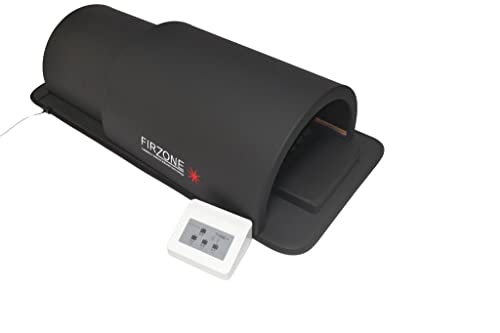
An honest Firzone ProZERO FZ-TD1 infrared sauna dome review covering the 1000W split-zone heating, heated mat, 178cm length and storage design, plus the tourmaline and zero EMF claims and how it compares with sauna tents and boxes.
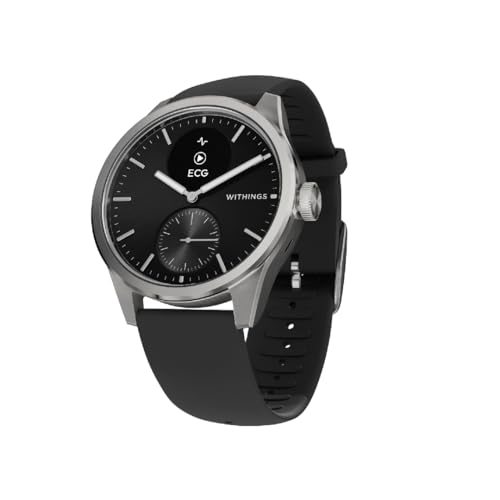
Withings ScanWatch 2 review: ECG and AF detection, SpO2, temperature, sleep and a month-long battery in a hybrid analogue case, plus the GPS, screen and Withings+ catches.
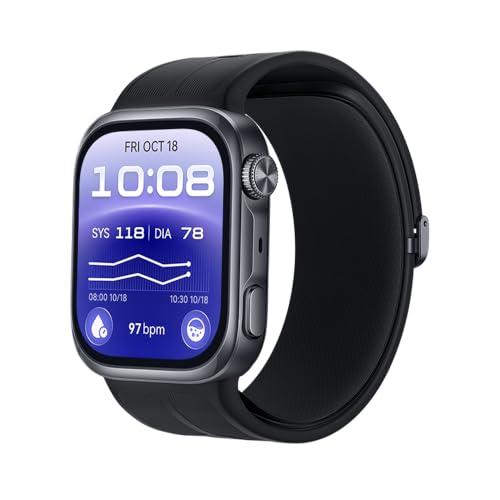
Huawei Watch D3 review: the airbag cuff in the strap, what CE-MDR certification really means, accuracy vs an upper-arm monitor, ECG, battery, iPhone limits and D3 vs D2.
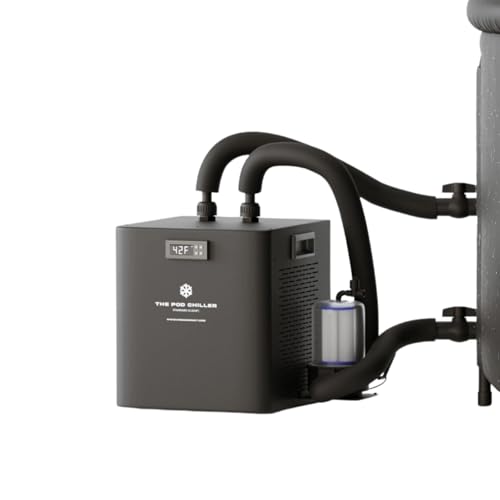
Our Pod Company cold plunge chiller review: a 280W, 1/3 HP unit that holds 5°C, with honest pull-down times, running costs, filters and tub fit.
Best Exercise is a participant in the Amazon EU Associates Programme, an affiliate advertising programme designed to provide a means for sites to earn advertising fees by advertising and linking to Amazon.co.uk. As an Amazon Associate we earn from qualifying purchases. This comes at no extra cost to you and never influences our independent reviews or rankings.