Recovery
Google Fitbit Air Review: A £85 Screenless Tracker Worth Buying?
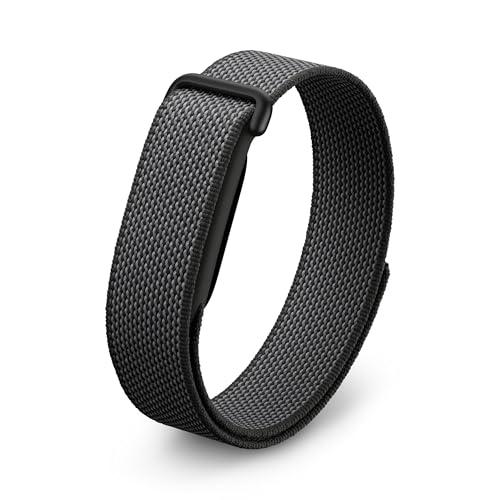
Google Fitbit Air review: £84.99 screenless tracker with 7-day battery, SpO2 and HRV, and a Gemini coach behind Premium. Is it better than Whoop or Charge 6?

By Jack Atkins, Home Gym Equipment Specialist · Updated 13 November 2026
We may earn a commission from qualifying purchases made through links on this page, at no extra cost to you. This never affects our ratings.
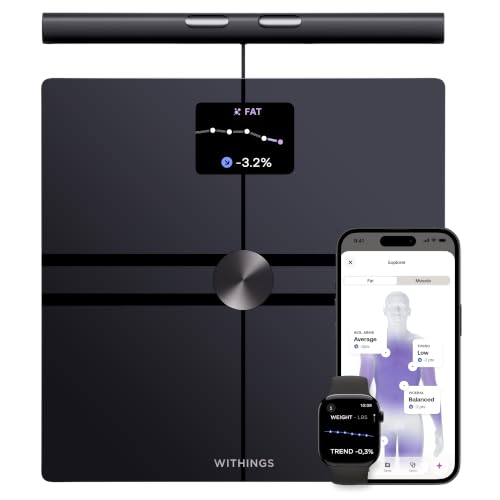
The Withings BodyFit is the cheapest scale that gives you a proper segmental body composition reading, and it's the one most people shopping in this price bracket should buy. For £229.95 you get a retractable handle, eight electrodes and fat and muscle numbers for your arms, legs and trunk. It isn't cheap for a bathroom scale, and its body fat figure is an estimate, but the hardware matches what Withings sells at twice the price.
The honest caveat is the DEXA claim in the marketing. Withings says its readings correlate up to 99 percent with DEXA for fat mass, and its own launch release says that study was done on the Body Scan, a different scale. More on that below.
Check the Withings BodyFit price on Amazon£229.95How we review
This review is based on Withings' launch release and spec details, UK retailer listings and peer-reviewed research on how well consumer impedance scales agree with DEXA. We haven't tested this scale ourselves, and no independent validation of the BodyFit has been published, so we treat Withings' accuracy figures as manufacturer claims and say so each time.
Buy it if you lift or run and want to know whether a cut is costing you muscle. A lean mass reading for each arm and leg also shows left and right differences after an injury. It suits people on GLP-1 drugs too, which is exactly who Withings built the launch campaign around.
Skip it if you just want a weight number and a rough body fat percentage. Our best smart scales guide covers scales from well under £100, and for a simple trend line they're fine.
The BodyFit is a slim glass-topped scale with a handle that pulls out of the front edge. You grip it, stand still and the scale sends a current through both arms, both legs and your torso. That's what separates it from the usual foot-only scale, which can only run current from one foot to the other.
Withings counts eight electrodes in total, four in the handle and four in the platform. The platform also has four weight sensors with 50g precision. Sources disagree on the screen size: Withings' European page lists a 3.4 inch colour display and its US and Singapore pages list 3.5 inches, so don't rely on either number.
| Electrodes | 8 (4 in the handle, 4 in the platform) |
|---|---|
| Technology | Bioimpedance spectroscopy, 13 frequencies up to 800 kHz |
| Body composition | 6 zones: arms, legs and trunk |
| Scan time | About 20 seconds total, 10 seconds for the composition scan (Withings claim) |
| Weight sensors | 4, with 50 g precision |
| Maximum capacity | 200 kg (per UK retailer listings) |
| Display | Colour screen, roughly 3.4 to 3.5 inches |
| Connectivity | Wi-Fi and Bluetooth |
| Battery | Rechargeable, up to 1 year claimed |
| UK price | £229.95 |
Specs come from Withings' launch release and UK retailer listings. Withings' own UK product page blocks automated access, so we couldn't read its full spec table, which is why dimensions and user limits aren't listed above.
Withings says fat mass readings correlate up to 99 percent with DEXA and muscle mass up to 98 percent. The launch release credits an 80-person benchmark carried out with a sports-health centre called Mon Stade in 2025. Then the footnote: the study "was conducted using Body Scan." That's the older, pricier scale. The BodyFit uses a related system, so the result is a reasonable sign, not a validation of this exact device.
Correlation is also the friendliest number Withings could pick. It says people with more fat score higher, which isn't hard when the scale already knows your weight. It doesn't tell you how far your own reading is from reality.
Independent work shows the gap. A study of 106 adults compared four consumer impedance devices with whole-body MRI and DXA (Bosy-Westphal and colleagues, 2008). Most correlated well, at r of about 0.92 to 0.96, yet the foot-to-foot scales showed systematic bias, overestimating fat in lean people and underestimating it in people with more body fat, with limits of agreement reaching about 11 percentage points for some. The one tetrapolar device, which also used hand electrodes, had the narrowest limits and no such bias, and the authors concluded that design should be preferred for individual use. It's the same family of design as the BodyFit. The study was funded by Omron, which makes consumer scales, so note the source.
Scales without a handle fare worse in clinical settings. In a French hospital comparison, three smart scales weighed patients to within about 1kg, but all three underestimated fat mass by a median of 2 to 4kg, and the authors concluded that "smart scales are not accurate for body composition and should not replace DEXA in patient care" (JMIR mHealth and uHealth, 2021). That sample was small, and the scales were older foot-only models.
So where does that leave a handle-equipped scale with 13 frequencies? Probably better than anything in those studies, and still unproven. Weigh yourself at the same time each morning, before eating, and watch the four-week trend. If fat mass falls 1.5kg while arm and leg muscle holds, believe the direction even if the absolute percentage is off. The visceral fat estimate deserves the most scepticism; the 2008 study found consumer devices were poor at it.
The two share the same body composition idea: handle, 13 frequencies, six zones. What the BodyScan 2 adds is heart and vascular hardware. It's a 6-lead ECG with AFib detection, pulse wave velocity, a blood oxygen sensor and a nerve health score, and the pricier scale also has a display built into its handle. Our Withings BodyScan 2 review goes through all of it.
Be careful with some retailer and press copy here. One launch write-up credits the BodyFit with a single-lead ECG and vascular age, but Withings' own release assigns the 6-lead ECG and Vascular Age to the Body Scan range and presents the BodyFit as the body composition entry point. Treat any heart feature on the BodyFit as unconfirmed until you see it on Withings' UK page.
For someone tracking a cut, a bulk or GLP-1 weight loss, the extra £220 buys features you won't use daily. If you're over 40 with a family history of heart trouble, the BodyScan 2 argument gets stronger. Otherwise, the BodyFit is the better value.
The app turns each weigh-in into an animated zone-by-zone scan and classifies your muscle-to-fat balance on a 12-zone grid, with labels such as Athletic, Strong or Powerhouse. It also estimates calorie balance and offers habit suggestions between weigh-ins with no manual logging.
Withings+ is the optional layer on top. According to the launch release, new BodyFit buyers get a free first month, with access to an AI health assistant and a one-hour session with a certified nutritionist. After that, the UK price in our BodyScan 2 review is £8.95 a month or £89.50 a year. I wouldn't pay it by default. The measurements you bought the scale for work without it, and you can add it later if the coaching appeals. Over three years it would add £268.50 to a £229.95 scale.
For a basic trend line, the scales in our best smart scales guide cost a fraction of the BodyFit and are reliable enough for tracking changes week to week. They lack the handle, so you lose the zone breakdown.
If you want recovery and heart data without stepping on a scale, a wearable does a different job. The Apple Watch Series 12 and the Oura Ring 5 track heart rate variability and sleep, though neither estimates body fat.
See the Withings BodyFit on Amazon£229.95Yes, if you want arm, leg and trunk readings for fat and muscle and you'll weigh in most mornings. At £229.95 it uses the same handle-and-foot approach as scales costing twice as much. If you only want a weight and body fat trend, a scale at under £100 does that job.
Nobody independent has published a validation of it yet. Withings quotes up to 99 percent correlation with DEXA for fat mass, but its own launch release says that study used the Body Scan, not the BodyFit. A high correlation also doesn't tell you how far one reading can sit from the truth. Use the trend, not the single number.
No. Weigh-ins and the body composition readings work without a subscription. Withings+ adds an AI health assistant, a one-hour session with a certified nutritionist and a personalised plan. New BodyFit owners get a free first month of Withings+, and our BodyScan 2 review lists the UK price as £8.95 a month or £89.50 a year.
Both measure fat and muscle in six body zones using 13 frequencies. The BodyScan 2 adds a 6-lead ECG with AFib detection, pulse wave velocity, a blood oxygen sensor and a nerve health score, and costs around £450. The BodyFit is around £230.
Withings markets it that way, and the logic is sound: weight alone can't tell you whether you're losing fat or muscle, and zone-by-zone readings give a better clue. It's a tracking tool, not a medical one, so talk to your prescriber about anything you see.
Withings lists support for multiple users, and our BodyScan 2 review notes automatic recognition for up to 8 on that model. Check the Withings spec page for the BodyFit's exact user limit before you buy for a large household.
Google Fitbit Air review: £84.99 screenless tracker with 7-day battery, SpO2 and HRV, and a Gemini coach behind Premium. Is it better than Whoop or Charge 6?
Fitbit Air vs WHOOP for UK buyers: £84.99 against a £169 to £349 yearly membership. Battery, sensors, coaching, accuracy research and two-year cost compared.
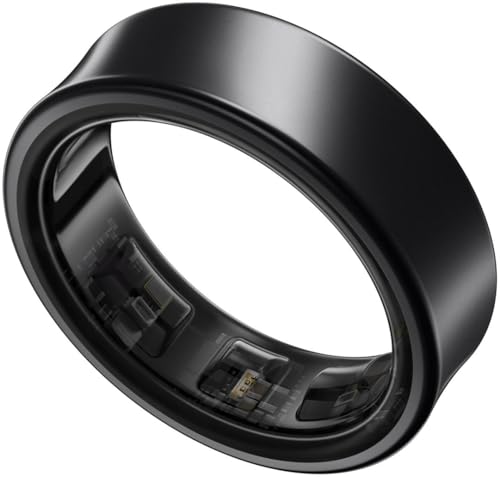
Samsung Galaxy Ring review for UK buyers: titanium build, up to 7 day battery, no subscription, Android only, sizing kit advice and how it compares with Oura.
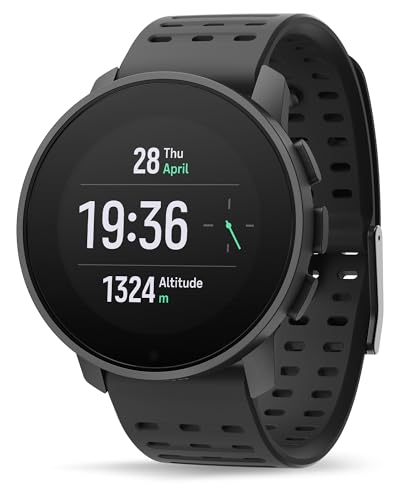
A Suunto 9 Peak Pro review for UK buyers: 40 hours of GPS, 21 days of daily use, sapphire glass and a £189 price, plus what's dated next to the Race 2.
Best Exercise is a participant in the Amazon EU Associates Programme, an affiliate advertising programme designed to provide a means for sites to earn advertising fees by advertising and linking to Amazon.co.uk. As an Amazon Associate we earn from qualifying purchases. This comes at no extra cost to you and never influences our independent reviews or rankings.