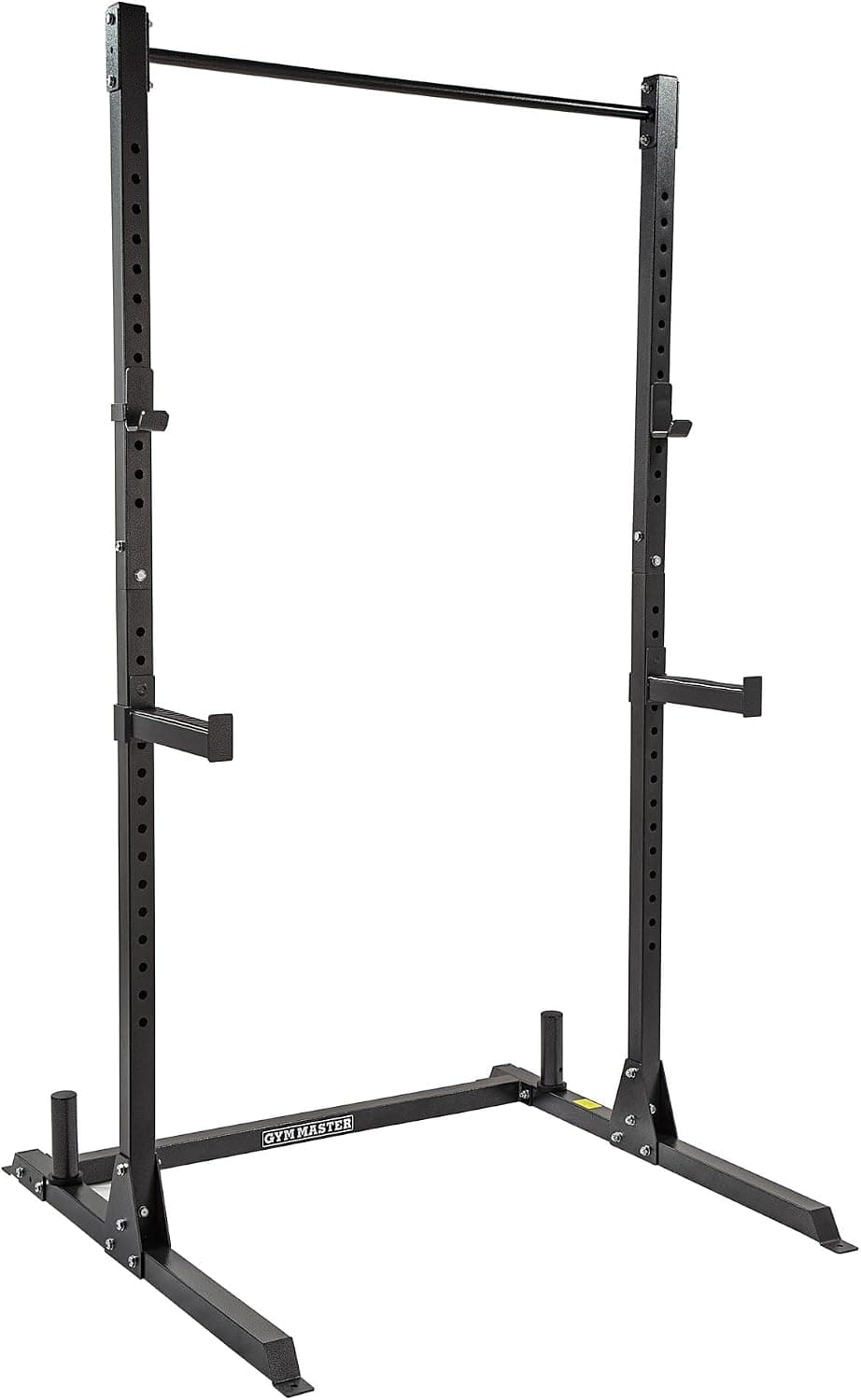
Home Gym
Best Squat Rack UK 2026: Squat Racks, Stands and Half Racks
The best squat racks in the UK for 2026, compared on weight rating, height range and spotters. Cheap squat stands, half racks and a full cage for home gyms at every budget.

By Jacob Chambers, Founder & Lead Reviewer · Updated 12 October 2026
We may earn a commission from qualifying purchases made through links on this page, at no extra cost to you. This never affects our ratings.
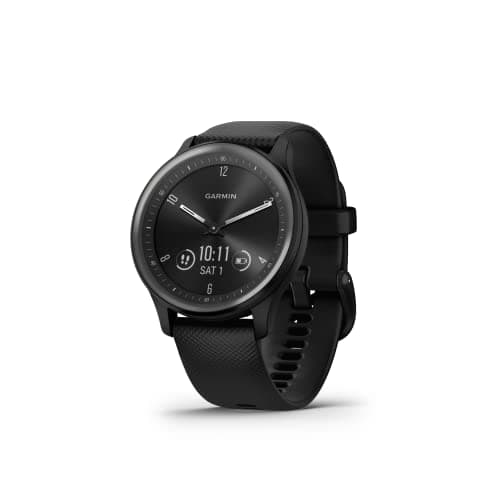
The vívomove Sport is the cheapest analogue Garmin you can buy, and at £150.51 on Amazon UK it gets you Garmin's full wellness tracking (Body Battery, sleep score, stress, Pulse Ox and women's health) inside a 40mm watch with real hands. It's a good buy if you want something that looks like a plain sports watch and quietly logs your recovery data. It's a poor buy if you want contactless payments, a screen you can actually read or GPS without your phone, because the Sport has none of those.
Context matters with this one. It's the older, simpler sibling of the vívomove Trend, and Garmin has cut a lot to hit the price. Some of those cuts won't bother you. One or two might.
How we review
This review is research-based. We built it from Garmin's published UK specifications, the Amazon UK listing and recurring patterns in verified owner feedback, and we've cross-checked claims about tracker accuracy against published research. We haven't tested this watch hands-on, so we report what Garmin states and what owners report consistently rather than one person's impression. Price and stock were checked on Amazon UK at the time of writing.
Every figure below comes from Garmin's vívomove Sport product page, which currently lists the watch at £179.99. Amazon's price undercuts that by nearly £30.
| Case size | 40 x 40 x 11.0mm, fits 125 to 190mm wrists |
|---|---|
| Weight | 19.0g case only, 33.8g with silicone strap |
| Display | Hidden OLED touchscreen, 8.6 x 18.5mm, 72 x 154 pixels |
| Lens and case | Chemically strengthened glass, fibre-reinforced polymer case |
| Battery (smartwatch mode) | Up to 5 days |
| Battery (watch mode) | Up to 1 additional day |
| Charging | Garmin proprietary plug charger |
| GPS | Connected GPS only (uses your phone) |
| Sensors | Elevate wrist heart rate, Pulse Ox, accelerometer, ambient light |
| Water rating | Swim, 5 ATM |
| Strap | Silicone, 20mm quick release |
| Payments | None (no Garmin Pay listed) |
| Compatibility | iPhone and Android, Garmin Connect app |
| Amazon UK price | £150.51 at the time of writing |
From a distance the Sport is a clean, slightly sporty analogue watch. The case is plastic (Garmin calls it fibre-reinforced polymer) and there's no steel bezel, so it reads as casual rather than smart. At 33.8g with the strap, it's 9.5g lighter than the Trend, which you'll notice in bed more than anywhere else. Light watches get worn overnight, and a tracker that stays on your wrist for sleep is worth more than a heavier one that ends up on the bedside table.
The hidden display is where the price cut shows. It's an OLED strip just 8.6mm wide, tucked into the lower half of the dial, and it only appears when you raise your wrist or tap the glass. The hands then move aside so you can read it. Garmin's own figures put the Trend's display at 25.6 x 18.8mm, close to three times the width, so on the Sport you're reading data through a slot. A step count or heart rate figure fits fine. Notifications scroll across a few characters at a time, which owners consistently describe as fiddly, and it can be hard to make out in bright sunshine.
That's the real trade. If your idea of a smartwatch is glancing at a number, it's enough. If you want to read messages on your wrist, it isn't.
This is the Sport's strongest suit, and it's where the price looks fair. Garmin lists constant heart rate (sampled every second), resting heart rate, high and low heart rate alerts, respiration rate, all-day stress, advanced sleep with a Sleep Score, Body Battery, fitness age, hydration logging, breathwork and women's health tracking. Pulse Ox works as a spot check during the day or, optionally, during sleep.
Body Battery is the feature most owners end up checking. It combines sleep, stress and activity into a 0 to 100 score, and it's a handy nudge on whether today is a training day or a walk-and-stretch day. Pair it with our guide to sleep and muscle recovery and the overnight data starts to make practical sense.
Activity tracking covers steps, calories, distance, intensity minutes, Move IQ automatic activity detection and automatic rep counting for strength sessions. Garmin also lists a VO2 max estimate for running. What's missing is floors climbed: there's no barometric altimeter on the Sport's sensor list, while the Trend has one.
How far should you trust the numbers? A 2020 systematic review of 158 studies on consumer wearables found that heart rate accuracy varied by brand, with Garmin among the most accurate in lab settings, and that steps were generally measured well. It also found that no brand measured energy expenditure accurately. So treat the Sport's calorie burn as a rough guide, not a figure to plan meals around, and lean on heart rate and steps as the reliable data.
Wrist sensors still struggle with fast intervals and heavy gripping, where the strap shifts and blood flow changes. If accurate heart rate during hard sessions matters, a chest strap from our best heart rate monitor UK guide does that job better, and the Sport can broadcast its own heart rate over ANT+ to compatible gym kit.
Activity profiles are limited but cover the basics: walking, running, treadmill running, biking, pool swimming, HIIT, cardio, elliptical, stair stepping, pilates and yoga. Heart rate zones, HR alerts and Auto Lap are all there.
GPS is the big omission. Garmin lists distance, pace and route for runs as "Connected GPS only", meaning the watch borrows your phone's location. Take your phone and you'll get a mapped route in Garmin Connect. Leave it behind and the Sport estimates distance from your arm swing, which drifts on outdoor runs. For dog walks and commutes with a phone in your pocket, that's fine. For anyone training for a 10k without carrying a phone, it rules the watch out.
Garmin quotes up to 5 days in smartwatch mode and up to 1 more day in watch mode, where the smart features switch off and the hands keep going. Five days is short for Garmin; the vívoactive 6 manages up to 11. Switching on overnight Pulse Ox costs you battery, and owners commonly settle into charging every four or five days.
Charging uses a proprietary plug-in cable rather than Qi wireless charging, which the Trend supports. Lose the cable and you're ordering a Garmin spare.
Smart notifications work on iPhone and Android, and Android owners can reply to texts with preset responses. You also get calendar and weather on the wrist, music controls for your phone, find my phone and incident detection, which can alert your emergency contacts through the paired phone during select activities. Garmin Connect is free with no subscription, which still counts for a lot against Fitbit's Premium model.
There's no Garmin Pay, and no NFC. That's the single biggest feature gap against the Trend, and if you've got used to paying with your watch, you'll miss it within a day.
The Sport is an older watch, and its own spec sheet shows it. Garmin lists security updates until at least January 2024, so you're buying finished hardware that won't gain features. The display window is tiny and dim outdoors. There's no built-in GPS, no altimeter, no wireless charging and no contactless payments. And the 5 day battery is modest for a watch that does relatively little.
None of that makes it bad. It makes it a basic wellness tracker dressed as a watch, priced accordingly.
Garmin vívomove Trend: around £232 on Amazon UK in our review. The extra money buys Garmin Pay, a barometric altimeter, Qi charging, a steel bezel and a hidden display nearly three times wider. Battery life matches the Sport's 5 days, and neither has built-in GPS. If you'd use payments or want to read notifications, the Trend is worth the step up.
Garmin vívoactive 6: about £252, with a full AMOLED screen, built-in GPS, up to 11 days of battery and offline music. It looks like a smartwatch rather than a watch, but it's far more capable for training.
Fitbit Inspire 3: around £60 for a colour AMOLED band with sleep tracking and a battery Google rates at up to 10 days. It also lacks onboard GPS. If you don't care about analogue hands, it does most of the Sport's tracking for well under half the price, though the deeper insights sit behind a subscription.
If the hybrid look and Garmin's health tracking are what you're after, Amazon UK's price sits comfortably below Garmin's own £179.99.
Check price on Amazon£150.51No. Garmin lists it with connected GPS only, which means it borrows your phone's GPS to record distance, pace and a route on outdoor walks, runs and rides. Without your phone, distance comes from the accelerometer and will be less accurate.
No. Garmin Pay doesn't appear on the vivomove Sport's spec sheet, and there's no NFC for contactless payments. If you want to pay from your wrist, the vivomove Trend has Garmin Pay and costs roughly £80 more on Amazon UK.
Garmin quotes up to 5 days in smartwatch mode, plus up to 1 additional day in watch mode, where the hands keep time after the smart features shut down. Overnight Pulse Ox tracking cuts into that. It charges with Garmin's proprietary plug charger, not wirelessly.
The Trend adds Garmin Pay, a barometric altimeter for floors climbed, Qi wireless charging, a stainless steel bezel and a much larger hidden display (25.6 x 18.8mm against 8.6 x 18.5mm on the Sport). The Sport is lighter at 33.8g with its strap versus 43.3g, and noticeably cheaper.
Yes. Garmin rates it Swim, 5 ATM, and it has a pool swimming activity profile with underwater wrist heart rate. It's fine for laps, showers and holidays, but it isn't a dive watch.
It still syncs with the free Garmin Connect app on iPhone and Android. Garmin's spec page lists security updates guaranteed until at least January 2024, a date that has now passed, so don't buy it expecting new features.
The best squat racks in the UK for 2026, compared on weight rating, height range and spotters. Cheap squat stands, half racks and a full cage for home gyms at every budget.
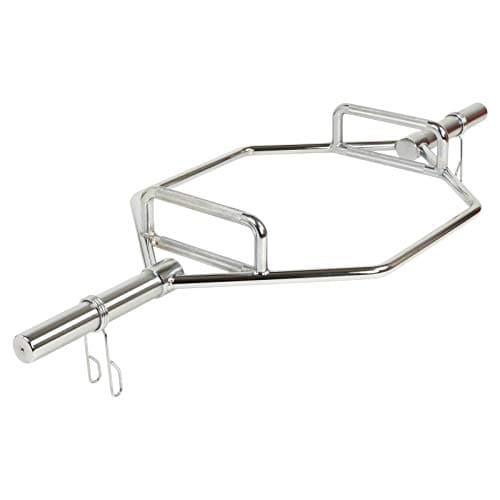
The best trap bars and hex bars in the UK for 2026, for home and garage gyms. Honest picks for deadlifts, shrugs and farmer's carries, from budget 1 inch shrug bars to premium open frames.
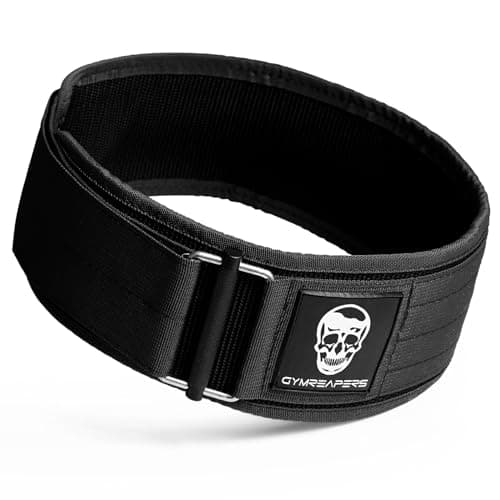
The best weight lifting belt for UK lifters in 2026, from an £18 leather belt to a 13mm lever belt. Thickness, buckle type and sizing compared for squats and deadlifts.
Are adjustable dumbbells worth it? We run the UK numbers on cost and floor space against a fixed hex set, then cover dial, twist and spin-lock types, drop risk and who should skip them.
Best Exercise is a participant in the Amazon EU Associates Programme, an affiliate advertising programme designed to provide a means for sites to earn advertising fees by advertising and linking to Amazon.co.uk. As an Amazon Associate we earn from qualifying purchases. This comes at no extra cost to you and never influences our independent reviews or rankings.