Recovery
The Pod Company Cold Plunge Chiller Review: 5°C for Under £500
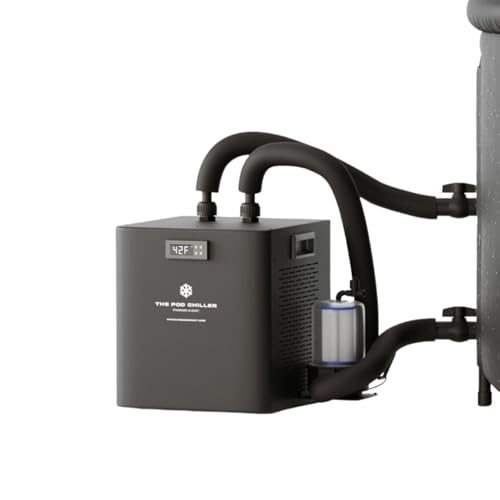
Our Pod Company cold plunge chiller review: a 280W, 1/3 HP unit that holds 5°C, with honest pull-down times, running costs, filters and tub fit.

By Mike Shilling, Recovery & Training Editor · Updated 17 November 2026
We may earn a commission from qualifying purchases made through links on this page, at no extra cost to you. This never affects our ratings.
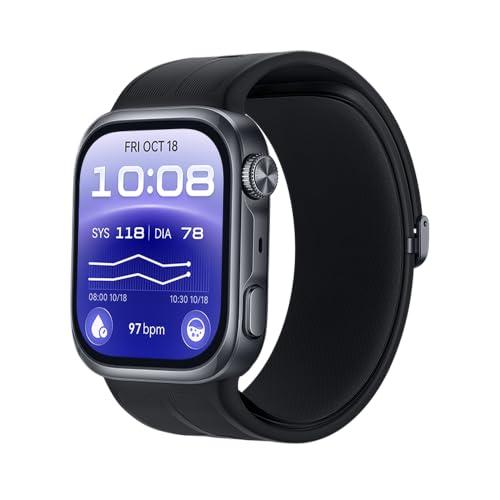
The Huawei Watch D3 is a smartwatch with a small inflatable blood pressure cuff built into its strap. Press the button, hold your wrist at heart height, and an airbag inside the band pumps up and squeezes your wrist exactly like a home monitor does on your arm. Nothing else at around £399.99 at the time of writing does this as convincingly, and that single feature is the whole reason to buy one.
Our verdict, up front: if you have high blood pressure, borderline readings, or a GP who wants you checking more often, the D3 is a far easier habit to keep than a cuff in a drawer. It isn't a replacement for a validated upper-arm monitor, though, and it's a fairly ordinary fitness watch once you look past the cuff. We rate it 4.1 out of 5.
How we review
We haven't worn the Watch D3 ourselves. This review is built on Huawei's published UK specifications and safety information, peer-reviewed studies of the Watch D series, NHS blood pressure guidance and consistent patterns in verified owner feedback. Where the evidence on accuracy is mixed, we say so rather than picking the flattering study.
Most "blood pressure" smartwatches estimate it from the optical heart rate sensor, using pulse wave timing and a calibration. Those cuffless estimates have a poor track record. The D3 takes a different route. According to Huawei's UK product page, it uses the oscillometric method with a mechanical airbag and a high-precision pressure sensor, which is the same principle as the upper-arm machines sold in Boots.
That matters. An inflating cuff physically occludes the artery and reads the pressure oscillations as it deflates, so you're getting a real measurement rather than a modelled guess. The trade-off is that the strap is chunkier than a normal watch band and you have to sit still for each reading.
Huawei's posture rules for a single reading are strict, and they're worth taking seriously:
Two strap sizes come in the box. The M-sized airbag strap fits 130 to 160 mm wrists and the L-sized fits 161 to 210 mm. Huawei warns that accuracy may suffer outside 130 to 210 mm, so measure your wrist before ordering (a paper ruler is included too).
Huawei markets the D3 with two phrases: "Medical-Grade Blood Pressure Monitoring" and "CE-MDR-Certified as a Medical Device". The second is the concrete one. It means the blood pressure function carries CE marking under the EU Medical Device Regulation, which is a regulatory sign-off on safety and performance documentation.
It doesn't mean the watch matches a clinic device in every situation, and Huawei doesn't claim that. Its own warning list says the device hasn't been validated for pregnant people (including preeclampsia), shouldn't be used in emergency care, and that you should never diagnose yourself or change medication based on its readings. It also flags that arrhythmias such as atrial fibrillation, diabetes, kidney disease and arteriosclerosis can all affect accuracy, and that wrist and upper-arm readings "may vary significantly" in people with atherosclerosis.
We'd add one practical point: whatever the certification, most GPs will still want key readings confirmed on a validated upper-arm monitor before acting on them.
This is where honest reviews of the D series have to slow down. The evidence is better than for any other blood pressure watch, and it's still not settled.
The best summary comes from a 2026 European Society of Hypertension consensus statement on wristwatch-type cuff monitors. Its authors reviewed 26 relevant papers and found only two devices with validation studies run to established standards: the Omron HeartGuide and the Huawei Watch D/D2. Static validation (sitting still, correct posture) "generally showed acceptable accuracy". Data on 24-hour ambulatory use, special populations and clinical outcomes were described as limited. Note that this covers the D and D2; the D3 uses the same approach with a narrower airbag, but we haven't found a published independent validation of the D3 itself yet.
The ambulatory side is the weak spot. An independent Spanish study had 41 hypertensive outpatients wear a Watch D2 alongside a validated clinical ABPM unit for 24 hours. The watch under-read systolic pressure by 6.8 mmHg on average, and only 47% of systolic readings landed within 10 mmHg of the reference, below the accepted threshold. Heart rate agreement was excellent. The authors concluded it wasn't yet good enough for clinical ambulatory monitoring.
Put those together and the practical picture is fairly clear. Seated, still and correctly positioned, the D series reads close to a proper cuff. Asked to track you through a normal day, it drifts. A 7 mmHg under-read is enough to make a 142 systolic look like 135, which is the difference between "high" and "fine" on the NHS home threshold.
That threshold is worth knowing. The NHS blood pressure test guidance says blood pressure is usually considered high at 135/85 or above when checked at home, and 140/90 or above when checked by a healthcare professional, and its description of a standard test uses a cuff on the upper arm. Our advice: use the D3 for frequent spot checks and trends, then confirm anything near or above 135/85 with an upper-arm monitor before you see your GP.
Check the Huawei Watch D3 price on Amazonaround £399.99The D3 can run a 24-hour monitoring plan, inflating at set intervals through the day and overnight. Huawei's ABPM guidance follows the European Society of Hypertension recommendation of readings every 15 to 30 minutes, with at least 20 daytime and 7 night-time readings. Daytime readings need you to stop and hold the correct posture; night-time ones happen automatically while you sleep.
At the end you get average systolic and diastolic figures for daytime, night-time and the full 24 hours, which you can export from the Huawei Health app as a report for your GP. Be aware of the cost: an inflation every 15 minutes is intrusive, it can disturb sleep, and battery life falls to about a day. Huawei suggests picking a quiet day for it, which is sensible.
Given the Spanish D2 data above, we'd treat the ABPM report as useful context to bring to an appointment, not as a substitute for the clinic-issued 24-hour monitor your GP may arrange.
This is the feature that earns the D3 a place in our recovery section. Before an outdoor or indoor run, walk or cycle, the watch can prompt a reading and warn you to hold off on hard efforts if your pressure is high. Within two minutes of finishing, it takes another, so you can see how your body is responding to training load over weeks.
For anyone returning to exercise with diagnosed hypertension, that's genuinely useful. For a fit 30-year-old, it's a novelty you'll use twice. It only works with running, walking and cycling, not strength sessions.
Beyond blood pressure, the D3 includes a single-lead ECG. You hold the electrode on the side of the case for 30 seconds and get a report on the watch. Huawei notes that ECG availability varies by country, so check its supported list for the UK before relying on it.
Separately, the PPG-based Pulse Wave Arrhythmia Analysis checks for signs of atrial fibrillation in the background, and Huawei's support site lists the UK among supported countries for that feature. You also get TruSleep 5.0 sleep tracking, HRV, SpO2, stress, skin temperature and a "Health Glance" summary of 11 metrics. The Health Community feature lets family members see your readings and receive alerts, which some buyers will find reassuring for an older parent.
New owners get a free three-month Huawei Health+ membership, with guided workouts and meditation content. After that it's a paid subscription, though the core health features don't need it.
| Dimensions | 46.5 × 41 × 11.3 mm |
|---|---|
| Weight | Approx 40 g without strap |
| Display | 1.92-inch AMOLED, 408 × 480, 3000 nits peak |
| Blood pressure | Oscillometric, mechanical airbag in strap, 24-hour ABPM |
| Wrist fit | M strap 130 to 160 mm, L strap 161 to 210 mm (both included) |
| Heart sensors | Optical heart rate, single-lead ECG |
| Other sensors | 9-axis IMU, barometer, temperature, ambient light |
| Battery | Up to 6 days typical, approx 1 day with ABPM |
| Charging | Wireless SuperCharger, USB-C cable |
| Connectivity | Bluetooth 6.0, NFC (Curve Pay) |
| Compatibility | Android 8.0+, iOS 13.0+ |
| Water | Remove for swimming; no IP rating listed |
All figures come from the Huawei Watch D3 specification page.
Huawei says the D3 is 15% thinner and 9% lighter overall than the D2, with a strap 7.5 g lighter and a narrower airbag. At 11.3 mm it's now about as thick as a mainstream smartwatch, which helps for overnight wear during ABPM. The 1.92-inch AMOLED is large and bright, with a quoted 3000 nits peak, so it stays readable outdoors.
The aluminium case comes in black with a black HNBR rubber strap (the version linked here), plus gold and mocha gold versions with composite leather straps. Owners consistently describe the cuff squeeze as firm but not painful. Huawei does warn against measuring too often, since repeated inflation can bruise, and suggests taking the watch off periodically to rest your skin.
Everything syncs to the Huawei Health app. On Android, you'll need to install it from Huawei's AppGallery or website rather than Google Play, which takes a few minutes and puts some buyers off. On iPhone, it installs from the App Store as normal.
iPhone owners lose a bit more. Notifications appear, but you can't reply to messages from the watch. Bluetooth calling works on both platforms through the built-in speaker and microphone. If you want your blood pressure readings to flow into a wider health app ecosystem, check current export options before buying, as Huawei's third-party integrations are thinner than Apple's or Samsung's. We've covered the same app trade-offs in our Huawei Watch GT 6 Pro review.
Huawei's 6-day claim is more realistic than most, because its test already assumes six blood pressure readings and five ECGs a day, always-on heart rate and sleep tracking. Most owners should land at 5 or 6 days. ABPM is the exception, cutting it to roughly 24 hours.
As a sports watch, the D3 is limited. There are 100+ workout modes, including golf and snow sports, but Huawei's spec sheet lists no GPS or GNSS among its sensors, so outdoor runs and rides lean on your phone. If accurate pace and route data matter, the Huawei Watch GT 5 Pro or GT 6 Pro will serve you far better, though neither has a cuff.
Plenty of people still search for the D2, so here's the straight comparison based on Huawei's UK spec pages.
| Watch D3 | Watch D2 | |
|---|---|---|
| Thickness | 11.3 mm | 13.3 mm |
| Screen | 1.92-inch AMOLED | 1.82-inch AMOLED |
| Bluetooth | 6.0 | 5.2 |
| Water rating listed | None (remove for swimming) | IP68 (not for swimming) |
| Battery (typical / ABPM) | Up to 6 days / approx 1 day | Up to 6 days / approx 1 day |
| Charger | Wireless SuperCharger | Charging cradle |
The measurement method, sensors, ABPM mode and battery claims are effectively the same. The D3's gains are comfort and screen size. Two points push us towards the D3, though. The D2 is now low in stock at most UK retailers, and Huawei's UK spec page for the D2 lists a "defined support period" date of 26 September 2026, which has already passed. If you find a D2 heavily discounted and mainly want spot checks, it's still a capable device, but for a new purchase the D3 is the sensible choice.
Buy the D3 if you've been told to monitor your blood pressure, you struggle to keep up with a traditional cuff, or you want to see how training affects your pressure over time. The convenience of checking at your desk or before a run is the real benefit; frequent readings reveal patterns that a monthly check never will.
Skip it if you mainly want a sports watch with accurate GPS, if you swim, or if you need clinical-grade 24-hour data for a diagnosis. A validated upper-arm monitor costs a fraction of the price, and pairing one with a mainstream smartwatch such as the Samsung Galaxy Watch8 (best on Android) covers most bases. And if your health goals are more about body composition, the Withings BodyScan 2 adds a 6-lead ECG and segmental body composition from a smart scale instead.
See today's Huawei Watch D3 priceIt's the most credible wrist option available because it uses a real inflating cuff and the same oscillometric method as a home monitor. A 2026 European Society of Hypertension consensus statement found static validation studies of the Watch D and D2 generally showed acceptable accuracy, but evidence for 24-hour ambulatory use is limited, and one independent study of the D2 found it under-read systolic pressure by around 7 mmHg on average across 24 hours. Treat it as a very good trend tracker and confirm any worrying numbers with a validated upper-arm cuff.
Huawei states the Watch D3 is CE-MDR certified as a medical device, meaning it carries CE marking under the EU Medical Device Regulation for its blood pressure function. That is a regulatory approval, not proof it outperforms an upper-arm monitor, and Huawei's own warnings say never to diagnose yourself or adjust medication based on its readings.
The D3 is 2 mm thinner (11.3 mm against 13.3 mm), has a bigger 1.92-inch screen, a narrower airbag, a lighter strap and Bluetooth 6.0. Battery claims are identical at up to 6 days typical and around 1 day with 24-hour monitoring running. The D2 has a published IP68 rating, which the D3 spec sheet doesn't list, and the D2 is now hard to find in stock.
Yes, it supports iOS 13 or later and blood pressure, ECG and sleep data all sync to the Huawei Health app. The usual Huawei iPhone limits apply: notifications arrive but you can't reply from the wrist, and there's no Apple Health level of integration with third-party apps.
Huawei quotes up to 6 days of typical use, which already includes six blood pressure readings and five ECGs a day. Run a 24-hour ambulatory monitoring plan at 15-minute intervals and that drops to about 1 day, so plan to charge it before and after any ABPM session.
No. Huawei tells owners to remove it before swimming, showering in hot water or using a sauna, and to dry it fully after hand washing or rain before taking a reading, because water in the airbag can cause failed measurements or slow deflation. Liquid damage from those situations isn't covered under warranty.
Our Pod Company cold plunge chiller review: a 280W, 1/3 HP unit that holds 5°C, with honest pull-down times, running costs, filters and tub fit.
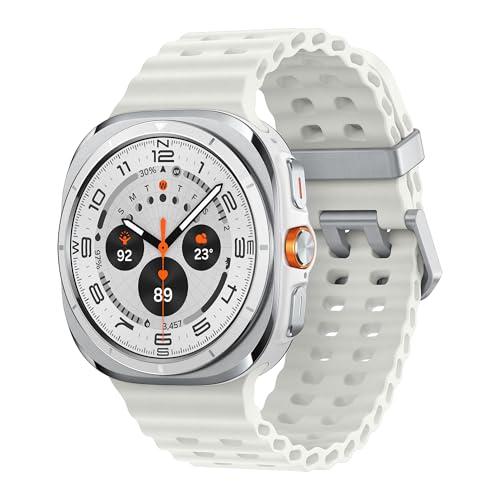
Samsung Galaxy Watch Ultra (2025) review for UK buyers: titanium, dual-frequency GPS, 590 mAh battery, 10 ATM and LTE for around £349. What the Ultra2 adds, and who should save.
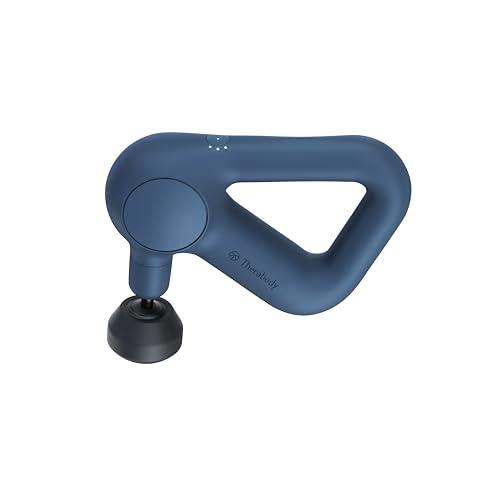
Our Theragun Relief review covers the 10mm stroke, three speeds, 621g build and two-hour battery, how it compares with the Mini and Prime, and who should buy it in the UK.
COROS vs Garmin for UK runners: PACE 4, PACE 4 Pro, APEX 4 and NOMAD against Forerunner, fenix and Instinct on battery, maps, apps, Garmin Pay and price.
Best Exercise is a participant in the Amazon EU Associates Programme, an affiliate advertising programme designed to provide a means for sites to earn advertising fees by advertising and linking to Amazon.co.uk. As an Amazon Associate we earn from qualifying purchases. This comes at no extra cost to you and never influences our independent reviews or rankings.