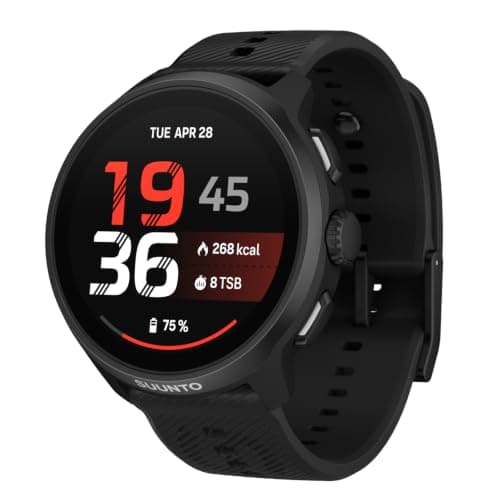
The Suunto Run 2 is the watch the original Run should have been. Suunto has taken a 35g running watch that was light and cheap but dim and mapless, and given it a 2,000 nit AMOLED panel, dual-band GPS, a 12-channel heart rate sensor and free worldwide offline maps. On Amazon UK it's £264.99, which undercuts Suunto's own store (£299 for the All Black when we checked) and puts it squarely between the COROS PACE 4 and the Garmin Forerunner 265.
My verdict, in short: it's the best-specified road running watch at its price if you want maps, and the hardware is genuinely competitive. But it launched on 8 September 2026, so there's barely a month of owner feedback to go on, and the two weaknesses Suunto always has (thinner software, smaller ecosystem) haven't gone anywhere.
How we review
This review is based on Suunto's official UK product and specification page, the Amazon UK listing, and the early verified owner feedback available a month after launch. We haven't tested the Run 2 ourselves, and long-term reliability data simply doesn't exist yet, so we've stuck to published specs and said plainly where something is still unknown.
If you're already leaning towards it, Amazon is currently cheaper than buying direct from Suunto.
Suunto publishes more detail on its own page than Amazon does, and a few figures differ between the two. Where they disagree, we've used Suunto's official Run 2 specifications.
Suunto Run 2 key specs
Display
1.32 in LTPS AMOLED, 466 x 466, up to 2,000 nits
Case
46 x 46 x 11.7 mm, stainless steel bezel, Gorilla Glass
Weight
35 g body, 53 g with the silicone strap
Water resistance
5 ATM / 50 m
Battery capacity
380 mAh (295 mAh on the original Run)
GPS battery
Up to 24 h dual-band (18 h always-on), 30 h single-band, 40 h power saving
Daily use
Around 10 days training use; up to 13 days smartwatch mode
12-channel optical sensor; Bluetooth chest strap support
Storage
4 GB (Standard) or 64 GB (Premium), shared by maps and music
Sport modes
35 according to Suunto's FAQ
Strap
22 mm quick release, fits 130 to 200 mm wrists
Design and screen
Thirty-five grams is light. Even with the strap you're at 53g, which is the sort of number that stops you noticing the watch overnight and means sleep tracking actually happens. The case is 46mm across and 11.7mm thick, a touch bigger than the 45mm Race S, so very slim wrists may find it looks a bit broad.
The screen is the headline change. The original Run topped out at 600 nits; the Run 2 claims 2,000, which Suunto says is three times brighter in practice. That's the difference between reading your pace at a glance on a bright June morning and tilting your wrist to find the right angle. Gorilla Glass and a stainless steel bezel cover the front, and the 5 ATM rating handles swimming and rain without fuss.
GPS and heart rate
Dual-band GNSS is now standard at this price, and the Run 2 has it across all five major systems. It matters most where single-band watches struggle: between tall buildings and under heavy tree cover, where reflected signals push your track off the road. A Swiss validation study of eight sport watches (single-band models from Apple, COROS, Garmin, Polar and Suunto) found average distance errors of 3.2 to 6.1 percent, with the worst results in urban and forest areas (Gilgen-Ammann et al., JMIR mHealth and uHealth 2020). Dual-band reception is designed to shrink exactly that gap, though nobody has published independent accuracy data on the Run 2 yet.
The 12-channel optical sensor sits behind curved 2.5D glass, and Suunto claims it keeps up better with intervals and surges. That's plausible; it's also what every brand says about every new sensor. Wrist optical heart rate still has physical limits, and a 2025 device validation study found a wrist-worn device averaged around 7 percent error against an ECG while an arm-worn sensor stayed within about 1.4 percent (JMIR Cardio 2025). If you train strictly to heart rate zones, pair a Bluetooth chest strap, which the Run 2 supports.
For racing, Suunto adds a Marathon mode with a real-time finish prediction (built from your pace, the route's elevation and your fitness), a Virtual Pacer, Race mode and target modes for time, distance and ascent. Structured intervals, running power and a ghost runner are all on the spec list too.
Battery life
Here's where the numbers need untangling. Suunto quotes 24 hours of training in its most accurate dual-band mode, dropping to 18 with the always-on display, then 30 hours on single band and 40 hours in power saving modes. For everyday wear the marketing says 10 days, while the detailed spec table says up to 13 days in smartwatch mode. Assume 10 days if you run most days and wear it to bed.
That's a clear step up on the original Run (20 hours, 8 days) and enough for a marathon block with one charge a week. It isn't class-leading, though. The COROS PACE 4 claims 41 hours of GPS and about 19 days of daily use, and it costs less. If you hate charging, that gap is real.
App, maps and smart features
Free offline maps are the reason to pick this over a similarly priced Garmin. You download regions through the Suunto app, then follow routes with turn guidance and a breadcrumb trail, which turns a run in an unfamiliar city into a run rather than a phone-check every junction. Route planning uses Suunto's heatmaps of where other people actually run, and that's genuinely handy for finding decent loops when you're travelling.
Storage is the catch to watch for. Suunto lists a 4GB Standard version and a 64GB Premium version, with maps and music sharing that space. Four gigabytes fills up fast once you add a country's map and a few playlists, and the Amazon listing doesn't make it obvious which tier you're getting, so check before you order.
The rest of the app is decent and a bit clumsy. On our Race S review we found map downloads awkward and training terminology unexplained, and there's no sign yet that Suunto has overhauled any of that for the Run 2. Smart features stretch to notifications, predefined message replies, music control, find my phone and onboard music. Suunto doesn't list contactless payments or an app store, and Strava and TrainingPeaks sync covers most people's third-party needs.
Genuine cons
Battery trails COROS. Twenty-four hours of dual-band GPS is fine; the PACE 4's 41 hours is better, at a lower price.
Training guidance is raw data, not coaching. Suunto gives you overnight HRV, a Recovery Index, recovery time, VO2max, lactate threshold and training load. What it doesn't list is anything like Garmin's Training Readiness score, morning report or daily suggested workouts, so you do the interpreting.
Smaller ecosystem. No app store, fewer compatible accessories, and a smaller community of coaches who know the platform.
It's brand new. One month on sale means no data on strap wear, button durability or how the battery holds up after a year. Early feedback isn't long-term feedback.
How it compares
Against the Garmin Forerunner 265, around £299, you trade Garmin's training suite and apps for free offline maps and four extra hours of dual-band GPS. Runners who want to be told what to do each morning should pick the Garmin. The Forerunner 165 Music at around £205 is cheaper but single-band, with 19 hours of GPS and no maps.
The COROS PACE 4 (around £229) is lighter at 32g and lasts much longer; the Run 2 answers with maps and a brighter screen. Within Suunto's own range, the Race S (around £259) offers 30 hours of GPS and a digital crown for similar money, while the Race 2 costs around £413 and lasts 55 hours. For pure road running, the Run 2 is the lighter, simpler pick of the three.
Pros
35 g body, 53 g with strap, light enough to forget about overnight
2,000 nit AMOLED is a big jump from the original Run's 600 nits
Dual-band GNSS across five satellite systems
Free worldwide offline maps with heatmap-based route planning
Onboard music and a dedicated Marathon mode with finish prediction
Undercuts the Garmin Forerunner 265 on Amazon UK while adding maps
Cons
24 hours of dual-band GPS trails the COROS PACE 4 by a wide margin
No Garmin-style readiness score or daily suggested workouts
4 GB Standard storage fills quickly with maps and music
Smaller app and accessory ecosystem than Garmin
Too new for any long-term durability or battery ageing data
At £264.99 it's cheaper on Amazon than on Suunto's own site, which doesn't happen often with a watch this new.
For a road runner who wants a light AMOLED watch with dual-band GPS and free offline maps for around £265, yes. Nothing Garmin sells at that price includes maps. If battery life is your priority the COROS PACE 4 goes further for less, and if you want daily training advice the Garmin Forerunner 265 is the better coach.
What is the difference between the Suunto Run and the Suunto Run 2?
Suunto's own comparison lists a much brighter screen (2,000 nits against 600), a bigger 380 mAh battery against 295 mAh, offline maps (the original Run has none), upgraded GPS and heart rate hardware, and battery figures of 10 days daily use and 24 hours high performance GPS against 8 days and 20 hours. The case grows from 11.5mm to 11.7mm thick, which you won't notice.
How long does the Suunto Run 2 battery last?
Suunto quotes up to 24 hours of training in its all-systems dual-band mode (18 hours with the always-on display), 30 hours on single band and 40 hours in power saving GNSS modes. For daily wear it quotes up to 13 days in smartwatch mode, while its headline marketing and the Amazon listing say around 10 days of daily training use. Treat 10 days as the realistic figure if you run most days.
Does the Suunto Run 2 have offline maps and music?
Yes to both. Free worldwide offline maps download to the watch through the Suunto app, and you can store music on the watch for phone-free runs. Suunto lists a Standard version with 4GB of storage and a Premium version with 64GB, shared between maps and music, so check which one an Amazon listing is selling before you buy.
Is the Suunto Run 2 waterproof?
It's rated to 5 ATM (50 metres), which covers pool swimming, open water and running in heavy rain. Suunto says it isn't made for snorkelling, scuba or diving off boards, and recommends rinsing it in fresh water after a swim.
Does the Suunto Run 2 have Training Readiness like Garmin?
Not as such. It tracks overnight HRV, a Recovery Index, recovery time, VO2max, lactate threshold and training load, which covers the raw data. What it doesn't list is a single morning readiness score or daily suggested workouts in the way Garmin's Forerunners do, so you interpret the numbers yourself.
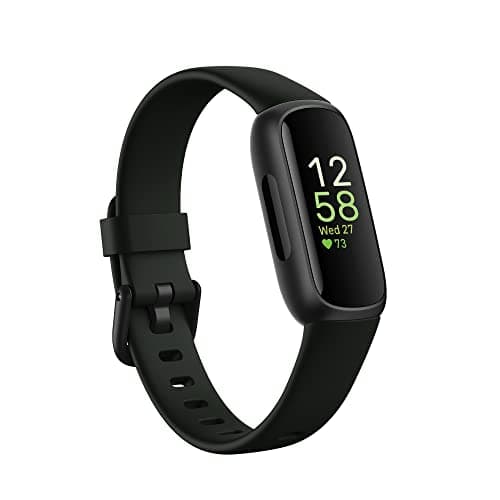
An honest Fitbit Inspire 3 review covering its AMOLED screen, 10-day battery, sleep and heart rate tracking, connected GPS, the Premium paywall and who should buy it.
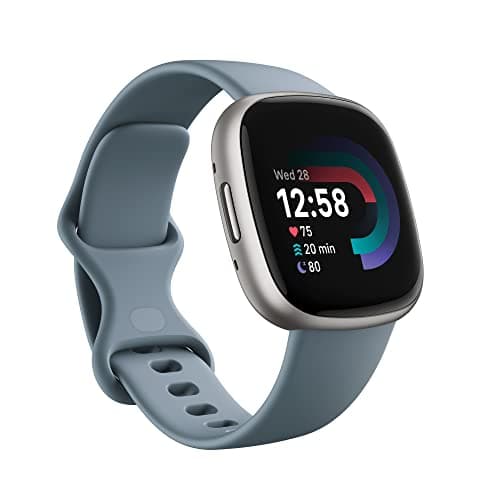
Our Fitbit Versa 4 review covers built-in GPS, 6+ day battery, Google Maps and Wallet, the lost third-party apps and Wi-Fi, and who should buy it at £179.
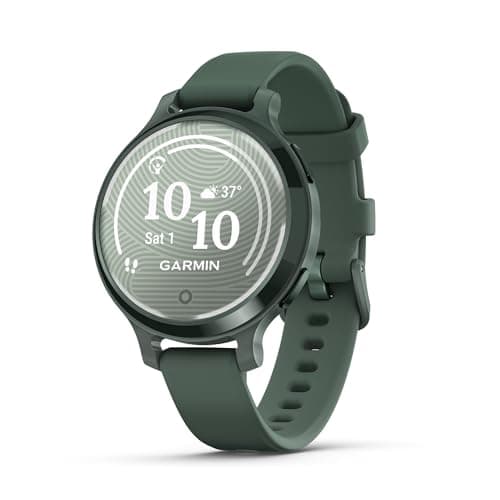
An honest Garmin Lily 2 Active review: built-in GPS on a 38mm, 29g case, 9 day battery, Garmin Pay, and the greyscale screen and missing music storage to weigh against the price.
Garmin vivomove Trend review for UK buyers: analogue hands over a hidden touchscreen, Body Battery, Garmin Pay, Qi charging, and the 5 day battery and missing GPS to weigh up at £232.
Best Exercise is a participant in the Amazon EU Associates Programme, an affiliate advertising programme designed to provide a means for sites to earn advertising fees by advertising and linking to Amazon.co.uk. As an Amazon Associate we earn from qualifying purchases. This comes at no extra cost to you and never influences our independent reviews or rankings.