Home Gym
Are Vibration Plates Worth It? What the Research Actually Shows
Are vibration plates worth it? Yes for balance, bone health support and low-impact warm-ups; no for weight loss or replacing strength training. The evidence.

By Paul Kendrick, Cardio & Endurance Editor · Updated 18 August 2026
We may earn a commission from qualifying purchases made through links on this page, at no extra cost to you. This never affects our ratings.
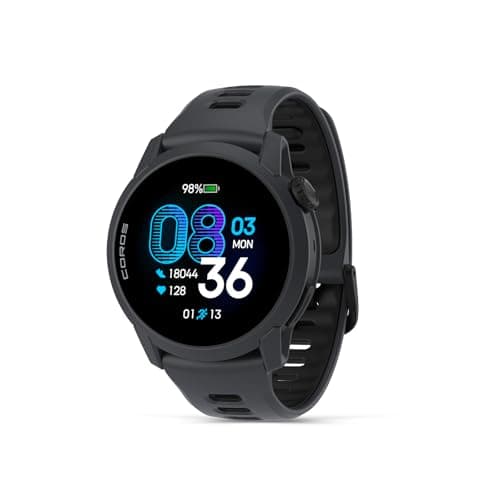
COROS keeps doing the same trick and it keeps working: take the features runners actually use, cut the ones they don't, and sell it for less than Garmin. The PACE 4 weighs 32 grams with the nylon band, which is roughly the weight of an energy gel, and it runs for 41 hours of continuous GPS or about 19 days of ordinary use. At around £229 on Amazon UK, it undercuts most of the competition by a comfortable margin.
The compromises are real, though, and they cluster around navigation. This is a training watch first and a map-reading device barely at all. Know that going in and the PACE 4 is very hard to argue with.
How we review
This review draws on COROS's published specifications, the product documentation and consistent findings across owner reviews and expert running outlets. We have not run our own multi-month test of this exact watch, so we report corroborated patterns rather than single opinions, and we say plainly where the manufacturer's figures depend on settings most people change.
Runners who train regularly and want the numbers without the noise. The PACE 4 suits someone building towards a half marathon or marathon, doing structured sessions, and caring more about pace, heart rate and recovery than about maps and payment apps. It's also the obvious pick for anyone who resents charging a watch.
It's less suited to trail and ultra runners heading somewhere unfamiliar, who need proper maps, and to people who want a smartwatch that handles notifications, contactless payment and music storage well. COROS does the first of those adequately and the others barely.
COROS put a 1.2 inch AMOLED on the PACE 4 with a claimed 164 percent resolution increase over the PACE 3, and it auto-adjusts brightness (COROS PACE 4 specifications). That's a meaningful upgrade in daylight readability, and colours on the data screens are sharp enough that you can read a pace field at a glance.
But 1.2 inches is small. If you're running a complex interval session with four data fields and a lap counter, you'll squint. Runners with any degree of long sight will want to trim their data screens down to three fields. The flip side is what the small case does for weight: at 32 grams with nylon or 40 grams with silicone, it disappears on the wrist in a way that a 55 gram Garmin never quite does.
| Display | 1.2 inch AMOLED touchscreen, auto brightness |
|---|---|
| Weight | 32 g with nylon band, 40 g with silicone |
| GPS battery | 41 hours continuous, All Systems mode |
| Daily use battery | Up to 19 days with training and sleep tracking |
| Satellites | All Systems and Dual Frequency modes |
| Controls | Digital crown, two buttons and touchscreen |
| Navigation | Breadcrumb routes, no offline base maps |
| Extras | Microphone, voice control, Voice Pins, media controls |
| Charging | USB-C |
Forty-one hours of continuous GPS is a genuinely long time. It covers a 100 mile ultra with hours in hand, and for a marathon runner it's a whole training block on two or three charges. The 19 day daily-use figure assumes normal training plus sleep tracking, with the display waking on wrist raise rather than staying on permanently.
Turn always-on display on and that figure drops sharply, which is true of every AMOLED watch and worth knowing before you're disappointed. Left in the default setup, the PACE 4 comfortably outlasts anything Garmin sells at this price, and charging over USB-C rather than a proprietary clip is a small mercy.
This is the line COROS drew to protect the PACE Pro. The PACE 4 does breadcrumb navigation: import a route from Strava, Ride with GPS or Wikiloc, and the watch draws it as a line with your position on it, plus off-course alerts. There's no underlying map, so you can't see the footpath twenty metres to your left, and you can't improvise a route on the fly.
For road running, repeated loops and races with marshals, that is completely sufficient. For a first visit to the Peak District in fog, it isn't. Anyone whose running involves unfamiliar trails should look at the COROS PACE Pro or a mapping Garmin instead, and accept the extra weight and cost.
The redesigned heart rate sensor with larger LEDs is a step forward on optical accuracy, though as with every wrist-based sensor, the numbers get unreliable during hard intervals and anything involving a bent wrist. If you train by heart rate zones seriously, pair a chest strap. No wrist optical sensor beats one.
The training platform gives you effort pace, training load, recovery timing, sleep stages and HRV, plus a race predictor and personalised marathon plans. COROS presents this with far less ceremony than Garmin does, which some runners find refreshing and others find sparse. There's no daily readiness score nagging you to rest.
The microphone is the genuine novelty. Voice control for setting workouts and alarms works well enough, and Voice Pins, which attach a spoken note to a point on your route, are unexpectedly useful for anyone reconnoitring a race course or logging where a path was flooded.
For general fitness, any of this counts towards the 150 minutes of weekly moderate activity that UK guidance recommends, alongside strength work twice a week (NHS physical activity guidelines). The watch will happily tell you when you've hit it. It won't tell you to do the strength half, so book that in yourself.
At around £229 the PACE 4 competes with watches that cost 40 percent more and beats several of them on battery and weight. What you give up is ecosystem: fewer apps, no offline music, thinner smartwatch functionality and a smaller community of third-party tools. If those matter to you, the extra money for a Garmin buys something real. If they don't, this is the most watch per pound in running right now.
It is one of the best options for a first proper running watch. The interface is simpler than Garmin's, the training metrics are presented without drowning you in scores, and the battery means you charge it roughly once a fortnight rather than every few days. Beginners also benefit from the low weight, since a light watch is one you keep wearing.
COROS quotes 41 hours of continuous GPS in the standard All Systems satellite mode, and up to 19 days of daily use with training and sleep tracking. Real-world figures land close to that if you keep the always-on display off. Marathon runners can train for a full block on two or three charges.
No, and this is the main difference from the pricier PACE Pro. The PACE 4 does breadcrumb navigation, so it draws your route as a line and shows you where you are on it, but there is no underlying map with roads and paths. For road running and repeated routes that is fine. For unfamiliar trails, spend the extra on the Pro.
The PACE 4 is lighter, lasts far longer between charges and costs less. The Forerunner 265 has a richer app ecosystem, more third-party integrations, offline music from Spotify and a more mature training readiness system. Choose COROS for battery and simplicity, Garmin for the ecosystem.
It is rated for swimming and handles pool and open water sessions, with dedicated swim modes that count lengths and strokes. Like any sports watch, avoid hot showers and saunas, since heat and steam are harder on the seals than cold water is.
Yes. There is a built-in microphone, so you can set alarms, create workouts and record voice notes mid-run. The voice notes feature, which COROS calls Voice Pins, drops a marker on your route with your recording attached. It is more useful than it sounds for anyone scouting a race course.
Are vibration plates worth it? Yes for balance, bone health support and low-impact warm-ups; no for weight loss or replacing strength training. The evidence.
Are walking pads worth it? Who they suit, the step and calorie gains from treadmill desk research, cost per use, noise, spec limits and when to buy a treadmill.
The Arnold split explained: a 6-day chest and back, shoulders and arms, legs rotation run twice a week. Full sample week, who it suits, home and 4-day versions.
Can you run on a walking pad? Mostly no: most cap at 6km/h with short belts and no rails. Which 2-in-1 pads allow a light jog, and when to buy a real treadmill.
Best Exercise is a participant in the Amazon EU Associates Programme, an affiliate advertising programme designed to provide a means for sites to earn advertising fees by advertising and linking to Amazon.co.uk. As an Amazon Associate we earn from qualifying purchases. This comes at no extra cost to you and never influences our independent reviews or rankings.