Best Tart Cherry Juice UK 2026: What It Does and What It Doesn't
By Declan Hallwood, Nutrition & Supplements Editor · Updated 20 September 2026
We may earn a commission from qualifying purchases made through links on this page, at no extra cost to you. This never affects our ratings.
Tart cherry juice earned its place in athletes' fridges the honest way: someone ran a trial, marathon runners recovered slightly better, and the finding held up reasonably well when other groups repeated it. That's more than most recovery supplements can claim. It's also a long way from the claims on the front of the bottles, and the gap between a 30ml serving of Montmorency concentrate and a capsule of dried cherry extract is bigger than the marketing lets on.
What follows are the tart cherry products worth buying in the UK, ranked by how closely they match what the research actually tested.
How we chose
We researched the best-reviewed and most widely bought Montmorency cherry products on Amazon UK rather than running our own testing programme. We compared anthocyanin delivery per serving where it is declared, cost per serving rather than cost per bottle, whether the product is 100 percent cherry or a diluted juice drink, and the recurring themes in verified owner feedback. Prices and specs were correct at the time of writing and change often, so check current details before buying.
What the evidence says
Two things are being sold here, and they have separate bodies of evidence behind them.
For recovery, a systematic review and meta-analysis pooling the tart cherry trials found genuine benefit for recovery from strenuous exercise, concentrated in reduced muscle soreness and better subjective recovery (Int J Sport Nutr Exerc Metab). A more recent meta-analysis focused specifically on tart cherry juice and exercise-induced muscle damage in athletes reported a similar picture (Sports Med Open). Neither found it turns you into a different athlete. Both suggest the day-after-tomorrow ache is measurably less grim.
For sleep, the original finding came from a 2012 trial reporting increased melatonin and improved time in bed, total sleep time and sleep efficiency after tart cherry juice concentrate (Eur J Nutr). A 2025 systematic review on tart cherry and sleep quality found the literature broadly supportive but inconsistent, which is a fair summary of a small field (Food Sci Nutr).
The counterpoint deserves a mention rather than burial. High-dose antioxidant supplementation taken around training may interfere slightly with the oxidative signalling that drives adaptation, and the current thinking treats that as a timing question rather than a reason to avoid antioxidants altogether (Antioxidants). Use tart cherry when recovery is the priority, such as race week, a tournament or a heavy training block. Skip it during the base phase when adaptation is the priority.
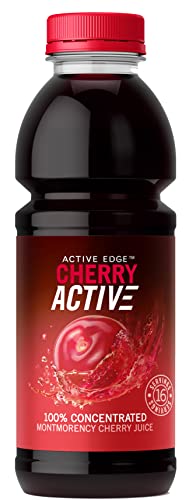
1. CherryActive Concentrate 473ml: Best Overall
CherryActive is the brand that keeps appearing in the published research, and buying it means buying the thing that was actually studied rather than something adjacent to it. The 473ml bottle is 100 percent Montmorency cherry concentrate, no water, no sweetener, no preservative. One 30ml serving diluted in water is the dose the trials used, and each bottle gives you roughly 16 of them.
At around £22 it looks expensive next to a litre of supermarket cherry juice. Per serving it isn't: about £1.35 a shot for a genuine research dose, against ready-to-drink juices where you need 250ml or more of a diluted product to get anywhere close. The concentrate also stores far better, since a bottle in the fridge lasts weeks rather than days.
Taste is the honest drawback. Undiluted Montmorency concentrate is aggressively sour, closer to unsweetened cranberry than anything you'd drink for pleasure. Cut it with 150ml to 200ml of water or mix it into sparkling water, and it becomes perfectly drinkable. Some people add it to a protein shake instead.
Pros
100 percent Montmorency concentrate, the format used in most published trials
About 16 x 30ml servings per bottle, roughly £1.35 per research dose
No added sugar, sweetener or preservative
Keeps for weeks in the fridge once opened
Cons
Sharply sour, needs diluting properly to be pleasant
Around £22 up front, which puts people off despite the per-serving maths
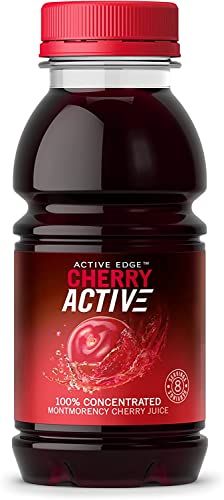
2. Active Edge CherryActive Concentrate 237ml: Best Starter Size
Identical concentrate, half the bottle, around £14. That's about eight servings, which happens to be almost exactly the four-to-seven-day loading protocol used in the recovery trials.
Buy this one first. Sour cherry concentrate is not a flavour you can predict from a description, and eight servings tells you whether you'll stick with it and whether you notice anything before you commit to the larger bottle. If you're buying it for one specific event, a marathon, a tournament weekend or a testing week in the gym, this is the right size full stop.
Per serving it costs slightly more than the 473ml, which is the usual small-pack penalty and hardly punitive.
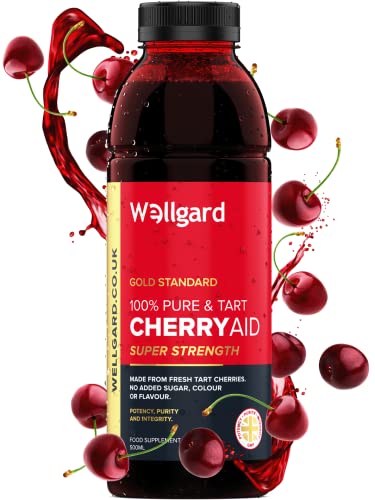
3. Wellgard CherryAid 100% Montmorency 500ml: Best Ready to Drink
Not everyone wants to measure and dilute. Wellgard's CherryAid is 100 percent Montmorency juice, made in the UK, in a 500ml bottle at around £15, and you drink it as it comes.
Being juice rather than concentrate, the anthocyanin load per millilitre is much lower, so a 500ml bottle is closer to a couple of days of a research-level protocol than a fortnight of it. Read the serving guidance on the bottle rather than assuming a glass equals a shot of concentrate. What you're paying for is convenience and a far gentler flavour, and for a lot of people that's the difference between using it and leaving it in the cupboard.
Honest cons: the cost per anthocyanin dose is noticeably worse than concentrate, and once opened it needs drinking within a few days rather than a few weeks.
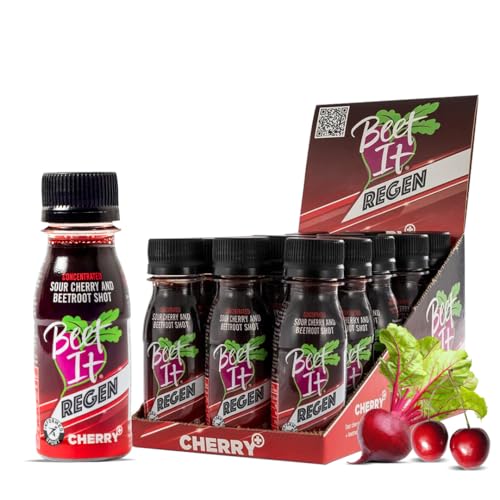
4. Beet It Regen Cherry Shot: Best for Hard Training Days
This is a different animal: a cherry shot that also delivers 125mg of dietary nitrate per serving, stacking the beetroot nitrate story on top of the cherry anthocyanin story. Beet It is the brand that shows up in the nitrate literature because it declares content per serving, which is exactly why it's here.
Around £25 for the pack puts it at the premium end, and it's the only product in this guide doing two jobs at once. If you already take a nitrate shot before hard sessions and a cherry concentrate afterwards, this replaces both with one bottle you can throw in a kit bag. The nitrate dose is modest by beetroot-shot standards, so treat it as a combined recovery-and-endurance product rather than a full pre-workout nitrate load.
The drawback is flexibility. You cannot separate the two ingredients, so if you want cherry without nitrate on a rest day, or a bigger nitrate dose before a time trial, you'll end up buying something else as well.
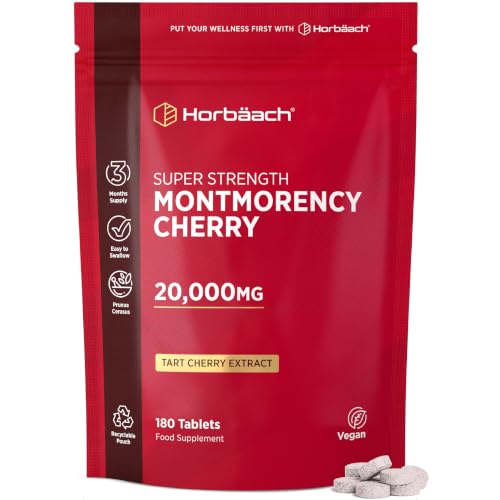
5. Horbaach Montmorency Cherry Tablets: Best Budget Capsule
At around £8 for 180 tablets, roughly three months at the label serving, this is the cheapest way to get Montmorency cherry into you. It's a 50 to 1 concentrated extract, marketed at 20,000mg equivalent, and the tablets are small enough to swallow without ceremony.
Be clear-eyed about what capsules can and cannot do. The recovery and sleep trials used juice or concentrate delivering a substantial anthocyanin load in liquid form, and extract tablets deliver a fraction of that regardless of how the equivalent figure is presented on the front of the bottle. If you want the evidence-backed protocol, buy concentrate. If you want a convenient daily Montmorency habit for general antioxidant intake, or you simply cannot face the taste, this does the job cheaply.
Pros
About £8 for 180 tablets, by far the cheapest option here
No taste to get past and nothing to measure or dilute
Easy to travel with and keep at a desk
Cons
Anthocyanin load per serving is far below the juice protocols used in research
The 20,000mg equivalent figure describes fresh-fruit equivalence, not what you absorb
No published third-party assay of anthocyanin content
Around £22, 100% concentrate, about 16 x 30ml servings
Active Edge CherryActive 237ml
Around £14, same concentrate, about 8 servings, ideal trial size
Wellgard CherryAid 500ml
Around £15, 100% Montmorency juice, drink as it comes, UK made
Beet It Regen Cherry Shot
Around £25, cherry plus 125mg declared dietary nitrate per serving
Horbaach Cherry Tablets
Around £8, 180 tablets, 50:1 extract, cheapest and least potent
Buying tart cherry juice in the UK
The British shelf is narrower than the American one, which matters if you're lifting a protocol straight out of a US study. Montmorency concentrate in a glass bottle is the format most of that research used, and it's what CherryActive and a handful of own-brands sell here. Ready-to-drink 100 percent juice, like Wellgard's CherryAid, gets pressed and bottled in the UK, so you skip the diluting at the cost of hauling home a lot more liquid for the same anthocyanins. Capsules are the convenience play, cheapest by a distance and furthest from anything anyone tested.
Read the ingredients panel rather than the front of the bottle. Anything labelled a cherry "juice drink" is diluted, usually with apple juice sitting first on the list and sugar not far behind, and those bottles undercut the real stuff per litre for an obvious reason. The wording worth paying for is 100 percent Montmorency, concentrate or pressed. Morello and generic sour cherry get shelved alongside it and are not the same fruit.
One more UK quirk: concentrate drifts in and out of stock on Amazon and prices move by a few pounds between weeks, so if you're loading for a race, buy the bottle before the taper rather than three days out.
How to use tart cherry juice
Load, don't dose. The trials that found a benefit had participants taking cherry for four to seven days spanning the hard block, typically two servings a day, rather than drinking one glass after a session and hoping. Start three or four days before the event.
For sleep, take it in the evening, an hour or two before bed. For recovery, split it morning and evening and keep going for two or three days afterwards, since delayed onset soreness peaks around 48 hours in.
Dilute concentrate properly. Neat Montmorency shots are hard on tooth enamel and harder on your stomach; 30ml in 200ml of water is the standard.
Work out the cost before you commit to a block, because this is where UK buyers get caught. At two 30ml servings a day, a 473ml bottle of concentrate lasts about eight days rather than the sixteen the serving count implies, so a seven-day loading protocol around a marathon runs close to a full bottle. Ready-to-drink juice needs roughly 250ml to 350ml twice daily to land in the same anthocyanin range, which is why it looks cheaper per bottle and works out dearer per useful dose. Capsules are the convenient option and the hardest to compare, since most UK brands declare a dried fruit equivalent rather than an anthocyanin figure.
Who should be careful
Tart cherry juice carries real sugar and sorbitol, so a large serving can cause bloating, wind or loose stools, and anyone managing diabetes should count it as carbohydrate rather than treating it as a free supplement. Cherries carry moderate oxalate, which is relevant if you've had calcium oxalate kidney stones.
The adaptation question is worth taking seriously rather than dismissing. Cycling tart cherry around competitions and heavy blocks, and leaving it out during base training, gets you the recovery benefit without the theoretical cost. And none of it substitutes for sleep, protein intake and the physical activity guidelines doing the heavy lifting.
CherryActive Concentrate is the one to buy if you want the product closest to what the research used. It is 100 percent Montmorency cherry concentrate with nothing added, a 30ml serving is the dose used in most of the published trials, and the 473ml bottle gives you about 16 servings. It costs more per bottle than the ready-to-drink juices, but per serving it is better value because you are not paying to ship water.
Does tart cherry juice actually help recovery?
The evidence is real but modest. A 2021 systematic review and meta-analysis found tart cherry supplementation improved recovery from strenuous exercise, with the clearest effects on muscle soreness and perceived recovery rather than on raw strength returning faster. A 2026 meta-analysis on trained athletes reached similar conclusions. Expect to feel less beaten up two days after a hard session, not to add anything to your squat.
How much tart cherry juice should I drink for recovery?
The protocol most trials used is 30ml of Montmorency concentrate twice a day, diluted in water, for four to seven days spanning the hard training block or event. Ready-to-drink juice needs roughly 250ml to 350ml twice daily to reach a comparable anthocyanin load. Loading for several days beforehand matters more than drinking it once afterwards.
Does tart cherry juice help you sleep?
There is some support for it. A 2012 trial found tart cherry juice concentrate raised melatonin levels and improved time in bed, total sleep time and sleep efficiency, and a 2025 systematic review on tart cherry and sleep quality found broadly positive but inconsistent results across studies. The effect is small and it will not fix poor sleep hygiene. Take it in the evening if sleep is your reason for buying.
What are the warnings for tart cherry juice?
Three worth knowing. It is high in natural sugars and sorbitol, so large servings can cause bloating, wind or loose stools, and diabetics should count the carbohydrate. Cherries contain moderate oxalate, which matters if you have had calcium oxalate kidney stones. And there is a theoretical concern that heavy antioxidant supplementation around training may slightly blunt the adaptations you are training for, so cycling it around competitions rather than taking it every day of the year is the sensible approach.
Is tart cherry juice the same as normal cherry juice?
No. Tart cherries, usually the Montmorency variety, contain far more anthocyanins than sweet dessert cherries such as Bing, and anthocyanins are what the research is interested in. Sweet cherry juice tastes much nicer and does considerably less. Check the label says Montmorency or sour cherry, not simply cherry.
How much water should you drink with creatine? The honest answer: mix each 3 to 5g dose in 250 to 350ml, then drink to normal needs. Loading, cramps and dehydration myths explained.
Creatine gummies vs powder, with real UK prices per 5g dose. Gummies cost 4 to 10 times more and some fail lab tests. Here's when each one actually makes sense.
What nutrient dense foods are, why they matter if you train, and a UK shopping list of the best ones, from oily fish and eggs to lentils and Greek yoghurt.
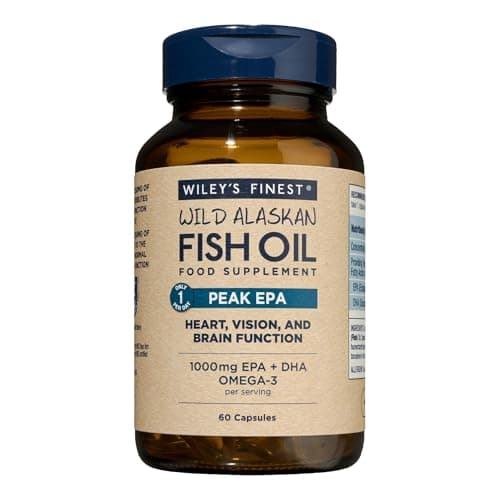
An honest Wiley's Finest Peak EPA review covering its 750mg EPA, 250mg DHA, the ethyl ester oil form, sustainable Wild Alaskan Pollock source, dosing, value and who should buy it.
Best Exercise is a participant in the Amazon EU Associates Programme, an affiliate advertising programme designed to provide a means for sites to earn advertising fees by advertising and linking to Amazon.co.uk. As an Amazon Associate we earn from qualifying purchases. This comes at no extra cost to you and never influences our independent reviews or rankings.