Recovery
Compression Boots Benefits: What the Research Actually Shows
The real benefits of compression boots, judged against the research: what helps (soreness, feeling recovered), what doesn't hold up, and who should avoid them.

By Mike Shilling, Recovery & Training Editor · Updated 5 September 2026
The foam roller sits in the corner of most home gyms getting used for about four minutes a fortnight, usually after somebody's knee starts hurting. The reason is that nobody is quite sure when to use it, and the internet gives contradictory answers. So here is a direct one: roll before you train, and roll again afterwards if soreness is the thing bothering you. Those are two separate jobs and the research supports each.
A warm-up needs to increase range of motion without leaving you weaker, and that is the specific problem foam rolling solves. Long-duration static stretching before a session can temporarily reduce force production. Rolling does not, and a meta-analysis pooling foam rolling studies found pre-exercise rolling produced small improvements in flexibility and sprint performance with no detriment to strength (meta-analysis of foam rolling on performance and recovery).
The mechanism is not what the marketing says. You are not breaking up scar tissue and you are not remodelling fascia; the pressure needed to deform connective tissue is enormous compared with what a roller under your body weight delivers. What happens is neural: pressure and pain modulate how tolerant you are of stretch, so the muscle allows a longer position. That is also why the effect is temporary and why you should roll immediately before training rather than at breakfast.
A randomised trial on Nordic hamstring work found exactly this pattern: a single bout of rolling improved flexibility while leaving muscle stiffness and functional muscle parameters unchanged (single bout of foam rolling after Nordic hamstring exercise). Better range, same tissue.
The post-session case is about soreness. The same meta-analysis found rolling after exercise reduced perceived muscle pain in the days that followed, with a slight edge over doing nothing. It does not repair muscle faster, and it will not make Thursday's session better. It makes Wednesday's stairs less unpleasant, which is worth two minutes per leg.
Do not expect a transformation. Rolling belongs in the same bracket as a warm shower and a walk: cheap, mildly useful, and no substitute for sleeping properly. If soreness is genuinely limiting your training, look at your volume progression before you look at your roller.
The pressure rule
Aim for a six or seven out of ten. Painful enough to notice, calm enough that you can breathe slowly through it. If you are gritting your teeth, the muscle tenses against the pressure and you get nothing. Reduce the load by keeping one foot on the floor rather than stacking your full body weight onto the roller.
Rolling directly over a joint, a bony edge or your lower back achieves nothing useful and can hurt. For the lower back specifically, roll the glutes and the thoracic spine above it, which is usually where the problem originates anyway.
Match it to the session rather than doing every muscle you own.
Before lower body: quads 45 seconds each, glutes 45 seconds each, calves 30 seconds each, then adductors 30 seconds each if you are squatting wide. Follow with bodyweight goblet squats to use the range you just found.
Before upper body: thoracic spine 60 seconds with the roller across your mid-back, lats 45 seconds per side, pecs on a ball against a wall for 30 seconds per side. Then a set of band pull aparts before you press.
Using the new range immediately matters. Range of motion you do not load goes away, so pair every roll with a movement that takes the joint through it.
Rolling is broad pressure. A trigger point is small and specific, and a 15cm roller passes straight over it. For focal work, a lacrosse or massage ball puts the same force through a fraction of the area, which is what you want for glute medius, the sole of the foot, or the spot beside a shoulder blade. Our guide to muscle knots covers what those actually are and why the imaging evidence is messier than the term suggests.
A massage gun does a similar job faster and reaches places you cannot get your body weight over, like the front of the shoulder or the upper trap. It costs more and does roughly the same thing, so buy one because it is convenient rather than because it is superior.
Comparative work is also unflattering to the roller in one respect. A 2026 randomised trial comparing static stretching, PNF, muscle energy technique, Graston and foam rolling for hamstring flexibility in young footballers found rolling effective but not the leading method (comparative trial of five hamstring flexibility methods). If flexibility is your actual goal, dedicated hamstring stretches done consistently will outperform rolling. Rolling wins on speed and on not compromising your lift.
Roll before you train, for 30 to 60 seconds per muscle you are about to use, and use the range straight away. Roll after training when you know a session is going to leave you sore, or on rest days when something is tight. Do not expect it to fix an injury, lengthen a muscle permanently, or replace sleep and food. A decent roller costs about £25 and lasts a decade, which makes it good value for a small, reliable effect. Our best foam roller UK guide covers which density to buy, and the rest of our recovery section has the tools worth pairing it with.
Both work, for different reasons. Rolling before training adds range of motion without the temporary strength loss that long static stretching can cause, so it belongs in a warm-up. Rolling afterwards reduces how sore you feel over the following days. If you only have time for one, roll before.
Between 30 and 60 seconds per muscle, and two or three minutes total on a problem area. Meta-analysis findings point to short pre-exercise bouts for range of motion and slightly longer post-exercise work for soreness. Ten minutes on one calf is not doing more.
No. You cannot deform fascia by hand or by roller; the forces needed are far beyond what a body weight roller produces. The effects are neural and circulatory, which is why they appear within seconds and fade within an hour or so.
Yes, modestly. Pooled data shows rolling after exercise lowers perceived soreness in the days that follow, though it is a comfort effect rather than a faster repair of the muscle itself.
It should feel like a firm, tolerable ache, around six or seven out of ten. If you are holding your breath or clenching, you are pressing too hard and the muscle will guard against you rather than release.
Yes. There is no accumulated fatigue cost the way there is with training, so daily rolling is fine and often helpful for chronically tight hips or calves. Avoid rolling directly over a fresh injury, a joint, or your lower back.
The real benefits of compression boots, judged against the research: what helps (soreness, feeling recovered), what doesn't hold up, and who should avoid them.
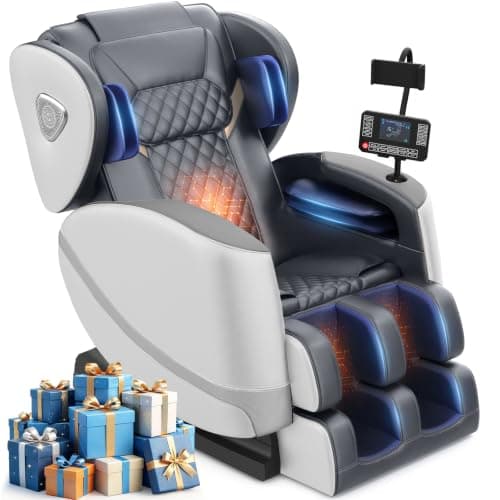
Our FURNIMAT massage chair review of the £470 zero gravity model: 14 fixed nodes, 8 airbags, heat and 165 degree recline, plus a footrest that suits shorter users.
Infrared sauna vs traditional sauna compared: heat, sweat, session length, what the research supports, home costs and safety, plus which one to pick and why.
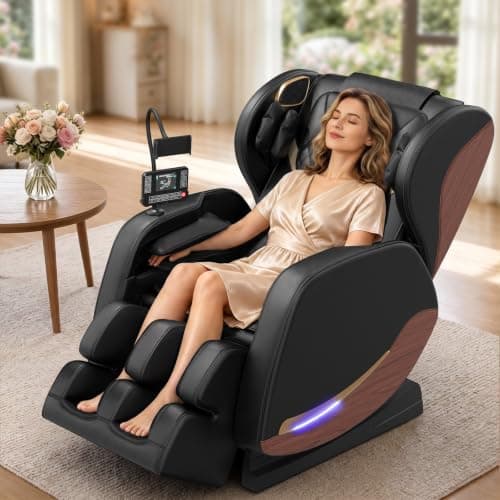
Our yewglen massage chair review: 14 fixed rollers, 8 airbags, back and leg heat, 165 degree recline and a 175cm height cap, compared with rival budget chairs.
Best Exercise is a participant in the Amazon EU Associates Programme, an affiliate advertising programme designed to provide a means for sites to earn advertising fees by advertising and linking to Amazon.co.uk. As an Amazon Associate we earn from qualifying purchases. This comes at no extra cost to you and never influences our independent reviews or rankings.