Recovery
How to Use a Portable Steam Sauna: Setup, Session Time and Safety
How to use a portable steam sauna tent at home: setup, which water to use, pre-heat time, how long to sit in it, cleaning to stop mould, and who should check with a GP first.

By Mike Shilling, Recovery & Training Editor · Updated 15 September 2026
We may earn a commission from qualifying purchases made through links on this page, at no extra cost to you. This never affects our ratings.
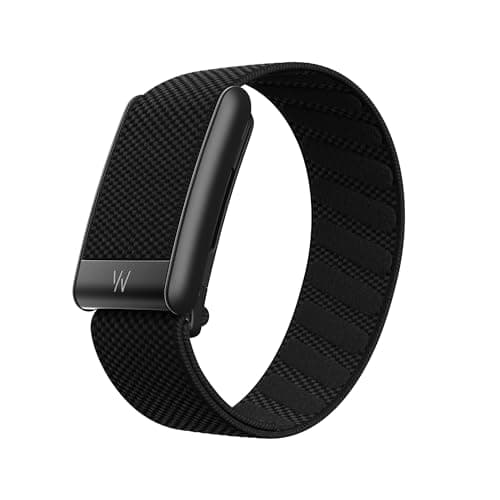
WHOOP sells something none of its rivals do: a fitness tracker with no screen, no clock, no notifications, and a rental agreement instead of a receipt. The Peak tier is the middle of three memberships, costs around £229 for 12 months, and ships the WHOOP 5.0 band, a SuperKnit strap and the slide-on wireless charger in the box.
Strip away the novelty and the question is simple. Does a device that only measures strain, sleep and recovery justify £19 a month when a £229 Garmin does most of it and keeps working forever? For a specific kind of athlete, yes. For most people buying their first tracker, no.
Check the WHOOP Peak price on Amazonaround £229 for 12 monthsHow we review
This review is based on WHOOP's published specifications and membership documentation, consistent findings across independent expert testing, and repeated themes in verified owner reviews. We have not run a 12 month membership of this exact tier ourselves, so we report corroborated patterns rather than single opinions, and we treat manufacturer battery and accuracy figures as claims.
WHOOP suits people who already train hard and keep getting the dosage wrong. If you routinely stack a heavy session on top of four hours of sleep and then wonder why week three of a block falls apart, a device built entirely around recovery is a genuinely useful nag. Triathletes, CrossFit competitors and anyone in a demanding shift pattern get the most from it.
It's a poor first tracker. Someone trying to walk more, start running or lose weight needs step counts, a clock and route maps far more than a heart rate variability trend, and they'll be irritated by paying for it annually. Our recovery section covers the cheaper kit that does more for most people.
Every wearable now shows a readiness number. WHOOP's is better because it commits. Each morning you get a percentage built from heart rate variability, resting heart rate, respiratory rate and how you slept, alongside a plain statement of what it means for today's training. Green means push, red means don't.
The underlying idea has real support. Meta-analysed work on training guided by heart rate variability found it produced better VO2max improvements than fixed, pre-planned programmes in endurance athletes (HRV-based training for improving VO2max, systematic review and meta-analysis). That's the honest case for the whole product: not that a band makes you fitter, but that adjusting when you go hard beats following a plan written a month ago.
Where it struggles is strength work. Strain is a cardiovascular measure at heart, so a brutal five by five session that leaves you wrecked can score lower than a gentle jog. WHOOP knows this and the Journal feature helps a bit. It's still the weakest part of the model, and lifters should read the recovery number and ignore the strain one.
| What is in the box | WHOOP 5.0 device, SuperKnit band, Wireless PowerPack charger |
|---|---|
| Term | 12 month membership, roughly £229 in the UK |
| Battery | 14 plus days claimed; charges without removing the band |
| Display | None; all data lives in the phone app |
| Core metrics | Strain, Recovery, Sleep Performance, HRV, resting heart rate, respiratory rate |
| Peak tier extras | Healthspan (WHOOP Age, Pace of Aging), Health Monitor, Stress Monitor |
| Tier above | WHOOP Life, which ships WHOOP MG hardware with ECG |
| Water resistance | Swim and shower safe |
| GPS | Uses your phone's GPS, none on board |
Because there's no screen and no rigid case, the 5.0 is the first tracker I'd describe as easy to forget about overnight. That matters, since a device you take off at bedtime measures nothing. Sleep Performance breaks the night into stages and compares what you got against what your recent strain suggests you needed, and Sleep Coach turns that into a bedtime.
The reason to care is that sleep is the single most effective recovery tool available, and the evidence is not subtle. Reviews of sleep in professional athletes link short or disrupted sleep to worse performance and higher injury risk (sleep and performance in professional athletes), and a 2025 systematic review found sleep loss measurably reduces muscle strength (implications of sleep loss or sleep deprivation on muscle strength). We go deeper into the mechanism in our guide to sleep and muscle recovery.
Peak unlocks Healthspan, which produces a WHOOP Age and a Pace of Aging figure from your behaviour and physiology. Treat the number as a motivational device rather than a clinical one; biological age models vary wildly in what they measure. As a way of showing that a run of bad sleep and no training has a cost beyond this week, it works, and it's the feature most likely to keep someone engaged past month three.
Here's what should decide your purchase. The band is not yours. WHOOP bundles hardware with the membership, and a lapsed membership leaves you holding a screenless strap with no way to read anything. Three years of Peak costs about £687. A Garmin Forerunner 70 costs around £214 once and still works in 2031.
WHOOP's counter is that you get hardware upgrades as part of the deal, and that's a fair point. It doesn't change the arithmetic for someone who'd wear the same watch for four years regardless.
If recovery is the thing you actually want to improve rather than measure, the money might be better spent on kit that does the recovering: our guides to compression boots and how long DOMS lasts cover the practical end, and a properly planned deload week costs nothing at all.
See today's WHOOP Peak priceIt stops being useful. The hardware is bundled with the subscription rather than sold to you outright, and the band has no screen, so without an active membership and the app there is nothing to read. Budget for this as an ongoing cost, not a one-off purchase.
Around £229 for 12 months, which works out at roughly £19 a month. That buys the WHOOP 5.0 device, a SuperKnit band, the wireless charging pack and every Peak feature including Healthspan, Health Monitor and Stress Monitor.
One is the entry tier with strain, recovery and sleep. Peak adds Healthspan (WHOOP Age and Pace of Aging), Health Monitor and Stress Monitor. Life is the top tier and ships the WHOOP MG hardware instead, which adds ECG and blood pressure insights. Peak is the sensible middle.
WHOOP claims 14 plus days, a large jump from the four or five days of the 4.0. Heavy training and frequent app syncing pull that down, so treat 10 to 12 days as a realistic figure. You charge it with a slide-on battery pack without taking the band off, which is the neatest solution anyone has shipped.
For recovery specifically, WHOOP's daily readiness score is more coherent and better explained than most watch equivalents, and the screenless design means it is comfortable in bed. A Garmin does recovery well enough and also tells the time, tracks GPS routes and never expires. WHOOP wins on sleep and recovery depth; Garmin wins on everything else and on cost over three years.
Yes. It is water resistant for swimming and showering, and the SuperKnit band dries fast. Chlorine is hard on any fabric strap over time, so rinse it.
How to use a portable steam sauna tent at home: setup, which water to use, pre-heat time, how long to sit in it, cleaning to stop mould, and who should check with a GP first.
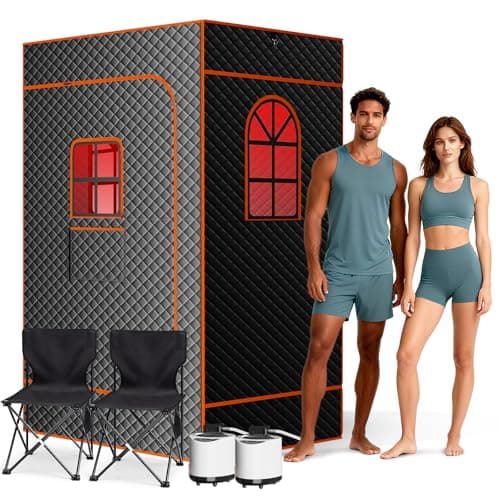
An honest Obqer 2 person portable steam sauna review: two 1200W generators, 9 heat levels, a 120 x 90cm footprint and £212.99 price, compared with Manastin and SereneLife.
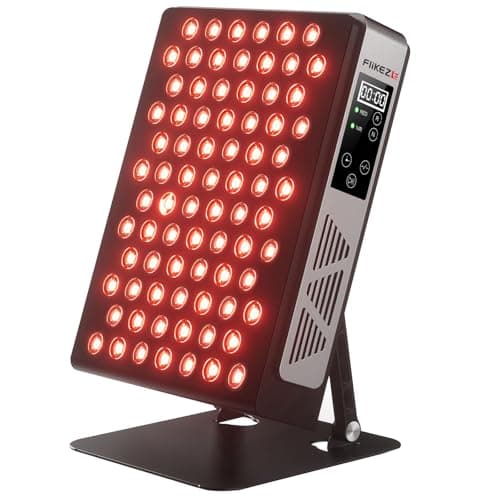
FliKEZE red light therapy review: 78 quad chip LEDs, 630 to 850nm, a 134 mW/cm² claim at 6 inches, five intensity levels and how it compares at £249.99.
How to use a red light therapy panel properly: the right distance and session time, how often, before or after training, eye safety and how to work out your dose.
Best Exercise is a participant in the Amazon EU Associates Programme, an affiliate advertising programme designed to provide a means for sites to earn advertising fees by advertising and linking to Amazon.co.uk. As an Amazon Associate we earn from qualifying purchases. This comes at no extra cost to you and never influences our independent reviews or rankings.