Recovery
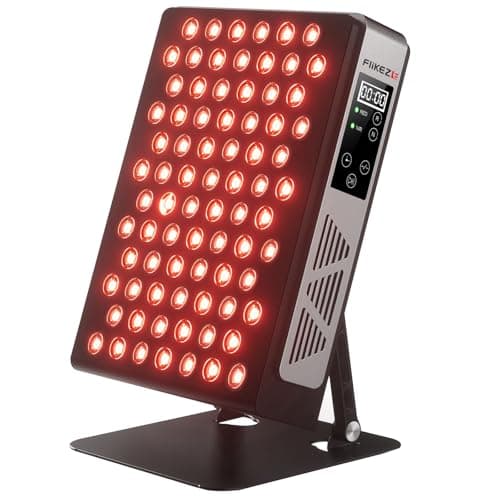
FliKEZE Red Light Therapy Review: 78 Quad Chip LEDs for £249.99
FliKEZE red light therapy review: 78 quad chip LEDs, 630 to 850nm, a 134 mW/cm² claim at 6 inches, five intensity levels and how it compares at £249.99.

By Mike Shilling, Recovery & Training Editor · Updated 13 September 2026
You did squats on Monday. Tuesday morning the stairs are an event, and by Wednesday sitting down requires a plan. That is delayed onset muscle soreness, and the timeline is more predictable than it feels while you're living through it: onset around 6 to 12 hours after the session, peak between 24 and 48 hours, mostly resolved by 72.
The exception is novelty. First time down a long descent, first session of Nordic curls, first day back after eight weeks off, and you can be sore for five to seven days. That's not a sign of damage you need to worry about; it's the size of the adaptation your body is being asked to make.
The lactic acid explanation refuses to die, and it's wrong. Blood lactate returns to baseline within roughly an hour of finishing exercise, while DOMS hasn't even started yet at that point.
What's actually happening is mechanical. Eccentric contractions, where the muscle produces force while lengthening, disrupt the structure of individual fibres. Lowering the bar, running downhill, the descent of a lunge: those are the movements that cause it. The damage triggers an inflammatory and repair response over the following day or two, sensitising the nerve endings in the surrounding tissue, and that sensitisation is the soreness you feel when you press the muscle or stretch it.
The useful consequence is the repeated bout effect. Do the same session again within a few weeks and the soreness is dramatically reduced, because the muscle has already reinforced itself against that specific stress. This is why week one of a new programme flattens you and week four doesn't.
A scoping review of non-pharmacological strategies for DOMS and a Bayesian network meta-analysis of physical therapy modalities for DOMS land in roughly the same place, and the honest summary is that the effects are real but modest.
Cold water immersion has the strongest showing, with benefits immediately after exercise and at 24 hours, and it's one of the few modalities still associated with lower soreness at 48 hours. The caveat matters though: regular cold water immersion after strength training may blunt some of the adaptation you trained for, so save it for competition blocks and brutal weeks rather than using it every session. Our guide to cold plunge timing before or after a workout goes into when it's worth it.
Massage performs well for early soreness relief, and a percussion device does a reasonable approximation at home. How to use a massage gun covers the sensible dose, which is shorter than most people assume.
Active recovery is the one to reach for if you care about performing again soon. A network meta-analysis of post-exercise recovery strategies and explosive performance found active recovery preferable for restoring explosive output in the short term. Twenty easy minutes on a bike does more than an afternoon on the sofa.
Compression has a smaller, more variable effect, but it's passive and harmless, which is a reasonable trade. See how to use compression boots if you own a pair.
Tart cherry is the only supplement in this conversation carrying trial data worth reading, and even then the effect is modest and depends on loading for several days around the hard block rather than drinking a glass once you're already sore. Our guide to tart cherry juice in the UK sets out the protocol the studies used and where the bottles on sale here drift away from it.
Static stretching barely registers. It feels like it should help and the trials keep finding it doesn't move soreness in any meaningful way. Stretch because you want the range of motion, not because you think it'll fix Wednesday.
The thing that helps most is boring
Sleep, protein and not doing anything stupid on day two. No recovery modality on this page comes close to the effect of seven to nine hours of sleep and enough food, and every one of them is being measured against a baseline where those are already in place. If your sleep is broken and you're under-eating, buying an ice bath is solving the wrong problem.
Day of the session. Eat properly, get fluids in, sleep. If you're in a competitive block and need to be fresh tomorrow, a ten minute cold immersion is defensible. Otherwise leave it alone.
The next day. Move. Walking, easy cycling, light mobility work, the same movement pattern at a fraction of the load. Blood flow through the tissue helps and the soreness usually eases for an hour or so afterwards.
The day after that. Train, but drop the load. If squats made you sore, squat again at 50 to 60 percent for a few sets rather than avoiding the movement entirely. Avoidance extends the problem, since the fastest way to stop being sore from an exercise is to have done it more than once.
If it's still bad on day four. Look at what you did. A jump in volume of more than about 20 percent, a lot of new eccentric work, or a long layoff before the session all explain it. If none of those apply, or the pain is sharp and localised, treat it as an injury rather than soreness.
The belief that a workout only counts if you can't walk afterwards costs people more progress than almost any other training idea. Soreness measures novelty. A programme that makes you sore every week is a programme that keeps changing, and constant change is the enemy of measurable progress in strength work.
If you're consistently sore for days on end, the fix is usually structural rather than a recovery gadget: too much volume, too little sleep, or no planned reduction in load. A scheduled deload week every four to eight weeks solves more DOMS than anything you can buy. Our recovery section covers the rest, from foam rolling timing to what muscle knots actually are.
Soreness usually starts 6 to 12 hours after training, peaks somewhere between 24 and 48 hours, and has mostly gone by 72 hours. After a genuinely novel session with a lot of eccentric loading, such as your first hill descent or a heavy Nordic curl session, it can drag on for five to seven days. Beyond a week, something other than ordinary DOMS is going on.
No. Lactate clears from your blood within roughly an hour of finishing exercise, long before the soreness starts. DOMS follows microscopic damage to muscle fibres and the inflammatory and repair response that follows, which is why it takes a day to appear and why the exercises that lengthen muscle under load cause the most of it.
Usually yes, with adjustments. Light work on sore muscles tends to reduce the soreness for an hour or two and does not slow repair. What you should not do is load a sore muscle heavily for a personal best, because force production is genuinely reduced while you are sore and the risk of doing something silly goes up.
No. Soreness tracks novelty, not quality. A session you have never done before will make you sore whether or not it was well designed, and a well designed session you have done fifty times will not. Judge training by whether your numbers are moving, not by how much you ache the next morning.
Cold water immersion and massage have the best evidence for short term soreness relief, with cold water still showing an effect at 48 hours. Active recovery helps restore explosive performance faster. Stretching does almost nothing for it, despite being the first thing most people reach for.
Sharp or localised pain rather than a diffuse ache, pain that appeared during the session rather than the next day, swelling, bruising, or an inability to use the limb normally all point away from DOMS. Dark brown urine plus severe pain and swelling after very heavy unaccustomed exercise needs urgent medical attention, because that can indicate rhabdomyolysis.
FliKEZE red light therapy review: 78 quad chip LEDs, 630 to 850nm, a 134 mW/cm² claim at 6 inches, five intensity levels and how it compares at £249.99.
How to use a red light therapy panel properly: the right distance and session time, how often, before or after training, eye safety and how to work out your dose.
The real benefits of compression boots, judged against the research: what helps (soreness, feeling recovered), what doesn't hold up, and who should avoid them.
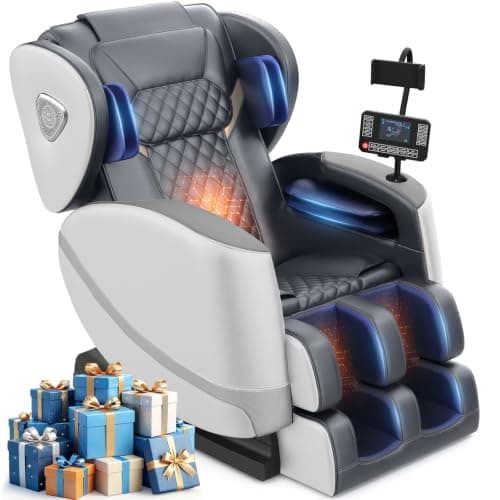
Our FURNIMAT massage chair review of the £470 zero gravity model: 14 fixed nodes, 8 airbags, heat and 165 degree recline, plus a footrest that suits shorter users.
Best Exercise is a participant in the Amazon EU Associates Programme, an affiliate advertising programme designed to provide a means for sites to earn advertising fees by advertising and linking to Amazon.co.uk. As an Amazon Associate we earn from qualifying purchases. This comes at no extra cost to you and never influences our independent reviews or rankings.