Recovery
Yewglen Massage Chair Review: Zero Gravity, 14 Rollers and a Height Limit
Our yewglen massage chair review: 14 fixed rollers, 8 airbags, back and leg heat, 165 degree recline and a 175cm height cap, compared with rival budget chairs.

By Mike Shilling, Recovery & Training Editor · Updated 3 September 2026
A massage gun is easy to buy and surprisingly easy to misuse. Most people switch it on, pick the highest setting because it seems more serious, and grind it into the sorest spot they can find until the skin goes red. That is roughly the opposite of how percussive therapy works, and it explains why so many devices end up in a drawer after a fortnight.
Percussion delivers rapid pulses into the muscle, which changes how the tissue feels and how sensitive it is for a while afterwards. A 2026 systematic review and meta analysis of percussive therapy dosages found real benefits for recovery from exercise induced muscle damage, with the effect depending heavily on how long and how often the device was applied (percussive therapy dosages and recovery). A randomised crossover trial in active adults similarly reported improvements in soreness and jump performance after percussive massage of the quadriceps (percussive massage on quadriceps fatigue and soreness).
What it does not do is break down scar tissue, flush lactic acid or realign anything. Anyone selling you those explanations has stopped reading around 2009.
Sit or lie down so the muscle you are working is slack. A massage gun does very little to a muscle that is holding your bodyweight up.
The pressure test
If the motor's pitch drops as you press, you have exceeded what the device is designed to deliver and you are now stalling it against your own tissue. Ease off until the sound stays constant. That note is a better feedback signal than anything you will feel through the handle.
Most guns ship with four to six heads and people use exactly one. Worth knowing what the others do:
Before a session, 30 to 60 seconds per muscle on a low setting raises tissue temperature and takes the edge off stiffness without costing you force. Do it on calves, hip flexors and upper back, then do a proper warm up. The gun is not a warm up.
After a session, work more slowly and cover more area, two minutes a muscle group at most. This is where the soreness benefit shows up, usually 24 to 48 hours later. If you also plan to use cold water, read contrast therapy first, because the order matters more than most people realise.
On a rest day, treat it as maintenance: five minutes on whatever felt tight yesterday. If a spot keeps coming back day after day, the gun is treating a symptom and something else needs attention. Our guide to muscle knots covers that distinction.
Muscle bellies only. Keep it off the front and sides of your neck, where the carotid arteries sit; off the spine itself; off the kidneys in the low back; out of the armpit, the groin and the hollow behind the knee, all of which are full of nerves and vessels with no muscle protecting them. Bony areas like the shin, elbow and collarbone get nothing useful from percussion.
Skip it entirely over a fresh injury, an open wound, a recent fracture, varicose veins, or any area where you have been told there is a clot risk. If you are pregnant, on blood thinners, or managing a condition like neuropathy or osteoporosis, ask a physio or your GP before you start rather than after.
Chasing pain. People find the sorest point and attack it. Soreness is not a target; it is information. Work around a tender area first, then approach it briefly.
Using it as a warm up. Sixty seconds of vibration does not prepare a joint for load. It complements a warm up, and it replaces none of it.
Maximum setting, every time. The highest speed on most guns is meant for large dense muscle. On a calf or a forearm it is uncomfortable without being more effective.
Ten minutes on one leg. Longer is not better, and the dosage work suggests the useful window is short (percussive therapy dosages and recovery). Twenty minutes for a full body pass is a generous ceiling.
Expecting it to replace training and sleep. Percussion helps at the margins. The NHS guidance on muscle strengthening at least twice a week is doing far more for how your body feels than any recovery gadget.
Ten minutes, done sitting on the floor after training:
Skip anything that felt fine. There are no points for completing the set.
Amplitude matters more than the headline stall force. A cheap gun with 6mm of travel vibrates the skin; a good one with 12 to 16mm actually moves tissue. Our best massage gun in the UK roundup ranks the current field, and the Theragun Elite and the pocket sized Theragun Mini are the two we come back to. If you would rather spend less and cover more surface, a foam roller does a different job well.
Between 30 seconds and two minutes per muscle group. Under 30 seconds and you have not given the tissue time to respond; past about two minutes on one spot you are just irritating it. Five to ten minutes for a whole leg is plenty.
Both work, for different reasons. Before training, 30 to 60 seconds per muscle on a low setting wakes the area up without dulling force output. Afterwards, a slower pass helps with the soreness that shows up the next day.
Barely. Let the weight of the device do the work and glide it along the muscle at roughly 3cm a second. If your arm is shaking or the motor is bogging down and changing pitch, you are pressing far too hard.
Directly on bone, the front or sides of the neck, the spine itself, the kidneys, the back of the knee, the groin, and anywhere with a fresh injury, an open wound, a blood clot risk or a recent fracture. Stay on muscle bellies.
Yes, if you press hard, stay in one place, or work over a bony area. Bruising means you used it wrong, not that it worked. Back off the pressure and keep the head moving.
It is faster and better at specific spots, particularly calves, forearms and glutes. A foam roller covers large areas more cheaply and gets at your thoracic spine and lats far better. Most people who train hard end up owning both.
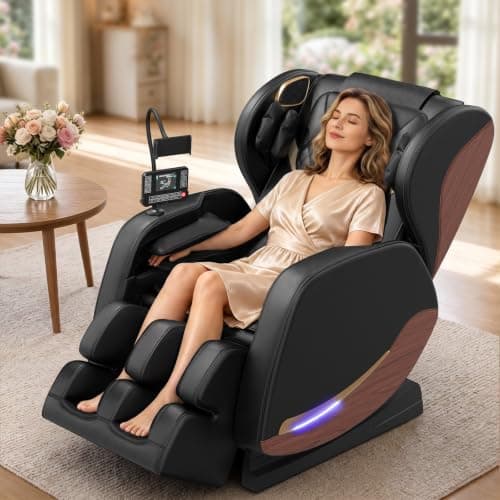
Our yewglen massage chair review: 14 fixed rollers, 8 airbags, back and leg heat, 165 degree recline and a 175cm height cap, compared with rival budget chairs.
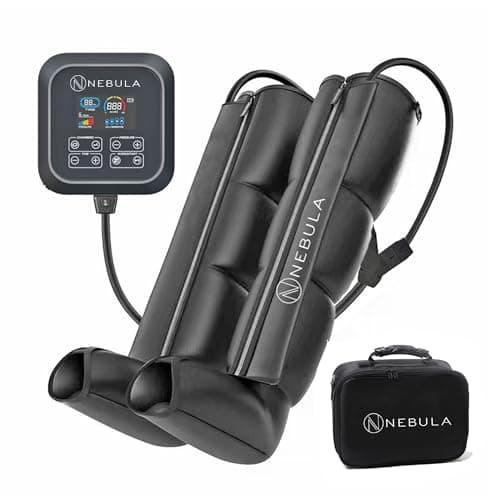
Our Nebula compression boots review: 6 modes, 30 to 260 mmHg, a 90 minute timer and mains power for £229.99. How they compare with Normatec 3 and FIT KING.
WHOOP vs Apple Watch compared for UK buyers: WHOOP 5.0 and MG memberships against the Apple Watch Series 12, SE 3 and Ultra 4. Battery, recovery, HRV, sleep, GPS, accuracy research and the real cost over three years.
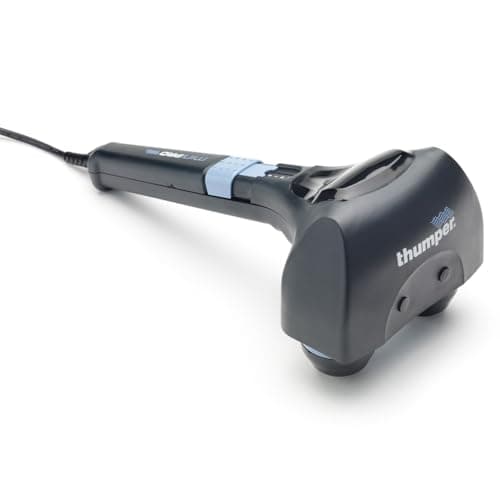
Our Thumper Mini Pro review: a corded, broad-head percussive massager with 6mm stroke and a long handle for your back. How it compares with massage guns.
Best Exercise is a participant in the Amazon EU Associates Programme, an affiliate advertising programme designed to provide a means for sites to earn advertising fees by advertising and linking to Amazon.co.uk. As an Amazon Associate we earn from qualifying purchases. This comes at no extra cost to you and never influences our independent reviews or rankings.