Recovery
Google Fitbit Air Review: A £85 Screenless Tracker Worth Buying?
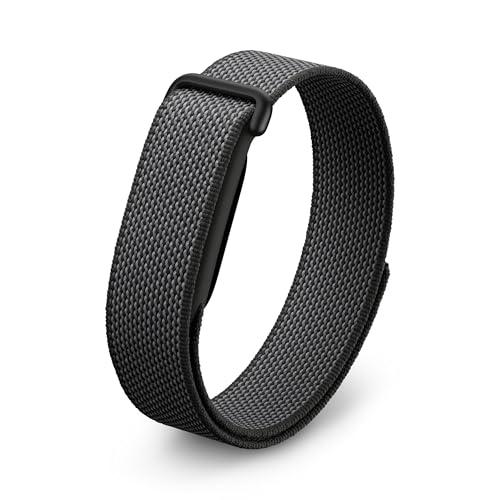
Google Fitbit Air review: £84.99 screenless tracker with 7-day battery, SpO2 and HRV, and a Gemini coach behind Premium. Is it better than Whoop or Charge 6?

By Paul Kendrick, Cardio & Endurance Editor · Updated 13 November 2026
We may earn a commission from qualifying purchases made through links on this page, at no extra cost to you. This never affects our ratings.
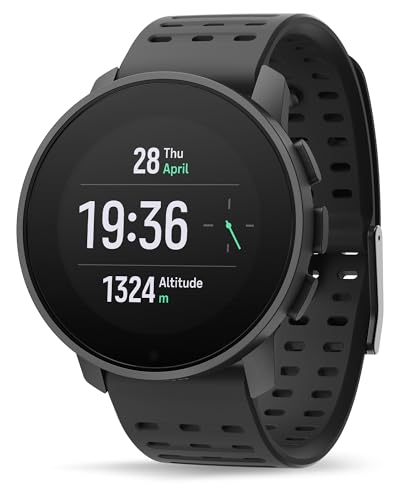
The Suunto 9 Peak Pro is a very good watch for the money if you care about battery life, and a dated one if you care about anything else. At around £189 on Amazon UK it gives you up to 40 hours of full-accuracy GPS, up to 21 days of everyday use, a sapphire crystal and 100m water resistance in a case that weighs 64g. What it doesn't give you is an AMOLED screen, dual-band GPS or offline maps, all of which have since landed on Suunto's newer watches.
That's the whole trade. Suunto launched this watch in October 2022 at a much higher price, and the market has moved on while the price has dropped to something sensible. For a runner, hiker or triathlete who wants a durable, long-lasting GPS watch without paying £300 or more, it's still a credible pick. For anyone who wants the latest screen and map features, it's the wrong end of Suunto's range.
How we review
This review is based on research: Suunto's published specification pages, owner reviews, and the wider body of expert coverage of the watch. We haven't worn this unit through a training block ourselves, so we report consistent findings from owners and the manufacturer's own numbers, and we flag where a claim is Suunto's rather than independently measured.
Battery is where the 9 Peak Pro still earns its place. Suunto's spec page gives three training figures: up to 40 hours in Performance mode with the best single-band GPS accuracy, up to 70 hours in Endurance mode, and up to 300 hours in Tour mode, which drops GPS accuracy and turns heart rate off. Performance mode is the default when you start an exercise, so 40 hours is the number to plan around.
Everyday use is similarly generous. With heart rate on and the display waking on wrist-raise you're looking at up to 21 days, or up to 30 days with heart rate off. Those are manufacturer figures, and an always-on display or heavy notification use will pull them down. Even so, a watch you charge once every two or three weeks is a different experience from one that needs a cable every Sunday night.
Compare that with the newer Suunto Race 2, which quotes 55 hours with dual-band GPS but costs more than twice as much. If your longest outings are a marathon, a 100km sportive or a weekend of hillwalking, 40 hours is more than you'll use. Ultra runners and multi-day backpackers will like the Endurance and Tour modes.
Check price on AmazonLet's be direct about the age. The 9 Peak Pro has a 1.2 inch, 240 x 240 display. It does the job outdoors and the always-on option helps, but put it beside the AMOLED panel on a Garmin Forerunner 265 or a Suunto Race and the difference is obvious. Colours are flat, text is smaller and indoors it looks plain.
The bigger gap is maps. The 9 Peak Pro supports waypoint and visual route navigation, so you can load a route from the Suunto app or from Strava and follow the line, but there's no topographic map under it. Suunto's Race family changed that, and our Suunto Race 2 review covers free offline maps in detail. If you walk or run in unfamiliar hills and want to see contours and paths, this is the single best reason to spend more.
GPS is the third compromise. Suunto describes the Performance mode as single-band accuracy, and that's accurate: the watch talks to five constellations but not on two frequency bands. In open country that's perfectly good. Between tall buildings or under dense canopy, dual-band watches hold a straighter line.
| Battery, training (Performance) | Up to 40 hours |
|---|---|
| Battery, Endurance / Tour | Up to 70 hours / up to 300 hours |
| Battery, daily use | Up to 21 days (up to 30 days with heart rate off) |
| Weight | 64 g |
| Display | 1.2 inch, 240 x 240 matrix, always-on option |
| Glass / bezel / case | Sapphire crystal / stainless steel / glass fibre reinforced polyamide |
| Water resistance | 100 m |
| Satellite systems | GPS, GLONASS, Galileo, QZSS, BeiDou (single-band) |
| Sensors | Optical heart rate, blood oxygen, digital compass, altimeter |
| Navigation | Waypoint and visual route navigation; no offline maps |
The wrist sensor measures heart rate and blood oxygen, and it feeds Suunto's recovery status and sleep tracking. How good is it? A 2020 systematic review and meta-analysis in the Journal of Sports Sciences pooled 44 studies and 15 brands of wrist-worn optical monitors. It found a mean difference of roughly 0.5 bpm against ECG or chest-strap criteria during treadmill walking and running, but the error grew to about 4.5 bpm in cycling and about 7.3 bpm in resistance training. That pattern matches what owners of every optical watch report, including this one.
So the practical advice is simple. For steady runs the wrist sensor is good enough to train by. For interval sessions, hard cycling or weights, add a chest strap; our best heart rate monitor guide covers sensible options.
Smart features are limited, which is par for Suunto. You get phone notifications, music controls and an Android-only quick-reply option, and not much else beyond that. It runs on the Suunto app, which is clunkier than Garmin Connect for deep analysis, though it syncs to Strava and others if that's where you keep your history.
Buy it if your priorities look like this: long battery life, a tough case that won't scratch, a watch light enough to wear around the clock and a price under £200. Hikers and ultra-curious runners get the most from the Endurance and Tour modes. So do people who've been burned by watches that die in the middle of a long day out.
Skip it if you want maps, a vivid screen or the sharpest GPS. The Suunto Race S review covers the nearest step up: AMOLED, dual-band GPS and free offline maps at about £217, which is less than £30 more. If your priority is training analysis rather than raw endurance, the Garmin Forerunner 265 at about £260 has far better coaching tools, and our best Garmin watches in the UK guide shows where else Garmin competes.
One more thing about price. £189 is the figure we saw on Amazon UK at the time of writing, and watch prices move. Check the live listing before you buy; if it's crept above £200, the Race S becomes the better deal.
Check the latest price on AmazonAt around £189, yes, if battery life and a tough case matter more to you than a bright screen or maps. It's a 2022 watch, so the display is a basic 240 x 240 panel and there are no downloadable offline maps. If you can stretch the budget, the Suunto Race S adds AMOLED and free maps for roughly £70 more.
Suunto's spec page lists up to 40 hours of continuous tracking in Performance mode, up to 70 hours in Endurance mode and up to 300 hours in Tour mode, which uses lower GPS accuracy and switches heart rate off. In daily use it's up to 21 days with heart rate on and up to 30 days with it off.
No. It has waypoint and visual route navigation, so you can follow a loaded route as a line with a compass, but there's no topographic map underneath. Free offline maps arrived on Suunto's newer Race range, which is the main reason to pay more.
No. Suunto describes the best accuracy mode as single-band. It supports GPS, GLONASS, Galileo, QZSS and BeiDou, which is fine in open country, but tall buildings and dense woodland are where dual-band watches pull ahead.
Wrist optical sensors as a class do well at steady running and worse in cycling and strength work. A 2020 meta-analysis of 44 studies found a mean difference of about 0.5 bpm on treadmill activities but over 7 bpm during resistance training. Pair a chest strap for intervals or lifting.
The Forerunner 265 has an AMOLED screen, multi-band GPS and far deeper training analysis, and it costs around £260. The 9 Peak Pro is thinner, lasts much longer between charges and costs about £70 less. Pick the Garmin for coaching features, the Suunto for endurance and value.
Google Fitbit Air review: £84.99 screenless tracker with 7-day battery, SpO2 and HRV, and a Gemini coach behind Premium. Is it better than Whoop or Charge 6?
Fitbit Air vs WHOOP for UK buyers: £84.99 against a £169 to £349 yearly membership. Battery, sensors, coaching, accuracy research and two-year cost compared.
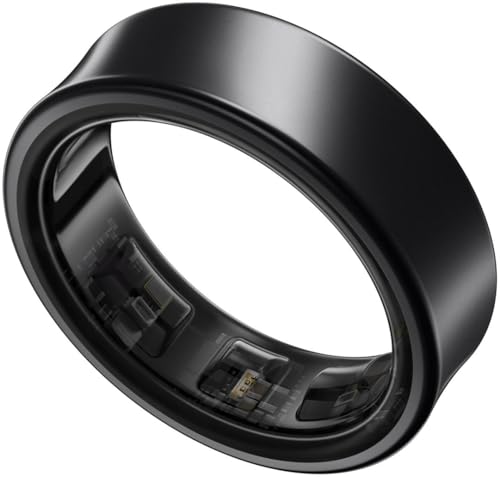
Samsung Galaxy Ring review for UK buyers: titanium build, up to 7 day battery, no subscription, Android only, sizing kit advice and how it compares with Oura.
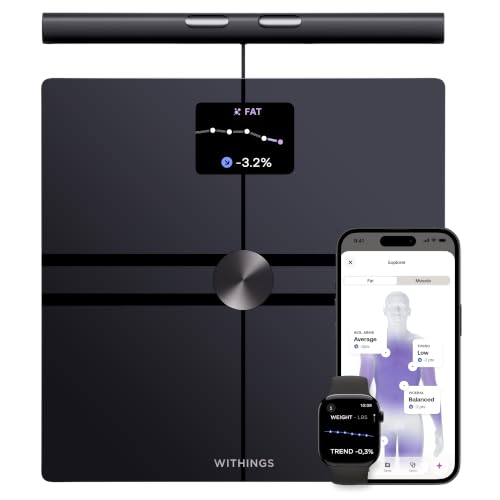
Withings BodyFit review for UK buyers: a handle-equipped scale with 6-zone fat and muscle readings, what the DEXA claim covers, and the BodyScan 2 comparison.
Best Exercise is a participant in the Amazon EU Associates Programme, an affiliate advertising programme designed to provide a means for sites to earn advertising fees by advertising and linking to Amazon.co.uk. As an Amazon Associate we earn from qualifying purchases. This comes at no extra cost to you and never influences our independent reviews or rankings.