Recovery
How to Use Red Light Therapy: Distance, Time and Dose
How to use a red light therapy panel properly: the right distance and session time, how often, before or after training, eye safety and how to work out your dose.

By Mike Shilling, Recovery & Training Editor · Updated 18 October 2026
We may earn a commission from qualifying purchases made through links on this page, at no extra cost to you. This never affects our ratings.
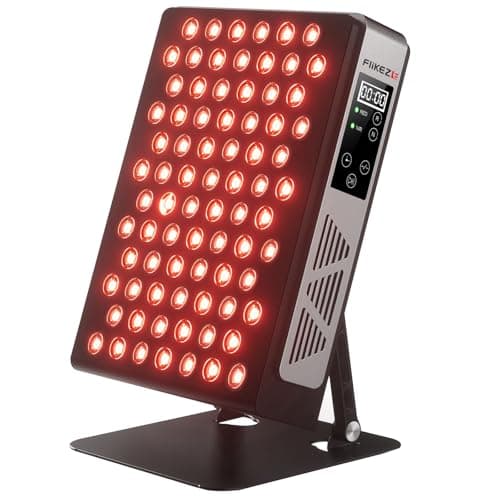
FliKEZE sells a mid sized red light panel on Amazon UK for £249.99 (in stock when we checked on 18 October 2026), listed as the Pro 78. It runs 78 quad chip LEDs, each carrying four wavelengths (630nm and 660nm red, 830nm and 850nm near infrared), with five intensity steps from 20% to 100%, three modes and a timer that tops out at 30 minutes. Protective goggles come in the box.
We rate it 4.0 out of 5. The spec sheet is better than its price suggests, and quad chip LEDs plus a proper dimmer put it ahead of most panels at this money. What holds it back is the headline number. FliKEZE says the panel delivers 134 mW/cm² at 6 inches, which would make it as bright as the Hooga ULTRA360 for £57.60 less, and nobody we could find has put an independent meter on it. Until that happens, you're buying on the seller's word.
How we review
This review is based on research: the Amazon UK listing and its stated specifications, patterns in verified owner reviews, and published research on photobiomodulation. We haven't run long term hands-on testing of this panel or measured its output ourselves, so every irradiance figure below is the manufacturer's claim unless we say otherwise.
This panel makes sense for someone who wants to treat one area properly, such as a quad, a lower back or a knee, and likes the idea of turning the intensity down rather than just moving the panel back. At roughly 37 by 32 cm (going by the listed dimensions) it's bigger than a laptop sized unit but nowhere near full body. You'll treat your thighs one at a time.
It's the wrong buy if you want to stand in front of a tall panel and do your whole back and legs in a single session, or if you need a figure you can trust before you spend £250. For those buyers, Nebula and Hooga publish more data on their own websites.
Check the FliKEZE red light panel price on Amazon£249.99| LEDs | 78 quad chip |
|---|---|
| Wavelengths | 630nm, 660nm, 830nm, 850nm |
| Claimed irradiance | 134 mW/cm² at 6 inches (unverified) |
| Intensity levels | 5 (20%, 40%, 60%, 80%, 100%) |
| Modes | 3 |
| Timer | Up to 30 minutes |
| LED lifespan | Up to 10,000 hours (claimed) |
| Listed dimensions | Approx 37 x 32.5 x 15 cm |
| Listed weight | Approx 4.8 kg |
| In the box | Panel, protective glasses |
| Warranty | Not stated |
| Price (Amazon UK) | £249.99 (18 October 2026) |
Irradiance at a stated distance is the number that decides how long a session takes, and FliKEZE deserves some credit for quoting one at 6 inches rather than at point-blank, which is where RENPHO measures its 180 mW/cm². Six inches is a realistic distance for a panel this size.
The trouble is who did the measuring. Manufacturer irradiance figures in this market are routinely inflated, and many sellers test with cheap solar power meters that aren't calibrated for narrow red and near infrared bands, so the readings run high. FliKEZE doesn't say what meter it used, doesn't publish a second distance, and doesn't give a real wall draw. Compare that with Hooga, which lists four distances on its own site, or Nebula, which publishes a measured 288W draw against its 1020W LED rating.
Is the claim plausible? Roughly. Hooga gets 132 mW/cm² at 6 inches from 72 quad chip LEDs, and FliKEZE has six more. But plausible isn't verified, and we'd plan sessions as if real output were noticeably lower.
If you take the number at face value, a 10 minute session at 6 inches on full power works out to about 80 J/cm² (134 mW/cm² for 600 seconds). That's arithmetic on a claim, not a reading. It also means the 30 minute timer is far longer than you'll need: light therapy has a biphasic dose response, where too much energy can blunt the effect rather than add to it, as Hamblin's group laid out in their review of LLLT dose response. The 20% setting is where most people should start.
Honest answer: it's mixed, and it depends heavily on dose. A 2025 systematic review and meta-analysis on delayed onset muscle soreness found 14 controlled studies using wavelengths from 660 to 950nm. Pooled data showed a moderate drop in soreness scores at 72 and 96 hours and better strength at 24 and 48 hours, though only four studies had data clean enough to combine.
Set that against a double blind crossover trial of 60 sports students, where 808nm laser on the quads for 10 minutes before exercise made no difference to strength or recovery compared with sham. Different devices, doses and timing produce different results, and almost none of this work used a consumer LED panel at an unmeasured distance.
So a FliKEZE panel might take the edge off soreness after a hard leg day. It won't replace sleep, protein or sensible programming. Our red light therapy for recovery guide covers dosing and timing in more depth.
Wear the included goggles whenever the panel faces your head, and never stare into the LEDs. Near infrared at 830 and 850nm is almost invisible, so your blink reflex won't help. If you have an eye condition, a history of skin cancer, or take medication that increases light sensitivity, check with your GP first.
We've now reviewed several panels, and the FliKEZE sits in the middle of the pack on price.
If you want Hooga's spec without Hooga's price and can live with trusting the seller, the FliKEZE is the obvious alternative. If verified data matters more than £57, pay for the Hooga.
See the FliKEZE 78 LED panel on Amazon£249.99On paper it's one of the better specified panels under £250: 78 quad chip LEDs carrying four wavelengths, five intensity steps and a timer up to 30 minutes, with goggles in the box. The weak point is that the 134 mW/cm² figure comes only from FliKEZE, and we found no independent meter reading to back it up.
Treat it as a ceiling, not a measurement. Hooga claims 132 mW/cm² at 6 inches from 72 quad chip LEDs, so FliKEZE's number isn't absurd for 78 LEDs, but budget panels routinely overstate irradiance and cheap solar meters used by many sellers read red and near infrared inaccurately. Assume real output at 6 inches is lower until someone measures it with proper equipment.
Shorter than the 30 minute timer suggests. If the claimed output were accurate, 10 minutes at 6 inches on full power would deliver around 80 J/cm², which is already at the high end of what recovery studies use. Start at P1 (20%) for 5 to 10 minutes, and move further away rather than staying longer if you want a gentler dose.
The evidence is mixed. A 2025 meta-analysis found a moderate reduction in soreness at 72 and 96 hours, but only four studies had data good enough to pool, and some well run trials found no benefit at all. Dose matters, and most research used lasers or clinical arrays rather than home panels.
Yes, whenever the panel faces your head. Near infrared at 830 and 850nm is barely visible, so your eyes don't squint against it. FliKEZE includes protective glasses, which saves you buying a pair.
How to use a red light therapy panel properly: the right distance and session time, how often, before or after training, eye safety and how to work out your dose.
The real benefits of compression boots, judged against the research: what helps (soreness, feeling recovered), what doesn't hold up, and who should avoid them.
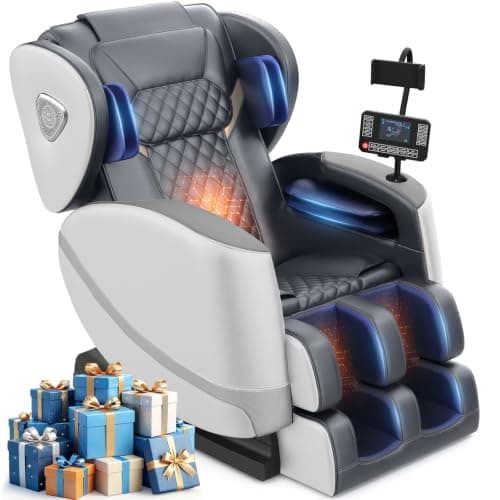
Our FURNIMAT massage chair review of the £470 zero gravity model: 14 fixed nodes, 8 airbags, heat and 165 degree recline, plus a footrest that suits shorter users.
Infrared sauna vs traditional sauna compared: heat, sweat, session length, what the research supports, home costs and safety, plus which one to pick and why.
Best Exercise is a participant in the Amazon EU Associates Programme, an affiliate advertising programme designed to provide a means for sites to earn advertising fees by advertising and linking to Amazon.co.uk. As an Amazon Associate we earn from qualifying purchases. This comes at no extra cost to you and never influences our independent reviews or rankings.