Recovery
Vibrating Foam Roller: Are They Worth It Over a Normal One?
Is a vibrating foam roller worth the extra money? What the research shows on range of motion, pain and DOMS, who should pay more, and what to look for.

By Mike Shilling, Recovery & Training Editor · Updated 6 October 2026
We may earn a commission from qualifying purchases made through links on this page, at no extra cost to you. This never affects our ratings.
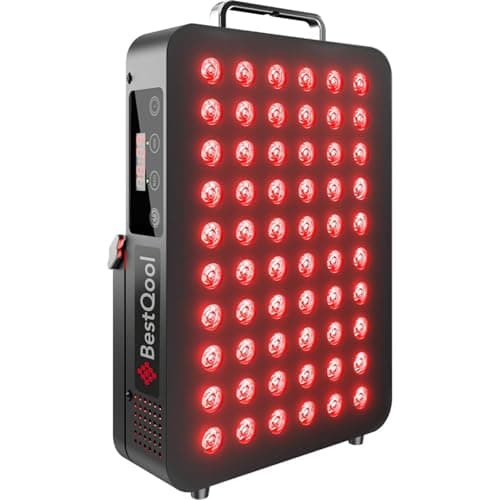
BestQool sells a compact red light panel on Amazon UK for £189.00 (checked 6 October 2026), listed as model BQ60. It pairs 660nm red and 850nm near infrared on dual chip LEDs, gives you three light modes and a touchscreen, and ships with both an adjustable stand and a hanging kit. That's a sensible spec sheet at a price that undercuts most of the panels we've covered.
We rate it 3.9 out of 5. It's one of the better value ways to try red light on a single sore spot, and BestQool at least quotes irradiance at a stated distance, which plenty of sellers don't bother with. But 3 inches is a flattering place to measure, the panel is too small for whole body sessions, and the listing leaves out things you'd want to know, like LED count, panel size and warranty length. Buy it for targeted use and you'll probably be happy with it; buy it expecting a full body recovery setup and you won't.
How we review
This review is research-based. We haven't tested this panel hands-on or measured its output. We worked from BestQool's Amazon UK listing, tried to check the specs on BestQool's own website (the site blocked our requests, so we couldn't confirm anything there), compared the numbers with the five red light panels we've already reviewed, and read the published research on red and near infrared light for muscle recovery. Every output figure in this review is the manufacturer's claim.
The BestQool suits someone who wants to aim light at one problem area, perhaps an achy Achilles or a stiff shoulder after pressing, without spending £300 or more to find out whether red light suits them. The stand lets it sit on a desk or bedside table at an angle, and the hanging kit means you can fix it to a wall if you'd rather stand in front of it.
It's also a reasonable pick if you're comparing small panels on numbers. A figure at 3 inches isn't ideal, but it's more honest than the point-blank readings some rivals use.
Skip it if you want to treat big muscle groups in one go. A compact panel can only cover a small patch of skin at the distance where it delivers its quoted output, so a session for both quads and your lower back turns into three or four separate ones. Our guide to red light therapy for recovery explains why panel size and distance matter so much for the dose you actually get.
Check the BestQool red light panel price on Amazon£189.00BestQool's listing is light on hard numbers, so the table below includes the gaps as well as the claims.
| Model | BQ60 |
|---|---|
| Wavelengths | 660nm red and 850nm near infrared, dual chip LEDs |
| Modes | Red, near infrared or both |
| Power | 105W (listing doesn't say if this is wall draw) |
| Claimed irradiance | 95.6 mW/cm² at 3 inches (no figure at other distances) |
| Controls | Touchscreen |
| Cooling | Cooling system, details not given |
| Mounting | Adjustable stand plus wall hanging kit |
| LED count | Not stated |
| Panel size | Not stated, described as compact |
| Colour | Black |
| Price (Amazon UK) | £189.00 (6 October 2026) |
95.6 mW/cm² sounds precise, and it's useful to have at all. The catch is the distance. Three inches is about 7.6cm, which is closer than most people sit in front of a panel, and light spreads out quickly as you move back. At 15cm, a common working distance, you should expect a meaningfully lower reading, though without BestQool's data we can't tell you how much lower.
Taken at face value, a 10 minute session at 3 inches would deliver about 57 J/cm² (95.6 mW/cm² for 600 seconds). That's a simple calculation from the claim, not a measurement, and it only applies to the small patch of skin directly in front of the LEDs.
Panel wattage is a poor guide to output, and the listing doesn't say whether 105W is what the panel pulls from the socket or a nominal total for the chips. If it's the real draw, running it for 10 minutes a day costs very little. Either way, ignore it as a measure of strength and look at irradiance instead.
Sometimes, modestly, and not consistently. A 2025 Bayesian network meta-analysis of treatments for delayed onset muscle soreness found photobiomodulation reduced soreness compared with placebo at 24 and 48 hours, and it ranked best among the physical therapies compared. Beyond 48 hours, though, none of the treatments beat placebo.
A separate 2025 meta-analysis on photobiomodulation for muscle soreness found 14 studies using wavelengths from 660nm to 950nm, but only four had data it could pool. Those four showed a moderate drop in soreness at 72 and 96 hours and better strength at 24 and 48 hours. Four studies is a thin base to build on, and the two reviews don't agree on timing.
Then there are the null results. A double blind crossover trial in 60 physical education students applied an 808nm laser to the quads for 10 minutes before exercise and found no difference from sham treatment in either strength or recovery after fatigue.
Most of this research used lasers or clinical LED arrays at controlled doses, not a consumer panel at an unmeasured distance. So even the encouraging findings don't transfer directly to the BestQool. If your sleep, protein and training load aren't in order, fix those first; our piece on sleep and muscle recovery is a better place to spend your attention.
Wear goggles. Near infrared light at 850nm is close to invisible, so your eyes don't protect themselves by squinting, and a desk mounted panel will often point straight at your face. Never look into the LEDs. If you have an eye condition or take medication that increases light sensitivity, talk to your GP or optician before you start. The listing doesn't say whether goggles come in the box, so plan to buy a pair.
At £189.00 the BestQool is the cheapest panel we've reviewed. Its closest rival is the RENPHO 70 LED panel at £199.99, which has the same two wavelengths, three modes and a stand plus sling. RENPHO quotes 180 mW/cm² at point-blank, a number that tells you almost nothing about real use, so on published data the BestQool edges it. RENPHO wins on brand familiarity and a clearer UK presence.
The Hooga ULTRA360 is the useful benchmark because Hooga also measures at 3 inches. It claims 159 mW/cm² there, roughly two thirds more than the BestQool's 95.6, and adds a 6 inch figure too. It costs £307.59, so you're paying around £119 extra for more intensity and better published data.
For whole body sessions, neither compact panel competes with the Nebula 1020W. Nebula claims 95 mW/cm² at 6 inches across a 104cm panel, which means it reaches about the same claimed intensity as the BestQool at twice the distance and over a far larger area. At £379.99 it costs double, but it treats both legs or your whole back at once.
See today's BestQool red light panel priceIt uses 660nm red and 850nm near infrared, the two wavelengths most recovery studies work with, so the hardware choice is sound. The research is mixed, though. A 2025 network meta-analysis found photobiomodulation reduced muscle soreness compared with placebo at 24 and 48 hours but not beyond that, while a double blind trial in 60 students found no effect on strength or recovery. Think of it as a small extra, not a replacement for sleep, food and sensible training.
It's BestQool's claimed irradiance with a light meter about 7.6cm from the panel. Irradiance falls as you move further away, so at a more comfortable 15cm you'll get noticeably less. BestQool doesn't publish a figure at any other distance, and nobody has independently measured it as far as we can find.
They're close cousins. Both are compact panels with 660nm and 850nm LEDs, three light modes, a stand and a hanging option, and both cost under £200. The BestQool is £10.99 cheaper at £189.00 and quotes irradiance at 3 inches rather than at point-blank, which is a slightly more useful number. RENPHO has the better known UK brand presence.
Yes. Near infrared at 850nm is barely visible, so your eyes won't blink or squint against it the way they would with a bright lamp. Keep blackout goggles on whenever the panel faces your head, never stare into the LEDs, and check with your GP or optician first if you have an eye condition or take medication that makes you light sensitive.
No. It's a small desk or wall panel, so it covers one area at a time, such as a knee, a shoulder or one side of your lower back. Treating both legs and your back means several separate sessions. A tall panel like the Nebula 1020W is the better tool for full body use.
Is a vibrating foam roller worth the extra money? What the research shows on range of motion, pain and DOMS, who should pay more, and what to look for.
How to use a portable steam sauna tent at home: setup, which water to use, pre-heat time, how long to sit in it, cleaning to stop mould, and who should check with a GP first.
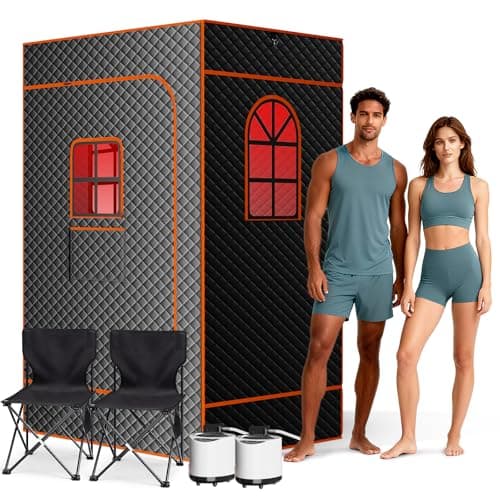
An honest Obqer 2 person portable steam sauna review: two 1200W generators, 9 heat levels, a 120 x 90cm footprint and £212.99 price, compared with Manastin and SereneLife.
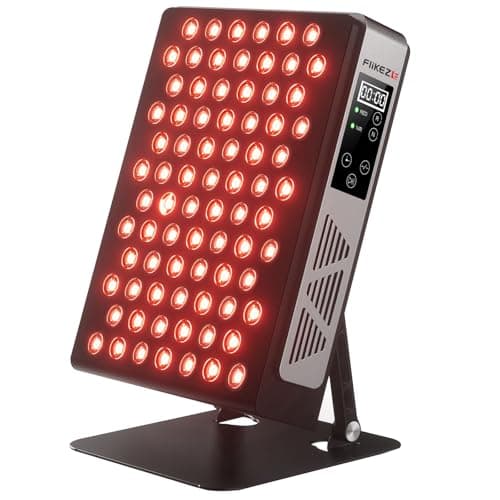
FliKEZE red light therapy review: 78 quad chip LEDs, 630 to 850nm, a 134 mW/cm² claim at 6 inches, five intensity levels and how it compares at £249.99.
Best Exercise is a participant in the Amazon EU Associates Programme, an affiliate advertising programme designed to provide a means for sites to earn advertising fees by advertising and linking to Amazon.co.uk. As an Amazon Associate we earn from qualifying purchases. This comes at no extra cost to you and never influences our independent reviews or rankings.