Recovery
Apple Watch Series 12 Review: Apple Finally Builds a Recovery Watch
Apple Watch Series 12 review for UK buyers: Readiness score, HRV every five minutes, Ceramic Shield 2 and the 24 hour battery that still loses to Garmin.

By Mike Shilling, Recovery & Training Editor · Updated 11 November 2026
We may earn a commission from qualifying purchases made through links on this page, at no extra cost to you. This never affects our ratings.
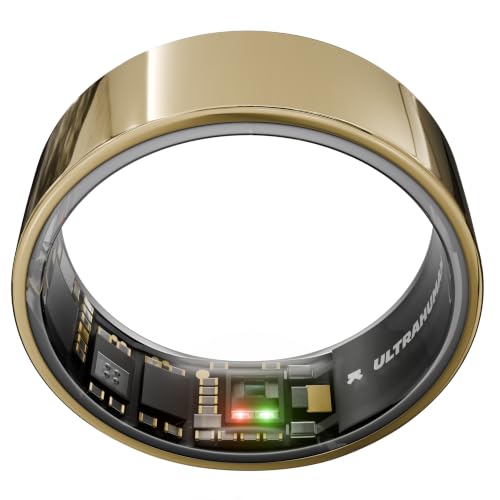
The Ultrahuman Ring AIR is the smart ring to buy if you want Oura-style sleep and recovery tracking without paying every month to see your own data. It was £199 on Amazon UK at the time of writing, and that's the whole bill: no membership, no trial that expires. You give up some battery life and some scientific backing compared with Oura, and for most people who mainly want to know how they slept, that's a fair trade for saving £340 over two years.
It isn't Ultrahuman's newest ring any more. The company launched the Ring PRO in 2026 with a claimed 15-day battery and a £429 list price, which leaves the AIR as the lighter, cheaper option in the range. Ultrahuman still sells the AIR on its UK site, and it still gets the same app.
How we review
We haven't worn the Ring AIR ourselves. This review draws on Ultrahuman's UK product, spec and PowerPlugs pages (checked 11 November 2026), the Amazon UK listing, recurring themes in owner feedback and published sleep-tracking research. Battery life, charge time and accuracy are Ultrahuman's figures unless we say otherwise, and where independent evidence is missing we tell you.
Buy the Ring AIR if you want overnight data (sleep stages, resting heart rate, HRV, skin temperature) and you resent subscriptions. It suits people who already own a running watch and don't want to wear it to bed, and anyone curious about recovery tracking who doesn't fancy committing to a WHOOP membership at £229 a year.
It's a weaker choice for people who train mostly with barbells, for anyone who wants live heart rate on screen during a session, and for buyers who want the tracker with the most independent validation. That last group should read our Oura Ring 5 review before deciding.
Ultrahuman's headline number is 2.4g, which appears in the Amazon title too. That's the smallest size. The UK spec sheet gives a range of 2.4g to 3.6g depending on size, a width of 8.1mm, and a thickness of 2.45mm to 2.8mm. So it's light, but it isn't the thinnest: Oura lists the Ring 5 at 6.09mm wide and 2.28mm thick, and you'll notice that difference most on a slim finger or beside a wedding band.
The shell is titanium with a tungsten carbide carbon coating, and the inside is a hypoallergenic epoxy resin that lets the sensors see your skin. Coated rings mark. Owners of every coated smart ring report hairline scratches within weeks, darker and matte finishes show them soonest, and metal gym equipment speeds things up. If cosmetic wear bothers you, the uncoated-looking Raw Titanium finish hides it better than Matte Grey or Aster Black.
The ASIN we link to is Bionic Gold in size 7, part of a parent listing that covers sizes 5 to 14 and other finishes, so pick yours on the page. Don't guess the size. The listing's first bullet tells you to buy the sizing kit first, because Ultrahuman sizes don't map neatly onto jewellery sizes and there are no half sizes. On Ultrahuman's own store the kit is free at checkout and you keep it; on Amazon you'll need to order the kit separately, wait for it, wear the sizer for a full day and night, then buy the ring. That's a week of faff before any data arrives, and skipping it is how people end up with a ring that spins and reads badly.
One note on the listing itself: this is a newer Amazon listing than the Ring AIR pages that have been around since 2023. We can't confirm whether it's refreshed hardware or simply a relisting, and the specs match Ultrahuman's current UK spec sheet, so we've treated it as the standard Ring AIR.
| Price | Around £199 on Amazon UK at the time of writing; £329 list on Ultrahuman's UK store |
|---|---|
| Subscription | None for core features; optional paid PowerPlugs and Ultrahuman Max |
| Weight | 2.4g to 3.6g, depending on size |
| Dimensions | 8.1mm wide, 2.45mm to 2.8mm thick |
| Battery | 24mAh, 4 to 6 days (Ultrahuman's figure) |
| Charging | 180 minutes from empty to full, per Ultrahuman's UK spec sheet |
| Sensors | Infrared PPG with red, green and infrared LEDs; skin temperature sensor; 6-axis motion sensor |
| Tracks | Sleep stages, heart rate, HRV, skin temperature, stress, movement, workouts, cycle |
| Water resistance | Up to 100m |
| Materials | Titanium with tungsten carbide carbon coating; epoxy resin inner |
| Sizes and finishes | 5 to 14, no half sizes; Raw Titanium, Aster Black, Matte Grey, Bionic Gold, Space Silver |
| Compatibility | iOS 15 or later, Android 6 or later |
| GPS / screen | Neither |
Each morning the app gives you a sleep score built on time in REM, deep and light sleep, plus a running sleep debt figure, and a recovery score that leans on resting heart rate, HRV and skin temperature. It's the same basic recipe as Oura's Sleep and Readiness scores. The reason any of it matters is that sleep does a lot of the work of adapting to training, which we cover in our guide to sleep and muscle recovery.
How accurate is it? Here we have to be straight with you. We searched PubMed Central for an independent study comparing the Ultrahuman Ring AIR with a sleep lab and didn't find one. The strong evidence for finger-worn trackers is on Oura's hardware. In a 2024 study of 35 healthy adults, the Oura Ring Gen3 showed no significant difference from polysomnography for wake, light, deep or REM sleep, with 76% to 80% sensitivity for sleep stages. A 2025 meta-analysis of six studies and 388 participants found no significant difference between Oura and medical-grade sleep studies for total sleep time or any stage.
Those results show that a ring on a finger can track sleep well. They don't prove that Ultrahuman's sensors and algorithms do. Treat the Ring AIR's sleep stage minutes as estimates, watch the weekly trend in resting heart rate and HRV instead of fretting over one night, and don't use it to rule out a sleep disorder.
This is the weak spot of every smart ring, and the Ring AIR is no exception. Optical heart rate works by shining light into skin and reading the blood flow that bounces back; clench your fist round a bar or a rowing handle and the ring shifts, the blood flow in the finger changes, and the readings get noisy. Steady walks and easy runs are fine. Intervals, lifting and anything with a hard grip are where rings lose the plot, so if workout heart rate matters to you, pair it with a chest strap from our best heart rate monitor guide.
Then there's the physical problem. A ring that's 2.45mm thick or more sits between your finger and the bar on every deadlift, pull-up and kettlebell swing. It pinches, and knurled steel will scratch the coating. The practical answer is to take it off for heavy sessions and log the workout manually, which defeats some of the point. Lifters who want strain numbers from training are better served by a strap or a watch, and our Garmin vs WHOOP comparison covers both routes.
There's no GPS and no screen. Everything happens in the app afterwards.
Ultrahuman quotes 4 to 6 days from the 24mAh cell, and owners commonly report landing nearer the bottom of that range. Its UK spec sheet lists 180 minutes for a charge from flat, although some UK retailers quote 90 minutes; either way it's slower than Oura's 80 minutes for a ring that already lasts longer. In practice that means two top-ups a week, ideally at your desk or in front of the telly, because a ring left on the charger at bedtime records nothing.
Battery is the single biggest reason to spend more. The Oura Ring 5 claims 6 to 9 days, Ultrahuman's own Ring PRO claims up to 15, and a WHOOP band can run about a fortnight.
The purchase covers sleep, recovery, heart rate, HRV, skin temperature, stress, movement and workout tracking, with no time limit. On top of that, Ultrahuman runs an add-on store called PowerPlugs. Most are free: Caffeine Window, Phase Alignment, Vitamin D, Smart Alarm, Social Jetlag, Shift Work, New Parent, Screentime, Cycle and Ovulation, and Pregnancy Insights were all listed at no charge on the UK PowerPlugs page when we checked.
Three were paid. AFib Detection was £4.90 a month, Cycle and Ovulation Pro £2.99 a month and Tesla Sync £6.90 a month. Ultrahuman also sells an optional Max plan at £9.99 a month or £99.99 a year, which bundles PowerPlugs with accidental damage and loss cover. None of that is needed to use the ring, but it does mean "no subscription" comes with an asterisk if you want the heart rhythm feature.
Prices are from Amazon UK and each brand's UK site at the time of writing.
The gap grows every year you keep it. By year three the Oura Ring 5 has cost roughly £609 and the Ring AIR is still £199. Ultrahuman's own UK store lists the AIR at £329 with an offer bringing it to about £197, so Amazon isn't the only place to find this price, but the saving against Oura holds either way. If you're weighing a ring against a strap in general, our WHOOP vs Oura comparison walks through that choice.
Two bits of news matter to buyers. First, Oura won a patent case at the US International Trade Commission, and from 21 October 2025 Ultrahuman was barred from importing and selling its rings in the United States. That's a US trade order. It doesn't apply in the UK, and the Ring AIR was on sale here from Ultrahuman and on Amazon in November 2026. We can't promise what a company under legal pressure in its biggest market will do with long-term app support, though nothing we've found suggests UK owners have lost any features.
Second, the Ring PRO now sits above the AIR. Ultrahuman's UK store lists it at £429 with up to 15 days of battery, a weight of 3.3g to 4.8g, and no subscription. If charging twice a week would annoy you, the PRO fixes that for about double the money. The AIR remains the pick on price and weight.
See today's Ultrahuman Ring AIR price on AmazonNo. Sleep, recovery, heart rate, HRV, skin temperature, stress and activity tracking are all included in the purchase price, and Ultrahuman describes app access as free for life. A few optional add-ons called PowerPlugs cost extra, such as AFib Detection at £4.90 a month, and there's an optional Ultrahuman Max plan at £9.99 a month, but you can ignore both and still use the ring fully.
Ultrahuman quotes 4 to 6 days from the 24mAh battery, and its UK spec sheet lists 180 minutes for a full charge from empty. That's shorter than the 6 to 9 days Oura quotes for the Ring 5, so expect to charge about twice a week.
Only in the United States. A US International Trade Commission order stemming from Oura's patent case stopped Ultrahuman importing and selling rings there from 21 October 2025. That order has no force in the UK, where the Ring AIR was on sale at both Ultrahuman's own store and Amazon when we checked in November 2026.
Use Ultrahuman's sizing kit before you order. The Ring AIR comes in sizes 5 to 14 with no half sizes, and Ultrahuman says its sizes can differ from standard ring sizes. Wear the plastic sizer for at least a day and a night on the finger you plan to use, then order the ring.
It's better value and worse on battery, thickness and published evidence. Over two years the Ring AIR costs £199 against about £539 for an Oura Ring 5 with membership, at the time of writing. Oura's ring is thinner, lasts longer per charge, and has independent sleep lab studies behind it, which Ultrahuman's ring doesn't yet have in the research we could find.
You can, but it's not ideal. A ring sits exactly where a barbell or dumbbell handle presses into your hand, the coating can scuff against knurled steel, and gripping hard tends to upset optical heart rate readings. Most lifters either move it to the non-dominant hand or take it off for heavy sets.
Apple Watch Series 12 review for UK buyers: Readiness score, HRV every five minutes, Ceramic Shield 2 and the 24 hour battery that still loses to Garmin.
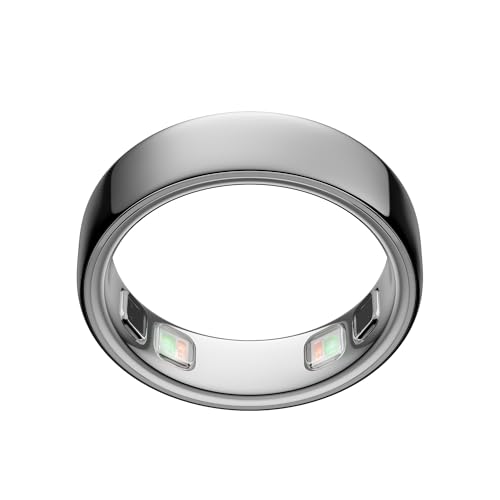
Oura Ring 5 review for UK buyers: 40% thinner titanium ring, 6 to 9 day battery, sleep accuracy evidence, sizing kit and the real cost of the membership.
Garmin vs WHOOP for UK buyers: two-year cost, GPS, Body Battery and Training Readiness against WHOOP recovery, sleep accuracy research, battery and who should pick which.
How to build your own sauna in the UK: indoor or garden, sizing, timber, insulation, ventilation, heater sizing, Part P electrics and planning rules.
Best Exercise is a participant in the Amazon EU Associates Programme, an affiliate advertising programme designed to provide a means for sites to earn advertising fees by advertising and linking to Amazon.co.uk. As an Amazon Associate we earn from qualifying purchases. This comes at no extra cost to you and never influences our independent reviews or rankings.