Workouts
Archer Push Up: How to Do It, Muscles Worked and Progressions
How to do an archer push up with clean form. Muscles worked, why it's the best bridge to a one-arm push up, common mistakes, easier and harder variations, and a weekly plan.

By Paul Kendrick, Cardio & Endurance Editor · Updated 18 November 2026
We may earn a commission from qualifying purchases made through links on this page, at no extra cost to you. This never affects our ratings.
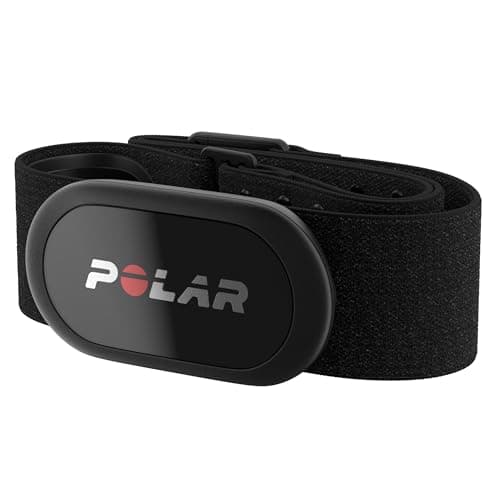
The Polar H10 is still the heart rate sensor to beat, and at around £56 on Amazon UK it's cheaper than Polar's own £69.20 list price. It reads your heart's electrical signal through a chest strap, so it stays accurate through sprints, hill reps and heavy lifting, where wrist and arm sensors smooth over the peaks or lag behind. It also talks Bluetooth, ANT+ and Polar's old 5kHz signal simultaneously, which means almost any watch, bike computer, app or gym console can read it. The weak points are the strap rather than the pod: owners report snaps and fabric wearing out, and readings can wobble until the electrodes are damp.
If you're trying to decide between a strap and an armband, the short version is this: buy the H10 for intervals, strength work and HRV, and consider an optical armband only if comfort is the thing stopping you from wearing a sensor at all.
How we review
This is a research-based review. We haven't tested an H10 hands-on; we've worked from Polar's published specifications and user manual, peer-reviewed validation studies, the Amazon UK listing and recurring owner feedback on forums such as Reddit. Where owner reports conflict or can't be confirmed, we say so.
Anyone who trains by heart rate zones and wants those zones to be right on the hard days. Runners doing track sessions, cyclists on Zwift doing short over-unders, rowers and CrossFit regulars all get far more from an electrical sensor than from the optical one under their watch, because effort changes faster than an optical sensor can follow.
It also suits people who want HRV readings for recovery tracking. Third-party apps such as Elite HRV and Kubios can read beat to beat (RR interval) data from the H10, and that's the job researchers trust it with.
Skip it if you hate chest straps and mostly run or ride at steady efforts. An upper arm sensor like the COROS Heart Rate Monitor will be more comfortable and accurate enough. Likewise, if you want 24/7 heart rate, sleep and recovery scores, a chest strap is the wrong tool; look at a screenless band like the Polar Loop instead.
The H10 is two parts: a small plastic pod (Polar calls it the connector) that snaps onto two studs, and the Pro Strap, a soft textile band with plastic electrode areas on the inside and silicone dots that help stop it sliding down your chest. Polar lists the whole kit at 60g, and the pod alone at 21g. You wet the electrodes, fasten the strap snug just under your chest muscles, clip the pod on and you're broadcasting.
The strap is machine washable at 40°C, and Polar's manual asks you to unclip the pod and rinse the strap under running water after every session. That routine matters more than it sounds. Dried sweat degrades the electrode areas over time, and a strap left wet with the pod attached can keep the sensor active and flatten the coin cell.
This is also where most complaints centre. Across Reddit threads and Amazon feedback, the recurring story is that the pod outlasts the strap: owners describe the press studs loosening, the textile stretching or the electrode surface wearing until readings turn erratic. We can't put a failure rate on it, but it comes up often enough that we'd budget for a replacement strap at some point rather than treat the original as permanent. The good news is that the pod also fits Polar's Soft Strap and many third-party straps, so a worn band doesn't mean a new sensor.
| Measurement | Electrical (ECG-style) via chest strap electrodes |
|---|---|
| Connectivity | Bluetooth Low Energy, ANT+ and Polar GymLink (5kHz) |
| Simultaneous Bluetooth connections | 2 (plus ANT+ devices) |
| Battery | CR2025 coin cell, user replaceable, up to 400 hours |
| Internal memory | One training session (Polar lists up to 30 hours) |
| Water resistance | WR30 (30m); only 5kHz works in water |
| Weight | 60g with strap, 21g pod only |
| Strap sizes | XS-S Pro Strap fits 62 to 82cm chest; M-XXL fits 71 to 118cm |
| Strap care | Machine washable at 40°C |
| Price | £56.04 (M-XXL) and £56.99 (XS-S) on Amazon UK at the time of writing; Polar list price £69.20 |
Accurate enough that sports scientists use it as the reference device. The clearest evidence comes from the Swiss Federal Institute of Sport, where ten healthy adults wore an H10 alongside a medical Holter ECG through five activities from low to high intensity (Gilgen-Ammann et al., 2019). Overall, 99.6% of the H10's RR intervals were correctly detected, against 94.6% for the Holter. During the high-intensity activities, the Holter's signal quality dropped to 89.8% while the H10 held 99.4%. The authors went as far as suggesting a simple chest strap like the H10 could be the gold standard for RR interval work when the activity involves a lot of movement.
That's a small sample of healthy volunteers, so it doesn't prove the H10 is flawless for everyone. But the same group has since used the H10 as the criterion measure for testing other wearables. In a 2025 study with 16 participants doing nine activities from lying down to HIIT, Polar's Verity Sense armband was compared against the H10 and came very close on the upper arm, while the wrist-worn Vantage V2 watch showed a mean absolute error of 6.41 bpm on the non-dominant wrist (Schweizer and Gilgen-Ammann, 2025). When the yardstick in a study is your product, that tells you something about its reputation.
The practical caveat is setup rather than hardware. Chest straps need conductive contact, and the dropouts owners report almost always cluster at the start of a session, in cold or dry air, or with synthetic tops that build static. Wetting the electrodes, or using a dab of electrode gel, usually fixes it. Readings that stay jumpy after you're sweating are a common sign that the strap, not the pod, has worn out.
See the Polar H10 on AmazonBy default the H10 broadcasts on Bluetooth and ANT+ together, plus 5kHz for older Polar watches and gym kit. Bluetooth allows two simultaneous connections, so you can feed a watch and a Zwift session at once, while ANT+ devices can listen in without counting towards that limit. In the Polar Flow app you can switch off ANT+ or the public "Heart rate visible to all" broadcast to save battery, and Flow is also how the sensor gets firmware updates, so pair it there first even if you'll mostly use a Garmin or Wahoo.
The internal memory is an underrated feature. You can start a recording from a compatible Polar app, leave your phone in a locker and sync the session afterwards, which is handy for team sports, martial arts or anything where a watch isn't allowed. It holds one session at a time, so sync before the next one.
Battery life is rated at up to 400 hours from a CR2025. For someone training an hour a day, that's comfortably over a year between swaps, provided you unclip the pod after each use. Keep a spare cell in your kit bag; they're cheap and the swap takes a minute.
Polar H9 (around £36). The H9 uses the same style of electrode measurement and also broadcasts on Bluetooth and ANT+, with 5kHz for older Polar gear. It's a good choice if you just want accurate live heart rate for a watch or Zwift and don't need the H10's internal memory or its two simultaneous Bluetooth connections. Most people who only ever pair to one device won't miss the difference. See the Polar H9 on Amazon.
Garmin HRM-600 (around £120). If you're committed to Garmin and want running dynamics such as ground contact time and vertical oscillation, plus a rechargeable battery and onboard storage that fills gaps in your watch data, the HRM-600 is the Garmin-world answer. It costs more than double the H10, and for raw heart rate accuracy there's no reason to expect it to beat Polar. See the Garmin HRM-600 on Amazon.
COROS Heart Rate Monitor (around £69). An upper arm optical band with auto wear detection and no strap to wet. It's far more comfortable for long steady runs, but it's Bluetooth only and, like all optical sensors, less sharp in sprints. Our COROS Heart Rate Monitor review covers it in full.
Polar Verity Sense. Polar's own armband, and the optical sensor that came closest to the H10 in the 2025 study above. It's the pick for swimmers who want to clip a sensor to their goggle strap, or for anyone who simply won't wear a chest strap. Our Polar Verity Sense review compares the two directly.
For a wider shortlist, our best heart rate monitor UK guide ranks straps and armbands side by side.
The H10 makes most sense alongside a GPS watch whose wrist sensor you don't fully trust in hard sessions. With Polar watches like the Pacer Pro or Vantage M3 it slots in natively, and with a Garmin such as the Forerunner 265 it pairs over ANT+ or Bluetooth in a few seconds. If you're building a structured plan, our workouts hub has sessions where accurate zones make the difference between a productive interval and a wasted one.
Yes, if you train with intervals, lift, do HIIT or care about HRV. The H10 reads the electrical signal from your heart rather than shining light through your skin, so it responds instantly to changes in effort and doesn't get thrown by arm movement or a loose watch. For easy jogging and walking, a decent wrist sensor is usually close enough.
It broadcasts on Bluetooth and ANT+ at the same time, so it pairs with Garmin watches and bike computers, Wahoo and Hammerhead head units, Zwift and most connected gym kit. Apple Watch can read it as a Bluetooth heart rate sensor. Polar says you can hold two simultaneous Bluetooth connections, plus any number of ANT+ listeners.
A CR2025 coin cell, which Polar rates at up to 400 hours. It isn't rechargeable; you open the back with a coin and swap it. Polar specifically warns against fitting a thicker CR2032. Unclipping the pod after every session matters, because a damp strap left attached can keep the sensor awake and drain the cell.
It's water resistant to 30m, but Bluetooth and ANT+ don't travel through water. Polar's manual says only its 5kHz GymLink signal works in the water, which limits live swim data to compatible Polar watches. The onboard memory can also record a session for syncing afterwards, though pool water can short the electrodes and Polar suggests wearing the strap under a swimsuit for best results.
Usually dry electrodes. Until you sweat, there's not enough moisture for a clean signal, especially in cold or dry weather or with technical tops that build static. Wet the electrode pads before you put it on, or use a little electrode gel. If spikes continue after the strap is wet, the strap itself may be worn and due for replacement.
Polar lists the M-XXL Pro Strap for chests of 71 to 118cm and the XS-S version for 62 to 82cm. Most adults need M-XXL (ASIN B07PM54P4N). Smaller-framed runners and many women find the XS-S (B07PM565W2) holds more securely without cranking the adjuster to its limit.
How to do an archer push up with clean form. Muscles worked, why it's the best bridge to a one-arm push up, common mistakes, easier and harder variations, and a weekly plan.
Garmin Forerunner 165 vs 265 compared on multi-band GPS, Training Readiness, Training Status, battery, screen size, triathlon mode and UK price, with a clear verdict.
What Garmin Body Battery actually measures, how it charges and drains, what a good number is, why yours stays low, how far to trust it and which Garmin watches have it.
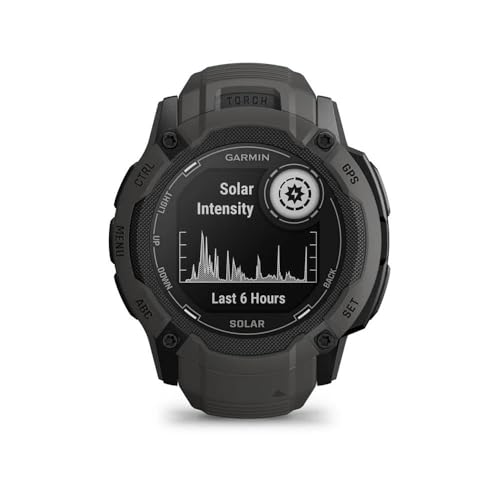
An honest Garmin Instinct 2X Solar review covering the 40 day battery, the unlimited solar claim, the LED torch, multi-band GPS and whether to buy it over the Instinct 3 Solar.
Best Exercise is a participant in the Amazon EU Associates Programme, an affiliate advertising programme designed to provide a means for sites to earn advertising fees by advertising and linking to Amazon.co.uk. As an Amazon Associate we earn from qualifying purchases. This comes at no extra cost to you and never influences our independent reviews or rankings.