Workouts
Archer Push Up: How to Do It, Muscles Worked and Progressions
How to do an archer push up with clean form. Muscles worked, why it's the best bridge to a one-arm push up, common mistakes, easier and harder variations, and a weekly plan.

By Paul Kendrick, Cardio & Endurance Editor · Updated 18 November 2026
We may earn a commission from qualifying purchases made through links on this page, at no extra cost to you. This never affects our ratings.
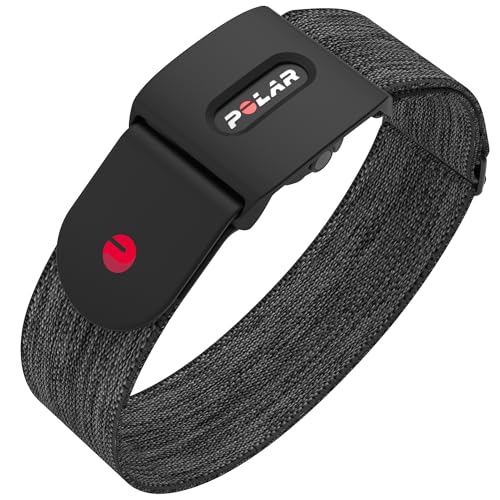
The Polar Verity Sense is an optical heart rate armband that gets closer to chest strap accuracy than any watch, and it's one of very few arm sensors built to swim, record sessions on its own and talk to Bluetooth and ANT+ devices at once. For around £82 on Amazon UK, it's the armband we'd recommend to most runners, cyclists, gym users and pool swimmers who've given up on chest straps. If you do lots of sprints, CrossFit or HRV tracking, buy a strap instead.
That's a strong verdict for a small plastic pod on a stretchy band, so it's worth explaining what sets it apart. Most armband sensors do one job: they stream heart rate to your watch over Bluetooth. The Verity Sense does that, but it also streams over ANT+ to as many devices as you like, stores up to 600 hours of training in its own memory, and clips onto your goggles to measure heart rate, distance and pace in the pool. Its predecessor, the OH1, already had the best independent research record of any arm-worn optical sensor, and the Verity Sense has since picked up good results of its own.
How we review
This is a research-based review. We haven't tested this unit hands-on; we've worked from Polar's product page and user manual, the Amazon UK listing, consistent owner feedback and peer-reviewed validation studies. Where a spec wasn't confirmed by Polar's own documentation, we've said so or left it out.
People who want accurate heart rate during workouts but can't stand a chest strap are the obvious buyers. That covers runners who find a strap rubs on long runs, women for whom a strap fights with a sports bra, and anyone who's tired of wetting electrodes on a cold morning. If you train by heart rate zones and your watch's wrist reading wanders, an arm sensor fixes most of that.
Pool swimmers are the second group, and they don't have many alternatives. Wrist sensors struggle in water, and many chest straps either slip when you push off the wall or can't send data through water in real time. The Verity Sense's swim mode sidesteps the problem by recording at the temple and syncing after you get out.
The third group is people who own more than one device. Because it broadcasts on two Bluetooth channels and unlimited ANT+ links, you can feed a watch, a phone app and a gym treadmill in the same session without fiddling with settings.
Who shouldn't buy it? Anyone whose training is mostly short, explosive intervals, and anyone who wants HRV readings for recovery. We'll explain both below.
The sensor is a 30 by 30mm pod, 9.5mm thick, that clips into a holder on a washable fabric armband with a Velcro fastener. You can wear it on the upper arm, the forearm or, according to Polar, anywhere it sits snugly against bare skin. The holder isn't just there to keep it in place: Polar's manual says the armband holder and the goggle clip act as booster antennas, raising Bluetooth range from about 20 metres to up to 150 metres in open space.
Underneath are six LEDs used for heart rate measurement, which also double as a simple menu. There's a single button: a short press turns it on, short presses pick a mode, and a long press turns it off. The side status light glows blue in heart rate mode, green in recording mode and white in swimming mode, and once you've picked one the mode stays locked until you switch the sensor off and back on.
That button is the one area where the COROS armband feels more modern. COROS uses wear detection to power its band on and off automatically; with the Verity Sense you have to remember to hold the button down after every session, or the battery quietly drains.
| Type | Optical heart rate sensor for arm, temple or other skin contact |
|---|---|
| Optical sensor | 6 LEDs |
| Other sensors | Accelerometer, gyroscope, magnetometer |
| Battery | 45 mAh Li-pol; up to 30 hours continuous training, or 16 days at 1 hour per day |
| Connectivity | Bluetooth (2 simultaneous connections) and ANT+ (unlimited) |
| Range | Up to 150m with holder, up to 20m without |
| Memory | Up to 600 hours of training |
| Modes | Heart rate, recording, swimming |
| Water resistance | 50m, suitable for swimming |
| Weight | 5g sensor, 19g with armband |
| Band sizes | S to L (arms 24 to 40cm), L to XXL (arms 31 to 56cm) |
| In the box | Armband, goggle strap clip, USB charging adapter |
| Price | £82.18 on Amazon UK at the time of writing (Polar UK lists £77.85) |
This is where the Verity Sense earns its rating, and the evidence is better than for almost any other consumer wearable. A 2025 study from the Swiss Federal Institute of Sport put 16 adults through nine activities, from lying down to high-intensity intervals, and compared the Verity Sense with a Polar H10 chest strap (Schweizer and Gilgen-Ammann, 2025). Worn on the upper arm, it showed an average bias of minus 0.05 bpm and a mean absolute error of 1.43 bpm, with high reliability across repeat sessions. The wrist-worn Polar Vantage V2 in the same study was noticeably less accurate, with a mean absolute error of 6.41 bpm.
Placement matters, and a second study shows how much. Researchers in Maryland had 28 adults wear an H10 alongside a forearm-mounted Verity Sense and several wrist and arm devices through rest, a warm-up, burpees and a graded treadmill test (Moghaddam et al., 2025). The Verity Sense had the lowest error at rest and, along with an upper arm Whoop, the closest agreement with the chest strap during the treadmill protocol. Burpees were a different story: agreement collapsed for every optical device tested, the Verity Sense included.
So the practical read is simple enough. For easy runs, tempo work, long rides, rowing and treadmill sessions, you'll get data that's hard to tell apart from a strap. For 15 second sprints, kettlebell complexes or burpee-heavy circuits, expect lag and flattened peaks; that's a limit of reading blood flow with light, not a Polar fault, but it's real.
See the Polar Verity Sense on AmazonThis is the feature that sets it apart from cheaper armbands. In swim mode you clip the sensor to your goggle strap so the lens sits on bare skin at your right temple, and it records heart rate, distance and pace for pool sessions. Distance comes from your set pool length plus turns that the gyroscope detects, so wearing it in the right spot matters; Polar's manual warns that data from a badly positioned sensor will be flawed.
There's decent evidence that temple placement works. The OH1, which the Verity Sense replaced, was tested in 26 competitive swimmers with the sensor under the swim cap at the temple and an H10 under the swimsuit (Olstad and Zinner, 2020). Agreement with the strap was mostly excellent, while a wrist-worn Polar watch in the same session read significantly lower. One caveat: Polar supplied the kit for that study, and it tested the OH1 rather than the Verity Sense itself.
Swim mode is pool-only by design, since distance relies on pool length. We couldn't find Polar documentation on open water distance, so treat it as a heart rate recorder outside.
Polar's 30 hour figure is for continuous training. The manual also quotes 16 days at an hour a day, which tells you there's some drain when it's on but idle, and the manual power button makes that more likely. In practice most people will charge it every two to three weeks. It charges through a small USB adapter, and Polar's FAQ puts a full charge at roughly 1.5 to 2 hours.
Connectivity is the strongest in its class. By default it sends heart rate over ANT+ and to two Bluetooth devices at once, so a Garmin watch, Zwift on a laptop and an ANT+ gym console can all read it together. That's the main reason a cyclist would choose it over the COROS band, which is Bluetooth only. You can switch off ANT+ or the second Bluetooth channel in Polar Flow to save battery.
The Polar H10 is still the reference device; it's the strap researchers use as the benchmark in every study above. It reads electrical signals from the heart rather than light, so it holds up in sprints and gives beat to beat intervals for HRV apps. Polar doesn't list RR interval or HRV support for the Verity Sense, so if recovery tracking or interval work matters most, the strap wins. You can buy the H10 on Amazon for a similar price.
The Verity Sense wins on comfort, swimming and the simple fact that people actually wear it. A chest strap left in a drawer because it chafes gives you no data at all, and for steady endurance training the accuracy gap is close to nothing. Our best heart rate monitor UK guide covers the strap options in more depth.
The COROS Heart Rate Monitor is the nearest rival and usually the cheaper one. It answers back with automatic wear detection, a longer 38 hour battery and three Bluetooth connections. But it has no ANT+, no swim support and, as far as COROS's specs go, no onboard memory. If you only run and ride with a Bluetooth watch, the COROS is a fair saving; if you swim, use ANT+ kit, or want watch-free recording, pay the extra for Polar.
If what you really want is all-day recovery and sleep data rather than workout heart rate, neither armband is right. Look at a screenless band like the Polar Loop, which is designed to be worn around the clock.
Polar's current pages don't give a separate battery figure for swimming or recording mode, so we can't tell you whether those drain faster than live streaming. We also couldn't confirm the 20 hour battery figure some retailers list; Polar's own manual says up to 30 hours. And there's no published validation of swim mode distance accuracy that we could find.
Yes. It broadcasts standard heart rate over both Bluetooth and ANT+, so Garmin watches and Edge bike computers pick it up as an ordinary external heart rate sensor. You don't need a Polar watch. The swim mode and recording mode, though, store data in Polar Flow, so you'd sync those sessions through Polar's app and then export or link them to other platforms.
Polar quotes up to 30 hours of continuous training from its 45 mAh battery, and separately says 16 days when training an hour a day. That second figure is the more realistic one for most people, because it allows for the time the sensor spends switched on but idle. It charges through a small USB adapter that comes in the box.
For steady running, cycling, gym cardio and treadmill work it's very close. A 2025 Swiss study found an average bias of just minus 0.05 bpm against an H10 when the Verity Sense was worn on the upper arm. Where it falls behind is short, explosive work such as sprints and burpees, and it isn't the tool for beat to beat HRV, which needs an ECG strap.
Yes, and that's its biggest advantage over most rivals. It's water resistant to 50 metres and has a dedicated swimming mode that records heart rate, distance and pace in the pool. Polar wants you to clip it to your goggle strap so the lens sits on your right temple, where it also uses its gyroscope to detect turns.
Yes. In recording mode it saves the session to its internal memory, which holds up to 600 hours of training, and you sync it to the Polar Flow app afterwards. You'll need to set it up and link it to a Polar Flow account first, but after that you can leave the watch and phone at home.
Polar sells two band sizes. The S to L band fits arms of roughly 24 to 40cm and the L to XXL band fits 31 to 56cm. Measure the part of your upper arm or forearm where you'll actually wear it; most runners and cyclists are fine with the standard band.
How to do an archer push up with clean form. Muscles worked, why it's the best bridge to a one-arm push up, common mistakes, easier and harder variations, and a weekly plan.
Garmin Forerunner 165 vs 265 compared on multi-band GPS, Training Readiness, Training Status, battery, screen size, triathlon mode and UK price, with a clear verdict.
What Garmin Body Battery actually measures, how it charges and drains, what a good number is, why yours stays low, how far to trust it and which Garmin watches have it.
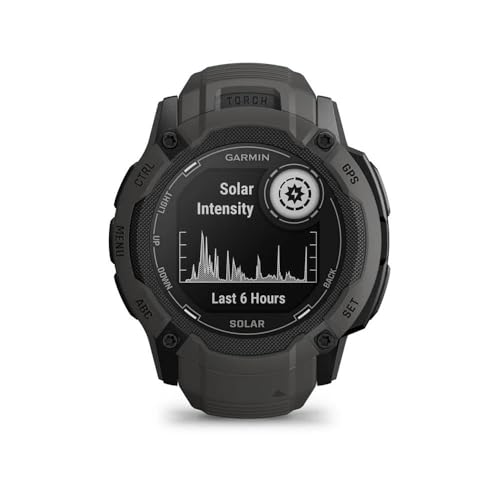
An honest Garmin Instinct 2X Solar review covering the 40 day battery, the unlimited solar claim, the LED torch, multi-band GPS and whether to buy it over the Instinct 3 Solar.
Best Exercise is a participant in the Amazon EU Associates Programme, an affiliate advertising programme designed to provide a means for sites to earn advertising fees by advertising and linking to Amazon.co.uk. As an Amazon Associate we earn from qualifying purchases. This comes at no extra cost to you and never influences our independent reviews or rankings.