Recovery
COROS vs Garmin: Which Running Watch Should You Buy in 2026?
COROS vs Garmin for UK runners: PACE 4, PACE 4 Pro, APEX 4 and NOMAD against Forerunner, fenix and Instinct on battery, maps, apps, Garmin Pay and price.

By Paul Kendrick, Cardio & Endurance Editor · Updated 16 November 2026
We may earn a commission from qualifying purchases made through links on this page, at no extra cost to you. This never affects our ratings.
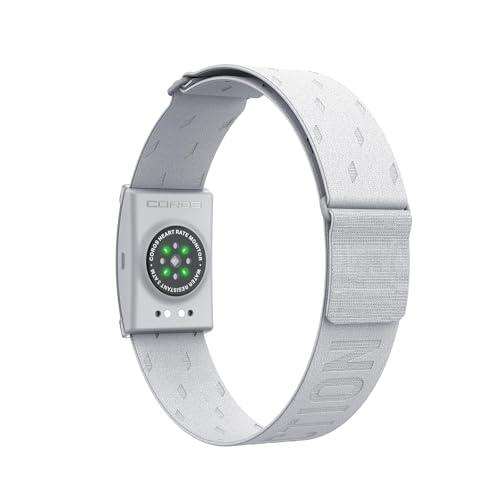
The COROS Heart Rate Monitor is a £69 optical armband that you wear on your upper arm or forearm, and for steady running and cycling it gives you cleaner heart rate data than the sensor on the back of any watch. It isn't a chest strap replacement for sprinters or HIIT fans, and it can't swim. But if you've given up on chest straps because they chafe, slip or need wetting before every run, this is one of the easiest upgrades you can make for around the price of a pair of decent running socks and a gel belt.
The big surprise for a lot of buyers: it isn't a COROS-only accessory. COROS says it pairs with any Bluetooth heart rate enabled device and holds up to three connections at once, so a Garmin watch, a phone running Zwift and a smart treadmill can all read it in the same session. What it lacks is ANT+, and that matters more than it sounds for some cyclists.
How we review
This is a research-based review. We haven't tested this unit hands-on; instead we've worked from COROS's published specifications, the Amazon UK listing, consistent owner feedback and independent research on arm-worn optical sensors. Where we couldn't verify a spec from COROS or another reliable source, we've left it out.
Runners and cyclists who already own a sports watch and are tired of the wrist sensor going haywire. Wrist optical readings drift when your arm swings hard, your watch shifts on cold skin, or you grip handlebars; an armband sits on a fleshier, steadier patch of skin and moves far less. If you train by heart rate zones, that steadiness is the whole point.
It also suits anyone who simply hates chest straps. Women who find a strap digs in under a sports bra, people with sensitive skin, and runners who've given up on wetting electrodes on frosty mornings all tend to prefer an arm band.
It's the wrong buy if you mostly do CrossFit, sprint sessions or circuit classes. And swimmers should look elsewhere.
There's not much to it, which is the appeal. A small optical pod clips into a soft fabric band that lays flat around your arm and grips with a textured inner surface; you slide a buckle to set the tension once, and from then on it's a pull-on, pull-off job. COROS describes the sensor as its latest multi-channel optical design, sat under a scratch-resistant cover.
The feature that sets it apart from most budget armbands is wear detection. Put it on and it wakes up and connects to your paired devices when you start a workout; take it off and it switches itself off. There's no power button to forget, which is exactly how most cheap optical sensors end up flat in a kit bag. You can also pop the pod out and throw the band in with your washing, something you'll appreciate after a hot summer long run.
Sizing comes in two bands. COROS lists the standard at 18 to 32cm and the large at 24 to 43cm, and the ASIN we link here is the grey standard.
| Type | Optical (PPG) armband, upper arm or forearm |
|---|---|
| Sensor | Multi-channel optical sensor with scratch-resistant cover |
| Battery | 38 hours of full operation, 80 days standby |
| Charging | Magnetic USB cable (no wall plug included) |
| Connectivity | Bluetooth only, no ANT+ |
| Simultaneous connections | Up to 3 Bluetooth devices |
| Compatibility | COROS watches and app, plus any Bluetooth heart rate enabled device |
| Wear detection | Yes, automatic power on and off |
| Band sizes | Standard 18 to 32cm, Large 24 to 43cm |
| Swimming | Not designed for swimming |
| Price | £69 on Amazon UK at the time of writing (COROS list price £79) |
We haven't put this unit on a lab treadmill, so we lean on research into arm-worn optical sensors, which COROS's monitor shares a design approach with. The evidence on placement is fairly clear: moving the sensor up the arm helps. A 2025 study in Sensors had 28 adults wear a Polar H10 chest strap as the reference alongside a Polar Verity Sense on the forearm and identical Whoop 4.0 units on the wrist, forearm and upper arm (Moghaddam et al., 2025). The upper arm and forearm devices agreed most closely with the chest strap during warm-ups and a graded treadmill test, and the identical Whoop units were more accurate on the upper arm than on the wrist.
That same study found every optical device struggled during burpees, where agreement collapsed for all of them. An earlier UK validation of Polar's OH1 armband tells a similar story: it tracked the H10 well through rest, cycling and an incremental treadmill test, with a mean bias of around 1 bpm, but its accuracy dropped in maximal sprints (Muggeridge et al., 2021).
So here's the practical read for the COROS band. Easy runs, tempo efforts, long rides and treadmill sessions should look clean and close to a chest strap. Track reps of 200m, hill sprints and anything with lots of upper body thrashing will lag and smooth out the peaks, which is the nature of light-based sensing rather than a COROS flaw. We'd expect it to behave like its rivals there, though no independent study has tested this exact model yet.
See the COROS Heart Rate Monitor on AmazonThe 38 hour figure is generous for a sensor this small; for comparison, that's several weeks of training for most people before you need the cable. If you use a COROS watch, you can check the band's battery level on the watch or in the COROS app, which saves the classic "did I charge it?" guess on race morning.
Connectivity is where you need to check your own kit. Bluetooth covers almost every modern watch, phone app, smart trainer and connected treadmill, and three simultaneous links is more than many chest straps manage. Lacking ANT+, though, it won't talk to devices that only listen on that protocol, and some older Garmin and Wahoo bike computers and gym consoles fall into that camp. If that describes your setup, a dual-band chest strap is the safer buy.
The Polar H10 remains the reference point: it's an ECG-style electrode strap, it broadcasts on Bluetooth and ANT+, and researchers use it as the criterion device in studies like the two above. Garmin's HRM 200 plays the same role inside the Garmin world. Pick a strap if you care about beat to beat accuracy, HRV readings, sprint work or ANT+ devices.
Pick the COROS armband if comfort decides whether you actually wear a sensor. A chest strap you leave in the drawer is less accurate than an armband you wear every run. Our best heart rate monitor UK guide covers the strap options in more depth.
The Polar Verity Sense is the most direct rival. It's the more proven design, with the strongest showing in the 2025 placement study, and Polar builds it to work in the pool clipped to goggle straps. The COROS answers with wear detection and a simpler, cheaper package, and on current Amazon pricing it usually undercuts Polar's band.
Screenless trackers like Whoop are a different product. They're built for 24/7 recovery and sleep data on a subscription, whereas COROS positions this band purely for workouts and says it isn't meant for daily tracking. If recovery scores interest you, our Whoop Peak review explains that model.
Yes, especially with a lighter watch like the COROS PACE 4, whose wrist sensor, like every wrist sensor, gets unreliable in hard intervals. Pairing is straightforward inside the COROS ecosystem, battery status shows up on the watch, and the auto connect means you put the band on, press start and go. Owners of the COROS PACE Pro get the same benefit. If you're still choosing a platform, our COROS vs Garmin comparison weighs the two ecosystems.
Yes. COROS says it works with any Bluetooth heart rate enabled device, so it isn't locked to COROS watches. It'll pair with recent Garmin, Polar and Suunto watches, phones, bike computers, smart trainers and gym kit that accept Bluetooth heart rate. It doesn't do ANT+, so older Garmin Edge units and some gym consoles that only listen for ANT+ won't see it.
COROS quotes 38 hours of full operation and 80 days on standby. Because the auto wear detection switches it off when you take it off, standby drain is low, and a typical runner doing five or six hours a week will charge it roughly every six weeks. It charges on a magnetic USB cable; the box doesn't include a plug.
Not quite. Upper arm optical sensors track a chest strap closely during steady running, cycling and treadmill work, but they lose accuracy in short, explosive efforts like sprints and burpees. If you do a lot of HIIT, sprint reps or want beat to beat data for HRV, a chest strap such as the Polar H10 is still the more precise tool.
No. It shrugs off sweat and rain, but it isn't built for swimming. If you want an arm sensor for the pool, the Polar Verity Sense is the usual pick, since it's designed to clip to goggle straps. For open water and triathlon most people still swim with a wrist reading or a swim-specific chest strap.
COROS positions it as a workout sensor, not an all-day tracker, and its own listing says it isn't intended for daily heart rate tracking. Put it on before training and take it off afterwards; the wear detection then powers it down by itself. For 24/7 tracking you'd want a watch or a screenless band like Whoop.
Measure the thickest part of your upper arm or forearm where you'll wear it. COROS lists the standard band at 18 to 32cm and the large band at 24 to 43cm. Most runners fit the standard band; people with big biceps, or anyone who wants to wear it high on a muscular upper arm, should go large.
COROS vs Garmin for UK runners: PACE 4, PACE 4 Pro, APEX 4 and NOMAD against Forerunner, fenix and Instinct on battery, maps, apps, Garmin Pay and price.
Does Revitive work? What the trials show on leg blood flow and symptom relief, whether the NHS recommends it, who shouldn't use it and cheaper alternatives.
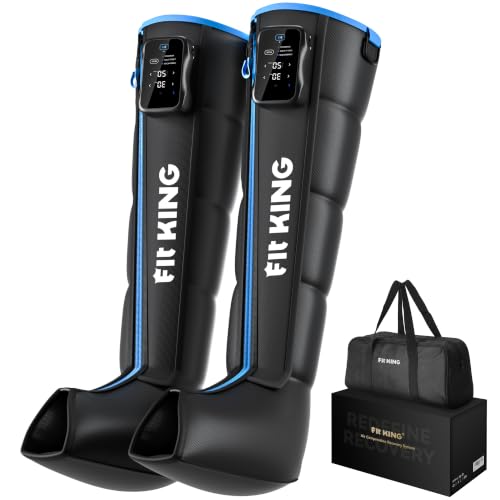
FIT KING cordless compression boots review: built-in controllers, Bluetooth sync, 50 to 150 mmHg and a 24 month warranty, weighed against a £699.99 price.
Forerunner 255 vs 265 compared: MIP vs AMOLED screen, battery, Training Readiness, weight, music and the price gap, with a clear verdict for UK runners.
Best Exercise is a participant in the Amazon EU Associates Programme, an affiliate advertising programme designed to provide a means for sites to earn advertising fees by advertising and linking to Amazon.co.uk. As an Amazon Associate we earn from qualifying purchases. This comes at no extra cost to you and never influences our independent reviews or rankings.