Home Gym
Are Vibration Plates Worth It? What the Research Actually Shows
Are vibration plates worth it? Yes for balance, bone health support and low-impact warm-ups; no for weight loss or replacing strength training. The evidence.

By Paul Kendrick, Cardio & Endurance Editor · Updated 17 August 2026
We may earn a commission from qualifying purchases made through links on this page, at no extra cost to you. This never affects our ratings.
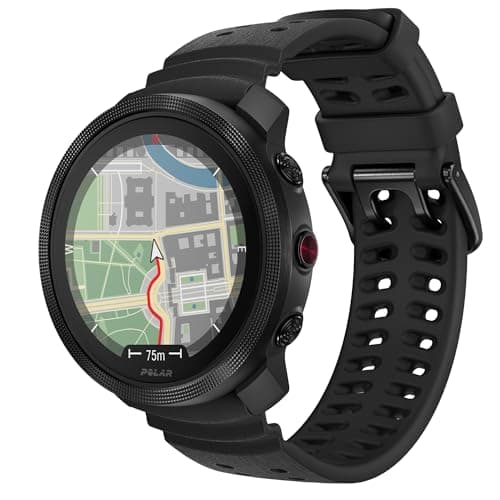
Polar has spent a decade being the brand that runners respect and then buy a Garmin instead. The Vantage M3 is the most direct answer to that problem the company has produced in years, because for around £250 it includes two things Garmin makes you pay much more for: offline topographic maps and a wrist ECG. Whether that is enough to change anyone's mind depends on how much you value hardware over ecosystem.
At the time of writing it sits close to £250 on Amazon UK. That puts it against the Garmin Forerunner 165 and below the Forerunner 265, and on a pure specification sheet the M3 beats both. The specification sheet is not the whole story, which is what the rest of this review is about.
How we review
This review is based on Polar's published specifications, independent testing from established sports technology outlets and patterns across verified owner feedback. We have not run our own long-term test of this specific unit, so we report only findings that appear consistently across sources, including the criticisms.
Runners, cyclists and multisport athletes who want proper training analysis and navigation without spending £400. The M3 makes most sense for someone who trains regularly, cares about load and recovery, and does not need their watch to also be a phone on their wrist. It is a strong first serious training watch and a good upgrade from a basic fitness tracker.
It suits anyone who values Polar's approach to recovery in particular. Polar has been doing heart rate science since the early 1980s, and Training Load Pro, Nightly Recharge and Sleep Plus Stages are mature features rather than recent additions bolted on to chase a competitor.
The 1.28 inch AMOLED runs at 416 x 416 with 1,500 nits of peak brightness, protected by Gorilla Glass 3. It is a genuinely good screen; text stays readable in bright sun and colour rendering on maps is crisp enough that the mapping feature is usable rather than a checkbox. Polar includes an ambient light sensor and an always-on option, with the usual battery cost.
The case is 44.7mm square-ish in footprint and 12.2mm thick, weighing 53g with the strap and 35g without. That is heavier than a Forerunner 265S but sits in normal territory for a 44mm multisport watch, and it is light enough to sleep in comfortably, which matters given how much of Polar's value lives in overnight recovery data.
| Case size | 44.7 x 44.7 x 12.2 mm |
|---|---|
| Weight | 53 g with strap, 35 g without |
| Display | 1.28 in AMOLED, 416 x 416, Gorilla Glass 3 |
| Brightness | 1,500 nits peak |
| Battery, smartwatch mode | Up to 7 days |
| Battery, performance training | Up to 30 hours |
| Battery, eco training | Up to 70 hours |
| Battery capacity | 310 mAh Li-Pol |
| GNSS | Dual-frequency, GPS, GLONASS, Galileo, BeiDou, QZSS |
| Maps | Offline topographic with komoot turn-by-turn |
| Sensors | Optical HR Gen 4, wrist ECG, SpO2, skin temperature, barometer, compass, accelerometer, gyroscope |
| Sport profiles | Over 150 |
| Water rating | 50 metres |
Offline maps on a £250 watch is the feature that ought to make people look twice. The M3 stores topographic maps locally, so you get contour detail and terrain rather than a bare line on a black background, and the komoot integration provides turn-by-turn guidance along a planned route. Back to Start and breadcrumb navigation are there as well.
The caveat is that it is a partnership rather than a fully native mapping system, so the workflow runs through komoot's route planning rather than Polar's own. If you already use komoot, that is a bonus. If you do not, there is a learning curve and a service to sign up for. Garmin's equivalent on the Forerunner 965 is smoother and more self-contained, and it costs roughly double.
The fourth-generation optical sensor is a solid performer for steady-state work and, like every wrist sensor, less dependable during intervals or in cold weather. Validation research on wrist-worn devices repeatedly finds accuracy varying with activity type, wrist movement, fit and individual physiology (wearable heart rate device validation study). Polar's chest straps remain among the best in the business and pair instantly, which is the sensible route for interval training.
The wrist ECG is a real differentiator at this price. Polar uses it to feed its recovery picture rather than pitching it as a diagnostic tool, and that framing is the honest one. Nightly Recharge combines autonomic nervous system and sleep recovery into a morning readout, Training Load Pro separates cardio, muscle and perceived load, and FitSpark suggests daily workouts based on where you are. Hill Splitter breaks a run or ride into ascents and descents automatically, which is more useful on hilly terrain than it sounds.
Whether you use any of it depends on you actually engaging with the data. Regular activity does the bulk of the health work regardless of what your watch says about it, and the British Heart Foundation's guidance on staying active is a good reminder that consistency beats analytics.
Ecosystem. Polar Flow is a competent training platform with a decent web interface, but Garmin Connect has an order of magnitude more third-party integrations, watch faces, data fields and community routes. Sync into Strava, TrainingPeaks and the rest works fine on both, so the gap only really bites if you want to customise heavily.
Then the omissions. No onboard music, so phone-free runs mean silent runs. No contactless payments. Thinner accessory support if you want power meters, radar or specialist sensors. None of these are dealbreakers for a lot of people, but you should know before you buy rather than after.
Polar's 7-day smartwatch figure is one of the more honest claims in this category. Reviewers running a realistic mix of daily GPS exercise and normal use report five to six days consistently, which is a small shortfall rather than the halving you sometimes see. Training battery of 30 hours in performance mode covers a long ultra; eco mode's 70 hours covers a multi-day event. Full figures are on Polar's UK product page.
It is worth being clear that Garmin's 13 to 15 day smartwatch claims are in a different bracket. If charging weekly annoys you, that is a genuine reason to look elsewhere.
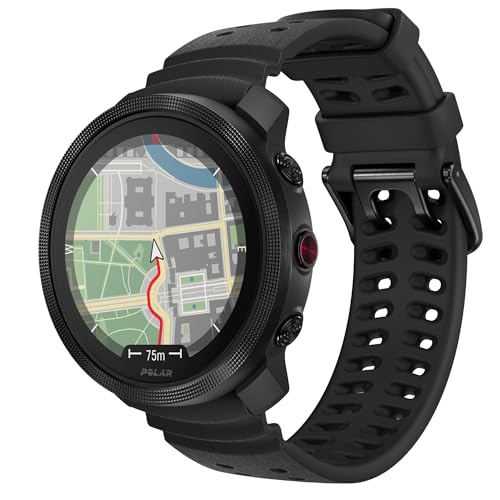
At £250 the M3 is one of the better-value training watches on Amazon UK, mainly because of what it includes rather than what it does best. Maps and ECG at this price are unusual, the screen is excellent, and Polar's recovery features are mature. What you sacrifice is the polish and breadth of Garmin's platform, plus music and payments.
If you want to compare across the market, our best Garmin watch UK guide covers the main alternative, and the Polar Grit X2 Pro review covers Polar's rugged flagship if you want the same software with more durability. For heart rate accuracy during intervals, pair it with a strap from our best heart rate monitor UK guide.
Check price on AmazonOn hardware, the M3 gives you more for less money: offline topographic maps, a wrist ECG and a brighter 416 x 416 AMOLED panel, at roughly £90 less. On software and ecosystem, Garmin wins clearly. Connect has a far larger third-party app library, better route planning and a bigger community. Choose the M3 if you want maps and ECG on a budget, the Garmin if you live inside a training platform.
Yes, and that is unusual at this price. It stores offline topographic maps with turn-by-turn guidance through Polar's komoot integration, plus breadcrumb navigation and back-to-start. Garmin does not put maps on a Forerunner until the 965, which costs considerably more.
Polar quotes 7 days in smartwatch mode, 30 hours of training in performance mode and up to 70 hours in eco mode from the 310 mAh battery. Reviewers running a mix of daily GPS exercise and normal smartwatch use consistently report five to six days, which is honest against a 7-day claim. Enabling the always-on display shortens that noticeably.
No. There is no onboard music storage and no support for streaming services, so you need your phone for audio. It handles music playback controls for whatever is playing on your phone, which is not the same thing. This is the M3's biggest single omission against Garmin and Apple rivals.
Yes. It has a wrist ECG sensor alongside the Gen 4 optical heart rate sensor, SpO2 and skin temperature. Polar uses it within its recovery and health features rather than as a regulated arrhythmia detection tool, so treat it as a training metric rather than a medical device.
It covers the sports, with over 150 profiles including open water swimming and a multisport mode, and it is 50 metre water resistant. For a first or second triathlon it is more than adequate. Serious triathletes who want deep cycling power analysis and a large accessory ecosystem will find Garmin's platform better supported.
Are vibration plates worth it? Yes for balance, bone health support and low-impact warm-ups; no for weight loss or replacing strength training. The evidence.
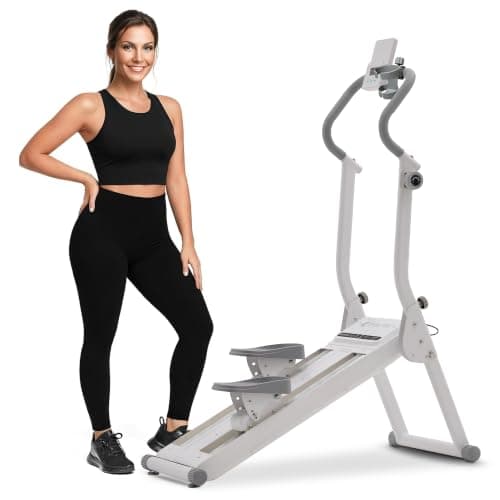
Our ExacMe magnetic stair climber review covers its 16 magnetic resistance levels, 48cm stride, 158kg user limit, app and noise claims, and who should buy it.
What a cambered bar is, the three main types (cambered squat bar, bowed bench bar, cambered Swiss bar), what each one does, how much they weigh and how to buy one.
What a landmine attachment is, the rack-mounted, plate-post and floor platform types, how to check bar and rack fit, safety tips, and the best exercises to do.
Best Exercise is a participant in the Amazon EU Associates Programme, an affiliate advertising programme designed to provide a means for sites to earn advertising fees by advertising and linking to Amazon.co.uk. As an Amazon Associate we earn from qualifying purchases. This comes at no extra cost to you and never influences our independent reviews or rankings.