Recovery
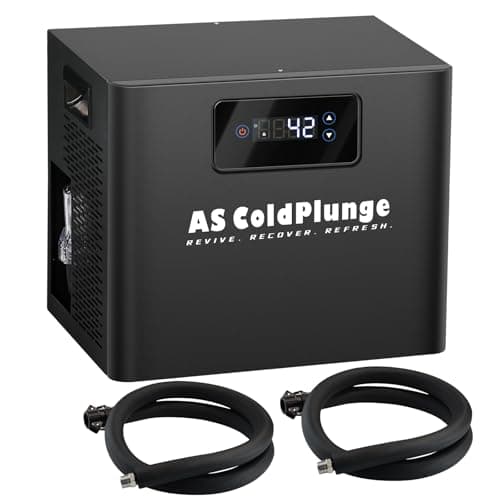
AS ColdPlunge Ice Bath Chiller Review: £687 to Stop Buying Ice
Our AS ColdPlunge ice bath chiller review: a 1/3 HP cooler for tubs up to about 300 litres, with the ice-versus-electricity maths and the listing's gaps.

By Mike Shilling, Recovery & Training Editor · Updated 31 October 2026
We may earn a commission from qualifying purchases made through links on this page, at no extra cost to you. This never affects our ratings.
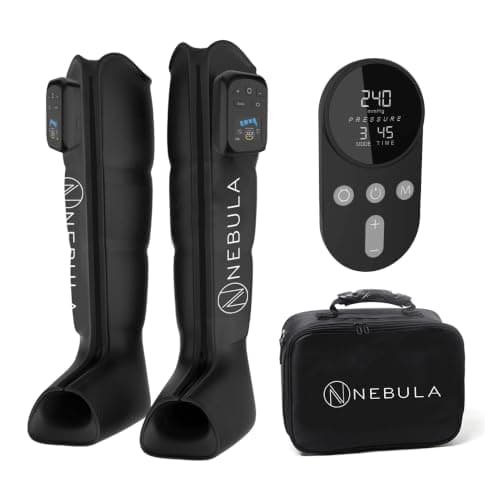
The Nebula Wireless Compression Boots are the cordless sibling of the mains powered Nebula compression boots we rated 4.0 earlier this month. At £249.99 they put the pump and battery inside the boots, charge over USB-C and run for 120 minutes, so you can zip up and move about the house with nothing plugged in. That freedom is the reason to buy them. The problem is what Nebula hasn't told us: there's no pressure range and no mode count on the listing, and the battery is shorter than on the cheaper cordless boots we've already covered.
They cover the feet, calves and thighs with sequential air compression, controlled from what Nebula calls a 2026 upgraded digital controller. This listing is the Medium. Amazon UK showed only five left in stock when we checked on 31 October 2026, with more on the way.
How we review
We haven't worn these boots. This review is based on Nebula's Amazon UK listing and the product data we pulled from Amazon, our existing reviews of the mains Nebula boots and rival cordless models, and the peer reviewed research on intermittent pneumatic compression. Where Nebula doesn't publish a figure (pressure, number of modes, air chambers, charge time, warranty) we say so instead of guessing. The model is new, so there's very little owner feedback to draw on yet.
The best fit is someone who likes the idea of compression boots but knows a hose system would end up in a cupboard. Runners, cyclists and people on their feet all day (nurses, retail staff, teachers) tend to want 20 minutes of squeeze in the evening, and boots that don't need laying out next to a socket make that far more likely to happen.
Skip them if you want to follow a set protocol at a known pressure, because you can't check what the boots are doing. Skip them too if you'll always use boots in the same chair: the mains Nebula is £20 cheaper, publishes its numbers and never runs flat. And if money is tight, remember the evidence says boots mainly make legs feel better (more on that below), which is hard to justify at £250 on a stretched budget. Our best compression boots UK guide lays out every price tier.
| Coverage | Feet, calves and thighs, both legs |
|---|---|
| Compression type | Sequential air compression |
| Power | Built-in rechargeable battery (cordless) |
| Battery life | 120 minutes per charge |
| Charging | USB-C |
| Controls | Digital controller (2026 upgrade) |
| Pressure range | Not published |
| Modes | Not published |
| Air chambers per boot | Not published |
| Size on this listing | Medium |
| Colour | Black |
| Price | £249.99 on Amazon UK (31 October 2026) |
The mains model gives you hard numbers: 30 to 260 mmHg, six modes and a 10 to 90 minute timer, all printed on the listing. The wireless model's listing talks about feet and leg modes and simple controls, then stops. We ran the product data through Amazon's own catalogue tools as well, and it lists only the colour, size and dimensions. So we can't tell you whether the wireless pump reaches the same pressures, and we'd be surprised if a battery pump in the boot matched a mains unit at the top end. Nobody needs 260 mmHg, but it means you can't check you're near the levels the research uses.
The other difference is the feet. The wireless listing puts more weight on foot and ankle compression, describing coverage from the feet up to the thighs. If your feet ache after a shift, that's a point in its favour.
Price runs the other way to what you might expect. The cordless boots cost £249.99 against £229.99 for the mains pair, so you're paying £20 for the convenience and accepting less published information in return.
Most recovery studies have used fairly modest settings. A 2024 meta-analysis in Biology of Sport pooled 17 studies and 319 participants and found the most common protocols ran for about 20 to 30 minutes at around 80 mmHg (Maia et al., 2024). Going higher hasn't been shown to help: a 2026 randomised, placebo controlled trial gave international level youth footballers 30 minutes at 200 mmHg after matches and found no improvement over a placebo cream on jump height, muscle fatigue, creatine kinase or perceived soreness (BMC Sports Science, Medicine and Rehabilitation, 2026).
So the missing number matters less for performance than for comfort and confidence. Without it, you're setting the boots by feel. Our practical advice: start on the lowest setting for the first few sessions, build to a firm squeeze that never feels painful, and keep sessions to 20 to 30 minutes. Our how to use compression boots guide covers timing and settings in more detail.
At 120 minutes per charge you'll get four to six sessions out of the boots, which means plugging them in two or so times a week if you use them daily. That's workable, but it's the weakest figure of the cordless boots we've reviewed. The JDZ and Povibar pairs both quote 180 minutes, and the Hyperice Normatec Go quotes up to three hours.
USB-C is the right choice, though. You can top up from a laptop, a phone charger or a power bank in the car, which suits people who'll take the boots to races or on holiday. Nebula doesn't publish a full charge time, and like any lithium battery the capacity will drop over a couple of years of use. That's the trade you make against the mains model, which has no battery to wear out.
Check the Nebula wireless price on Amazonaround £250Nebula wireless vs Povibar cordless. The Povibar cordless boots cost around £200, publish five air chambers per boot, three modes and five intensities, and quote 180 minutes of battery. Like Nebula, Povibar gives no pressure figure. On paper the Povibar tells you more and runs longer for £50 less, which is why we'd lean towards it on specs alone. The Nebula's case rests on its foot coverage and a brand whose mains boots we already rate.
Nebula wireless vs JDZ cordless. The JDZ cordless boots are £219.99 with almost the same spec sheet as the Povibar: five chambers, three modes, five intensities, 180 minutes and a 10, 20 or 30 minute timer. JDZ also sells an XL that fits thighs up to 73cm, useful for bigger legs. Again, no pressure figure. You'd pick the Nebula over it mainly for brand familiarity and the foot to thigh design.
Nebula wireless vs Hyperice Normatec Go. The Normatec Go costs £329 and only treats the calves, but it has seven compression levels, Hyperice's app, HyperSync pairing and a three hour battery. It's the better made product with the longer track record. If your problem is quads and hamstrings as well as calves, the Nebula covers far more leg for £80 less. If it's mainly calves and you travel a lot, the Go is the more refined choice.
Keep expectations in proportion. The Biology of Sport meta-analysis found a trivial to small benefit for muscle function, a trivial to moderate reduction in pain and soreness, and very mixed effects on blood markers of muscle damage. There are positive single trials: in a small 2025 randomised controlled trial, 20 untrained men did plyometric exercise to bring on muscle soreness, and the group given 15 minute compression sessions reported significantly less soreness at 48 and 72 hours than controls (Gu et al., 2025). Ten people per group is tiny, though.
Put together, compression boots seem to make legs feel lighter and less sore, which has real value in a heavy training block. They don't reliably make you perform better sooner, and they won't replace sleep, sensible training load and decent food. We go through the evidence in more depth in our compression boots benefits guide.
The listing leans on phrases like lymphatic drainage, oedema relief and neuropathy support. Treat those carefully. Swelling in the legs and nerve pain both have causes that need a diagnosis, and a recovery gadget isn't a substitute for that, so speak to your GP before using compression boots for either.
Compression isn't suitable for everyone. If you have a known or suspected deep vein thrombosis, don't use the boots until you've seen a doctor; a single swollen, warm, painful calf can be a clot, and the NHS guidance on DVT explains the signs and when to get urgent help. The same caution applies if you have peripheral arterial disease or other circulation problems, heart failure, open wounds or skin infections on the legs, or a recent fracture. Stop if you feel numbness, tingling or pain.
This listing is the Medium. Nebula doesn't give a height or thigh circumference range for it in the listing text we checked, so look at the size chart on the product page before ordering and measure the widest part of your thigh. A boot that's too tight feels like a tourniquet; one that's too loose can't squeeze evenly. Other sizes appear to be grouped under the same parent listing on Amazon.
They're a fair buy if cordless use matters to you and you want the brand behind our 4.0 rated mains boots. You get sequential air compression from the feet to the thighs, USB-C charging and a digital controller. What you don't get is a published pressure range, a published mode count or much owner history, and the JDZ and Povibar cordless boots cost £30 to £50 less with longer quoted battery life.
The mains boots (£229.99) run from a wall socket, publish a 30 to 260 mmHg pressure range, six modes and a 10 to 90 minute timer. The wireless boots (£249.99) are battery powered with a 120 minute charge and USB-C charging, but Nebula's listing doesn't state the pressure range or how many modes they have. You pay £20 more to lose the cable.
Nebula quotes 120 minutes per charge. At 20 to 30 minutes a session that's four to six sessions, so a daily user would charge them two or so times a week. Nebula doesn't publish a full charge time.
Nebula doesn't say. Neither the Amazon UK listing nor the product data we pulled gives a pressure range in mmHg or a number of levels. Don't assume they match the 30 to 260 mmHg of the mains model, because it's a different product with a different pump.
The listing mentions oedema relief and neuropathy support, but these are consumer recovery boots, not a prescribed medical device. Leg swelling and nerve symptoms both have causes that need a diagnosis, so see your GP before using compression for them. A single swollen, painful, warm calf can be a blood clot and needs urgent medical advice.
Anyone with a known or suspected deep vein thrombosis, peripheral arterial disease, uncontrolled heart failure, an open wound or skin infection on the legs, or a recent fracture should speak to a GP first. Stop a session if you feel numbness, tingling or pain.
Our AS ColdPlunge ice bath chiller review: a 1/3 HP cooler for tubs up to about 300 litres, with the ice-versus-electricity maths and the listing's gaps.
How often to change ice bath water, which sanitiser to use and how much, how to scrub inflatable and rigid tubs, and the signs your cold plunge water has gone bad.
What a sauna hat is, why felted wool keeps your head cooler in a hot sauna, whether it helps you stay in longer, how to size, wet and wash one, and which to buy.
Sauna temperature explained: 70 to 100°C for Finnish saunas, 45 to 65°C for infrared, 40 to 45°C for steam rooms, plus beginner settings and safety.
Best Exercise is a participant in the Amazon EU Associates Programme, an affiliate advertising programme designed to provide a means for sites to earn advertising fees by advertising and linking to Amazon.co.uk. As an Amazon Associate we earn from qualifying purchases. This comes at no extra cost to you and never influences our independent reviews or rankings.