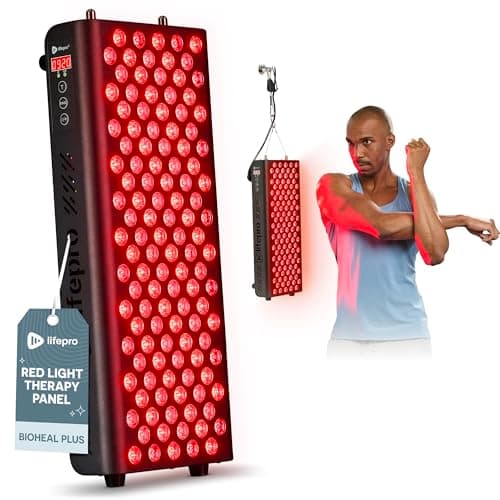
Recovery
LifePro Red Light Therapy Panel Review: Tall, Slim and Short on Data
LifePro red light therapy panel review: 660nm and 850nm, 10Hz pulse, wall mounts and hard case at £320.76, plus the specs LifePro's listing leaves out.

By Mike Shilling, Recovery & Training Editor · Updated 30 October 2026
We may earn a commission from qualifying purchases made through links on this page, at no extra cost to you. This never affects our ratings.
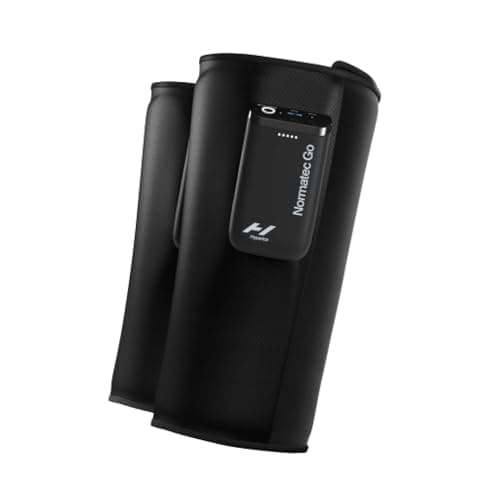
The Hyperice Normatec Go is a good, well-made pair of wireless calf compression sleeves that does one job conveniently: it squeezes your lower legs in a rolling wave for 20 minutes or so without a pump, a hose or a plug socket. That portability is the whole reason to buy it. The catch is coverage, because it only reaches from ankle to knee, and at £329 on Amazon UK you're paying close to what some full-leg boots cost. We rate it 4.2 out of 5: excellent if your calves take the beating, a poor substitute for full boots if your quads and hamstrings do.
On the Amazon UK listing it's called "Normatec Lower Legs", which is the same product Hyperice sells as the Normatec Go elsewhere. Each sleeve has its own pump and battery built in, and HyperSync keeps the pair inflating in time so you get a symmetrical massage rather than one leg running ahead of the other.
How we review
We haven't tested the Normatec Go ourselves. This review is built from Hyperice's published specifications, the Amazon UK listing, patterns in owner feedback, the recovery research on pneumatic compression and our experience with comparable compression kit. Where a spec isn't published, we say so rather than guess.
The Go makes the most sense for three overlapping groups. Runners are the obvious one, since calves and Achilles take the brunt of high mileage and that's precisely the area the sleeves cover. People on their feet all day (nurses, retail staff, teachers) get the same heavy-leg relief in the evening without dragging boots and a control unit out of a cupboard. And travellers benefit from the size: Hyperice says the sleeves are TSA approved for carry-on, and they pack flat at roughly 63 x 30 x 2.5cm.
Skip it if your soreness lives in your thighs or hips. Squat-heavy lifters, cyclists and footballers usually feel it in the quads and hamstrings first, and the Go does nothing for them. You'd be better served by full-leg boots, which our best compression boots UK guide covers at every price point.
Each Go sleeve is a self-contained unit: a wrap that closes around the calf, with a small built-in pump and the controls on the front. There's nothing to connect. You strap on both sleeves, press the power button on each, and HyperSync pairs them automatically. The listing describes three zones of overlapping, gapless 360-degree compression, which inflate in sequence from the ankle upwards before releasing. That's the same basic pattern the full-leg Normatec boots use, just over a much shorter length of leg.
Fit is where you have to be a bit careful. Amazon lists the Go as "one size fits most", and Hyperice doesn't publish a calf circumference range on the pages we checked. Owner feedback follows the pattern you'd expect from a single size: most people get a snug fit, while a minority with very slim lower legs report the wrap closing with little overlap pressure, and those with very muscular or larger calves find the strap close to its limit. If your calves sit well outside average, buy from a seller with easy returns.
Weight is a non-issue. Hyperice's product comparison page lists the Go at 1.2lb (about 0.5kg) with up to three hours of runtime and carry-on approval, and Amazon's listing gives the same 1.2lb figure, so they're light enough to forget about once they're on.
| Coverage | Calves only (ankle to below knee) |
|---|---|
| Compression levels | 7 |
| Zones | 3 overlapping zones per sleeve |
| Battery life | Up to 3 hours per charge |
| Charging | Rechargeable, built into each sleeve (charge time not published) |
| Weight | Approx 0.5 kg (1.2 lb) |
| Packed size | Approx 63 x 30 x 2.5 cm (25 x 12 x 1 in) |
| Size | One size fits most (no published calf range) |
| Sync | HyperSync pairs the two sleeves automatically |
| App | Hyperice app via Bluetooth |
| Travel | TSA approved for carry-on (per Hyperice) |
| Amazon UK price | £329.00 (October 2026) |
Seven levels let you start gently and build up, and in practice most owners settle in the middle of the range for recovery work. Hyperice doesn't print a pressure figure in mmHg for the Go on the pages we checked, so you can't compare its top level directly with rival boots. For session length, the research below suggests around 20 to 30 minutes is where most studies sit, and going much beyond that mostly costs you time.
You can run everything from the buttons on the sleeves, which is the point of a grab-and-go device. The Hyperice app adds session tracking and lets you adjust the level and timer from your phone, which is handy when you're sitting down and don't want to lean forward over your shins. It's useful but not essential, and plenty of people never open it.
Battery life of up to 3 hours means a daily 20 to 30 minute session needs a charge roughly once a week. Each sleeve carries its own battery, so you charge both after use. What Hyperice doesn't publish is a full charge time, so we can't tell you how long a flat pair takes to recover.
The honest answer is that pneumatic compression mostly makes your legs feel better rather than measurably perform better. A 2024 systematic review and meta-analysis in Biology of Sport pooled 17 studies with 319 participants and found a trivial to moderate benefit for pain and soreness, only a trivial to small benefit for muscle function, and highly variable effects on blood markers of muscle damage (Maia et al., 2024). The authors also noted that protocols of about 20 to 30 minutes at around 80 mmHg were the most commonly used.
There are encouraging single trials. In a small 2025 randomised controlled trial, 20 untrained men did plyometric exercise to bring on delayed onset muscle soreness, and the group treated with 15-minute intermittent pneumatic compression sessions reported significantly less soreness at 48 and 72 hours than controls (Gu et al., 2025). Ten people per group is tiny, though, and those sessions treated the whole lower limb rather than just the calves.
That last point matters for the Go. Almost all of the research uses full-leg boots, so there's no strong evidence specific to calf-only sleeves. It's reasonable to expect a similar feel-good effect on the area being squeezed, but don't expect a calf sleeve to help sore quads. Our guides to compression boots benefits and how to use compression boots go into the evidence and session setup in more detail.
See the Normatec Go on Amazon UK£329The Go sits in an awkward spot on price. It's less than half the cost of Hyperice's full-leg systems, yet it's dearer than two budget full-leg boots we've reviewed, both of which cover far more of the leg.
The Hyperice Normatec 3 is the full-leg benchmark at around £779: five zones from foot to hip, the same seven levels and ZoneBoost targeting, but with a control unit and hoses that tie you to a chair. The Hyperice Normatec Premier removes the hoses by putting a pump in each boot, which gives you the Go's cordless convenience over the whole leg, but at around £849 it costs more than two and a half Go sets.
At the budget end, the Povibar cordless compression boots are hose-free full-leg boots for around £200, though Povibar doesn't publish a pressure figure and the brand has almost no track record. The Nebula compression boots cost about £230 and cover calf to thigh with six modes and a stated 30 to 260 mmHg range, but they run from a separate controller and the mains.
So the choice comes down to what you value. If your priority is full-leg recovery at home, a budget boot gives you more coverage per pound than the Go. If you want something you'll actually use at a desk, on a plane or in a hotel room, with a brand that has years of support behind it, the Go earns its premium.
It's worth it if your recovery problem sits mostly in your calves (runners, people who stand all day, frequent flyers) and you value being able to use it anywhere. If you want quads, hamstrings and glutes covered too, £329 goes further on a pair of full-leg boots, even budget ones.
Yes. Hyperice sells the same product as Normatec Go in some markets and as Normatec Lower Legs on its UK site and Amazon UK. It's two wireless calf sleeves with 7 compression levels, HyperSync pairing and Bluetooth control through the Hyperice app.
Hyperice quotes up to 3 hours of runtime per charge. Each sleeve has its own built-in battery, so you charge both sleeves after use. Hyperice doesn't publish a full charge time.
You can stand and shuffle about, and Hyperice markets it for use at a standing desk. It isn't designed for walking any distance or exercising in, because the sleeves inflate rhythmically and a full-pressure squeeze on a working calf is uncomfortable. Sitting with your feet up or standing still is where it makes sense.
No. The sleeves wrap the lower leg between ankle and knee only. The feet, knees and thighs get no compression at all, which is the main trade-off against the Normatec 3 and Normatec Premier boots.
Anyone with deep vein thrombosis or a suspected clot, a fracture, an open wound or infection on the lower leg, or significant circulatory or heart disease should speak to a doctor before using pneumatic compression. Pregnant users should check with their midwife or GP first.
LifePro red light therapy panel review: 660nm and 850nm, 10Hz pulse, wall mounts and hard case at £320.76, plus the specs LifePro's listing leaves out.
Sauna etiquette explained for UK gyms, spas and home saunas: what to wear, towels, showering, pouring water on the stones, quiet, phones and safe session lengths.
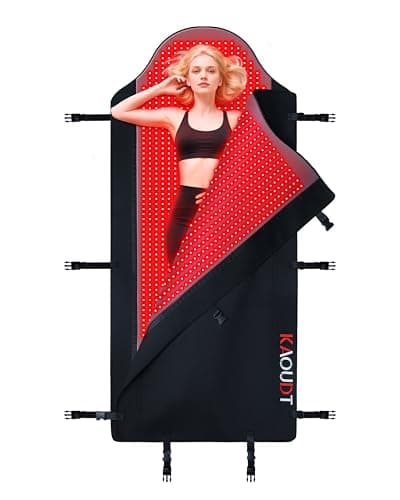
An honest Kaoudt red light therapy mat review: 2,600 LEDs at 660nm and 850nm, a 183cm wrap design, no published irradiance and a £720 price tag.
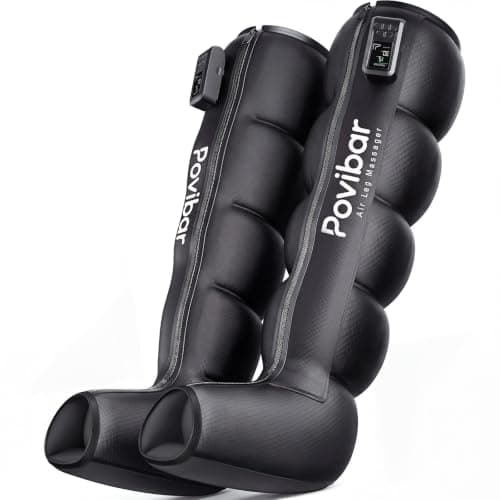
Our Povibar cordless compression boots review: 5 air chambers, 3 modes, 5 intensities and 180 minutes of battery for £200, but no published pressure figure.
Best Exercise is a participant in the Amazon EU Associates Programme, an affiliate advertising programme designed to provide a means for sites to earn advertising fees by advertising and linking to Amazon.co.uk. As an Amazon Associate we earn from qualifying purchases. This comes at no extra cost to you and never influences our independent reviews or rankings.