Recovery
HigherDOSE Infrared Sauna Blanket Review: Good Blanket, Shocking UK Price
Our HigherDOSE sauna blanket review: heat, size, build and the detox claims checked against the evidence, plus why £1,246 on Amazon UK is hard to defend.

By Mike Shilling, Recovery & Training Editor · Updated 20 November 2026
To use a sauna blanket, lay it flat on a bed, sofa or yoga mat, line it with a towel or put on loose cotton long sleeves and leggings, then switch it on and let it preheat zipped up for 10 to 15 minutes. Climb in, zip it to your chest and stay for 15 to 20 minutes on your first few goes at around 50 to 55C, building towards 30 minutes and the 60 to 70C range over a few weeks. Drink water before and after, get out slowly, and wipe the lining down before you fold it away.
That's most of it. The rest of this guide covers the details that decide whether you keep using the thing or shove it under the bed after a fortnight, and the honest answer on what all that sweating actually does for you.
A sauna blanket is a heated sleeping bag, so anywhere you could lie down comfortably works: a bed, a sofa, or the floor with a yoga mat underneath. Floors are colder and less comfortable than people expect, so if you go that route, a mat or folded duvet under the blanket helps.
Put it close enough to a wall socket that the cable reaches without stretching. Most blankets draw somewhere around 300 to 600W, which is far less than a steam generator or kettle, but you're still lying in a heated bag for half an hour, so plug it straight into the wall rather than into a cheap extension reel.
Keep the controller outside the blanket, where you can reach it with one hand. You'll want to turn the heat down or switch off without unzipping yourself first.
This is the step people skip and regret. You have two options, and both work:
Cotton matters for two reasons. Bare skin directly against a liner at 65C feels like leaning on a hot car door, and a layer of fabric spreads the heat out so you can tolerate a sensible temperature for longer. It also catches the sweat. Blankets like the LifePro and the HYDRAGUN HeatPod can't go in a washing machine, so the lining has to be wiped by hand, and that job is far easier when most of the sweat ended up in a towel you can throw in the wash.
Avoid synthetic gym kit. Polyester holds heat against the skin and gets unpleasant fast.
Switch on, set a high temperature, zip the blanket closed and leave it for 10 to 15 minutes while you get changed and fill a water bottle. Getting into a cold blanket and waiting for it to warm up is the most common reason first sessions feel disappointing; you lie there for ten minutes wondering why nothing's happening, and then you've used up half your session before the sweat starts.
Getting out quickly matters more than people think. Heat widens your blood vessels and drops your blood pressure, and standing straight up from lying down on top of that is exactly when people go light headed.
Start at 15 to 20 minutes for your first week. That sounds short when the box talks about 30 to 60 minutes, but you're learning how your body handles heat, and 20 minutes at 55C will already leave most first timers soaked.
If you feel fine afterwards (no headache, no dizziness, no wiped out feeling an hour later), add five minutes per session until you reach 30 minutes. That's where most regular users settle, and it's long enough to get the full heat load. Some blankets have timers that run to 60 minutes; the HeatPod's goes from 5 to 60, for example. That's what the hardware allows rather than what anyone has shown you need.
For context, the Finnish research that started all the excitement about saunas found its strongest associations with sessions of more than 19 minutes, compared with sessions of under 11 (Laukkanen et al., 2015). Nobody in that study was spending an hour in the heat. Past about 45 minutes you're mainly increasing the chance of dehydration, and if you've done that and feel fine, there's still no reason to go longer.
Our guide to how long you should stay in a sauna covers traditional saunas in more detail, and the same build up approach applies.
Most blankets quote a range from about 25C up to 80C, and a few, like the HeatPod, go to 85C. The number on the controller is the heating element or lining temperature, not the air around you, and it isn't directly comparable to the dial on a Finnish sauna.
| Setting | Who it suits |
|---|---|
| 45 to 55C | First two weeks, or anyone sensitive to heat |
| 55 to 65C | Most sessions once you're used to it |
| 65 to 75C | Experienced users wearing a cotton layer |
| 75C and above | Preheating, or short sessions on a cold day |
Our view is that the 60 to 70C band is where most people should end up. It produces a heavy sweat inside 15 minutes without turning the session into something you have to grit your teeth through. Going to the top of the dial doesn't make the session more effective in any way anyone has measured; it just makes it harder to stay in.
If you're comparing a blanket with a cabin, our infrared sauna vs traditional sauna guide explains why infrared kit runs at lower numbers and still makes you sweat.
You can lose a surprising amount of fluid in 30 minutes inside a blanket, because the heat has nowhere to go and the bag traps it around you. Weigh yourself before and after a session once or twice if you're curious; the difference is sweat, and it's the minimum you need to drink back.
A glass of water beforehand, a bottle within reach while you're in, and another glass or two afterwards covers most people. After a hard workout, or if you sweat heavily, add an electrolyte tablet or a pinch of salt with some food.
Know the warning signs of overheating. The NHS lists headache, dizziness, feeling sick, cramps, fast breathing and confusion among the symptoms of heat exhaustion. If you get any of those, switch off, unzip and get out, then cool down and drink. Don't try to finish the timer.
After a workout is the most popular time, and it's a reasonable choice. Wait 15 to 30 minutes so your heart rate comes down, have a drink, then get in. Keep it to around 20 minutes after a hard session, because you're already partly dehydrated.
What you can realistically expect: it feels good on stiff legs and helps a lot of people relax and sleep afterwards. Whether it improves recovery in a measurable way is less clear. A 2025 systematic review of 14 studies on post-exercise heat exposure found mixed acute results, some suggestion that repeated heating can improve running performance in hot conditions, no effect on cycling performance or VO2max, and evidence of low to moderate quality overall (Ahokas et al., 2025). Use it because you like it, not because you think it'll cut next-day soreness in half.
Don't use it before training. Heat before lifting or running saps your strength and starts the dehydration early. There's more on timing in our piece on using a sauna after a workout.
Sauna blankets go wrong in one of two ways: the lining starts to smell, or the seams and zip fail because the blanket was folded tightly while damp. Both come down to what you do in the five minutes after a session.
After every use:
Never put the blanket itself in a washing machine, and don't soak it; there are heating elements and wiring inside. Check your manual for any cleaning products the manufacturer rules out, as some exterior finishes don't like alcohol.
For storage, roll or fold it loosely along the lines it came folded in, and only once it's completely dry. Keep it somewhere it won't get crushed under heavy boxes, because sharp creases in the same place over and over are hard on the internal wiring. Coil the cable loosely rather than wrapping it tight round the controller.
Lying in a heated bag puts real load on your circulation: your heart rate climbs and your blood pressure drops as blood vessels widen to shed heat. For most healthy adults that's fine. For some people it isn't.
Speak to your GP (or midwife) before using a sauna blanket if you:
Never use one after drinking alcohol. Alcohol widens blood vessels and dehydrates you on its own, and it dulls your judgement about when to get out, which is a poor combination when you're zipped into a hot bag. Skip it too if you have a fever or a stomach bug, and keep it away from children.
Your sense of heat can also be unreliable if you're very tired or you've taken a sleeping tablet. Falling asleep inside a heating blanket is a bad idea; if you're the kind of person who drifts off, set the blanket's own timer as well as your phone's so it switches itself off.
The marketing on these products runs well ahead of the evidence, so it helps to separate the two.
What has some evidence behind it: regular heat exposure. The best known work is the Kuopio cohort of 2,315 middle-aged Finnish men followed for a median of 20.7 years. Men who used a sauna four to seven times a week had a markedly lower risk of sudden cardiac death and all-cause mortality than men who went once a week (Laukkanen et al., 2015). A systematic review of 40 clinical studies on regular dry sauna bathing reported mostly beneficial effects too, but pointed out that only 13 were randomised trials and most had fewer than 40 people (Hussain and Cohen, 2018).
The catch is that all of this comes from traditional saunas, mostly in Finland, where you sit in hot air with your head in the heat. A blanket heats your body by contact and radiant warmth while your head stays in room temperature air. It's a related stimulus, not the same one, and the Kuopio study was observational: frequent sauna users might simply have been healthier in ways the researchers couldn't fully adjust for. Nobody has run that kind of study on blankets.
What doesn't hold up: detox and fat loss. Sweat is overwhelmingly water and salt, and your liver and kidneys do the job of clearing waste from your blood whether you're warm or not. The weight you lose in a session is fluid, and it comes back as soon as you drink. Any blanket sold on burning calories or "flushing toxins" is selling you the wrong reason to buy it.
What most owners actually get: a warm, quiet half hour that leaves sore muscles feeling looser and makes it easier to fall asleep. That's a perfectly good reason to own one. It just isn't medicine.
Getting in cold. Preheat for 10 to 15 minutes, every time.
Going straight to 80C. First sessions at the top of the dial are why so many people decide they hate sauna blankets. Start in the 50s.
No cotton layer. You'll be uncomfortable, and the lining will smell within a couple of months.
Treating the timer as a goal. A 60 minute timer isn't advice.
Standing up straight away. Sit for a minute first.
Folding it away damp. It ruins the lining and stresses the seams.
For a healthy adult building up to regular use:
| Week | Sessions | Time | Temperature |
|---|---|---|---|
| 1 | 2 | 15 to 20 minutes | 45 to 55C |
| 2 | 3 | 20 to 25 minutes | 55 to 60C |
| 3 | 3 | 25 to 30 minutes | 60 to 65C |
| 4 onwards | 3 to 4 | 30 minutes, 45 max | 60 to 70C |
Put at least one session after a training day and one on a rest day, and see which you prefer. If you haven't bought one yet, our best sauna blanket UK roundup compares the main options, and the HigherDose infrared sauna blanket review covers the brand most people come across first. And if you share a gym or spa sauna as well, the sauna etiquette guide is worth a read before you go.
Start with 15 to 20 minutes at a moderate setting for your first week. If you feel fine afterwards, add five minutes a session and work towards 30 minutes. Some manufacturers fit 60 minute timers and talk about 30 to 60 minute sessions, but there's no evidence that the extra half hour does anything except dehydrate you, so treat 45 minutes as a ceiling rather than a target.
Most blankets run from roughly 25 to 80C, and a few go to 85C. Start around 50 to 55C, then move into the 60 to 70C band once you know how your body copes. That's where most regular users end up. The very top of the dial is mostly useful for preheating, not for lying in for half an hour.
Loose long sleeves and long bottoms in cotton, or a towel or cotton sheet lining the blanket. Don't get in naked. Bare skin against a hot liner is uncomfortable, and sweat soaks straight into the lining, which is what makes blankets smell after a few months.
After. Heat before training saps your strength and adds to dehydration before you've started. Wait 15 to 30 minutes after your session, drink some water, then get in. Keep it shorter than usual, around 20 minutes, after a hard workout.
No. Sweat is mostly water and salt, and the organs that clear waste from your blood are your liver and kidneys. You'll weigh less after a session, but that's fluid you need to drink back. Heat exposure has some genuinely interesting evidence behind it; detox isn't part of it.
Two to four sessions a week suits most healthy adults. Daily use is fine for some people once they're used to it, but leave a day between sessions in the first couple of weeks and skip it entirely if you're ill, hungover or haven't been drinking enough.
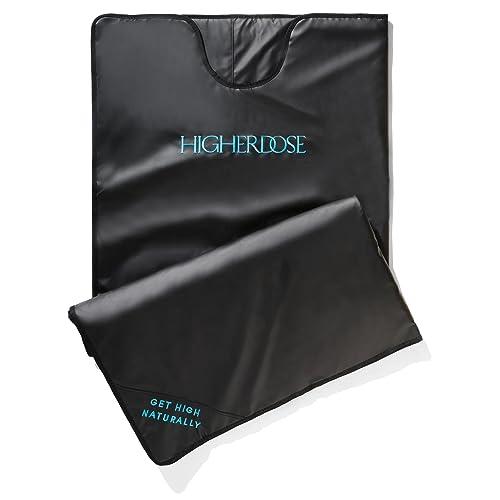
Our HigherDOSE sauna blanket review: heat, size, build and the detox claims checked against the evidence, plus why £1,246 on Amazon UK is hard to defend.
Suunto vs Garmin for UK buyers: Race S, Race 2, Vertical 2 and Run 2 against Forerunner 265, 965, 970, 165 and fenix 8 on maps, battery, apps and price.
WHOOP MG vs WHOOP 5.0 compared for UK buyers. The hardware is almost identical; MG adds an ECG, irregular rhythm alerts and blood pressure insights, but only on the dearer Life membership. Which one to get.
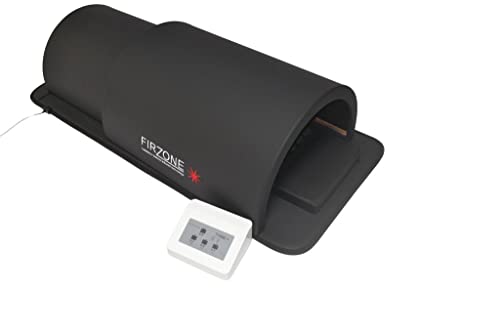
An honest Firzone ProZERO FZ-TD1 infrared sauna dome review covering the 1000W split-zone heating, heated mat, 178cm length and storage design, plus the tourmaline and zero EMF claims and how it compares with sauna tents and boxes.
Best Exercise is a participant in the Amazon EU Associates Programme, an affiliate advertising programme designed to provide a means for sites to earn advertising fees by advertising and linking to Amazon.co.uk. As an Amazon Associate we earn from qualifying purchases. This comes at no extra cost to you and never influences our independent reviews or rankings.