Recovery
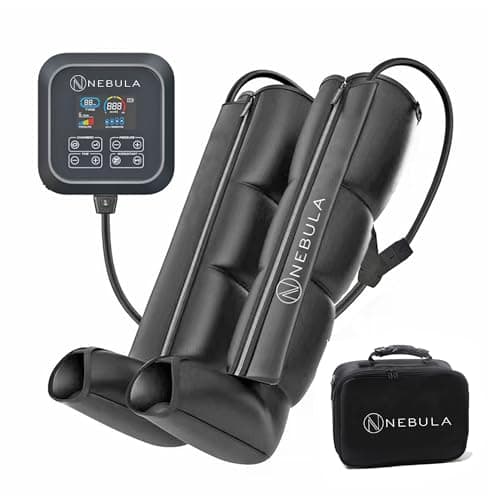
Nebula Compression Boots Review: 260 mmHg for £230
Our Nebula compression boots review: 6 modes, 30 to 260 mmHg, a 90 minute timer and mains power for £229.99. How they compare with Normatec 3 and FIT KING.

By Mike Shilling, Recovery & Training Editor · Updated 13 August 2026
We may earn a commission from qualifying purchases made through links on this page, at no extra cost to you. This never affects our ratings.
Compression boots went from a physio room curiosity to a thing runners keep under the sofa, and the price range on Amazon UK now runs from about £100 to well over £900 for hardware that all does roughly the same job: inflate chambers in sequence, squeeze the leg from foot to thigh, deflate, repeat. What separates them is pressure control, the number of chambers, whether you are tethered to a pump by a hose, and how well the cuffs fit an actual human leg.
I'll be straight about the evidence before the picks, because the marketing on these is loud and the research is quiet.
How we chose
We researched the best-reviewed compression systems available on Amazon UK rather than running a long-term hands-on test of every one. We compared chamber count and layout, stated pressure range, session timing options, cordless versus hose-tethered design, cuff sizing and owner feedback, and we picked across the price range from a £100 entry point to professional-grade kit. Prices and specifications were correct at the time of writing and change frequently.
A systematic review and meta-analysis of lower-limb intermittent pneumatic compression pooled 17 studies and 319 participants and reported a trivial to small benefit for muscular function, a trivial to moderate effect on pain and soreness measures, and highly variable effects on markers of muscle damage (PubMed). A separate meta-analysis of pressotherapy for delayed onset muscle soreness reached similar conclusions about perceived soreness (PMC).
Individual trials are less flattering still. Work on long distance runners concluded there were no substantial benefits of intermittent pneumatic compression in promoting recovery (PubMed).
So: legs that feel better, soreness that bothers you less, and no strong evidence of faster physiological recovery. That's a comfort purchase, and comfort purchases are allowed. Just don't pay £900 expecting a performance edge.
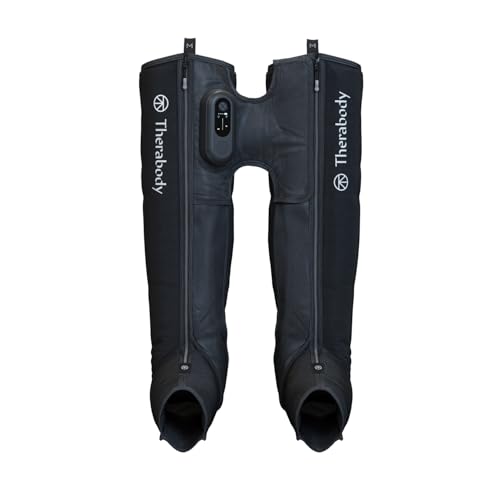
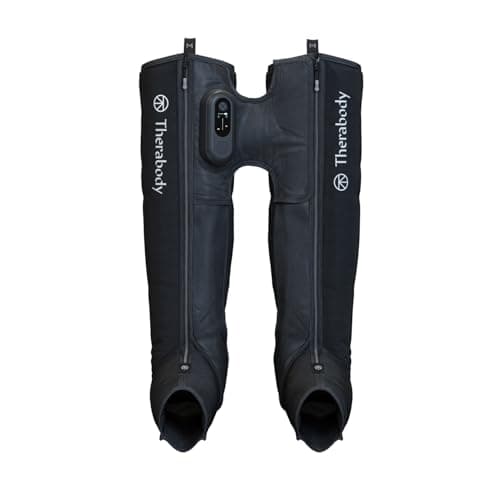
Therabody built its name on the Theragun, and the JetBoots are the company applying the same design attention to compression. The headline feature is that there's no pump box: the whole system is wireless, with controls and battery built into the boots themselves, so you're not tethered by a hose to a unit on the floor. They fold up roughly like a pair of trousers and come with a drawstring backpack, which sounds like marketing until you try to pack a hose-and-pump system for a race weekend.
Four overlapping chambers deliver what Therabody calls TruGrade, scaling pressure to leg size rather than applying the same inflation to a 60kg runner and a 100kg rugby player. You get four time intervals and four pressure levels from a one-touch panel with LED indicators, battery life is about 3 hours, and they'll run while charging so a flat battery doesn't cancel your session.
The cons are real. £469 is a great deal of money for a recovery aid whose measurable benefits are modest, four pressure levels is far less granular than the FIT KING's twelve, and there's no thigh-only or calf-only zone isolation. Sizing also matters more than on hose systems, so check the size chart properly. If cable-free convenience is what would actually get you using them, this is the one.
Check price on Amazon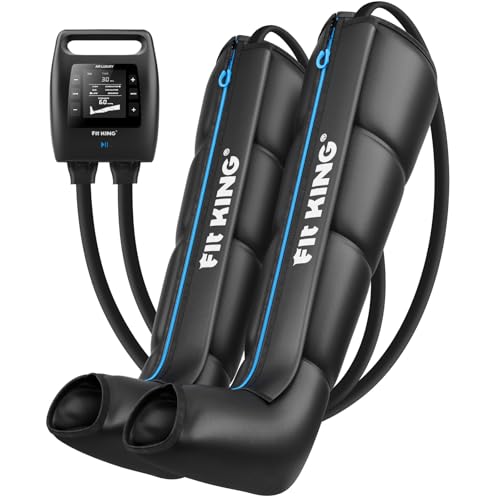
At around £270 the FIT KING FT-109A does more, on paper, than boots costing twice as much. It's cordless with a 2500 mAh battery good for 3 to 4 hours, and the specification sheet is unusually generous: 3 modes, 12 pressure intensities spanning 40 to 150 mmHg, and 10 session lengths from 15 to 60 minutes. Crucially you can isolate zones, running a single leg, or just the thigh, calf or foot, which is genuinely useful when one calf is the problem and the rest of you is fine.
FIT KING claims the dual-fabric airbags inflate and deflate around 40% faster than typical designs, and there's a sensor system that adjusts inflation volume to leg size. Sizing is by height, with the medium covering roughly 176cm to 189cm.
Where it gives ground to the Therabody: build quality and finish are a step below, the zips feel less premium, and the remote is fiddlier than a one-touch panel. We've covered this unit in more depth in our FIT KING leg compression machine review. For most people it's the sensible buy and the one I'd recommend before anything more expensive.
Check price on Amazon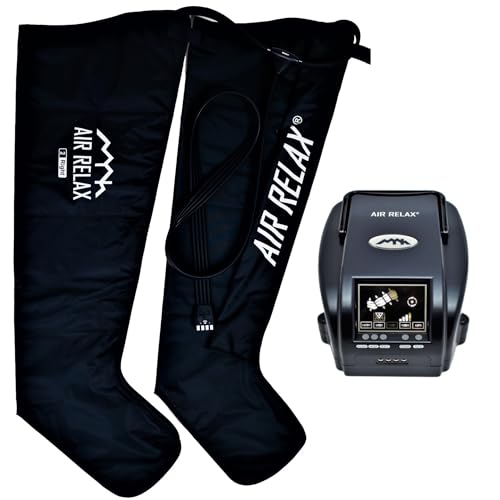
Air Relax is what turns up in triathlon clubs and physio clinics, and this is the traditional layout: a separate control unit with hoses running to leg cuffs. That design is unfashionable now, and it's also why the pressure delivery is consistent and the unit keeps working for years while cheaper cordless boots develop leaks.
Four modes cover peristaltic, sequential, massage and an automatic combination of the first two, with four pressure levels and a 15-minute auto shut-off. The cuffs are sold by inseam size rather than a vague small, medium and large, so the fit is closer than most.
The obvious problem is price: around £914 for the system with a size 2 cuff, and extension cuffs are extra. It's also a hose system, so you're anchored to a spot on the floor and packing it away takes a few minutes rather than seconds. Air Relax states plainly that it's a personal massage apparatus rather than a medical device, which is honest and worth repeating. Buy it if you're using compression four or five times a week and want kit that will still be running in 2031.
Check price on Amazon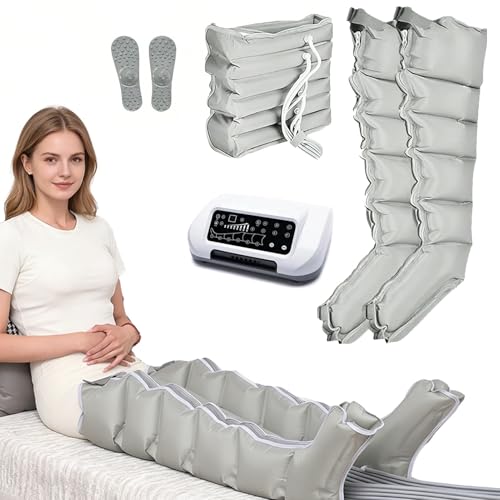
Most compression boots stop at the top of the thigh. This Joyfitness system extends the wrap higher and adds a waist section, which is the reason it's here: if your problem area is glutes and hip flexors after long rides rather than calves after runs, standard boots simply don't reach it.
Six independent air chambers inflate and deflate in alternating combinations across six adjustable modes, with smart sensors handling pressure control. The extended cut takes a thigh circumference up to 62cm, which is more generous than most, and there's a touchscreen plus a remote. Automatic air exhaust after a session is a small thing that saves a surprising amount of faff.
Honest reservations: Joyfitness is not an established name, the published pressure range isn't specified in mmHg the way FIT KING's is, and at £279 you're paying Therabody-adjacent money for a brand with far less of a track record. The coverage is the reason to consider it, and if you're mainly after calves and quads, the FIT KING is the better buy.
Check price on Amazon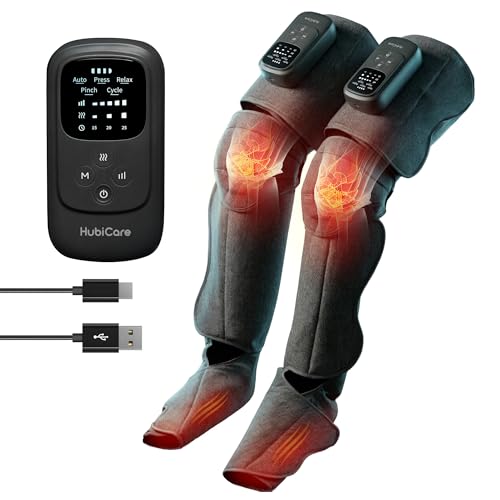
If £270 feels absurd for something whose main proven effect is feeling nice, £100 is a much easier number to justify. The HubiCare is fully wireless, wraps thigh to calf to foot, and offers five modes (auto, press, relax, pinch and cycle), five intensity levels and three heat settings with heated zones placed around the knees and the soles of the feet.
The heat is the differentiator. Nothing in the research suggests warmth speeds recovery, but it does make a 20-minute session considerably more pleasant on a cold February evening, and the thing you actually use beats the better thing gathering dust.
What you're giving up at this price: no mmHg pressure figures, less air volume than the bigger systems so the squeeze is gentler, and no zone isolation. Heavier or taller users will find the fit tighter than they'd like. As a first compression system, or for someone who mostly wants relief from a day on their feet rather than from marathon training, it's an easy recommendation. Pair it with a decent foam roller and you have most of a recovery setup for under £150.
Check price on AmazonOne more time, because it matters: the strongest case for these is that they feel good and they park you on the sofa with your legs up for half an hour. That's worth something. It isn't worth £900 to most people, and if your recovery problem is really a sleep problem or an eating problem, no amount of air pressure fixes it. If you've got budget for exactly one recovery tool, a massage gun does more for less, and we've covered the premium end of that in our Hyperice Normatec 3 review too.
They reliably make your legs feel better, and the evidence for anything beyond that is thin. A 2024 systematic review and meta-analysis of 17 studies covering 319 participants found lower-limb intermittent pneumatic compression produced a trivial to small benefit for muscular function and a trivial to moderate effect on pain and soreness, with highly variable effects on muscle damage markers. Buy them for comfort and for the 30 minutes of enforced sitting still, not because they will make you faster.
The Therabody JetBoots Prime is the pick for most people who can afford it. It is fully wireless with the pump built into the boots, folds down into a supplied drawstring bag, runs about 3 hours on a charge and can be used while charging, and Therabody's TruGrade system scales pressure to leg size across 4 overlapping chambers. It is around £469, which is a lot for a comfort purchase, so the FIT KING at £270 is the sensible alternative.
Between 15 and 30 minutes per session is the range nearly every manufacturer recommends and where most of the research protocols sit. Longer is not better and can leave your legs feeling oddly numb. Once a day after training is plenty; twice on very heavy days if you have the time to spare.
Start low. Devices with a stated range typically run from around 40 mmHg to 150 mmHg, and most people find something in the middle comfortable for a full session. If the pressure makes you tense up or hold your breath, it is too high and you are working against the point of the session. There is no evidence that maximum pressure produces better outcomes.
For healthy legs, yes, when used as instructed. They are not appropriate if you have deep vein thrombosis or a suspected clot, an open wound or skin infection on the leg, severe peripheral arterial disease, uncontrolled heart failure or a recent fracture. Speak to a GP first if any of those apply or if you have unexplained leg swelling, and read the NHS advice on leg swelling and circulation before buying.
A massage gun for targeted work on one stubborn area and for pre-training warm-up, because it takes 90 seconds and costs a fraction as much. Compression boots for whole-leg comfort after long runs or heavy leg days, when you want to sit still for half an hour anyway. If you only buy one, buy the massage gun; it is more versatile and far cheaper.
Our Nebula compression boots review: 6 modes, 30 to 260 mmHg, a 90 minute timer and mains power for £229.99. How they compare with Normatec 3 and FIT KING.
WHOOP vs Apple Watch compared for UK buyers: WHOOP 5.0 and MG memberships against the Apple Watch Series 12, SE 3 and Ultra 4. Battery, recovery, HRV, sleep, GPS, accuracy research and the real cost over three years.
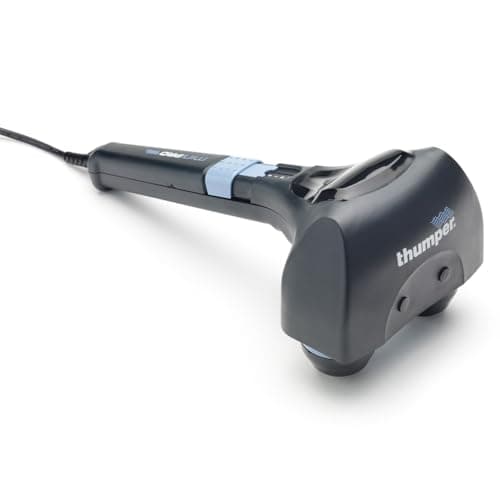
Our Thumper Mini Pro review: a corded, broad-head percussive massager with 6mm stroke and a long handle for your back. How it compares with massage guns.
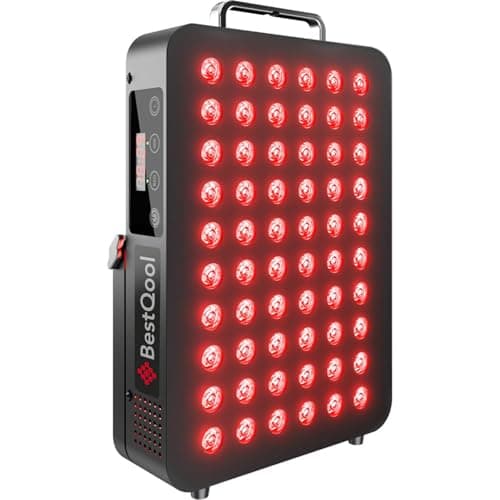
BestQool 105W red light therapy panel review: 660nm and 850nm, 95.6 mW/cm² at 3 inches, three modes, stand and hanging kit. Who it suits at £189.
Best Exercise is a participant in the Amazon EU Associates Programme, an affiliate advertising programme designed to provide a means for sites to earn advertising fees by advertising and linking to Amazon.co.uk. As an Amazon Associate we earn from qualifying purchases. This comes at no extra cost to you and never influences our independent reviews or rankings.