Recovery
How to Use a Massage Chair: Settings, Session Length and How Often
How to use a massage chair properly: first session settings, how long to sit in one, how often, zero gravity, airbags, heat, after training and who to avoid.

By Mike Shilling, Recovery & Training Editor · Updated 28 October 2026
We may earn a commission from qualifying purchases made through links on this page, at no extra cost to you. This never affects our ratings.
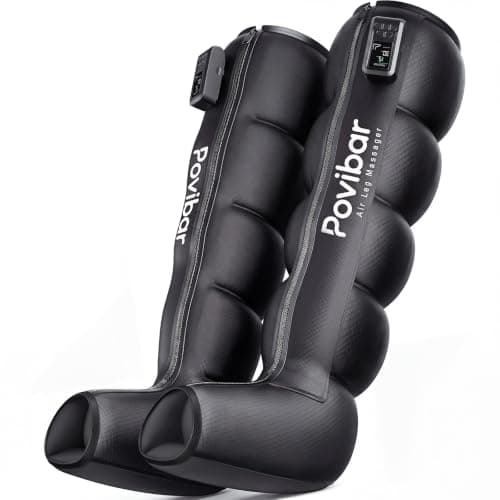
The Povibar Cordless Leg Compression Boots are a decent buy at around £199.99 if you want compression boots you'll actually use, because there's no pump box or air hose to set up. What stops us rating them higher is that Povibar doesn't say how hard they squeeze, and the listing is too new to show how they hold up.
Each boot has five air chambers running from the foot to the thigh, the battery and pump live in the boots, and a charge lasts up to 180 minutes. That spec sheet is almost word for word the same as the JDZ cordless compression boots we reviewed in September, which cost £20 more.
How we review
We haven't used these boots ourselves. This review is based on Povibar's Amazon UK listing and product details, the published research on intermittent pneumatic compression, and owner feedback patterns from very similar cordless boots we've covered. Amazon lists a release date of late September 2026 for this model, so there's barely a month of owner history and nothing on long-term reliability. We've weighted the score with that in mind.
Mostly people who've looked at compression boots before and been put off by the faff. Hose systems such as the Nebula compression boots mean laying out two long sleeves, clipping in the hoses and sitting next to a pump plugged into the wall. With the Povibar you zip up two boots and press a button, which makes a 20-minute session after a long run or a 12-hour shift far more likely to happen.
Povibar pitches them at runners, drivers, nurses and teachers, and that's about right. The full-length front zip helps anyone who struggles to pull on a snug sleeve, including older users with stiff hips.
If you want to follow a specific recovery protocol at a known pressure, look elsewhere. You can't do that here, for reasons we'll get to.
| Air chambers | 5 independent chambers per boot |
|---|---|
| Coverage | Foot, calf and thigh |
| Modes | 3 |
| Intensity levels | 5 |
| Maximum pressure | Not stated on the listing |
| Pressure sensor | Auto-adjusts to leg size |
| Battery | Rechargeable, up to 180 minutes |
| Timer | 10, 20 (default) or 30 minutes, auto-off |
| Closure | Full-length front zip |
| Size reviewed | Large (other sizes available) |
| Warranty | 12 months |
Plenty of people buy compression boots, use them for a fortnight, then shove them in a cupboard. The usual reason isn't that they stopped working; it's the setup. Povibar's design removes most of it, and that matters more than any spec on the box.
Povibar says the battery runs for up to 180 minutes. At the default 20-minute timer that's about nine sessions per charge, and the auto-off means you can doze through a session without them running all evening. The listing also mentions using them on long car journeys and flights. We'd take that with some caution, because full-leg boots with a pump in each one aren't small, and you'll want to check airline rules before you board with a battery device anyway.
The trade-off with any battery boot is power. A compact pump running off a battery generally can't push the same pressure as a mains unit sitting on the floor, which brings us to the figure Povibar leaves out.
Povibar describes the range as running "from gentle touch to firm deep air massage" and says a smart sensor adjusts the squeeze to your leg size. It gives no maximum pressure in mmHg, and neither do the product details we could pull from Amazon.
That's a real gap. Every boot we'd compare it with publishes a number. The Nebula runs from 30 to 260 mmHg, the FIT KING FT-115A from 50 to 150 mmHg, and the Hyperice Normatec 3 across seven levels from 40 to 110 mmHg. Most recovery studies used pressures around 80 mmHg for 20 to 30 minutes, according to a 2024 meta-analysis in Biology of Sport, so without a figure you can't tell whether intensity 5 gets you there or stops well short.
For relaxing tired, heavy legs at the end of the day, the number probably doesn't matter. If you're trying to copy what the research did, it does, and we'd like Povibar to add it to the listing.
The closest rival is the JDZ, and honestly the two read like the same product with different labels: five chambers, three modes, five intensities, 180 minutes, a pressure sensor, a front zip, a 10, 20 or 30-minute timer and a 12-month warranty. We can't confirm they come from the same factory, but if they're interchangeable on spec, the Povibar's £20 saving makes it the better buy of the two. The JDZ we reviewed was the X-Large, so if you need a bigger fit, check whether Povibar's size range covers you.
The Nebula is the pick if you don't mind a hose and a wall socket. At about £229 you get a published pressure range, six modes and a timer up to 90 minutes. The FIT KING FT-115A, at about £400, is cordless like the Povibar but publishes its pressure range, has a longer battery and comes from a brand with years of owner feedback behind it. The Normatec 3 is the benchmark, with a good app and a smooth pressure pattern, but at around £779 it's a lot to spend on something the research says mostly helps you feel better.
So the Povibar's case is narrow but real: it's the cheapest way we've found into cordless, full-leg compression.
Check the Povibar price on Amazonaround £200Keep your expectations modest. That 2024 meta-analysis pooled 17 studies and found lower-limb pneumatic compression gave a trivial to small benefit for muscle function and a trivial to moderate reduction in soreness. A 2025 randomised, placebo-controlled trial in 33 active men found 30 minutes at 200 mmHg after a damaging squat session didn't improve jump or strength recovery compared with a placebo, although there was a trend towards less soreness.
The more encouraging result comes from trained cyclists. A 2026 sham-controlled crossover trial in 21 high-level riders found compression improved perceived recovery, soreness and fatigue, plus some measures of leg strength, after an all-out time trial. It still didn't make them faster in a time trial 24 hours later.
Read together, the studies say compression boots make your legs feel better and might take the edge off soreness, which can make it easier to show up for the next session. They don't reliably speed up muscle repair or boost performance. Our guide to compression boot benefits goes into the evidence in more detail, and how to use compression boots covers timing, settings and session length.
Squeezing your legs with air isn't risky for most healthy people, but it's not for everyone. If you have, or think you might have, a deep vein thrombosis (DVT), don't use compression boots until you've seen a doctor, because a DVT needs prompt medical treatment and shouldn't be massaged. The same goes for peripheral arterial disease or other circulation problems, heart failure, open wounds or skin infections on the legs, and any swelling you can't explain. Povibar's listing says these are a relaxation and sports recovery product rather than a medical device, so don't use them to treat a condition. Start on the lowest intensity and stop if you feel numbness, tingling or pain.
The full-length front zip is the best physical detail here. Pull-on sleeves are a struggle with tight hamstrings or limited reach, and a zip lets you open the boot flat, lay your leg in and close it. Povibar says the fabric is breathable and easy to clean, which you'll appreciate if you're climbing into them straight after a sweaty run.
Sizing needs care. This ASIN is the Large, and Amazon sells other sizes under the same parent listing. Measure the widest part of your thigh and check it against Povibar's chart before ordering, because the fit decides whether the top chamber squeezes your thigh or just your knee.
On paper they're a sensible cordless option at around £200: five air chambers per boot, three modes, five intensity levels, a pressure sensor that adjusts to your leg size and up to 180 minutes per charge. The two weak spots are that Povibar doesn't state a maximum pressure in mmHg and the listing only went live in late September 2026, so there's almost no owner history yet.
Povibar quotes up to 180 minutes per charge. With the default 20-minute auto-off timer that works out at about nine sessions, so daily users would charge them roughly once a week.
The boots come in more than one size and this review covers the Large. Measure the widest part of your thigh and check it against the size chart on the Amazon listing before you order, because a boot that's too tight will feel like a tourniquet and one that's too loose won't squeeze properly.
The evidence is mixed. A 2024 meta-analysis found trivial to small benefits for muscle function and trivial to moderate drops in soreness, and a 2025 placebo-controlled trial found 30 minutes of compression reduced soreness a little but didn't improve strength or jump recovery. Expect them to make your legs feel better rather than make you faster.
Anyone with a known or suspected deep vein thrombosis, peripheral arterial disease or other circulation problems, open wounds, or unexplained leg swelling should speak to a GP first. Povibar itself says the boots are a relaxation and sports recovery product, not a medical device.
How to use a massage chair properly: first session settings, how long to sit in one, how often, zero gravity, airbags, heat, after training and who to avoid.
Is a vibrating foam roller worth the extra money? What the research shows on range of motion, pain and DOMS, who should pay more, and what to look for.
How to use a portable steam sauna tent at home: setup, which water to use, pre-heat time, how long to sit in it, cleaning to stop mould, and who should check with a GP first.
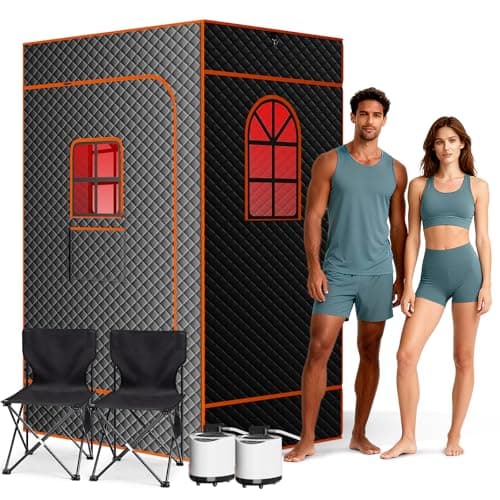
An honest Obqer 2 person portable steam sauna review: two 1200W generators, 9 heat levels, a 120 x 90cm footprint and £212.99 price, compared with Manastin and SereneLife.
Best Exercise is a participant in the Amazon EU Associates Programme, an affiliate advertising programme designed to provide a means for sites to earn advertising fees by advertising and linking to Amazon.co.uk. As an Amazon Associate we earn from qualifying purchases. This comes at no extra cost to you and never influences our independent reviews or rankings.