Recovery
FURNIMAT Zero Gravity Massage Chair Review: Fixed Nodes for £470
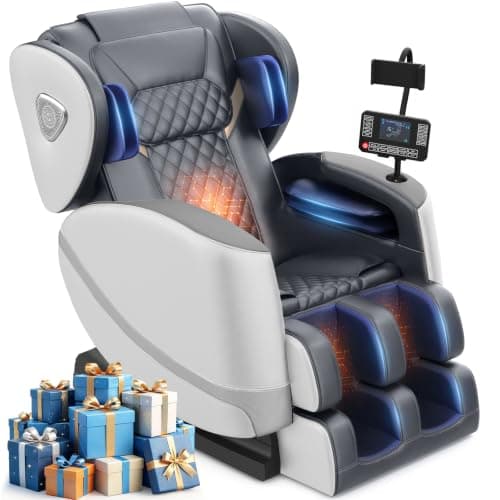
Our FURNIMAT massage chair review of the £470 zero gravity model: 14 fixed nodes, 8 airbags, heat and 165 degree recline, plus a footrest that suits shorter users.

By Mike Shilling, Recovery & Training Editor · Updated 15 October 2026
Compression boots make your legs feel less sore and less tired after hard training, and that is the benefit the research supports most consistently. What they do less convincingly is speed up measurable recovery: power, sprint times and blood markers of muscle damage mostly look the same whether people used boots or just lay down. The pooled evidence from 17 studies puts the effect on soreness at trivial to moderate and the effect on muscle function at trivial to small (Maia et al., 2024 meta-analysis). So they're a comfort and recovery-habit tool, not a performance drug, and if you go in expecting that, they're worth having.
Below is what the boots physically do, which claims hold up, which don't, and who shouldn't use them at all.
The technical name is intermittent pneumatic compression (IPC). You zip each leg into a sleeve containing several air chambers, usually four or five, and a pump inflates them in sequence from the foot towards the hip, holds, then releases and starts again. Most recovery protocols in studies run for 20 to 30 minutes at around 80 mmHg.
The idea is borrowed from hospitals, where IPC sleeves are fitted to immobile patients to keep blood moving in the deep veins of the leg and lower the risk of clots. Sports versions apply the same sequential squeeze, though they are higher pressure, shorter, and aimed at tired legs rather than bedbound patients.
The direct physical effect is real and measurable. In a lab study of 12 healthy adults, compression applied during recovery from calf exercise raised blood flow through the main thigh artery by around 59 ml per minute compared with no compression (Zuj et al., 2018). The squeeze empties the veins, the cuffs release, and fresh blood rushes in to fill the gap. What's less clear is whether that extra flow, for half an hour, changes anything that matters by the next morning.
This is the strongest finding, and even here the effect is modest. The Maia meta-analysis rated it trivial to moderate for pain and soreness and concluded that IPC's main potential is "mainly reducing perceived soreness". Individual trials point the same way.
The largest field study is still the 2016 Western States trial, where 72 finishers of a 161 km ultramarathon were randomised to 20 minutes of massage, pneumatic compression or simply lying down after the race (Hoffman et al., Journal of Orthopaedic & Sports Physical Therapy). Compression lowered overall muscular fatigue scores straight after the session compared with resting. By days 1 to 7, though, there were no differences between any of the groups. That's the pattern you should expect: legs feel noticeably better at the time, and the effect fades.
In 21 trained cyclists doing a simulated track omnium, 30 minutes in boots between a 20 minute ride and a 4 minute time trial produced a small improvement in how recovered riders said they felt, though it fell just short of statistical significance (Overmayer and Driller, 2018, International Journal of Sports Physiology and Performance). For an athlete with two events in one day, feeling fresher has some value even when the stopwatch doesn't move.
Nobody writes papers about this, but it's practical. Boots make you lie down with your legs elevated and do nothing for half an hour, which is more recovery than most busy people give themselves after a session. Some of the "I feel better" effect is the boots, and some is simply being still.
The Overmayer and Driller cyclists produced essentially the same 4 minute power after boots as after passive rest; the authors rated the difference trivial. The Western States runners showed no difference in 400 metre run times on day 3 or day 5. Across the Maia review, muscle function improved by a trivial to small amount at best, with wide variation between studies. If your reason for buying boots is to run faster tomorrow, the evidence doesn't back you up.
"Flushing out lactic acid" is the most repeated marketing line and the least supported. Blood lactate clears on its own within roughly an hour of stopping hard exercise, and it's not the cause of next-day muscle soreness anyway. In the cycling omnium study, the lactate effect of boots was rated unclear.
One study went the other way. Ten healthy adults did two 60 minute rides at 60% of functional threshold power with 30 minutes' rest in between, either lying in IPC boots or sitting without them. Heart rate was the same, but blood lactate during the second ride was higher after boot use: 3.9 mmol/L versus 2.7 mmol/L (Marcello et al., 2019). It's a small study with a different resting posture between conditions, so don't read too much into it, but it's hard to square with the idea that boots clear lactate.
Delayed onset muscle soreness peaks 24 to 72 hours after unfamiliar or eccentric work, and that's exactly the window where IPC looks weakest. A 2025 meta-analysis of recovery modalities found moderate-certainty evidence that IPC does not reduce muscle soreness 24 hours after the session (Canez et al., Journal of Bodywork and Movement Therapies). Blood markers of muscle damage, such as creatine kinase, showed a "highly variable" response in the Maia review: some studies found a drop, others found nothing.
In other words, the boots seem to take the edge off the immediate heavy-legged feeling more reliably than they shorten the two-day ache after a hard leg session.
Boots do increase blood flow while they're running; that's been measured. The effect lasts as long as the cuffs keep cycling, and there's no evidence that a session improves your circulation in any lasting way.
Lymphatic claims are harder to pin down. Pneumatic compression is used in clinics as part of treatment for lymphoedema, under the supervision of specialists who set the pressures and pair it with other care. That's a different setting from a £400 consumer device on healthy legs. There's no good trial evidence that recovery boots "drain toxins" or speed up lymphatic clearance of anything meaningful after exercise. If your ankles swell at the end of a long day, the boots will likely make them feel less puffy for a while, which is fair enough, but treat that as comfort rather than therapy.
Recovery boots are not medical devices
Hospital IPC sleeves and clinical lymphoedema pumps are prescribed, set and monitored by healthcare staff. Consumer recovery boots are sold for comfort after exercise. If you have a circulation or swelling problem, see your GP rather than self-treating with sports kit.
Given the evidence, the people who get the most from boots are those who value feeling fresher and train often enough to use them regularly.
For casual exercisers training two or three times a week, the honest answer is that a walk, a decent night's sleep and some active recovery will do most of what the boots do for nothing.
Squeezing the legs pushes blood towards the heart and puts pressure on the tissues, which can cause real harm in some conditions. Don't use boots, and check with your GP first, if any of these apply:
Pregnancy, diabetes with nerve damage, and any condition affecting circulation or sensation in the legs are also reasons for a conversation with your GP before you buy.
If you decide boots are for you, a few habits make the difference between a useful tool and an expensive clothes horse.
Use them after your hardest sessions and in your heaviest weeks, not after every easy jog. Stick to 20 to 30 minutes at a moderate pressure: the research protocols cluster around 80 mmHg, and higher pressure doesn't mean better results, just more discomfort. Our guide on how to use compression boots covers settings and timing in more detail.
Treat them as one part of recovery rather than the whole of it. Sleep, eating enough protein and carbohydrate, and sensible training load will matter far more to how you perform next week. Boots sit on top of those, not in place of them.
On price, the gap between premium and budget models has narrowed. The Hyperice Normatec 3 is the best-known premium system, but budget alternatives like the FIT KING 5 zone boots and Nebula compression boots apply the same sequential principle for a fraction of the cost. Since the benefits are modest and subjective, there's a good argument for not spending top money. Our best compression boots UK roundup compares the options.
Compression boots reliably make tired legs feel better for a while, and that's the honest headline. The evidence for faster performance recovery, lactate clearance or reduced next-day DOMS is weak, mixed or absent. If that trade sounds worth £150 to £800 to you, especially through heavy endurance training, they're a pleasant and safe tool for healthy adults. If you're hoping for a measurable edge, spend the money on a better mattress.
The best supported benefit is that your legs feel less sore and less fatigued straight after a session. A 2024 meta-analysis of 17 studies found a trivial to moderate effect on pain and soreness and only a trivial to small effect on muscle function. They also raise blood flow in the leg while they run, and they get you lying down with your feet up for 20 to 30 minutes, which is no bad thing.
Not in any way that matters. Blood lactate clears within about an hour of hard exercise anyway, and the trials that measured it found no clear advantage from boots. One 2018 study in trained cyclists rated the lactate effect as unclear, and a 2019 study actually found higher lactate during a second ride after boot use. Lactate is not what makes you sore the next day in any case.
The evidence says probably not, at least not measurably. In trained cyclists, 30 minutes of boots between two efforts made a trivial difference to 4 minute time trial power. In ultramarathon runners, a 20 minute post-race session did not change 400 metre run times three or five days later.
They temporarily increase blood flow through the leg while the cuffs are cycling, which has been measured with Doppler ultrasound. That effect stops when the session ends. Recovery boots sold for sport are not a treatment for any circulation problem, and anyone with a diagnosed vascular condition should ask their GP before using them.
Anyone with a known or suspected deep vein thrombosis, heart failure, peripheral arterial disease, open wounds, skin infection or a recent fracture in the legs. If you have any heart or circulation diagnosis, are pregnant, or have unexplained swelling, warmth and pain in one calf, speak to your GP first.
Most research protocols use a single 20 to 30 minute session at roughly 80 mmHg after training. Daily use is fine for healthy adults, and they are most useful in your hardest training weeks rather than as a year-round habit.
Our FURNIMAT massage chair review of the £470 zero gravity model: 14 fixed nodes, 8 airbags, heat and 165 degree recline, plus a footrest that suits shorter users.
Infrared sauna vs traditional sauna compared: heat, sweat, session length, what the research supports, home costs and safety, plus which one to pick and why.
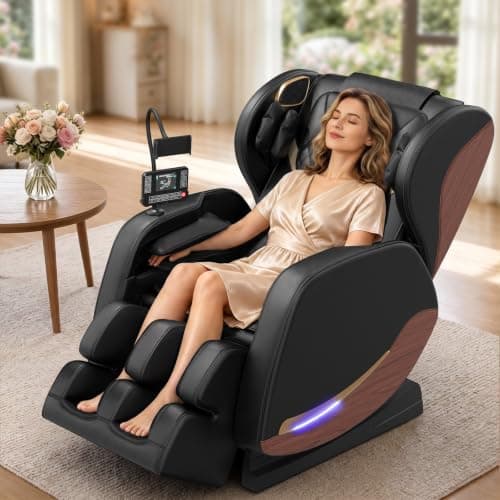
Our yewglen massage chair review: 14 fixed rollers, 8 airbags, back and leg heat, 165 degree recline and a 175cm height cap, compared with rival budget chairs.
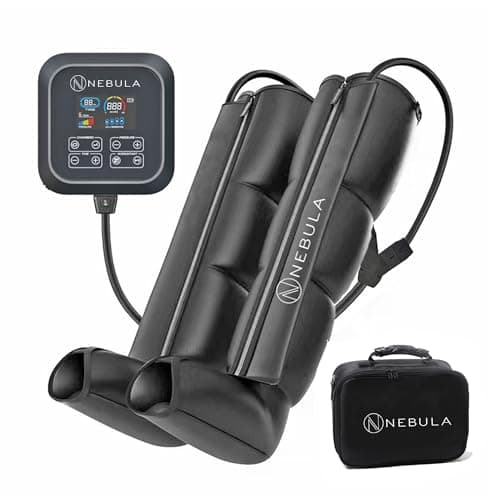
Our Nebula compression boots review: 6 modes, 30 to 260 mmHg, a 90 minute timer and mains power for £229.99. How they compare with Normatec 3 and FIT KING.
Best Exercise is a participant in the Amazon EU Associates Programme, an affiliate advertising programme designed to provide a means for sites to earn advertising fees by advertising and linking to Amazon.co.uk. As an Amazon Associate we earn from qualifying purchases. This comes at no extra cost to you and never influences our independent reviews or rankings.