Recovery
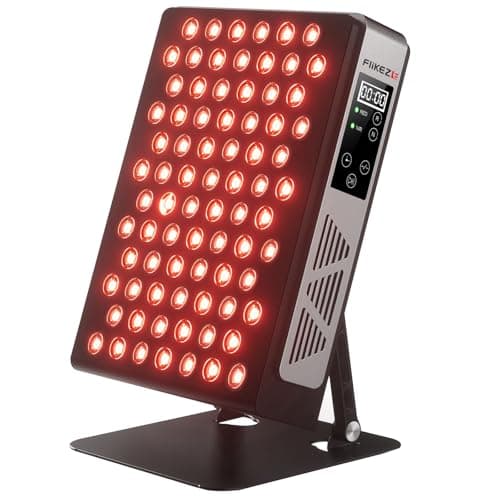
FliKEZE Red Light Therapy Review: 78 Quad Chip LEDs for £249.99
FliKEZE red light therapy review: 78 quad chip LEDs, 630 to 850nm, a 134 mW/cm² claim at 6 inches, five intensity levels and how it compares at £249.99.

By Jacob Chambers, Founder & Lead Reviewer · Updated 9 September 2026
We may earn a commission from qualifying purchases made through links on this page, at no extra cost to you. This never affects our ratings.
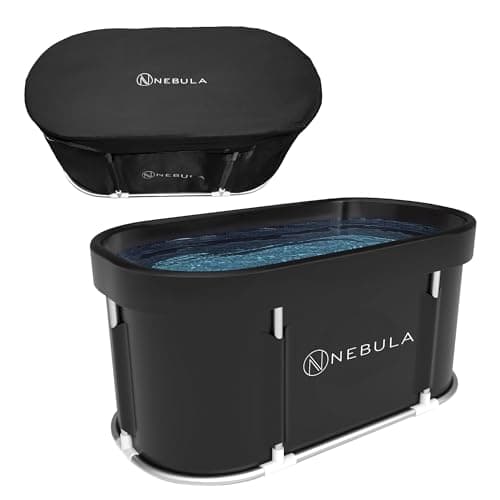
Nebula's 400 litre cold plunge tub is the kind of product that only exists because cold water immersion went mainstream: a PVC barrel on a pole frame, an insulated lid, a drainage tap, and a price that sits under £80. It is not trying to compete with the £3,000 chiller units that Instagram physios film themselves in. It is trying to get you into cold water this weekend for less than the cost of a decent pair of trainers, and on that narrow brief it mostly succeeds.
The catch is that this listing is new. At the time of writing it has fewer than 50 customer ratings on Amazon UK, which is not enough history to say anything confident about how the seams hold up after two winters. Everything below reflects the published specification, what the design tells you, and the well-established behaviour of this class of tub, which has now been sold under a dozen brand names.
How we review
This review draws on Nebula's published specification, the pattern of owner feedback across this style of pole-frame PVC plunge tub, and our own experience of running several similar tubs through British weather. We have not run a long-term endurance test on this exact unit, and we say so rather than pretending otherwise. Where the product is too new for reliable durability data, we flag it.
Buy this if you want to try cold water immersion properly without committing four figures, and you have a patio, garage corner or garden spot where a black barrel will not annoy anyone. It suits people who train hard and want a recovery tool, and it suits people who simply want the mental hit of a cold morning plunge. If you already know you will use it five days a week for years, the money is better spent on something with a rigid frame and a filter, and our best ice bath UK guide covers those.
Check the Nebula 400L price on Amazon£79.99The design is the now-standard pattern for this price bracket: a multi-layer PVC barrel held upright by an inflatable ring at the top and a set of steel or fibreglass poles that triangulate the sides. It is not clever, but it works, and it means the whole thing weighs under 3kg empty and folds into a bag.
Setup took the usual fiddling. The poles go together in a specific order and the instructions are the sort of single-sheet diagram that assumes you already know what you are doing. Give yourself 20 minutes and a flat surface. Level ground matters more than people expect, because 300 litres of water weighs 300kg and any slope shows up immediately as a lean.
The lid is the part that earns its keep. An uncovered tub in a British garden collects leaves, rain, insects and sunlight, and sunlight is the enemy: an uncovered black tub in June can gain 6 or 7°C in a day. Covered, the same tub drifts up by a couple of degrees. That difference is the whole economics of how much ice you buy.
| Capacity | 400 litres |
|---|---|
| Packed dimensions | Approx 115 x 57 x 55 cm |
| Empty weight | Approx 2.8 kg |
| Colour | Black |
| Frame | Inflatable top ring plus support poles |
| Included | Insulated lid, ring pump, outdoor cover, drainage tap, PVC repair kit |
| Filtration | None supplied |
| Chiller | Not compatible as standard |
| Warranty | 1 year |
Water temperature is where expectations need managing. Straight from a UK outside tap, you are looking at roughly 8 to 12°C in winter and 15 to 20°C in high summer. Winter needs no ice at all for most people. Summer needs a lot: dropping 300 litres by 5°C takes somewhere around 15 to 20kg of ice, which is a supermarket trolley full and about £20 a go if you buy bagged.
That seasonal maths is the honest limitation of every unchilled tub, Nebula's included. Plenty of owners of similar barrels end up plunging happily from October to April and quietly ignoring the thing in July.
The volume is a real advantage though. In a small 150 litre tub your body heat noticeably warms the water within a couple of minutes, which softens the stimulus. At 400 litres the water barely shifts, so a five-minute session is genuinely five minutes at temperature. If you care about the dose being consistent, that matters.
On the research side, the evidence supports the way most people use a tub like this rather than the more extreme protocols. A meta-analysis comparing immersion parameters found water between 11 and 15°C for 11 to 15 minutes more effective for reducing muscle soreness than colder or longer exposures. There is no need to chase 3°C, and no benefit to sitting there for half an hour. A broader systematic review of cold water immersion for muscle fatigue recovery reaches similar conclusions about the modest but real recovery effect.
One health note worth taking seriously: sudden cold immersion drives a sharp rise in heart rate and blood pressure, and the British Heart Foundation's guidance on cold water and the heart is worth reading before you start if you have any cardiac history. Enter slowly, breathe out as you go in, and never plunge alone if you are new to it.
Without a filter, water management is manual. Realistically you have three options: change the water every week or two, treat it with a small amount of chlorine or bromine and change it monthly, or plunge in clean, cover it, and accept that after ten days it looks like pond water. Most owners land on the second. The drainage tap makes the change itself painless, since you attach a hose and walk away.
Skin oils and sun cream are what turn the water cloudy, not dirt. Rinsing off before you get in extends the life of a fill by days, which sounds fussy and is the single most useful habit you can build.
See today's Nebula cold plunge priceAgainst the Zennest cold plunge tub, the Nebula gives up a little on frame rigidity but matches it on the essentials and usually costs less. The Cold Pod 440L is the more established name with a far longer review history, which is worth something when the failure mode you care about is a seam splitting in year two. Against the Lay-Z-Spa Glacial Dip it is not really a fair fight: the Lay-Z-Spa costs more, has a steel frame and a filter pump, and is built to sit outside permanently.
Where the Nebula wins is the entry price. If cold water turns out not to be for you, you are £80 down rather than £400.
If you are still working out the protocol, our guides on how long to stay in an ice bath and ice bath temperature will save you some guesswork, and contrast therapy covers pairing cold with heat. More kit sits in the recovery section.
The tub is rated at 400 litres, which is roughly the volume of a standard UK bathtub filled to a normal bathing level. Most adults up to about six feet fill it to somewhere between 250 and 320 litres, because the water level rises sharply once you sit down. Filling it to the brim and then getting in is the classic first-day mistake.
With the insulated lid on and the tub out of direct sun, expect the water to gain roughly 2 to 4°C a day in British spring or autumn weather. In a July heatwave it warms much faster, and you will be adding ice most days. Through winter the ambient temperature does the work for you and the lid mainly keeps leaves and rain out.
It includes a hand or foot pump for the inflatable outer ring only. There is no filtration pump and no chiller, so water changes and manual dosing are on you. Budget for a filter pump separately if you want to leave the same water in for more than a week or so.
Yes, most owners do, and cold weather is the point of it. The one thing that kills PVC tubs is being left full and unattended through a hard frost, since expanding ice stresses the seams. Drain it if a long freeze is forecast and you are not using it.
It is generous rather than excessive. The extra volume means the water temperature moves more slowly when you get in, so the plunge stays cold for the whole session instead of warming around you. The downside is that you need more ice to drop the temperature in the first place.
Around 15 to 20 minutes the first time, most of it spent inflating the outer ring and working out the pole layout. After that, packing it away or moving it takes about 10 minutes. It is a two-person job to carry it anywhere once it holds water.
FliKEZE red light therapy review: 78 quad chip LEDs, 630 to 850nm, a 134 mW/cm² claim at 6 inches, five intensity levels and how it compares at £249.99.
How to use a red light therapy panel properly: the right distance and session time, how often, before or after training, eye safety and how to work out your dose.
The real benefits of compression boots, judged against the research: what helps (soreness, feeling recovered), what doesn't hold up, and who should avoid them.
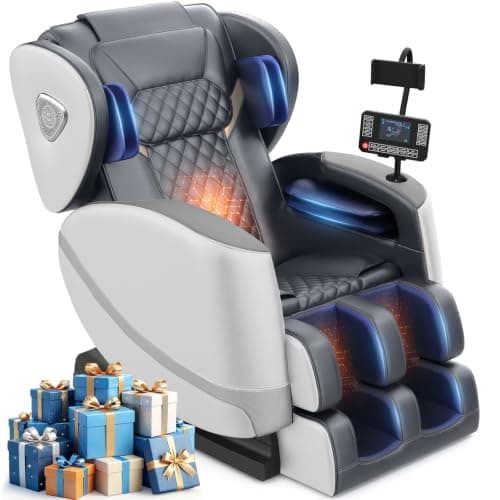
Our FURNIMAT massage chair review of the £470 zero gravity model: 14 fixed nodes, 8 airbags, heat and 165 degree recline, plus a footrest that suits shorter users.
Best Exercise is a participant in the Amazon EU Associates Programme, an affiliate advertising programme designed to provide a means for sites to earn advertising fees by advertising and linking to Amazon.co.uk. As an Amazon Associate we earn from qualifying purchases. This comes at no extra cost to you and never influences our independent reviews or rankings.