How Long Should You Stay in an Ice Bath? Time and Temperature That Work
By Mike Shilling, Recovery & Training Editor · Updated 30 August 2026
Ten to fifteen minutes at 11C to 15C. That is the answer for muscle soreness, it comes from a 2025 network meta-analysis of 55 randomised trials, and it is both longer and warmer than what most people do in a wheelie bin full of supermarket ice (dose response of cold water immersion duration and temperature). If you are starting from nothing, start at 2 to 3 minutes and work up. Nothing good happens past the 15 minute mark.
The rest of this guide is the detail underneath that number: how the dose changes with what you want out of it, how to build tolerance without frightening yourself, when cold water actively works against your training, and the safety rules that are worth more than any protocol.
The short answer, by goal
Cold water does different jobs at different doses, and the same 12 minute plunge is not the right prescription for everyone.
Sore legs after a hard session or a match: 10 to 15 minutes at 11C to 15C. This is the best-supported use of cold water and the dose the meta-analysis singles out.
Feeling sharp, alert and better in yourself: 2 to 5 minutes at whatever temperature you can tolerate. The mood response comes fast and does not need you to suffer for a quarter of an hour.
Cooling down after training in real heat: 5 to 10 minutes, colder if you have it. Here you are dumping core temperature, which is a physical job rather than a recovery one.
Building cold tolerance for open water swimming: short and frequent beats long and occasional. Two or three minutes, four times a week, extended slowly.
Building up without a horrible first week
The first 30 seconds in cold water are the worst part of the whole thing, and they are almost entirely a breathing problem. Your body gasps, your heart rate spikes, and your instinct is to get out. Get on top of the breathing and everything after that is manageable.
Sit down slowly rather than dropping in. Breathe out longer than you breathe in, roughly four seconds in and eight out, and keep doing that until the gasping stops, which usually takes under a minute. Keep your hands out of the water for the first fortnight if you like; fingers hurt more than anything else and they contribute nothing.
A sensible four week build looks like 2 minutes in week one, 4 to 5 in week two, 8 in week three, and 10 to 12 by week four. Skip a step if your breathing has not settled by the time you would normally get out.
The one rule that is not negotiable
Never do this alone if you are new to it, and never in water deep enough to submerge your head. Cold water shock causes an involuntary gasp, and a gasp underwater is how people drown in water they could easily swim in. The British Heart Foundation's guidance on cold water swimming is worth reading before your first session.
When an ice bath works against you
Here is the part the recovery industry glosses over. If you lift weights to build muscle, cold water immediately after training measurably reduces what you get out of the session. In a 12 week study, participants who used cold water immersion after strength training gained less muscle and less strength than those who did an active cool-down, and the anabolic signalling in their muscle was blunted for hours afterwards (post-exercise cold water immersion and long-term adaptations to strength training).
That does not make ice baths useless. It makes the timing matter:
After a hypertrophy or strength session, leave 4 to 6 hours at minimum, or move the plunge to a rest day.
During a competition week, when tomorrow's performance matters more than next month's muscle, use it freely. Reduced soreness is the point.
After endurance work, the trade-off is far less clear-cut and the soreness benefit usually wins.
If your goal is simply to feel less wrecked between football matches, plunge away. If your goal is a bigger squat, put the tub away on lifting days and use compression boots or a walk instead.
Temperature, and why colder is not better
There is a persistent belief that a colder plunge is a better plunge. The dose-response data says otherwise: 11C to 15C beat both warmer and colder water for reducing soreness, and dropping to 5C to 10C shifted the benefit towards neuromuscular measures rather than adding to it. Below 5C you get diminishing returns and rising risk, especially for anyone with high blood pressure or an undiagnosed heart problem.
Water temperature is also the variable people guess worst. A domestic cold tap in winter runs at roughly 8C to 12C in most of the UK, and in summer it can be closer to 18C, so the same tub without ice is a different bath in January than it is in July. A £6 pond thermometer removes the guesswork and is the best money you will spend on the whole setup. Our best ice bath UK guide covers the tubs, lids and chillers worth having.
Safety, honestly
Cold water immersion is safe for most healthy adults and genuinely dangerous for a few. Do not get in if you have a heart condition, uncontrolled high blood pressure, Raynaud's, or if you are pregnant, unless your doctor has said it is fine. Stop and get out if you feel dizzy, if you stop shivering, if your skin goes numb and white, or if you lose dexterity in your hands.
Afterwards, rewarm slowly. Towel off, dress in layers, move about, and have something hot to drink. Skip the immediately scalding shower, which feels wonderful for 20 seconds and can leave you light-headed as your blood vessels open while your core is still cold.
The wider health claims deserve some scepticism too. Reviews of voluntary cold exposure find plausible effects on metabolic markers alongside a lot of unanswered questions, and the authors are open about how thin the evidence still is (health effects of voluntary exposure to cold water). Take the soreness benefit and the mood lift as the reasons to do it. Treat everything about immune systems and metabolism as unproven.
Pairing cold with heat
Contrast bathing, alternating hot and cold, is old practice with mixed evidence, and most of the enthusiasm for it comes from how good it feels rather than from trial data. If you want to try it, a reasonable pattern is 10 minutes of heat, 2 minutes of cold, repeated two or three times, always finishing on cold if you want to feel alert or on heat if you want to sleep. Our guide to using a sauna after a workout covers the heat half in detail, and the same timing caveat applies: heat and cold both interfere with strength adaptation if you use them straight after lifting.
For the days when a cold plunge is the wrong tool, the rest of our recovery and wellness section covers the gentler options.
Ten to fifteen minutes at 11C to 15C is the range that comes out best in the research for reducing muscle soreness. Beginners should start at 2 to 3 minutes and build up over a few weeks. There is no benefit to going beyond 15 minutes, and the risk climbs the longer you stay.
How cold should an ice bath be?
Between 11C and 15C for soreness, which is colder than a British sea in August and warmer than most people assume. Going down to 5C to 10C shifts the effect slightly towards neuromuscular recovery, but it is far less pleasant and the extra benefit is small. Below 5C you are collecting risk, not results.
Is a 3 minute ice bath long enough?
For the mood lift and the alertness, yes, and that is where nearly everyone should start. For reducing next-day muscle soreness, 3 minutes is at the short end and the evidence favours 10 to 15. Build up rather than jumping straight in for a quarter of an hour.
Should you ice bath after weight training?
Usually not. Cold water immersion straight after resistance training measurably reduces long-term gains in muscle size and strength. If you lift for muscle, save the cold for rest days, for after cardio, or leave at least 4 to 6 hours between the session and the tub.
How often can you take an ice bath?
Three or four times a week is plenty for most people, and daily is fine if you enjoy it and you are not chasing muscle growth. Frequency matters far less than consistency and than getting the temperature and duration sensible.
Do you warm up in a hot shower afterwards?
Rewarm gradually instead. Dry off, put on warm layers, move around, and have a hot drink. Jumping straight into a hot shower is uncomfortable and can make you feel faint, because your blood vessels dilate quickly while your core is still cold.
WHOOP vs Apple Watch compared for UK buyers: WHOOP 5.0 and MG memberships against the Apple Watch Series 12, SE 3 and Ultra 4. Battery, recovery, HRV, sleep, GPS, accuracy research and the real cost over three years.
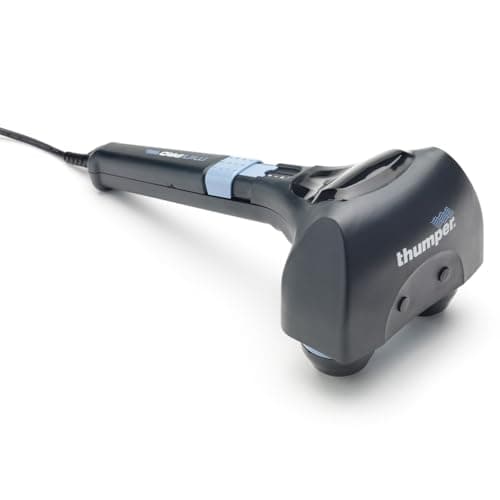
Our Thumper Mini Pro review: a corded, broad-head percussive massager with 6mm stroke and a long handle for your back. How it compares with massage guns.
Are massage chairs good for you? What randomised trials show for back pain, neck pain, stress and muscle soreness, who should avoid them, and how long and often to use one.
Best Exercise is a participant in the Amazon EU Associates Programme, an affiliate advertising programme designed to provide a means for sites to earn advertising fees by advertising and linking to Amazon.co.uk. As an Amazon Associate we earn from qualifying purchases. This comes at no extra cost to you and never influences our independent reviews or rankings.