Recovery
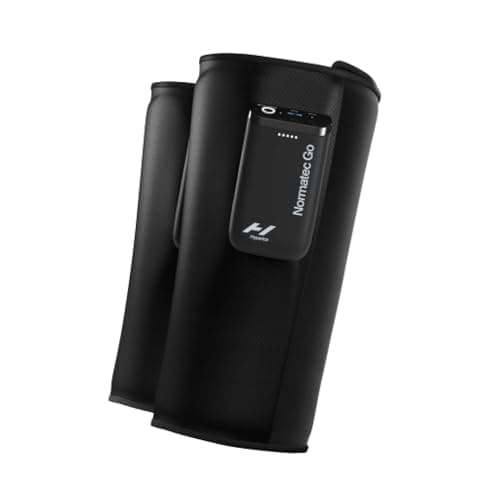
Hyperice Normatec Go Review: Wireless Calf Compression for £329
Our Hyperice Normatec Go review: wireless calf sleeves with 7 pressure levels, HyperSync and a 3-hour battery for £329, plus who should buy full-leg boots instead.

By Mike Shilling, Recovery & Training Editor · Updated 30 October 2026
We may earn a commission from qualifying purchases made through links on this page, at no extra cost to you. This never affects our ratings.
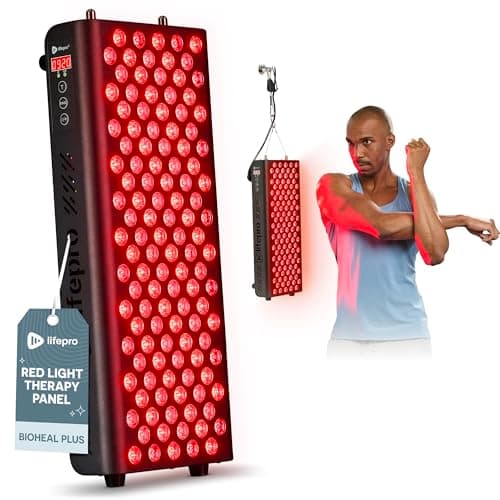
The LifePro red light therapy panel is a slim, mid height panel with 660nm red and 850nm near infrared LEDs, a 10Hz pulse mode, wall mounts and a hard carry case, selling for £320.76 on Amazon UK (30 October 2026). It's a sensible shape for treating a back, a pair of quads or a shoulder, and LifePro is a familiar name thanks to its vibration plates. The problem is what's missing: the listing gives no LED count, no power draw and no irradiance figure.
We rate it 3.9 out of 5. The format is good and the accessories are generous, but at this price you can buy panels that tell you exactly how much light they put out, and some that cover a much bigger area. The marketing also leans on claims like "cell regeneration" that the research doesn't support.
How we review
This review is research based. We haven't tested this panel hands-on or measured its output. We worked from the Amazon UK listing and its product data, tried to reach LifePro's own website for an official spec sheet (it blocked our requests, so we couldn't confirm anything there), compared it with the red light panels we've already reviewed, and read the published research on red and near infrared light for recovery. Any figure not on the listing is marked as unknown.
Buy it if you want a panel tall enough to cover a decent stretch of your back or both thighs in one go, and you like the idea of fixing it to a wall rather than propping it on a desk. The hard case also makes it one of the few panels that's built to be packed into a car boot or a gym bag, which helps if you split your time between two places.
It's also a reasonable pick if brand matters to you. LifePro sells a range of recovery kit in the UK, and we've reviewed its sauna blanket and vibration plates.
Skip it if you care about knowing the dose. Without an irradiance figure at a working distance, you can't work out session length with any confidence, which is the whole point of our guide to using red light therapy. Skip it too if you want full body coverage; at around 52cm tall it won't do that.
Check the LifePro red light panel price on Amazon£320.76The listing describes three things you can switch between: 850nm near infrared, which it pitches at joint and muscle pain, 660nm red, which it pitches at skin, and a 10Hz pulse mode that works with either. Red light at 660nm is mostly absorbed in the top layers of tissue, while 850nm travels further, which is why recovery panels nearly always carry both.
It also says the panel is "taller, thinner, and more durable than other models", comes with wall mounts, and ships with a hard case and charging cable. Amazon's product data gives the dimensions as 20.3 by 8.3 by 3.4 inches and the weight as 9.7lb, and lists this as size M, which suggests the listing groups more than one size together. Make sure the variant you add to your basket is the one you want.
Then there's the gap. There's no LED count, no wattage (nominal or real), no irradiance and no warranty term on the listing. We searched for an official spec sheet, but LifePro's site refused automated access, and the third party retailer pages we found disagreed with each other on how many LEDs the panel has. We aren't going to print a number we can't stand behind, so treat the output of this panel as unknown until LifePro publishes it.
That matters more than it sounds. The panels we rate highest, the Nebula 1020W and the Hooga ULTRA360, publish irradiance at more than one distance, so you can do the sums. With the LifePro you're guessing.
| Wavelengths | 660nm red and 850nm near infrared |
|---|---|
| Modes | Red, near infrared, 10Hz pulse |
| LED count | Not stated on the listing |
| Power draw | Not stated |
| Irradiance | Not stated at any distance |
| Dimensions (Amazon data) | 20.3 x 8.3 x 3.4 in (approx 52 x 21 x 9cm) |
| Weight (Amazon data) | 9.7lb (approx 4.4kg) |
| Mounting | Wall mounts included |
| Extras | Hard carry case, charging cable |
| Battery | Not stated |
| Warranty | Not stated on the listing |
| Price (30 October 2026) | £320.76 |
The listing talks about "accelerated recovery", "improved wound healing" and stimulating "the regeneration of your cells". Some of that has a plausible basis. Red and near infrared light is absorbed by an enzyme in the mitochondria called cytochrome c oxidase, and the leading theory is that this nudges up energy production in the cell (proposed mechanisms of photobiomodulation, 2016). That's a real pathway, studied mostly in cells and animals.
Whether it translates into faster recovery for you is a different question. A 2025 systematic review and meta-analysis on delayed onset muscle soreness found 14 studies using wavelengths between 660nm and 950nm, but only four had data good enough to pool. Those four showed moderately less soreness at 72 and 96 hours and better strength at 24 and 48 hours compared with placebo. Encouraging, and also a thin base.
Dose and delivery matter too. In a double blind trial comparing three commercial devices, 40 untrained men had the same total energy applied to their quads after damaging exercise. The lower powered pulsed device protected strength and cut soreness compared with placebo, while the high powered continuous device showed no benefit. That's one trial, and it used clinical devices on a known dose, not a consumer panel at an unknown output.
As for the 10Hz pulse mode, there's no good basis for the listing's suggestion that it boosts the effect of the other two modes. The best known review of pulsing in low level light therapy found some evidence that pulsed light acts differently from continuous light, but concluded that more work was needed to pin down what those effects are. So it's an option, not an upgrade.
Our longer piece on red light therapy for recovery goes through the evidence in more depth. Short version: if your sleep, protein and training load aren't in order, those will do more for you than any panel.
The wall mounts are the most practical feature here. A panel that lives on the wall at chest height gets used; one that has to come out of a cupboard and be balanced on a chair often doesn't. Fix it near a socket, stand side on for a shoulder or face it for your quads, and you've got a routine that takes a few minutes.
The hard case suits a narrower group. If you travel for work or compete away from home, it's useful, though at about 4.4kg it isn't a light thing to carry. Because the listing gives no battery details, don't assume you can use it away from a plug until you've confirmed it.
Wear goggles every time the panel faces your head. Near infrared is almost invisible, so your eyes won't react to it as they would to a bright lamp.
At £320.76 the LifePro sits in the middle of the panels we've reviewed, and that's where its value case gets awkward. The RENPHO 70 LED panel costs £199.99 and is tablet sized, but at least gives a (point-blank) irradiance figure and a stated LED count. The Hooga ULTRA360 is about £13 cheaper at £307.59, smaller at 12.7 by 8.6 inches, and publishes irradiance at four distances with a three year warranty. If you value knowing your dose, the Hooga is the better buy for one area.
For coverage, the STASUN 1050W gives you an 85cm panel for £269.99, so more area for less money, though its output claim is also unverified. The Nebula 1020W at £379.99 is 104cm tall and publishes figures at two working distances, and remains our pick for treating big muscle groups after training.
So the LifePro wins on portability and mounting, with a shape that sits sensibly between a spot panel and a full length one. It loses on published data to Hooga and Nebula, and on area per pound to STASUN.
See today's LifePro red light panel priceIt carries 850nm near infrared, the wavelength most recovery studies lean on, plus 660nm red, so the hardware matches the research. The research itself is mixed: a 2025 meta-analysis found moderate drops in muscle soreness at 72 and 96 hours, but only four studies could be pooled. Treat it as a small extra on top of sleep, food and sensible training load, not a fix.
The Amazon UK listing doesn't state one. Some third party retail pages quote a figure, but they disagree with each other on basics like LED count, and we couldn't reach LifePro's own product page to confirm anything. Until LifePro publishes irradiance at a stated distance, you don't know what dose you're getting.
It flashes the LEDs on and off ten times a second rather than running them constantly. LifePro says this boosts 'cellular regeneration', which isn't something the evidence shows. A 2010 review of pulsed versus continuous light concluded that pulsing may have different effects, but that more work is needed to define them. Leave it off if you like; you won't be missing anything proven.
The listing mentions a hard case and a charging cable for use on the go, but it gives no battery capacity or run time, so we can't say whether there's a battery inside or how long it lasts. Check the product page or ask the seller before you buy it purely as a travel device.
Amazon lists it at 20.3 by 8.3 by 3.4 inches (about 52 by 21 by 9cm) and 9.7lb (about 4.4kg). That's taller than tablet sized panels like the RENPHO or Hooga ULTRA360 but well short of a full length panel, so it suits one or two body areas per session.
Yes. Near infrared at 850nm is barely visible, so your eyes won't squint against it the way they do with bright visible light. Wear blackout goggles whenever the panel faces your head, never stare into the LEDs, and speak to your GP if you take light sensitising medication or have an eye condition.
Our Hyperice Normatec Go review: wireless calf sleeves with 7 pressure levels, HyperSync and a 3-hour battery for £329, plus who should buy full-leg boots instead.
Sauna etiquette explained for UK gyms, spas and home saunas: what to wear, towels, showering, pouring water on the stones, quiet, phones and safe session lengths.
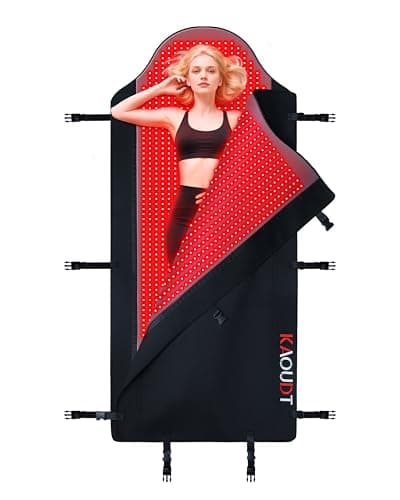
An honest Kaoudt red light therapy mat review: 2,600 LEDs at 660nm and 850nm, a 183cm wrap design, no published irradiance and a £720 price tag.
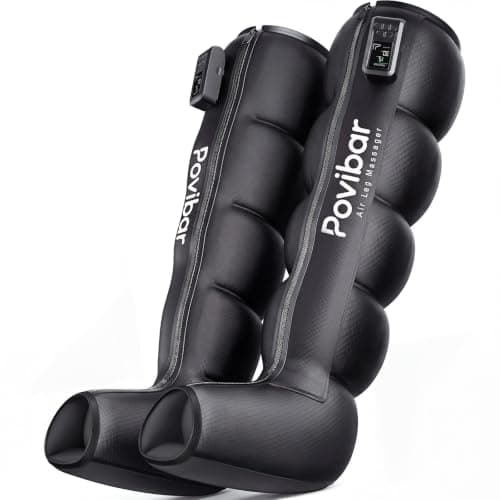
Our Povibar cordless compression boots review: 5 air chambers, 3 modes, 5 intensities and 180 minutes of battery for £200, but no published pressure figure.
Best Exercise is a participant in the Amazon EU Associates Programme, an affiliate advertising programme designed to provide a means for sites to earn advertising fees by advertising and linking to Amazon.co.uk. As an Amazon Associate we earn from qualifying purchases. This comes at no extra cost to you and never influences our independent reviews or rankings.