Recovery
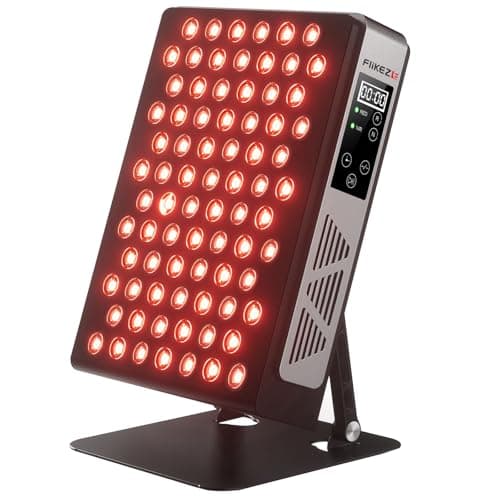
FliKEZE Red Light Therapy Review: 78 Quad Chip LEDs for £249.99
FliKEZE red light therapy review: 78 quad chip LEDs, 630 to 850nm, a 134 mW/cm² claim at 6 inches, five intensity levels and how it compares at £249.99.

By Mike Shilling, Recovery & Training Editor · Updated 18 October 2026
Stand 15 to 30cm from the panel, expose bare, clean skin over the muscle you want to treat, wear the goggles, and run it for 5 to 10 minutes per area, three to five times a week. That's the short answer for a decent home panel putting out around 100 mW/cm2 at that distance. The longer answer is that "10 minutes" means nothing on its own, because the thing your tissue responds to is dose, and dose depends on how bright your panel really is at the spot where your leg happens to be.
This guide covers the practical side: setting up a session, working out your own numbers, and avoiding the mistakes owners make in the first month. If you want to know whether red light helps recovery at all, our separate piece on red light therapy for recovery goes through the research and the mechanism. Here we'll assume you've bought a panel, or are about to, and want to use it properly.
You'll feel mild warmth at most. That's normal, and it isn't a sign the treatment is working any better or worse.
Bare skin, every time
Skin is the first barrier, and a T-shirt or leggings will soak up a large share of the light before it gets anywhere near muscle. If you're treating your quads, you're treating them in shorts.
Distance and time are linked, and that's the bit people get wrong. Move further back and the light spreads over more of your body, but less of it lands on any given square centimetre, so you need longer to reach the same dose. Move closer and you get more intensity on a smaller patch.
The Nebula 1020W is a useful example because Nebula publishes two readings: 95 mW/cm2 at 6 inches and 76 mW/cm2 at 12 inches (the brand's figures, not ours). That's a smaller drop than many people expect, partly because a tall panel lights you from lots of LEDs at once. Small panels lose output faster as you back away, which is why compact units suit knees and elbows held close in.
As a working rule:
| Distance | Best for | Typical session on a ~100 mW/cm2 panel |
|---|---|---|
| 10 to 15cm (4 to 6in) | A single joint, a calf, an elbow | 5 to 8 minutes |
| 15 to 30cm (6 to 12in) | A thigh, the lower back, both quads on a tall panel | 8 to 12 minutes |
| 30cm+ | Whole body front or back on a large panel | 10 to 15 minutes, if output holds up at that range |
Treat that table as a starting point. If your panel publishes a figure at your exact distance, use the dose calculation below and ignore the table.
Dose in photobiomodulation is energy delivered per area, measured in joules per square centimetre (J/cm2), and the arithmetic is simple:
Dose (J/cm2) = irradiance (mW/cm2) × time (seconds) ÷ 1,000
So a panel that really delivers 100 mW/cm2 at your skin, run for 10 minutes (600 seconds), gives you 60 J/cm2. Halve the irradiance by standing further back and you need 20 minutes to deliver the same 60 J/cm2. If you want to reverse it, divide the dose you're aiming for by your irradiance, multiply by 1,000, and you've got the seconds.
The catch is that more dose isn't automatically better. Light therapy follows a biphasic response, where the benefit climbs to a peak and then tails off as you keep going, which our recovery evidence guide covers in detail. The trade between power and time isn't perfectly linear either. In a double blind trial comparing three commercial devices, forty untrained men had the same total energy (180 J) applied to the quadriceps after damaging eccentric exercise. The low powered pulsed device protected strength and reduced soreness compared with placebo; the high powered continuous device, which delivered that energy in less time, showed no benefit on strength, creatine kinase or soreness. One study doesn't settle it, but it's a good reason not to assume a brighter panel lets you crank the session down to two minutes.
So don't chase the biggest number. Aim for a moderate dose you can repeat consistently.
If your dose calculation rests on irradiance, the irradiance had better be honest. Often it isn't.
There are a few reasons. Some brands measure with cheap solar power meters designed for sunlight, which tend to over-read near infrared. Others take the reading at the hottest point dead centre of the panel, with the meter almost touching the LEDs, then quote that figure as though it applies everywhere. And plenty don't say what distance the number applies to at all.
Look at how the panels we've covered present it. Nebula gives irradiance at two distances and states a real power draw of 288W. The STASUN 1050W claims over 167.4 mW/cm2, but only at 3 inches, a distance that flatters any panel and one you'll rarely use with something 85cm tall. We haven't measured either with a spectrometer, and that's the point: you're taking the brand's word, so give more weight to brands that show their working. The Flikeze panel is worth reading with the same question in mind.
The practical fix is to assume your panel is somewhat dimmer than advertised and to lean on the longer end of a sensible time range, rather than the shorter one. Ignore the wattage on the box entirely. A "1000W" panel is usually just the number of LEDs multiplied by their rated chip power, and it says nothing about what reaches your skin.
The evidence splits by goal, and it's more favourable to pre-exercise use than most people assume.
A review of 46 photobiomodulation trials in human muscle, covering 1,045 participants, found that both pre-conditioning (light delivered to muscles before exercise) and light applied afterwards could improve performance, with some studies also reporting more muscle gained after training and lower markers of inflammation. More recently, a 2026 meta-analysis in volleyball and football players pooled 14 randomised trials and found more repetitions before fatigue and lower creatine kinase, but no significant change in maximal strength.
How that translates to you:
One caveat runs through all of it. Most of these trials used lasers or LED clusters held against specific points on the muscle, not a panel 20cm away, so the doses don't map neatly onto home use. Use the research to choose your timing, not to copy exact numbers.
Three to five sessions a week works for most people. Match sessions to training: legs after a leg day, shoulders and upper back after pressing. There's no benefit in treating your whole body every day just because the panel's on the wall, and you'll stick with a short, targeted routine for far longer than a 40 minute one.
Give it four to six weeks of regular use before you judge whether it's helping. A single session won't tell you anything.
Wear goggles, even if the panel looks like it's barely on. Near infrared is invisible, so a panel running only 850nm can look dim or almost dark while still putting out plenty of energy, and your eyes get no warning signal to blink or look away.
Use the goggles that came with the panel; if it didn't come with any, buy a pair rated for the wavelengths it uses. Don't look directly into the LEDs while it's running, and switch it off before you take the goggles off. If you have any existing eye condition, have had eye surgery, or take medication that affects light sensitivity, speak to your optometrist or GP before you start, and treat your face only with their go-ahead.
Red light therapy is low risk for healthy adults using it sensibly, but some people should get advice from their GP before using a panel:
Don't shine it over moles that look unusual, and stop if you notice skin irritation, headaches or eye strain after sessions.
Sitting too far away for too short a time. Ten minutes at 60cm on a mid-range panel can deliver a fraction of the dose you think you're getting.
Doubling the session because you can't feel anything. There's nothing to feel. Longer isn't better past a point, and you can overshoot.
Treating through clothing. Fabric blocks most of the light.
Trusting the box. Wattage is marketing arithmetic, and irradiance quoted at 3 inches or at contact won't hold at the distance you actually use.
Skipping the goggles because the panel looks dim. With near infrared modes especially, dim-looking isn't the same as low output.
Expecting it to replace the basics. Sleep, food and sensible training load do most of the recovery work. Light therapy is a small extra on top, and the rest of the kit that helps sits in our recovery section.
Somewhere between 15 and 30cm (6 to 12 inches) for most muscle work. Closer gives you more irradiance on a smaller patch of skin; further back spreads the light over a bigger area at lower intensity, so you need longer to reach the same dose. Check what irradiance your panel publishes at each distance and set your timer from that, rather than picking a distance and guessing.
On a panel that genuinely delivers around 100 mW/cm2 at your chosen distance, 5 to 10 minutes per body area is plenty. A dimmer panel needs longer, a brighter one less. Work it out from dose: irradiance in mW/cm2 multiplied by seconds, divided by 1,000, gives you joules per square centimetre.
Three to five sessions a week on the areas you're actually training is a sensible routine. Daily use on the same patch of skin isn't dangerous for most healthy adults, but there's no evidence it beats a few well dosed sessions, and it's the quickest way to get bored and stop.
It depends on what you want. Studies on pre-conditioning applied light to the muscle shortly before exercise and found better performance during the session, while the soreness research mostly applied it afterwards. Before a hard session if you care about reps and fatigue; after, or that evening, if soreness is the problem.
Yes, with any panel bright enough to be worth owning. Near infrared light is invisible, so your blink reflex doesn't kick in and you've no sense of how much is reaching your eyes. Wear the goggles supplied with the panel, keep your eyes closed when treating your face, and never stare into the LEDs.
Talk to your GP first if you take photosensitising medication (some antibiotics, retinoids, certain diuretics and others), if you're pregnant, if you have an eye condition or have had eye surgery, a history of skin cancer, epilepsy that's triggered by flashing light, or any active cancer. Don't shine it over a suspicious mole or a tattoo you'd rather not heat up.
FliKEZE red light therapy review: 78 quad chip LEDs, 630 to 850nm, a 134 mW/cm² claim at 6 inches, five intensity levels and how it compares at £249.99.
The real benefits of compression boots, judged against the research: what helps (soreness, feeling recovered), what doesn't hold up, and who should avoid them.
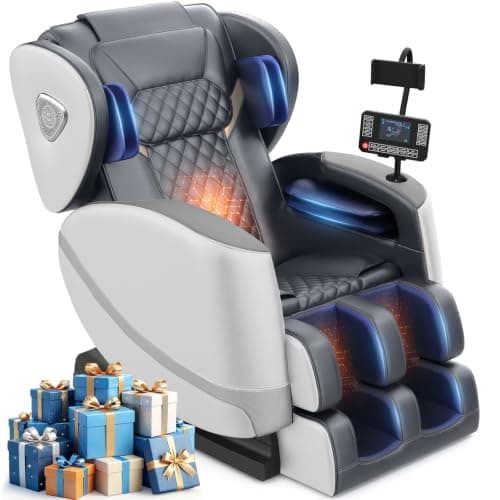
Our FURNIMAT massage chair review of the £470 zero gravity model: 14 fixed nodes, 8 airbags, heat and 165 degree recline, plus a footrest that suits shorter users.
Infrared sauna vs traditional sauna compared: heat, sweat, session length, what the research supports, home costs and safety, plus which one to pick and why.
Best Exercise is a participant in the Amazon EU Associates Programme, an affiliate advertising programme designed to provide a means for sites to earn advertising fees by advertising and linking to Amazon.co.uk. As an Amazon Associate we earn from qualifying purchases. This comes at no extra cost to you and never influences our independent reviews or rankings.