Recovery
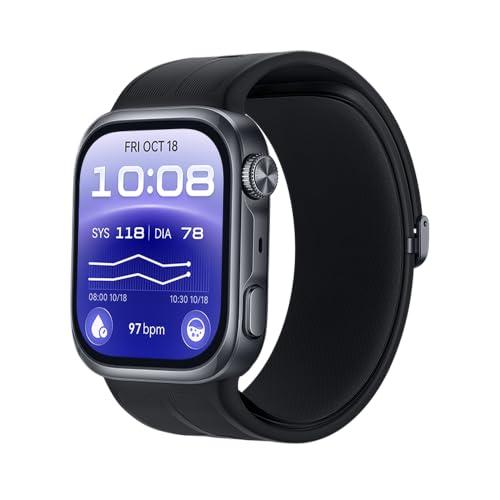
Huawei Watch D3 Review: A Real Blood Pressure Cuff on Your Wrist
Huawei Watch D3 review: the airbag cuff in the strap, what CE-MDR certification really means, accuracy vs an upper-arm monitor, ECG, battery, iPhone limits and D3 vs D2.

By Mike Shilling, Recovery & Training Editor · Updated 17 November 2026
We may earn a commission from qualifying purchases made through links on this page, at no extra cost to you. This never affects our ratings.
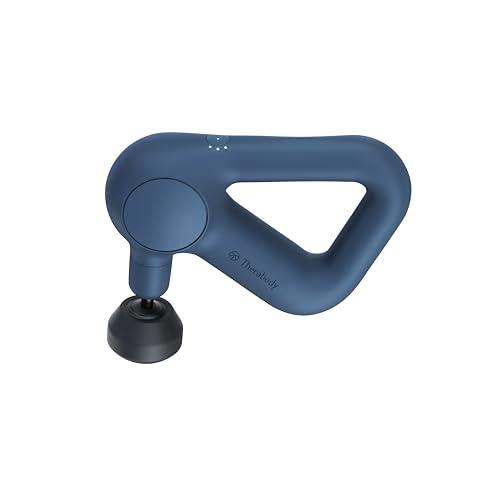
The Theragun Relief is Therabody's entry-level massage gun, and it's a different animal from the rest of the range. Where the Prime, Elite and Pro chase stroke depth and pressure, the Relief strips things back: one button, three speeds, a straight handle, no Bluetooth. Its 10mm stroke is the shallowest Therabody sells. At around £89 on Amazon UK at the time of writing (for the Navy version), it's also the cheapest way into the brand by a long way, and for a big group of buyers that trade makes sense.
Colour matters for price, oddly. The Charcoal version (a separate listing) was showing at around £129 when we checked, so if you aren't fussy about the finish, compare the two before you click. Ignore any third-party listings asking several hundred pounds; that's reseller pricing, not the real going rate.
How we review
This is a research-based review. We've drawn on Therabody's published specifications, the current Amazon UK listings, the patterns that come up again and again in owner reviews, and the published research on percussive massage. We haven't run a long-term hands-on test of the Relief ourselves, so we've stuck to consistent findings and said clearly where Therabody doesn't publish a figure.
Beginners, mostly, and people whose problem is daily tension rather than training load. If your shoulders lock up after a day at a laptop, your calves feel tight after a weekend walk, or you want a gentle wind-down before bed, the Relief covers it without making you learn anything. It also suits older users well: the single button cycles through three speeds with LED lights showing which one you're on, and there's no app pairing to fight with.
Athletes are a different story. If you lift heavy, run high mileage or want to dig into dense glutes and quads, a 10mm stroke and a lightweight motor won't give you what you're after. You'd be better served by the Theragun Prime or the Theragun Elite, both of which use a 16mm stroke.
Therabody's UK product page for the Theragun Relief and its official Relief FAQ list the figures below. The ones that matter most are amplitude and weight, because they explain both what's good about this gun and where it runs out.
| Amplitude (stroke depth) | 10 mm |
|---|---|
| Speeds | 3, with LED speed indicators |
| Percussions per minute | Not published by Therabody |
| Stall force | Not published by Therabody |
| Weight | 621 g / 1.37 lb |
| Dimensions | Approx 245 x 66 x 35 mm |
| Battery life | Approx 120 minutes per charge |
| Charging | USB-C (no use while charging) |
| Attachments | 3 (Standard Ball, Dampener, Thumb) |
| App | Guided routines in the Therabody app; not Bluetooth enabled |
| Warranty (UK) | 2 years |
Amplitude is how far the head travels with each hit. At 10mm the Relief works the outer layers of muscle well, which is what most tension and stiffness actually involves, but it doesn't push as deep as a 16mm gun. That's a design decision, not a defect; Therabody pitches it as comfortable rather than punishing, and for a first massage gun that's arguably the right call, because a 16mm stroke on full speed can feel like a lot on the neck or near bone when you are new to this.
The missing stall force figure is the bigger gap. The older Mini is rated at around 20lb and the Prime at around 30lb, but Therabody leaves the Relief blank. Our judgement, based on its size and motor, is that it sits towards the lower end of the range. In plain terms: press gently and let the gun do the work, and you'll be fine. Lean your bodyweight into a hamstring and it'll bog down.
Check the Theragun Relief price on AmazonThe shape is the most underrated thing about the Relief. Instead of the triangle handle on the Prime and Elite, or the palm-sized block of the Mini, it's a long straight wand, roughly 24.5cm end to end. That length helps more than you'd expect when you're working on your own upper back or the back of a shoulder, because you aren't bending your wrist backwards to get the head where it needs to go. It's also why it's easier for people with less grip strength or stiffer shoulders to use.
Therabody describes it as whisper-quiet. That's marketing, but owner reviews do consistently put it on the quiet side, which follows from the shorter stroke and smaller motor. You can use it in front of the television without anyone complaining.
The three attachments cover what most people need. The Standard Ball is the everyday head, the Dampener is softer for the neck and bony areas, and the Thumb is for focused knots around the shoulder blades or in the feet. The Prime's sixth generation, by contrast, ships with only two.
This is the real decision for most buyers, so here's how we'd split it.
The Theragun Mini (3rd generation) costs around £149 on Amazon at the time of writing. For roughly £60 more you get a 12mm stroke, a compact body that fits a gym bag or carry-on, a soft travel case and Bluetooth control through the Therabody app. If you travel a lot, or you want the app to run routines for you, the Mini wins. If the gun is going to live in a drawer at home and come out in the evening, the Relief's longer handle is more practical and the saving is real.
The Theragun Prime is a different tier. Its 16mm stroke, around 30lb stall force and drop-resistant shell put it in proper sports-recovery territory, and at around £299 it costs more than three times as much as the Relief. Buy it if you train hard several times a week. Don't buy it to ease a stiff neck from your commute; the Relief does that job for a fraction of the money. And the Elite sits higher again, with 40lb of stall force and an OLED force meter, for people who know they press hard.
If you're not sure a massage gun is for you at all, a foam roller costs less still and does a fair amount of the same work on legs and back.
Honestly, the evidence is modest, and you should buy any massage gun with that in mind. A controlled trial in 65 active adults, published in the Journal of Athletic Training, found that five minutes of massage gun use on the calves straight after hard exercise had little effect on range of motion, strength, endurance or swelling, and slightly increased perceived soreness for a few hours afterwards. A 2025 study comparing foam rolling and percussive massage for delayed onset muscle soreness found both helped muscle tone and stiffness recover compared with rest, with foam rolling doing better on several measures, but neither relieved pain any better than resting.
What does that mean for the Relief? It's a comfort tool. It can loosen tight muscles and feel good, which has value in itself, especially for everyday tension. It won't fix a training plan, replace sleep or speed recovery from a hard session in any measurable way. Given that, the gentler stroke looks less like a weakness, and paying three times as much for more depth makes less sense unless you specifically want the deep pressure. Our guide to using a massage gun covers sensible session lengths and the areas to avoid, such as the front of the neck.
At around £89, the Relief is the Theragun we'd point most first-time buyers towards. You get Therabody's build quality, a two-year UK warranty and three decent attachments for the price of many unbranded guns, and you give up depth and app control that casual users rarely miss. The second you want hard, deep-tissue work, though, it's the wrong tool, and spending more on the Prime or Elite is justified.
If you'd rather have the app and a more portable shape, the Mini is the sensible step up.
Or check the Theragun Mini (3rd Gen) price on AmazonFor everyday tension, desk stiffness and light post-exercise soreness, yes. It's light at 621g, has one button and three speeds, and costs around £89 on Amazon UK at the time of writing. Its 10mm stroke is shallower than other Theraguns, so people who want hard, deep work on big muscles should look at the Prime or Elite instead.
The Mini (3rd generation) is a compact palm-sized gun with a 12mm stroke, Bluetooth app control and a soft case, and it costs around £149 on Amazon at the time of writing. The Relief has a longer straight handle that's easier to reach your back with, a shallower 10mm stroke and no Bluetooth. Pick the Mini for travel, the Relief for use around the house.
Not directly. Therabody says the Relief isn't Bluetooth enabled, so the app can show you guided routines to follow by hand, but it can't change the gun's speed for you the way it does with the Mini, Prime or Elite.
Therabody quotes around 120 minutes per charge. It charges over USB-C, and the device won't switch on while it's charging, so plug it in after a session rather than before one.
Therabody doesn't publish one for the Relief. Given its light build and shallower stroke, expect it to slow down sooner than the Prime (around 30lb) when you lean hard into glutes or quads. For general tension it's rarely an issue; for heavy-handed deep-tissue work it will be.
It's one of the better choices for them. There's a single button, three speeds with LED indicators and no app to set up, and at 621g it's lighter than most full-size guns. The longer handle also means less twisting to reach the shoulders and lower back.
Huawei Watch D3 review: the airbag cuff in the strap, what CE-MDR certification really means, accuracy vs an upper-arm monitor, ECG, battery, iPhone limits and D3 vs D2.
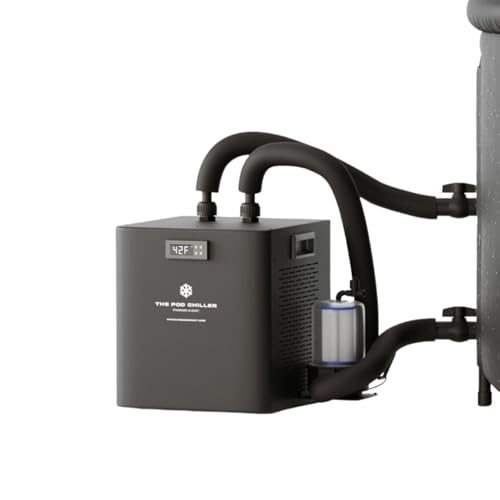
Our Pod Company cold plunge chiller review: a 280W, 1/3 HP unit that holds 5°C, with honest pull-down times, running costs, filters and tub fit.
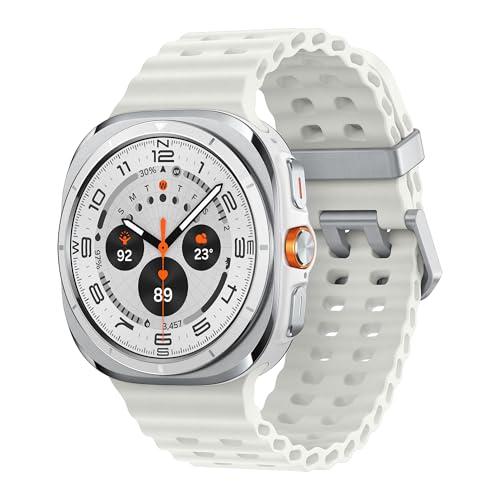
Samsung Galaxy Watch Ultra (2025) review for UK buyers: titanium, dual-frequency GPS, 590 mAh battery, 10 ATM and LTE for around £349. What the Ultra2 adds, and who should save.
COROS vs Garmin for UK runners: PACE 4, PACE 4 Pro, APEX 4 and NOMAD against Forerunner, fenix and Instinct on battery, maps, apps, Garmin Pay and price.
Best Exercise is a participant in the Amazon EU Associates Programme, an affiliate advertising programme designed to provide a means for sites to earn advertising fees by advertising and linking to Amazon.co.uk. As an Amazon Associate we earn from qualifying purchases. This comes at no extra cost to you and never influences our independent reviews or rankings.