Most sports watches ask you to choose between a screen you can actually see and a battery that lasts. Huawei's answer with the Watch GT 6 Pro is to refuse the question: you get a 1.47 inch AMOLED at 466 by 466 pixels, a titanium case, and a battery Huawei rates at up to 21 days. Even the honest, real world number sits somewhere near a fortnight, which makes every mainstream rival look needy.
At roughly £265 it undercuts a Garmin Fenix by hundreds and a Forerunner 970 by a fair chunk too. Its nearest rival on price is really the Garmin 265, which costs a little more and wins comfortably on training analysis. The hardware is genuinely premium. What you trade away is the software ecosystem, and whether that trade works depends almost entirely on which phone is in your pocket.
This review draws on Huawei's published UK specifications, consistent findings across independent expert testing, and patterns in verified owner reviews. We have not run our own multi month endurance test of this exact watch, so we report repeated, corroborated findings rather than single opinions, and we flag manufacturer claims as claims.
Who it is for
Buy this if you resent charging things. Runners, cyclists and hikers who want proper metrics without a nightly top-up are the target, and the 40 hour GPS figure means a long weekend in the hills doesn't need a cable. It also suits anyone who wants a serious looking watch: titanium, sapphire style finish, 54.7g without a strap.
Skip it if your training life runs through third party apps and a coach. There's no rich app store here, and while Huawei Health exports to Strava, the wider plumbing that Garmin and Coros users take for granted is thinner. Our best Garmin watch guide covers that side of the market.
Pros
Up to 21 days claimed, and around 10 to 12 days in normal use, which humbles almost every rival
1.47 inch AMOLED at 466 by 466 is bigger and brighter than most watches near this price
Titanium case, 5 ATM plus IP69, and freediving support to 40 metres
Dual band multi constellation GNSS holds a clean line in cities and woodland
Virtual cycling power and real time cadence with no extra sensors
Free offline maps for running, plus 3,000 plus UK golf courses
On-watch ECG in 30 seconds
Cons
Huawei Health is not on Google Play, so Android setup means a sideload from AppGallery
No reply to notifications on iPhone, and the iOS experience is clearly the second-class one
Third party app support is thin next to Garmin, Apple or even Coros
Optical heart rate lags on short, sharp intervals like every wrist sensor
Training analysis is decent rather than deep, with nothing matching Garmin's readiness modelling
Battery life is the whole pitch
Huawei's headline claim is 21 days, which assumes a quiet life: raise-to-wake only, light notifications, a few hours of exercise a week. Their own typical-use figure of 12 days is closer to what most people see, and owner reports cluster around that (Huawei's published UK battery conditions spell out exactly what each number assumes, which is more transparency than most brands bother with).
Switch the always-on display on and the number drops to roughly seven days. That still beats an Apple Watch by a factor of seven. The figure that matters to endurance athletes is 40 hours of continuous outdoor sport mode, enough for a full Bob Graham attempt with charge to spare, or a week of daily hour-long runs without thinking about it.
Huawei Watch GT 6 Pro key specs
Case
45.6 x 45.6 x 11.25 mm, titanium alloy
Weight
Approx 54.7 g without strap
Display
1.47 in AMOLED, 466 x 466, 317 ppi
Battery (typical)
Up to 12 days, 21 days maximum
Battery (always-on)
Up to 7 days
Battery (GPS sport)
Up to 40 hours
Water resistance
5 ATM plus IP69, freediving to 40 m
Positioning
Dual band GNSS: GPS, GLONASS, BeiDou, Galileo, QZSS, NavIC
The AMOLED is the second reason to want this watch. At 1.47 inches it gives you more usable data fields mid-run than a 43mm Forerunner, and in September sunshine it stays readable without squinting. The titanium case keeps the weight at 54.7g, light enough that sleep tracking doesn't feel like wearing a cricket ball to bed.
Durability goes further than the usual 5 ATM box-tick. IP69 means it shrugs off high pressure jets, and the depth sensor supports freediving to 40 metres with apnea training modes. Very few people will use that. It's still a sign that the hardware wasn't built down to a price.
Training, maps and cycling power
For running, you get ground contact time balance, vertical oscillation, trail metrics with altitude trends, and waypoint navigation. Offline maps download free through the Health app, which matters if you run somewhere with no signal; Garmin charges nothing for this either, but plenty of watches at £265 simply don't offer it.
Cycling is where Huawei has pushed hardest. The watch estimates virtual power from speed, gradient and your rider profile, and tracks real time cadence with no sensors on the bike. It isn't a replacement for a crank-based meter, and anyone training to precise zones should still buy one and pair it, because the watch will happily record real power and track FTP when you do. As a rough guide for a rider who has never seen power numbers before, it's genuinely useful, and our best turbo trainer guide covers the indoor side of that setup.
Golfers get 17,000 plus course maps worldwide, over 3,000 in the UK, with zoomable greens and yardage.
Heart rate, ECG and the accuracy question
The optical sensor is good for steady efforts and everyday tracking, and it does the usual wrist sensor thing on intervals: a few seconds of lag at the start of a hard rep, and the occasional lock onto cadence. This isn't a Huawei failing so much as physics. Reviews of how these devices get validated have criticised the field for testing under conditions that flatter the hardware, so treat any brand's accuracy claim with scepticism (methodological shortcomings of wrist-worn heart rate monitor validations). If you train by heart rate zones, add a strap. Our heart rate monitor guide covers the chest options worth having.
The ECG feature works from the watch: hold the electrode for 30 seconds and you get a report on the screen. Useful as a screening prompt, not a diagnosis.
The software catch
Here is the part reviews tend to bury. Huawei Health isn't in the Google Play Store, a consequence of the US trade restrictions rather than any technical problem, so Android owners download it from AppGallery or Huawei's site and approve an install from an unknown source. It takes five minutes and it works. It also makes some people uncomfortable, and that's a fair reaction.
On iPhone, the watch pairs and tracks properly, but you can't reply to messages from the wrist. Notifications are read-only. For a lot of buyers that alone settles it.
Third party app support is the other gap. There's no meaningful equivalent to Garmin Connect IQ, so what ships is what you get. Data syncs out to Strava, and if that's your whole ecosystem you'll never notice the limitation.
How long does the Huawei Watch GT 6 Pro battery actually last?
Huawei quotes up to 21 days at best, 12 days on typical use, 7 days with the always-on display enabled and 40 hours of continuous outdoor sport tracking. Train five or six hours a week with the screen on raise-to-wake and you will charge it roughly every 10 to 12 days. Turn on always-on and expect closer to a week.
Does the Huawei Watch GT 6 Pro work with an iPhone?
Yes, with iOS 13 or later, but you lose things. Notifications arrive and you can dismiss them, while replying from the wrist is an Android privilege. Calls, workouts and sleep tracking all work fine. If you are on iPhone and want full two way messaging, an Apple Watch or a Garmin is the less frustrating buy.
Do I need Google Play to set it up on Android?
No, and that is the catch. Huawei Health is not distributed through Google Play, so you download it from Huawei's AppGallery or the Huawei website and allow an install from outside Play. It takes about five minutes and it puts some people off entirely. Once it is on, the app itself is stable and well built.
Is the GPS accurate enough for running?
Yes. The GT 6 Pro uses dual band, multi constellation positioning that Huawei calls the Sunflower system, and it holds a sensible line through built up streets and under tree cover where cheaper single band watches wander. Expect Garmin Fenix territory rather than budget watch guesswork.
Can it measure cycling power without a power meter?
It estimates virtual cycling power from speed, gradient and rider data, plus real time cadence. Treat it as a training guide, not a lab number. Pair a genuine power meter and the watch records that instead, along with FTP tracking.
Huawei Watch GT 6 Pro or Garmin Forerunner 970?
The Huawei wins on battery, screen size and price by a wide margin. Garmin wins on the training platform, third party app support and data that syncs everywhere you might want it. If you care most about how long between charges, take the Huawei. If your training data lives in Strava, TrainingPeaks and a coach's inbox, Garmin is the safer choice.
How the assisted dip machine works (more weight means more help), how to set it up, form cues, common mistakes, and a simple plan to reduce the assistance until you can do unassisted dips.
The best back extension alternative is a floor prone extension for the lower back, or a Romanian deadlift if you want load. 9 swaps, sorted by erector or glute focus.
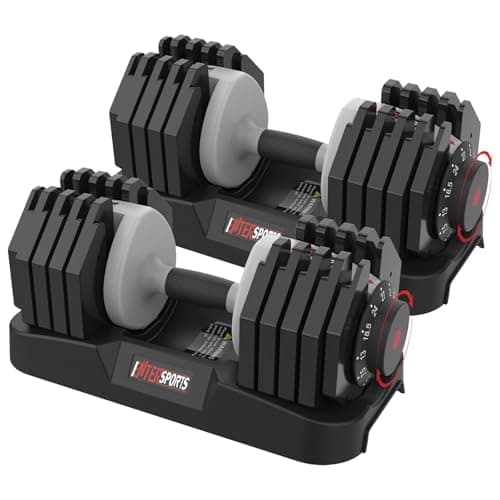
EnterSports 27kg adjustable dumbbells review: 10 settings from 2 to 27kg, uneven 2.5 to 3kg jumps, dial lock, wobble and who should pick it over the 20kg pair.
What a glute ham developer is, how a GHD machine differs from a Roman chair, the exercises it's built for, how to set it up, UK price bands and cheaper substitutes.
Best Exercise is a participant in the Amazon EU Associates Programme, an affiliate advertising programme designed to provide a means for sites to earn advertising fees by advertising and linking to Amazon.co.uk. As an Amazon Associate we earn from qualifying purchases. This comes at no extra cost to you and never influences our independent reviews or rankings.