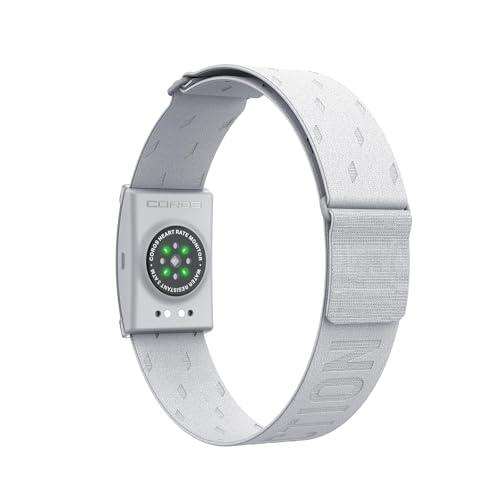
COROS Heart Rate Monitor Review: The £69 Armband That Beats Your Wrist
COROS Heart Rate Monitor review: a £69 upper arm optical sensor with 38 hour battery, auto wear detection and Bluetooth to 3 devices. Is it better than a chest strap?

By Paul Kendrick, Cardio & Endurance Editor · Updated 16 November 2026
We may earn a commission from qualifying purchases made through links on this page, at no extra cost to you. This never affects our ratings.
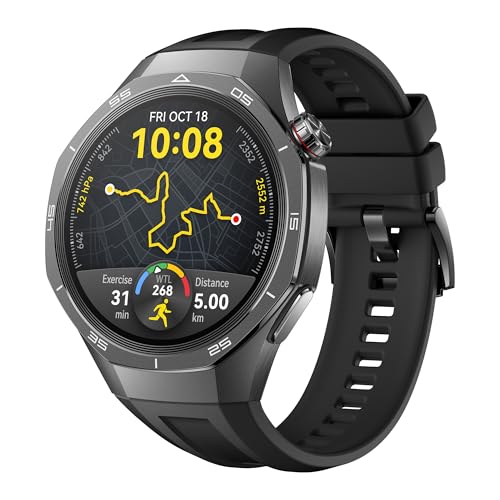
At £189 the Huawei Watch GT 5 Pro 46mm is the smarter buy than the GT 6 Pro for most people in late 2026. It shares the same titanium and sapphire build, the same dual band positioning idea, ECG and 40 metre freediving, and it costs roughly £75 less than its successor. What you give up is battery headroom (9 days typical instead of 12) and a handful of newer tricks, chiefly virtual cycling power.
The awkward part hasn't changed between generations. Huawei Health still isn't on Google Play, iPhone owners still get read-only notifications, and nothing in Huawei's world comes close to Garmin's training platform. If you can live with that, this is a lot of watch for the money.
Check the Watch GT 5 Pro price on Amazon£189How we review
This is a research-based review. We've built it from Huawei's published UK specifications, the current Amazon UK listing, recurring patterns in verified owner feedback and independent expert coverage. We haven't tested the GT 5 Pro hands-on, so battery and accuracy figures here are Huawei's claims or corroborated owner reports, and we say which is which.
Buy it if you want a premium looking sports watch that you charge weekly rather than nightly, and you'd rather keep £75 than gain three days of battery. Runners, hikers and casual golfers who sync to Strava and don't need a coach poring over their data are the natural fit.
Skip it if your phone is an iPhone and you expect smartwatch behaviour, or if your training runs on structured plans, Connect IQ apps and TrainingPeaks. Our Garmin vs Apple Watch comparison is a better starting point for that buyer.
This is the real question, since our Huawei Watch GT 6 Pro review already covers the newer model and it sells for around £265. Comparing the two UK spec pages, here's what changes:
What doesn't change matters more. Both have titanium cases, ECG, a depth sensor, IP69K and 5 ATM, and the same Android 9 and iOS 13 minimums. The GT 5 Pro is actually slightly thinner and lighter: 10.9mm and about 53g against 11.25mm and 54.7g.
So the decision comes down to two things. If you cycle seriously without a power meter, or you go on multi-day trips where three extra days of battery spare you a power bank, the GT 6 Pro earns its premium. For everyone else, 9 days between charges is already more than most rivals manage, and the £75 is better spent on a chest strap.
Huawei is unusually open about its test conditions. The 14 day maximum figure assumes about 90 minutes of exercise a week and the screen waking 200 times a day; the 9 day regular figure assumes around 180 minutes of exercise a week, 30 minutes of screen time a day and stress monitoring switched on (Huawei's GT 5 Pro UK specifications).
Owner reports broadly line up with the regular figure for people training three or four times a week. Turn on always-on and expect closer to 5 days, which is Huawei's own number. That's still several times what an Apple Watch gets.
One warning if you're tempted by the smaller model: the 42mm GT 5 Pro is rated at only 5 days regular use and 3 with always-on, and it swaps titanium for a ceramic case. The 46mm is the one this review covers, and the one we'd buy.
| Case | 46.3 x 46.3 x 10.9 mm, titanium alloy front, ceramic rear |
|---|---|
| Weight | Approx 53 g without strap |
| Display | 1.43 in AMOLED, 466 x 466, 326 ppi, sapphire glass |
| Battery (maximum) | Up to 14 days |
| Battery (regular) | Up to 9 days |
| Battery (always-on) | Up to 5 days |
| Water resistance | 5 ATM, IP69K, freediving to 40 m |
| Positioning | L1: GPS, GLONASS, Galileo, BDS, QZSS; L5: GPS, Galileo, BDS, QZSS |
| Sensors | Optical HR, ECG, barometer, temperature, depth, ambient light, magnetometer, gyro, accelerometer |
| Connectivity | Bluetooth 5.2, NFC, speaker and microphone |
| Compatibility | Android 9.0 or later, iOS 13.0 or later |
Titanium and sapphire at this price is the GT 5 Pro's strongest argument, and it's why owners keep wearing it to the office as well as the trail. The 1.43 inch AMOLED is a touch smaller than the GT 6 Pro's, but at 326 pixels per inch it's actually slightly denser, and the difference in data fields mid-run is marginal.
Huawei pitches golf, freediving and trail running as the "Pro" sports. Freediving support to 40 metres under EN13319 is real, though Huawei is clear it isn't for scuba. Golf mode and map-based route navigation are there for the weekend crowd, and the dual band GNSS should keep tracks tidy in cities and under tree cover, which is where cheap single band watches usually wander.
The optical sensor is fine for steady runs, sleep and resting heart rate. Like every wrist sensor, expect a few seconds of lag at the start of a hard rep, and be aware that validation studies for wrist monitors have often used conditions that flatter the hardware (methodological shortcomings of wrist-worn heart rate monitor validations). Anyone training to precise zones should pair a strap from our heart rate monitor guide.
ECG is a different matter. Huawei doesn't publish accuracy data on its UK spec page, so we won't invent any. The wider evidence is encouraging: a 2021 meta-analysis of nine prospective studies found smartwatch single lead ECG and optical rhythm checks reached around 95% sensitivity and 94% specificity for atrial fibrillation against standard monitoring (Elbey et al., Journal of Atrial Fibrillation). Those studies weren't on this watch, though. Treat an irregular reading as a reason to book a GP appointment, and check the NHS guidance on atrial fibrillation for the symptoms that matter.
On Android you'll be sideloading. Huawei Health isn't distributed through Google Play because of US trade restrictions, so you download it from AppGallery or Huawei's site and approve an install from outside the Play Store. It works, and it keeps updating, but you are trusting an app outside Google's review process.
iPhone owners avoid the sideload but get a cut-down experience: notifications arrive and can be dismissed, not answered. Calls, workouts, sleep and health tracking all work.
Then there's the ecosystem gap, which is bigger than either phone issue for keen athletes. Huawei Health exports to Strava, yet there's no Connect IQ equivalent, far fewer third party integrations and nothing like Garmin's training readiness and load modelling. If that's what you need, a Garmin Forerunner 265 costs more and gives up the titanium, but its software is in a different league.
See today's Watch GT 5 Pro priceYes, at around £189 it is. You get a titanium case, sapphire glass, dual band GNSS, ECG and freediving to 40 metres for well under what the GT 6 Pro costs. The newer watch lasts longer and has a slightly bigger screen, but the core hardware and health tracking are close enough that the saving wins for most people.
Huawei quotes up to 14 days on its maximum usage profile, 9 days on regular usage and 5 days with the always-on display switched on for the 46mm model. The regular figure assumes about three hours of exercise a week, so a heavier training week will pull it down. The 42mm version is much shorter at 5 days regular use.
Mainly battery and a few refinements. Huawei rates the GT 6 Pro at 12 days typical and 21 days maximum against 9 and 14, its screen grows from 1.43 to 1.47 inches, Bluetooth moves from 5.2 to 6.0, NavIC joins the satellite list, and virtual cycling power with real time cadence is one of its headline additions. It is also a little heavier at 54.7g versus 53g.
It pairs with iOS 13 or later and tracks workouts, sleep and health data properly. You can read notifications but you can't reply to them from the wrist the way Android owners can, and the app catalogue is thinner. If two way messaging on the watch matters, an Apple Watch is the easier choice.
No. US trade restrictions keep Huawei Health off Google Play, so Android owners install it from Huawei's AppGallery or website and allow an install from an unknown source. It takes a few minutes and the app works well once installed, but some people won't be comfortable doing it.
Huawei lists an ECG sensor but publishes no accuracy figures on its UK spec page. Research on smartwatch single lead ECG and optical rhythm checks shows they can be a reasonable screening tool for atrial fibrillation, but a watch reading is a prompt to see a GP, not a diagnosis.
COROS Heart Rate Monitor review: a £69 upper arm optical sensor with 38 hour battery, auto wear detection and Bluetooth to 3 devices. Is it better than a chest strap?
COROS vs Garmin for UK runners: PACE 4, PACE 4 Pro, APEX 4 and NOMAD against Forerunner, fenix and Instinct on battery, maps, apps, Garmin Pay and price.
Does Revitive work? What the trials show on leg blood flow and symptom relief, whether the NHS recommends it, who shouldn't use it and cheaper alternatives.
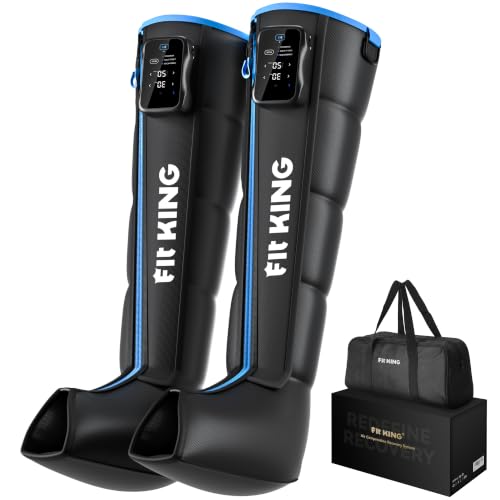
FIT KING cordless compression boots review: built-in controllers, Bluetooth sync, 50 to 150 mmHg and a 24 month warranty, weighed against a £699.99 price.
Best Exercise is a participant in the Amazon EU Associates Programme, an affiliate advertising programme designed to provide a means for sites to earn advertising fees by advertising and linking to Amazon.co.uk. As an Amazon Associate we earn from qualifying purchases. This comes at no extra cost to you and never influences our independent reviews or rankings.