Recovery
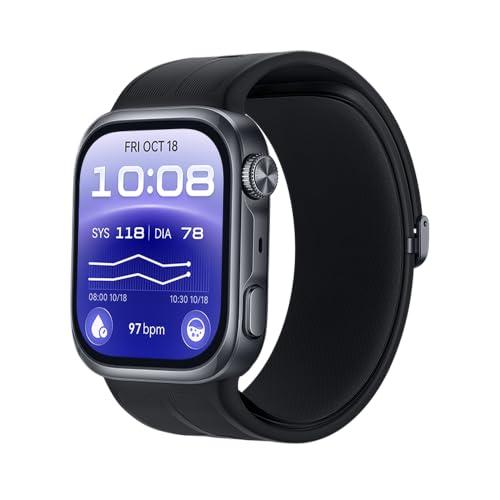
Huawei Watch D3 Review: A Real Blood Pressure Cuff on Your Wrist
Huawei Watch D3 review: the airbag cuff in the strap, what CE-MDR certification really means, accuracy vs an upper-arm monitor, ECG, battery, iPhone limits and D3 vs D2.

By Paul Kendrick, Cardio & Endurance Editor · Updated 17 November 2026
We may earn a commission from qualifying purchases made through links on this page, at no extra cost to you. This never affects our ratings.
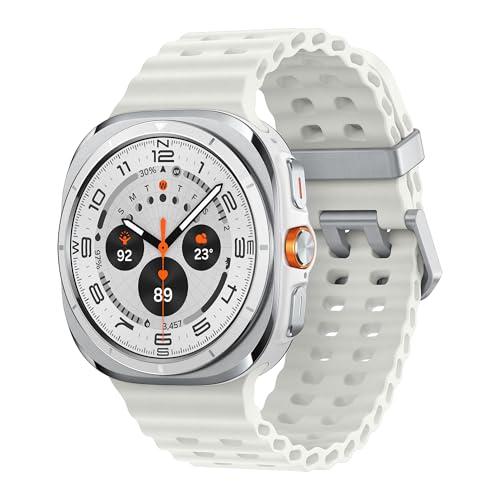
Buy the 2025 Samsung Galaxy Watch Ultra if you use an Android phone and want a tough titanium sports watch without paying Ultra2 money. It costs around £349 at the time of writing, roughly £200 less than the Ultra2, and it still has the things that make an Ultra an Ultra: dual-frequency GPS, sapphire glass, 10 ATM water resistance, LTE and Samsung's full health suite. If you carry an iPhone, it won't pair, so look elsewhere.
The honest question is what that £200 buys on the newer watch. On Samsung's own spec sheets the answer is a bigger battery, a brighter screen, dive certification and fast charging. For a runner, cyclist or pool swimmer who charges overnight, none of those changes the day-to-day much.
Check the Galaxy Watch Ultra price on Amazonaround £349How we review
This review draws on Samsung's published specifications (its UK comparison page and its product page), the Amazon UK listing, peer-reviewed research on Samsung's wrist heart rate sensors and recurring patterns in owner feedback. We haven't tested this watch ourselves. Battery and brightness figures are Samsung's lab claims, and we say where Samsung's numbers aren't directly comparable between models.
The Ultra suits an Android owner who trains five to eight hours a week, swims, maybe does the odd trail race or long hill day, and wants calls, Google Wallet, maps and Spotify on the same wrist. Owners of Samsung Galaxy phones get the most from it, because ECG, sleep apnoea detection and parts of the Energy Score need a Samsung handset.
It's the wrong watch for three groups. iPhone users can't pair it. Scuba divers should pay for the Ultra2 or a dedicated dive computer. And if your idea of a long day is a 100 mile race, no Wear OS watch will match the multi-day battery of a Garmin; our Garmin vs Apple Watch guide covers those trade-offs.
Not much, and that's the point. Samsung relaunched the Ultra alongside the Galaxy Watch8 in July 2025 with the same Exynos W1000 chip, the same 590 mAh battery and the same 47mm cushion-shaped titanium case. The changes were storage doubled to 64GB, a new Titanium Blue finish joining Grey, Silver and White, and One UI 8 Watch out of the box, which brought the Running Coach, Bedtime Guidance, Vascular Load and the Antioxidant Index.
That makes the 2025 version a sensible buy rather than a stale one. It runs the same Samsung Health features as the Watch8, and Samsung's UK comparison page lists it with the same Energy Score, Sleep Coaching and Running Coach ticks as the Ultra2 (Samsung UK).
Here's how Samsung's UK comparison table lines the two up, with the brightness and battery figures from each watch's product page.
| Price on Amazon UK | Around £349 vs around £549 |
|---|---|
| Case and weight | 47.1 x 47.4 x 12.1mm, 60.5g vs 47.1 x 47.4 x 10.7mm, 61.5g |
| Display | 37.3mm Super AMOLED, up to 3,000 nits vs 38.5mm, up to 5,000 nits |
| Chip | Exynos W1000 (3nm, 5 core) vs Snapdragon Wear Elite |
| Memory and storage | 2GB and 64GB on both |
| Battery | 590 mAh vs 800 mAh |
| Smartwatch battery claim | Up to 60 hours with always-on display on both |
| Durability | IP68, 10 ATM, MIL-STD-810H vs IP69K, 10 ATM, MIL-STD-810H plus EN13319 dive rating |
| Fast charging | No vs up to 40 percent in about 30 minutes |
| GPS | Dual-frequency L1+L5 on both |
| LTE | Yes on both |
| Phone compatibility | Android only on both |
Three of those rows matter to most buyers.
Battery. The Ultra2's cell is about 35 percent bigger, and that's real capacity. Oddly, Samsung's headline figure is the same for both: up to 60 hours with the always-on display on, per the Ultra's product page (Samsung) and the Ultra2's UK page. The two claims were measured on different chips and software, so read them as Samsung's own marketing numbers rather than a straight comparison. Where the Ultra2 pulls ahead is the published 80 hour figure with the display off and its 20 hour GPS workout rating; Samsung doesn't publish a like-for-like GPS workout number for the Ultra on its current pages, so we won't guess one.
Thickness. 12.1mm against 10.7mm is the difference you'll notice every day, mostly under a shirt cuff and in bed. Weight is effectively the same; the older watch is actually a gram lighter.
Diving. The Ultra2 is certified to EN13319 and supports recreational dives to 40 metres with its Depth app. The Ultra has the same 10 ATM rating but no dive certification. For swimming and snorkelling that makes no difference. For scuba it does.
The brighter screen and fast charging are nice to have. A 3,000 nit panel is already as bright as the Galaxy Watch8's and fine in direct sun.
The cushion case, a rounded square body with a circular screen, is grade 4 titanium with a sapphire crystal over the display. Samsung rates it for 10 ATM water pressure, IP68 dust and water protection and MIL-STD-810H, and says it works from -20 to 55°C and up to 9,000 metres of altitude. The orange Quick Button starts a workout or a multisport transition with one press, which you'll appreciate in gloves or mid-triathlon.
At 47mm and 12.1mm deep, it's big, and there's no smaller version. Try one on if your wrist is slim, or buy from a retailer with an easy return window. The Dynamic Lug System makes swapping straps quick, and the Marine, Trail and PeakForm bands are designed for water, breathability and sport respectively.
Samsung's figures for the Ultra are up to 60 hours with the always-on display on, up to 100 hours in Power saving mode and up to 48 hours in Exercise power saving mode, which strips back the screen and features during a long workout. For reference, the Galaxy Watch8 is rated at 30 hours with the display on, so the Ultra roughly doubles a regular Galaxy Watch.
Plan on charging roughly every two days if you do a daily workout and wear it to bed; LTE streaming and long GPS sessions will shorten that. There's no fast charging, so a top-up before a run takes longer than on the Ultra2, and you'll want a routine (charging while you shower and have breakfast, say) rather than relying on quick boosts.
Dual-frequency L1+L5 GPS is the feature that matters most for runners in cities and woodland, where tall buildings and trees bounce single-band signals around. The Ultra pairs it with a barometer, route navigation with Track Back, custom multisport workouts and SWOLF scores for swimming. Cyclists with a power meter get a Functional Threshold Power estimate when the watch is paired with a Galaxy phone.
Wrist heart rate is good but not perfect. A 2026 validation study put 55 healthy adults through a maximal treadmill test wearing a Galaxy Watch 6 and a Polar H10 chest strap. The watch's median absolute error stayed around 1 to 3 beats per minute and it read low by 2.67 beats per minute on average, but the limits of agreement ran from about 17 below to 12 above, which the authors judged adequate for groups with substantial variability between individuals (Inoue and colleagues, JMIR Cardio). The Ultra uses Samsung's newer BioActive sensor rather than the Watch 6's, so treat that study as a guide to Samsung's approach, not a test of this exact watch. If you train strictly by heart rate zones, pair a chest strap for intervals.
Each morning the Energy Score turns your sleep, activity and overnight heart data into a readiness number, and Sleep Coaching builds a programme after a week of wear. Vascular Load tracks stress on your circulation during sleep, and the Antioxidant Index gives a quick spot check linked to your diet. None of it needs a subscription.
The medical-style features come with conditions. Blood pressure readings need calibrating against a cuff every 28 days, and Samsung says the feature isn't intended for diagnosis. Sleep apnoea detection, ECG and some Energy Score insights need a Samsung phone, and availability varies by country, so check in the Samsung Health Monitor app before relying on them. If you already wear a Galaxy Ring, the two share data in Samsung Health, though most people won't need both.
See today's Galaxy Watch Ultra pricePay the extra £200 or so for the Galaxy Watch Ultra2 if you scuba dive (the EN13319 certification and Depth app are the only proper reason on this list), if your longest days regularly push past 12 to 15 hours of GPS, or if you'd value a slimmer case and fast charging enough to pay for them. The 5,000 nit screen is a bonus for high-altitude snow or desert running.
Everyone else should save the money. A runner doing 30 to 60km a week, a cyclist, a triathlete training for Olympic distance or a hillwalker on day hikes gets the same GPS, the same titanium and sapphire, LTE and the same Samsung Health features from the 2025 Ultra. If even £349 is more than you want to spend and you don't need titanium or LTE, the Galaxy Watch8 at around £226 runs the same software in a much thinner case.
The hardware is the same 47mm titanium watch with the Exynos W1000 chip and a 590 mAh battery. Samsung's 2025 refresh doubled storage to 64GB, added a Titanium Blue finish and shipped with One UI 8 Watch. If you see the 2024 model much cheaper, the main thing you give up is storage for offline music and maps.
For most Android runners, cyclists and swimmers, yes. It's around £349 against roughly £549 for the Ultra2. The Ultra2 adds an 800 mAh battery, a 5,000 nit screen against 3,000, IP69K, EN13319 dive certification, fast charging and a slimmer 10.7mm case. Pay the extra if you dive, race very long days or charge your watch at awkward moments.
Samsung quotes up to 60 hours with the always-on display switched on, up to 100 hours in Power saving mode and up to 48 hours in Exercise power saving mode. Those are Samsung's own lab figures. LTE calls, music streaming and long GPS sessions will cut them, so plan on charging every two days or so with normal use.
No. Like every Galaxy Watch since the Watch4, it pairs only with Android phones through the Galaxy Wearable app. Samsung also notes that some features, including ECG, sleep apnoea detection and Energy Score insights, aren't available when you pair it with a non-Samsung Android phone.
It's rated 10 ATM and IP68 and passes MIL-STD-810H, so pool and open-water swimming are fine. It doesn't carry the EN13319 dive instrument certification that Samsung added on the Ultra2, so don't use it as a dive computer or depth gauge on scuba dives.
Yes. The Galaxy Watch Ultra is sold only as an LTE model (SM-L705F) in the UK, so with an eSIM plan from your network you can take calls, get messages and stream music on a run with your phone left at home. Check your network supports Samsung watch eSIMs before you buy.
Huawei Watch D3 review: the airbag cuff in the strap, what CE-MDR certification really means, accuracy vs an upper-arm monitor, ECG, battery, iPhone limits and D3 vs D2.
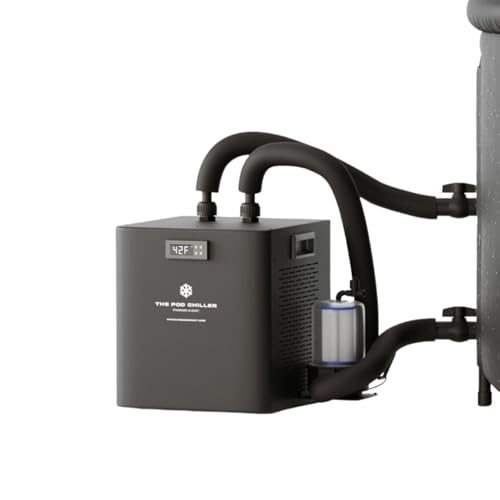
Our Pod Company cold plunge chiller review: a 280W, 1/3 HP unit that holds 5°C, with honest pull-down times, running costs, filters and tub fit.
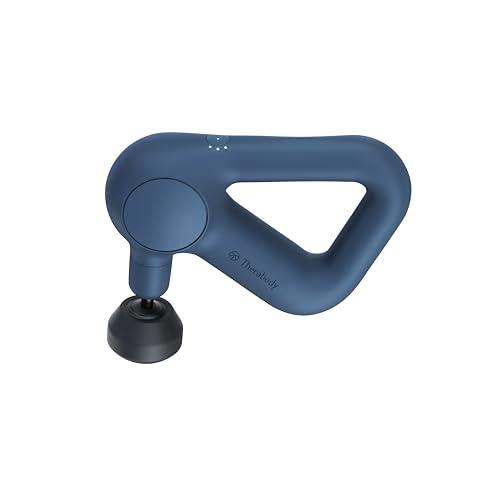
Our Theragun Relief review covers the 10mm stroke, three speeds, 621g build and two-hour battery, how it compares with the Mini and Prime, and who should buy it in the UK.
COROS vs Garmin for UK runners: PACE 4, PACE 4 Pro, APEX 4 and NOMAD against Forerunner, fenix and Instinct on battery, maps, apps, Garmin Pay and price.
Best Exercise is a participant in the Amazon EU Associates Programme, an affiliate advertising programme designed to provide a means for sites to earn advertising fees by advertising and linking to Amazon.co.uk. As an Amazon Associate we earn from qualifying purchases. This comes at no extra cost to you and never influences our independent reviews or rankings.