Home Gym
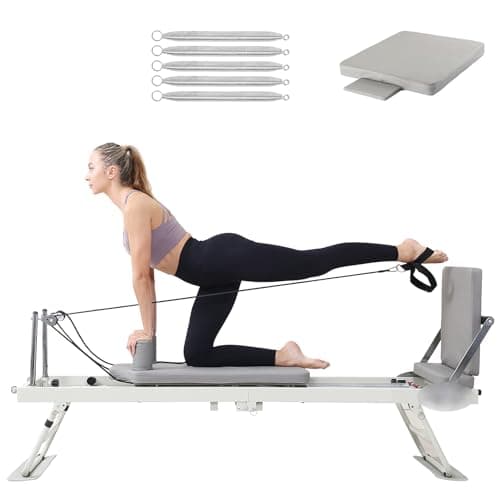
Best Reformer Pilates Machine UK 2026: 6 Foldable Home Picks
The best reformer pilates machines for home use in the UK in 2026, from a £259 foldable to a £788 wooden frame. Honest picks, real specs and how to choose a pilates machine.

By Jacob Chambers, Founder & Lead Reviewer · Updated 3 August 2026
We may earn a commission from qualifying purchases made through links on this page, at no extra cost to you. This never affects our ratings.
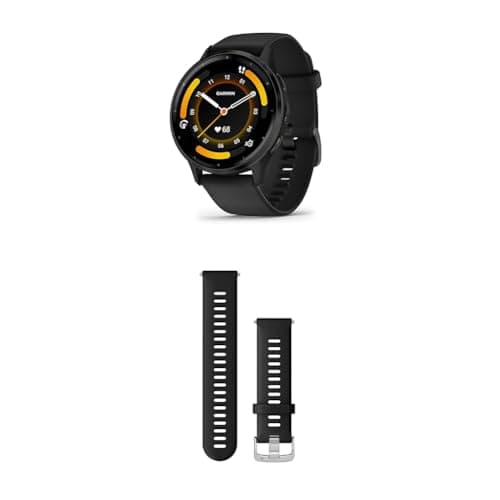
Garmin sells two broadly different watches. One is built for people chasing a parkrun time, and the other is built for people who want to know why Wednesday felt like wading through treacle. The Venu 3 is very much the second sort: a 45mm AMOLED smartwatch that takes calls from your wrist, coaches your sleep, counts reps in the gym and behaves like a health tracker that happens to be good at exercise rather than a training computer that grudgingly tells the time. At £326.98 on Amazon UK at the time of writing, it also costs more than a Forerunner 265, which will irritate runners, and understanding why is most of the buying decision.
What you actually get for that money is the nicest hardware Garmin puts on a non-premium watch: a stainless steel bezel, a 1.4in 454 x 454 AMOLED panel, 8GB of music storage, a speaker and microphone, Garmin Pay, and a set of health tools (Sleep Coach, nap detection, Body Battery, wheelchair mode) that the Forerunner line either lacks or handles less thoroughly. What you do not get is on-watch mapping or multi-band satellite reception, both of which live further up the range.
How we review
This review is built from Garmin's published specifications and owner's manual, the current Amazon UK listing, verified owner reviews and independent expert testing. We have not run our own months-long test of this exact unit, so we stick to findings that come up repeatedly rather than one-off experiences, and we keep Garmin's quoted numbers separate from what owners report in daily use.
Think of the Venu 3 as the watch for someone whose training is one part of a wider health picture rather than the whole of it. Gym members, walkers, cyclists, yoga and Pilates regulars, people managing stress or sleep problems, anyone who wants a smartwatch they can wear to a meeting without explaining it. Wheelchair users get proper support here too, with push tracking, weight shift alerts and wheelchair-specific sports apps, which is rare enough to be worth stating plainly.
It is the wrong watch if your week revolves around structured running or triathlon. You can absolutely run with it, and it will record the session competently, but the depth of analysis a Forerunner gives you is not here. More on that below, because it is the question most people arrive with.
The display is the first thing you notice and the thing that keeps earning its keep. At 1.4in and 454 x 454 pixels it is sharp enough that small text in notifications stays readable, and bright enough to see in July sun without shielding it with your other hand. Garmin gives you a small or large font option too, which sounds like a footnote until you try reading a workout screen mid-set with sweat in your eyes.
Physically it is a 45 x 45 x 12mm case in fibre-reinforced polymer with a stainless steel bezel and Gorilla Glass 3 lens, fitting wrists between 110mm and 200mm. The watch body weighs 30g, or 47g with the silicone band, and the quick release fitting means you can swap to a leather or metal strap in about ten seconds without tools. That matters more than it sounds: the single biggest reason people abandon fitness watches is that they look wrong with everything except gym kit, and the Venu 3 mostly dodges that.
Sleep tracking only works if you wear it in bed, and at 47g you will forget it is there by the second night.
| Case size | 45 x 45 x 12 mm (Venu 3S is 41 x 41 x 12 mm) |
|---|---|
| Display | 1.4 in AMOLED touchscreen, 454 x 454 pixels, optional always-on |
| Materials | Gorilla Glass 3 lens, stainless steel bezel, polymer case |
| Weight | 30 g body, 47 g with silicone band |
| Battery, smartwatch mode | Up to 14 days (up to 5 days with always-on display) |
| Battery, GPS only | Up to 26 hours |
| Battery, all-systems GNSS | Up to 20 hours (11 hours with music) |
| Satellites | GPS, GLONASS, Galileo |
| Water rating | 5 ATM |
| Sensors | Garmin Elevate wrist heart rate, Pulse Ox, ECG app, skin temperature, barometric altimeter, compass, gyroscope, accelerometer, ambient light |
| Memory | 8 GB for offline music |
| Calls and audio | Speaker and microphone, Bluetooth calling, phone voice assistant |
| Payments | Garmin Pay contactless |
| Sports apps | 30+ including strength, HIIT, Pilates, yoga, pool swim, wheelchair |
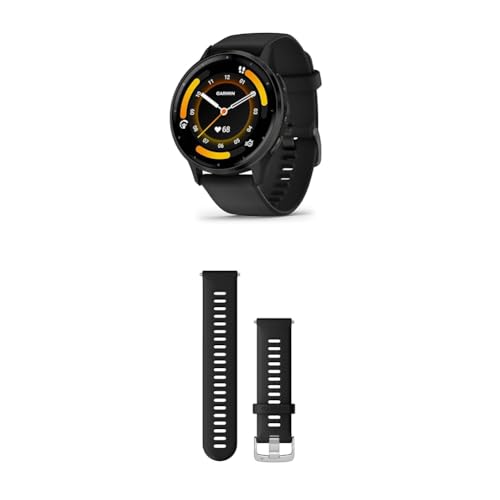
This is where the Venu 3 quietly outperforms its reputation as a lifestyle watch. Strength sessions get automatic rep counting: Garmin's manual explains that the count appears once you hit four reps, that each rep registers when the arm wearing the watch returns to its starting position, and that the watch handles one movement per set. Finish the set, start a new one, change exercise. It is not flawless, and Garmin says so directly in the strength training section of the Venu 3 manual, where it notes that leg exercises may not be counted. Squats and leg press will need a manual tidy-up in Garmin Connect. Everything from the waist up is generally solid.
Preloaded animated workouts for strength, HIIT, Pilates and yoga run on the watch itself, so you can follow a session without a phone propped against a dumbbell rack. You can also build custom workouts from over 1,600 exercises in Garmin Connect and push them to the wrist, which turns the watch into a genuine training log rather than a step counter with ambitions.
For anyone training at home, heart rate broadcasting is the underrated feature. The Venu 3 can transmit its heart rate to a compatible treadmill, bike or app, either automatically when an activity starts or on demand, so a Zwift session or a connected rower reads your heart rate without a second strap. Accuracy during hard intervals is the usual wrist optical caveat, and if you do a lot of high intensity work the chest straps in our best heart rate monitor guide will still beat any watch on the market. Pair one to the Venu 3 and it uses the strap instead.
Intensity minutes tick along in the background against the NHS target of 150 minutes of moderate activity a week plus strength work on at least two days, and having that number visible on a watch face is a surprisingly effective nag. For the kit that goes with it, our home gym section covers the machines and weights side, and body composition trends pair well with the devices in our best smart scales guide.
Check price on AmazonSleep Coach is the feature Venu 3 owners talk about most, and reasonably so. It gives you a sleep score each morning alongside a recommended amount of sleep for the night ahead, adjusted for your recent training load and how badly you slept the night before. Nap detection catches daytime sleep automatically and folds it into your Body Battery, which is Garmin's running estimate of how much energy you have left.
Be sensible about what any of this can tell you. Independent validation work comparing consumer sleep trackers with laboratory polysomnography, including a multicentre study of eleven consumer sleep trackers published in JMIR mHealth and uHealth, found devices are generally good at working out whether you are asleep and much less consistent at breaking that sleep into stages. Agreement on stage classification ranged from moderate down to slight depending on the device. So treat the "you had 47 minutes of deep sleep" line as a rough trend rather than a clinical measurement, and pay attention to the direction of travel across a fortnight instead.
The rest of the health suite is broad: 24/7 heart rate, Pulse Ox, respiration, stress, HRV, skin temperature and guided meditation sessions with breathing prompts. Garmin is careful to say this is not a medical device, and neither are we. The ECG app is on the watch, but whether you can actually use it depends on regional regulatory approval and your phone, so if that specific feature is the reason you are buying, confirm it works in the UK on your handset before you order.
Straightforward, this one. The 3S is 41 x 41 x 12mm with a 1.2in 390 x 390 screen and weighs 27g bare; the Venu 3 is 45 x 45 x 12mm with the 1.4in 454 x 454 panel at 30g. Garmin quotes up to 10 days of smartwatch battery on the 3S against up to 14 days on the Venu 3, with both dropping to 5 days if you run the display always-on. Sensors, sports apps, Sleep Coach, calling, music and payments are identical.
Pick on wrist size and nothing else. The 3S fits wrists from 110mm to 175mm, the Venu 3 from 135mm to 200mm, and the larger screen is easier to read mid-workout if your wrist can carry it.
Here is the honest split. Buy the Venu 3 if your exercise is varied and your interest in the data is mostly about health: sleep, stress, energy, keeping active, a few gym sessions and classes a week. Buy a Forerunner if you run with structure and want a watch that tells you whether today's session is a good idea.
The Forerunner 265 sits at a similar price and takes a different position entirely. You give up the speaker, the microphone and the sleep coaching depth, and you gain multi-band GNSS that holds a line between tall buildings, plus training readiness, HRV status, daily suggested workouts and a race widget that builds toward a date you enter. For a runner that gap is enormous. For someone who runs twice a month it is irrelevant. If you also want maps on the wrist for trails or travel, the Forerunner 965 is the one, at a meaningful jump in price.
Where the Venu 3 wins outright against both is everyday liveability. It looks better, it takes calls, it handles sleep more intelligently, and it does not announce to a room that you are training for something. That combination is worth real money to plenty of people.
Garmin's published battery figures for the Venu 3 series are up to 14 days in smartwatch mode, up to 26 days in battery saver, up to 26 hours with GPS only, up to 20 hours on all-systems GNSS and up to 11 hours with GNSS plus music. Those numbers assume gesture-based backlight rather than an always-on face.
Switch the display to always-on and Garmin's own figure falls to 5 days. That is the single biggest lever you control, and it is the reason owners report wildly different battery experiences with the same watch. Even at 5 days it comfortably beats an Apple Watch, and most people settle on always-on during the working week and gesture wake at weekends, or simply leave it off once the novelty fades.
Two omissions matter. There is no on-watch mapping in Garmin's Venu 3 specification, so navigation means following a breadcrumb of where you have already been rather than panning a map to find a road. And the satellite support is single band across GPS, GLONASS and Galileo, without the multi-band reception the Forerunner 265 uses to clean up tracks in built-up areas. Neither hurts a treadmill session or a gym class; both matter if you run city routes and care about the distance being right.
The third thing worth saying out loud is price. If you genuinely only want steps, resting heart rate and a sleep score, a Fitbit or a mid-range Amazfit does that respectably for a third of the money, and you will not miss the rest. The Venu 3 earns its price through the screen, the calling, the depth of the sleep tools and Garmin Connect, which remains the best free training platform of the major brands. If those things sound like features you would use every week, it is good value. If they sound like a list, save your money.
Check price on AmazonIf you want one watch that handles calls, sleep coaching, everyday health tracking and gym sessions without looking like sports equipment, yes. Garmin quotes up to 14 days of battery, the 45mm AMOLED screen is excellent, and the health features are the best on any non-running Garmin. If all you want is step counting and a rough sleep score, a Fitbit or a mid-range Amazfit does that for well under half the money.
Size and battery, not features. The Venu 3S measures 41mm across with a 1.2in 390 x 390 screen, while the Venu 3 is 45mm with a 1.4in 454 x 454 screen. Garmin quotes up to 10 days of smartwatch battery on the 3S versus up to 14 days on the Venu 3. Both share the same sensors, sports apps and software, so pick on wrist size.
No. Garmin does not list on-watch mapping in the Venu 3 specification, so you get GPS tracking and a breadcrumb of where you have been rather than a map you can pan around. If you want proper navigation on the wrist, the Forerunner 965 or a fenix is the line to look at.
Yes, over Bluetooth with a paired phone. It has a built-in speaker and microphone, so you can take a call from the wrist and use your phone's voice assistant to reply to messages. It is a genuine convenience for cooking, driving and gym sessions, though call quality depends heavily on background noise.
It does, automatically. Garmin's manual says the count appears once you complete at least four reps, that the watch tracks one movement per set, and that leg exercises may not register. Treat it as a useful log of what you did rather than a perfect record, and correct the odd set in Garmin Connect afterwards.
The best reformer pilates machines for home use in the UK in 2026, from a £259 foldable to a £788 wooden frame. Honest picks, real specs and how to choose a pilates machine.

The best adult weighted blankets in the UK for 2026, with honest picks for hot sleepers, heavier users and daytime use, plus how to choose the right weight and what the research shows.
Are vibration plates worth it? Yes for balance, bone health support and low-impact warm-ups; no for weight loss or replacing strength training. The evidence.
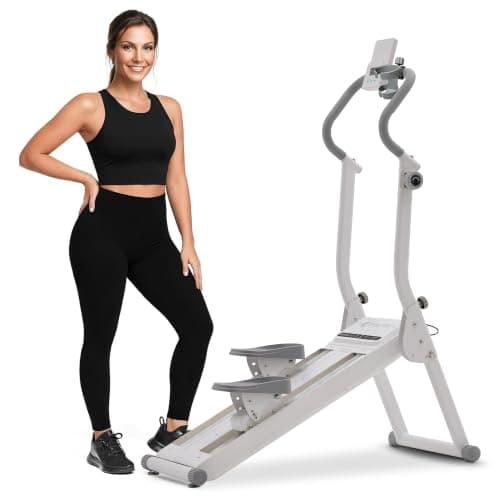
Our ExacMe magnetic stair climber review covers its 16 magnetic resistance levels, 48cm stride, 158kg user limit, app and noise claims, and who should buy it.
Best Exercise is a participant in the Amazon EU Associates Programme, an affiliate advertising programme designed to provide a means for sites to earn advertising fees by advertising and linking to Amazon.co.uk. As an Amazon Associate we earn from qualifying purchases. This comes at no extra cost to you and never influences our independent reviews or rankings.