Home Gym
Forerunner 165 vs 265: Is the Garmin 265 Worth the Extra?
Garmin Forerunner 165 vs 265 compared on multi-band GPS, Training Readiness, Training Status, battery, screen size, triathlon mode and UK price, with a clear verdict.

By Paul Kendrick, Cardio & Endurance Editor · Updated 19 November 2026
The vívoactive 6 is the better watch, and at current Amazon UK prices it's the one I'd buy. It costs around £205 at the time of writing against around £154 for the vívoactive 5, and that £50 or so buys a gyroscope, twice the music storage, nearly three times the sport profiles and a handful of genuinely useful running features. Buy the 5 only if you run, ride, swim and lift, you don't carry a big offline playlist, and £50 matters more to you than a smart wake alarm.
What doesn't change is just as important. Battery life is identical on paper, the screen is the same size and resolution, both weigh 36g with the band, and neither has a barometric altimeter. Plenty of the comparisons ranking for this search get at least one of those wrong.
How we compared them
Every spec below comes from Garmin's own UK product pages for the vívoactive 6 and vívoactive 5, Garmin's vívoactive 6 launch announcement and the owner's manuals. Where third-party sources disagree on counts or features, we've gone with what Garmin states. Prices are Amazon UK figures checked on 19 November 2026. We haven't worn the two side by side for this piece.
Get the vívoactive 6 if you run regularly, follow structured plans, want offline music beyond a few playlists, or just want the version Garmin will keep updating for longer. Get the vívoactive 5 if you want the cheapest proper Garmin with an AMOLED screen and your sports are on its 30-odd profile list.
Check vívoactive 6 price on Amazon| vívoactive 5 | vívoactive 6 | |
|---|---|---|
| Launched | September 2023 | April 2025 |
| Display | 1.2in AMOLED, 390 x 390 | 1.2in AMOLED, 390 x 390 |
| Lens | Gorilla Glass 3 | Gorilla Glass 3 |
| Case size | 42.2 x 42.2 x 11.1mm | 42.2 x 42.2 x 10.9mm |
| Weight | 26g (36g with band) | 23g (36g with band) |
| Smartwatch battery | Up to 11 days (5 always-on) | Up to 11 days (5 always-on) |
| GPS-only battery | Up to 21 hours | Up to 21 hours |
| All systems with music | Up to 8 hours | Up to 8 hours |
| Storage | 4GB | 8GB |
| Preloaded sport apps | More than 30 | More than 80 |
| Satellites | GPS, GLONASS, Galileo | GPS, GLONASS, Galileo, BeiDou, QZSS |
| Gyroscope | No | Yes |
| Barometric altimeter | No | No |
| Smart wake alarm | No | Yes |
| PacePro, race predictor, running dynamics | No | Yes |
| Water rating | 5 ATM | 5 ATM |
| Security updates until at least | 20 Sept 2025 | 2 April 2027 |
| Garmin UK list price | £209.99 | £269.99 |
| Amazon UK price (19 Nov 2026) | Around £154 | Around £205 |
The gyroscope is the hardware change most comparisons skip. Garmin lists it on the vívoactive 6 and not on the 5, alongside the same compass, accelerometer and ambient light sensor. On its own a gyroscope doesn't show up as a feature you tap on, but it gives the watch better motion data, and it arrives in the same generation as the 6's new running dynamics (cadence, stride length and ground contact time, per Garmin's announcement).
Storage goes from 4GB to 8GB. Both watches play offline playlists from services such as Spotify, Amazon Music and Deezer with a subscription, so this only matters if you run phone-free with a lot of music or podcasts loaded. If you do, 4GB fills up faster than you'd expect.
Garmin's own wording is "more than 30" for the 5 and "more than 80" for the 6, and we'd treat any exact count you see elsewhere with suspicion. Comparing the two UK spec lists, the 6 adds trail running, track running and obstacle racing, hiking, rucking, golf, mountaineering, kayaking, snorkelling, ice skating, cyclocross, gravel and road biking profiles, a mobility profile and a set of motor sports. The 5 covers running, cycling, pool and open water swimming, strength, HIIT, rowing, yoga, Pilates and a long list of team and racket sports already.
So if you hike or play golf and want the watch to treat it as such, the 6 is the only option of the two. If you only ever press "Run" or "Strength", the extra profiles are irrelevant.
Here's the gap I'd actually pay for. Garmin's spec sheet lists PacePro pacing strategies, a race predictor, Training Effect (aerobic and anaerobic), running dynamics and Garmin Coach strength and cycling plans on the 6. None of those appear on the 5's spec list, though both list Garmin Coach running plans from expert coaches. For someone training towards a 10k or half marathon, PacePro's grade-adjusted pacing and a race time prediction are the features that turn a fitness watch into a training tool.
The 6 adds a smart wake alarm, which Garmin's launch announcement describes as waking you with a light vibration during a lighter stage of sleep within a window you set. It also adds an evening report, sleep alignment and health status. The 5 already has sleep score, sleep coach, nap detection, HRV status and Body Battery, so the sleep basics are covered on both.
Garmin calls the 6's AMOLED panel "even brighter" in its launch release. It doesn't publish nits for either watch, and the panel size, resolution and glass are identical, so treat this as a minor improvement rather than a reason to upgrade.
Battery is the big one. Garmin's UK pages list exactly the same figures for both: up to 11 days as a smartwatch, 5 days with always-on display, 21 days in battery saver, 21 hours GPS-only, 17 hours on all systems and 8 hours on all systems with music. A watch that does more with the same battery is a decent result, but it isn't a battery upgrade.
Neither watch has a barometric altimeter, so both estimate elevation from GPS and neither counts floors climbed. Neither has multi-band GPS. Both are 5 ATM, which Garmin's vívoactive 6 manual equates to pressure at 50 metres depth: fine for swimming, not for diving. Garmin Pay, wheelchair mode with push tracking, incident detection, Wi-Fi, a 20mm quick release strap and the 125 to 190mm wrist fit carry over unchanged.
One line on Garmin's spec pages deserves more attention than it gets. The UK listing gives the vívoactive 5 security updates "until at least" 20 September 2025, against 2 April 2027 for the 6. That doesn't mean the 5 stops working, and Garmin has historically kept older watches running with Garmin Connect for years. But the 6 is the model Garmin is actively committing to, and if you keep a watch for four or five years that's worth something.
At around £154 against around £205, the difference is roughly £50. Garmin's own list prices put the gap at £60 (£209.99 against £269.99), so Amazon is currently narrowing it.
For £50 you're getting a gyroscope, 4GB more storage, the extra sport profiles, PacePro and the race predictor, the smart wake alarm and a longer stated support window. That's a lot for the money, and it's why our vívoactive 6 review calls it the Garmin most people should buy. The vívoactive 5 review makes the honest counter-case: if you'd never use any of those additions, keeping £50 is perfectly sensible.
Check vívoactive 5 price on AmazonBuy the vívoactive 6 if you're working towards a race, you hike or play golf, you load a lot of offline music, or you want the newer software and the smart wake alarm. It's the better buy for most people at around £205.
Buy the vívoactive 5 if your week is runs, rides, swims, walks and gym sessions, a few playlists cover your music, and you want the cheapest Garmin with an AMOLED screen and Garmin Pay. At around £154 it's still very good value.
Buy neither if you need a barometric altimeter, multi-band GPS, ECG or on-wrist calls. Those sit higher up the range, and our Garmin Venu vs vívoactive comparison covers where the extra money goes. For the full range ranked by use, see our best Garmin watch guide.
Going by Garmin's UK spec sheets, the vivoactive 6 adds a gyroscope, doubles storage from 4GB to 8GB, lifts the sport list from more than 30 profiles to more than 80, and adds a smart wake alarm, PacePro, a race predictor, Training Effect, running dynamics and BeiDou and QZSS satellite support. The screen size and resolution, the 42mm case, the 36g weight with band, the battery figures and the 5 ATM rating are the same.
No. Garmin lists identical figures for both: up to 11 days in smartwatch mode (5 days with the display always on), up to 21 days in battery saver mode, up to 21 hours GPS-only, up to 17 hours using all satellite systems and up to 8 hours with all systems plus music. Anyone telling you the 6 lasts longer is not quoting Garmin.
Neither does. Garmin's sensor lists for both watches include GPS, the Elevate wrist heart rate sensor, Pulse Ox, a compass, an accelerometer and an ambient light sensor, but no barometer. Elevation comes from GPS and there's no floors climbed count on either. If you want an altimeter at this price, look at the Forerunner 165 or a Venu.
Garmin's launch announcement describes the vivoactive 6 as having an even brighter AMOLED display, but it doesn't publish a brightness figure for either watch. Both use a 1.2in, 390 x 390 AMOLED panel under Gorilla Glass 3, so the size and sharpness are identical.
Yes, if your training fits its sport list and 4GB of music is enough. At around £154 against around £205 for the vivoactive 6, it saves roughly £50. The one thing to weigh is software support: Garmin's UK page lists security updates for the 5 until at least September 2025, against at least April 2027 for the 6.
Garmin Forerunner 165 vs 265 compared on multi-band GPS, Training Readiness, Training Status, battery, screen size, triathlon mode and UK price, with a clear verdict.
What Garmin Body Battery actually measures, how it charges and drains, what a good number is, why yours stays low, how far to trust it and which Garmin watches have it.
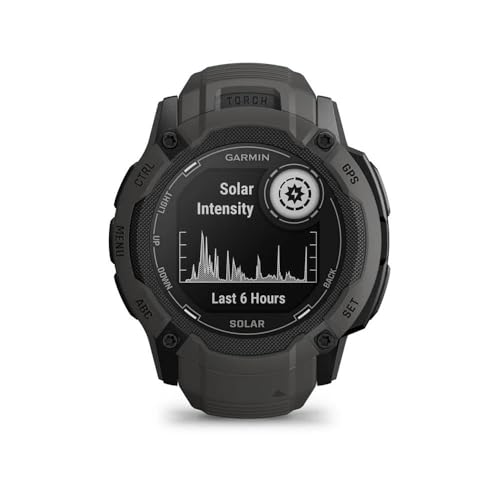
An honest Garmin Instinct 2X Solar review covering the 40 day battery, the unlimited solar claim, the LED torch, multi-band GPS and whether to buy it over the Instinct 3 Solar.
Garmin Venu vs vivoactive explained: what separates the two lines, how the Venu 4 and vivoactive 6 compare on battery, sensors and price, and when the older Venu 3 or vivoactive 5 is the smarter buy.
Best Exercise is a participant in the Amazon EU Associates Programme, an affiliate advertising programme designed to provide a means for sites to earn advertising fees by advertising and linking to Amazon.co.uk. As an Amazon Associate we earn from qualifying purchases. This comes at no extra cost to you and never influences our independent reviews or rankings.